
 By Iffa Jayyana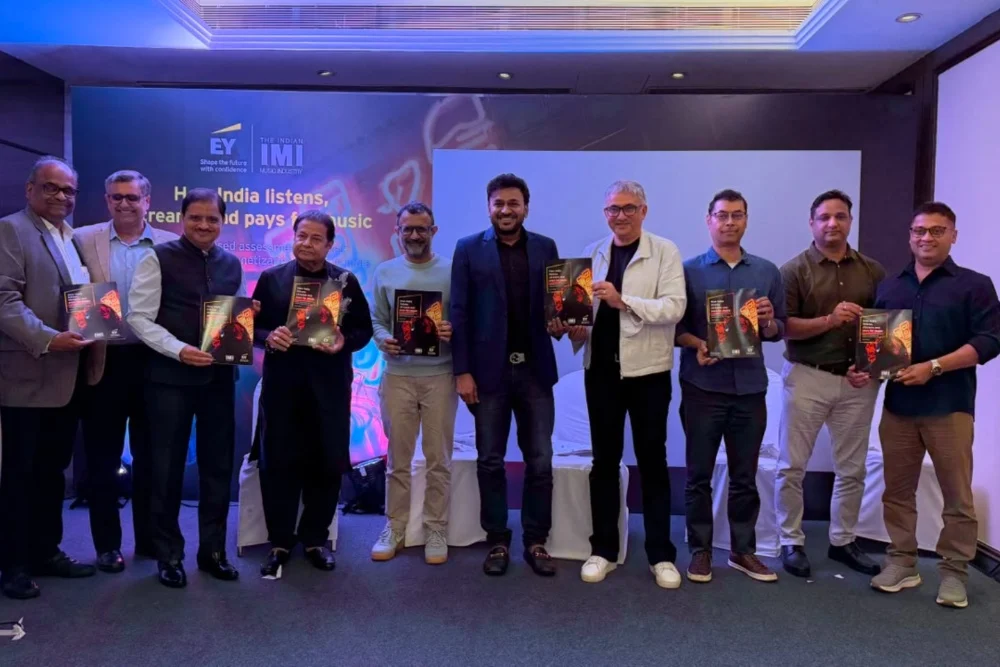
India stands at a critical juncture in the evolution of its digital economy. While the nation boasts one of the highest music consumption rates globally, a persistent paradox remains: the transition from "free-to-listen" to "paid-to-support" is proving to be a complex, multi-year challenge. A groundbreaking new report, “How India Listens, Streams and Pays for Music,” released by EY and the Indian Music Industry (IMI) in Mumbai, suggests that the country’s paid streaming subscriber base is poised for significant growth, projected to double from 14 million in December 2025 to between 28 million and 30 million by 2028.
However, the road to this milestone is paved with structural hurdles, cultural shifts in consumption habits, and the looming dominance of ad-supported platforms like YouTube.
The Landscape of Consumption: A Data-Driven Overview
The EY-IMI report provides an exhaustive look at the Indian listener, drawing on a comprehensive survey of over 15,000 smartphone owners, bolstered by psychometric research involving 2,200 consumers and high-level industry consultations.
The data paints a picture of a nation obsessed with sound. Approximately 96% of smartphone owners consume music regularly, and a staggering 80% of these users dedicate more than an hour each day to listening. Despite this, the monetization gap is profound. While 86% of Indians have paid for video streaming services, only 38% have ever spent money on music streaming.
The YouTube Factor and Discovery
Digital Service Providers (DSPs) hold the loyalty of 60% of the market for structured listening. However, YouTube remains the undisputed king of discovery, serving as the primary portal for 32% of users. The short-form video explosion has further entrenched YouTube’s position, often acting as the initial touchpoint for listeners before they migrate to dedicated audio platforms.
A Chronological Shift: From Physical to Frictionless Free
To understand the current stagnation in paid subscriptions, one must look at the history of the Indian music market. India famously leapfrogged the era of widespread physical media consumption—CDs and cassettes were never as ubiquitous as in the West—jumping straight into the era of free, ad-supported digital streaming.
- Pre-2015: The digital market was largely dominated by piracy and unstructured, fragmented platforms.
- 2015-2020: The rapid expansion of affordable 4G data, spearheaded by the "Jio effect," democratized internet access, cementing the culture of free, ad-supported streaming as the default.
- 2020-2025: The pandemic accelerated digital adoption, but also solidified the expectation that digital content should be free.
- 2025-2028 (Projected): The current phase, as identified by the report, focuses on moving users toward "value-added" tiers. With subscription revenues expected to climb from INR 10 billion ($111 million) in 2025 to INR 22 billion ($244 million) by 2028, the industry is entering a period of aggressive, data-backed conversion strategies.
Psychometric Insights: The Three Cohorts of the Indian Listener
The study conducted by MindLink identifies three distinct segments of the Indian population, each requiring a different conversion strategy:
- The Payers: Current subscribers who value the premium experience.
- The Fence-sitters: The most promising demographic. They use free versions but acknowledge that they would pay if forced or if the value proposition improved significantly. 27% believe paying is worthwhile for a service used regularly, while 34% are motivated by reliability and performance.
- The Never-payers: A significant segment who believe music should be free. 49% explicitly stated that streaming is not worth the cost, while 36% hold a moral objection to paying for digital goods when free alternatives are readily available.
For these groups, the concept of "ownership" remains a strong pull. A combined 30%+ of Fence-sitters and Never-payers indicated they would prefer to own a collection of songs outright rather than subscribe to a revolving library. This suggests that the industry might need to experiment with alternative models, such as "a la carte" purchases or permanent digital lockers, to capture this segment.
Official Responses: Cultivating "Economic Oxygen"
Industry leaders have reacted to these findings with a mix of urgency and optimism, framing the subscription model not just as a business goal, but as a cultural necessity.
Blaise Fernandes, CEO of the Indian Music Industry (IMI), was unequivocal in his assessment. "Art requires more than just inspiration; it requires economic oxygen," Fernandes stated. He argued that the current ecosystem, if left un-monetized, risks stifling the next generation of Indian talent. "To take Indian music global… we must transition from being a passive consumer market into an active patron’s market. Paying for an audio digital subscription is a direct investment by the fan."
Vikram Mehra, Chair of the IMI, echoed this sentiment, noting that the data validates a latent readiness among consumers to pay for quality. "The eventual goal is to get India into the top five music markets of the world," Mehra said.
Ashish Pherwani, Partner and Leader of the Media & Entertainment Sector at EY India, viewed the current shortfall as an opportunity. "The report highlights an opportunity for the industry to further strengthen subscription adoption through improved consumer awareness, differentiated offerings, and innovation," Pherwani noted.
From the creative side, Badshah, the renowned composer and performer, highlighted the shift from "reach" to "value." He noted that the future of the industry depends on how deeply listeners value the content they consume, rather than just how widely it is distributed.
Structural Drivers of Future Growth
Despite the challenges, the macroeconomic and demographic tailwinds in India are undeniable.
- Smartphone Proliferation: The base of 584 million smartphone users in 2025 is projected to reach 735 million by 2030.
- Economic Prosperity: With a projected 6.5% GDP growth rate, India is on track to become the world’s third-largest economy by 2030, increasing the disposable income of the younger demographic.
- The Youth Dividend: 65% of India’s population is under the age of 35, a demographic inherently more comfortable with digital ecosystem subscriptions.
- Automotive Expansion: With over 400 million registered vehicles, the "in-car" listening experience offers a new, captive audience for premium audio services.
Implications: The Path Forward
To bridge the gap between 14 million and 30 million subscribers, the industry must evolve. The report suggests several strategic interventions:
1. Differentiated Product Innovation
The survey revealed that 44% of payers subscribe specifically to remove ads. However, to convert the remaining 62% of the market, DSPs must go beyond simple ad removal. This includes "context-aware" features—playlists that adapt to mood, activity, and local cultural nuances—as well as high-fidelity audio options.
2. The Power of Bundling
While the report notes that bundling alone won’t solve the issue (only 7% cited it as their sole reason for paying), it remains a vital "hook." Integrating music subscriptions with existing banking, telecom, and e-commerce platforms can lower the barrier to entry, making the "cost" of the service feel like a seamless part of a larger utility.
3. Creating a "Super-App" Experience
The future of music in India may lie in multifunctionality. By connecting streaming platforms with live concert ticketing, karaoke features, and exclusive creator-led content, DSPs can transform the subscription from a simple "music utility" into a "lifestyle hub."
4. Continued Enforcement
Finally, the industry must continue to address piracy and the "value gap" created by platforms that offer content without fair remuneration to the rights holders. As Fernandes noted, the goal is to build a tiered ecosystem where every level of user—from the casual listener to the superfan—contributes to the sustainability of the arts.
Conclusion: A Global Comparison
The scale of the task ahead is highlighted by international benchmarks. Brazil, a market with similarities to India, has already crossed the 30 million mark. China, once behind India in 2015, now boasts 171 million paid subscribers, proving that with the right combination of tech-enabled friction and ecosystem-wide collaboration, the "conversion" of a massive, free-user base is entirely possible.
For India, the next three years will be defined by whether the industry can successfully translate its massive volume of plays into a sustainable, patron-driven model. The potential is massive, the audience is engaged, and the roadmap is clear; the only remaining variable is the speed at which the Indian consumer embraces the act of paying for the soundtrack of their lives.
 Siti Muinah
  Ammar Sabilarrohman
  Layla Zulfa