
 By Ammar Sabilarrohman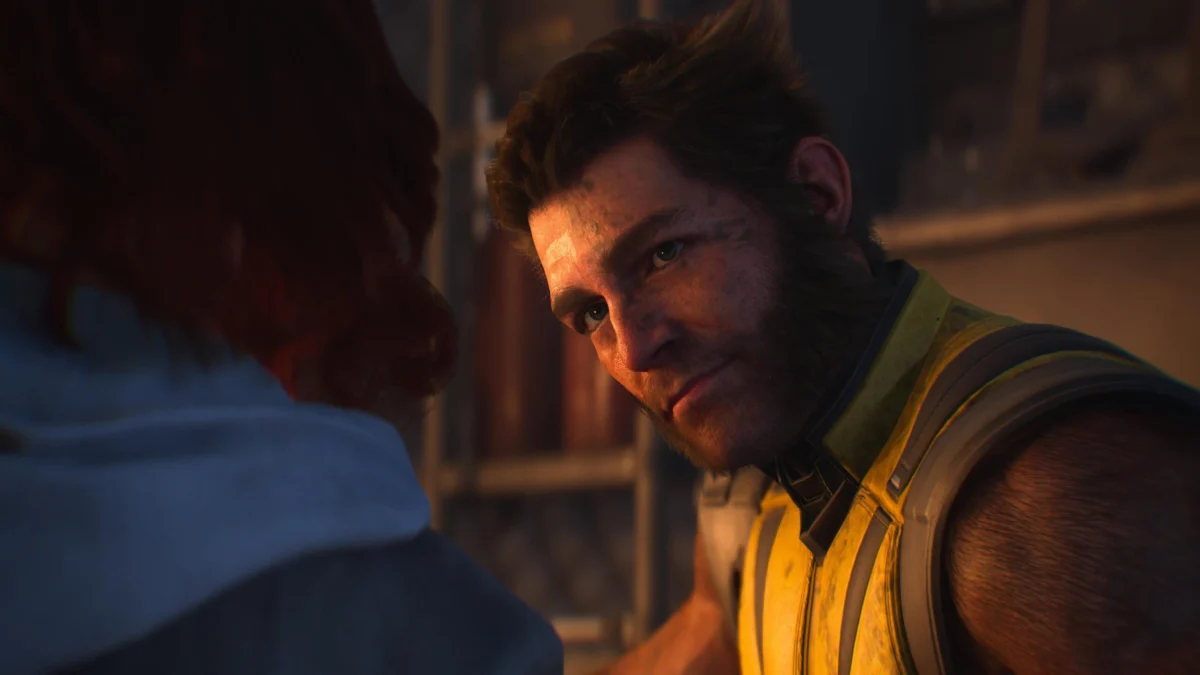
For decades, the archetype of the "gritty, traumatized action hero" has served as the backbone of Western triple-A gaming. From the stoic solitude of The Witcher’s Geralt to the calculated rage of Kratos in God of War, developers have mastered the art of blending visceral combat with a "prestige" narrative of inner turmoil. It seemed only natural that Wolverine—the quintessential Canadian mutant with a penchant for whiskey and self-loathing—would be the final piece of this puzzle. Yet, in the recently released Marvel’s Wolverine, developer Insomniac Games delivers an experience that is caught in a strange, liminal space: it is both a tender character study and a mechanical relic of a bygone era.
The Anatomy of the Formula
The modern PlayStation first-party blueprint has become increasingly recognizable. Players are typically introduced to a world defined by climbable ledges, "RPG-lite" skill trees, convenient waist-high grass for stealth, and the ubiquitous "rage meter" that culminates in a synchronized button-press ultimate. Marvel’s Wolverine does not deviate from this script; if anything, it wears it like a second skin.

While the gaming industry has moved toward more experimental, systems-driven design, Wolverine feels decidedly old-school. It is a linear, narrative-heavy romp that prioritizes cinematic pacing over player agency. While this could have been a refreshing departure from the bloated, checklist-filled open worlds of the last decade, the game unfortunately falls into the trap of becoming a repetitive slog. It possesses the components of a blockbuster—the high-fidelity graphics, the motion-captured performances, and the bombastic set-pieces—but it lacks the inventive spark that makes those mechanics feel vital rather than obligatory.
Chronology and Narrative Context
The narrative of Marvel’s Wolverine is an exercise in "alt-universe" storytelling. Eschewing the traditional X-Men team dynamic, the game drops players into the middle of a conflict involving "Team X," a group led by the enigmatic Nathaniel Essex. Fans of the source material will recognize Essex as a classic antagonist, here reimagined with a dash of Victorian-era mystique and brought to life with a charismatic, arch performance by Troy Baker.

The game begins in media res, a choice that leaves newcomers to the lore feeling slightly disoriented. We join Logan as he returns to a team he seemingly never left, creating an immediate friction in the storytelling. This lack of clear origin or motivation persists throughout the first act; Logan often feels like a passenger in his own life, reacting to the whims of Essex and the plot rather than driving the narrative through his own desires.
Even the game’s attempt to address his missing memories—the "Nightmare Doors"—feels like a secondary, optional distraction rather than a core pillar of his character arc. Instead of an existential quest for self-discovery, Logan’s amnesia functions merely as a plot device to facilitate the next wave of combat encounters.

The Heart of the Beast: Characterization
Where the game undeniably succeeds is in its subversion of the "gruff, crusty loner" trope. Insomniac’s interpretation of Logan is remarkably vulnerable. With a performance by Liam McIntyre that leans into a disarming, almost puppy-dog tenderness, this Wolverine is as quick to offer a comforting hug or a gentle word as he is to unsheathe his claws.
This emotional sincerity extends to the supporting cast. Sabretooth is not merely a one-note villain but a complex figure caught in the same cycle of violence as his counterpart. Even the "villainous" Essex manages to maintain a veneer of civility that feels genuinely unsettling. Jean Grey, while somewhat underutilized in the grand scope of the plot, provides a necessary anchor for the team’s emotional stakes. These moments of human connection are the game’s greatest triumph, proving that even in a world of super-powered mutants, the most powerful weapon remains empathy.

Mechanical Limitations and Combat Data
The core gameplay loop is where the "relic" status of the title becomes most apparent. Combat is built on a foundation of parrying and light-heavy attack combinations, reminiscent of mid-2010s action titles.
- The Combat Loop: The game utilizes a "traffic light" parry system—blue for parryable, red for unblockable, and gold for high-risk "reckless attacks." While satisfying in short bursts, the repetition becomes glaring by the midpoint.
- Skill Progression: The RPG elements are superficial. Players collect whiskey bottles to unlock minor stat boosts or ability cooldowns, but these choices rarely alter the fundamental way you engage with enemies.
- Enemy Variety: Most encounters involve waves of "meat-n-bones" grunts. By the fifth or sixth encounter, the rhythm of the game—Ding, dodge, slash, repeat—becomes so predictable that it loses its edge, literally and figuratively.
Despite the ferocity and the liberal application of gore, the action never quite reaches a crescendo. Because the player is constantly operating at a high level of intensity, there is no sense of escalation. You are essentially fighting the same enemies from the first hour until the final act, with little room for the creative, expressive combat found in titles like Sekiro: Shadows Die Twice or Insomniac’s own Marvel’s Spider-Man.

Official Responses and Industry Reception
Sony Interactive Entertainment has framed Marvel’s Wolverine as a flagship experience, intended to bridge the gap between their massive, sprawling open-world titles and a more focused, linear action narrative. While the budget appears to have been allocated to high-end visuals and technical polish—including excellent ray-tracing and smooth performance even on the PS5 Pro—the "stripped back" nature of the collectibles and environmental design has raised questions about the game’s production scope.
Industry analysts suggest that the game represents a pivot in Sony’s strategy: creating "efficient" blockbusters. However, the reception indicates that efficiency should not come at the cost of innovation. Compared to modern benchmarks of the genre—such as the directorial flair of Alan Wake 2 or the sheer mechanical ingenuity of Titanfall 2—Wolverine feels like a product designed by committee, adhering to a manual of what a game "should" be rather than taking risks on what it "could" be.

Implications for the Future of Linear Action
The primary takeaway from Marvel’s Wolverine is a cautionary one: linear structure does not automatically equate to narrative or mechanical focus. For a game to thrive in the modern market, it must offer more than just a well-polished coat of paint.
The success of Wolverine lies in its heart—its characterization and its commitment to the humanity of its mutants. These elements save the game from being a total disappointment, keeping the player engaged through sheer emotional investment. However, for future titles in this space to succeed, developers must look beyond the established formula of the last decade.

If Insomniac and other studios are to continue crafting linear action titles, they must rediscover the art of player agency. They must allow the player to interact with the world in ways that aren’t highlighted by a yellow paint-stroke or a prompt-based button press. Marvel’s Wolverine is a reminder that even the most iconic, indestructible character can be held back by the weight of tradition. It is a game that is "just fine"—a perfectly serviceable, occasionally spectacular, but ultimately outdated experience that leaves one yearning for a more daring, claws-out approach to game design.
As it stands, Marvel’s Wolverine serves as a bridge to a past we have already outgrown. It is a heartfelt tribute to a beloved character, but as a piece of interactive media, it fails to cut through the noise of its contemporaries. For fans of Logan, the game provides enough charm to be worth the journey, but it is clear that the character—and the genre—is capable of so much more.
 Asep Darmawan
  Azzam Bilal Chamdy