
 By Suro Senen
In modern digital photography and videography, convenience is increasingly taking precedence over absolute, uncompromising optical performance. Modern creators frequently prioritize gear that reduces physical strain during long shooting days without sacrificing the creative flexibility needed to capture dynamic environments. Having a lens that is compact, lightweight, and versatile—sporting a focal range that starts at an ultra-wide field of view—means creators can comfortably leave secondary primes and heavy telephotos behind.
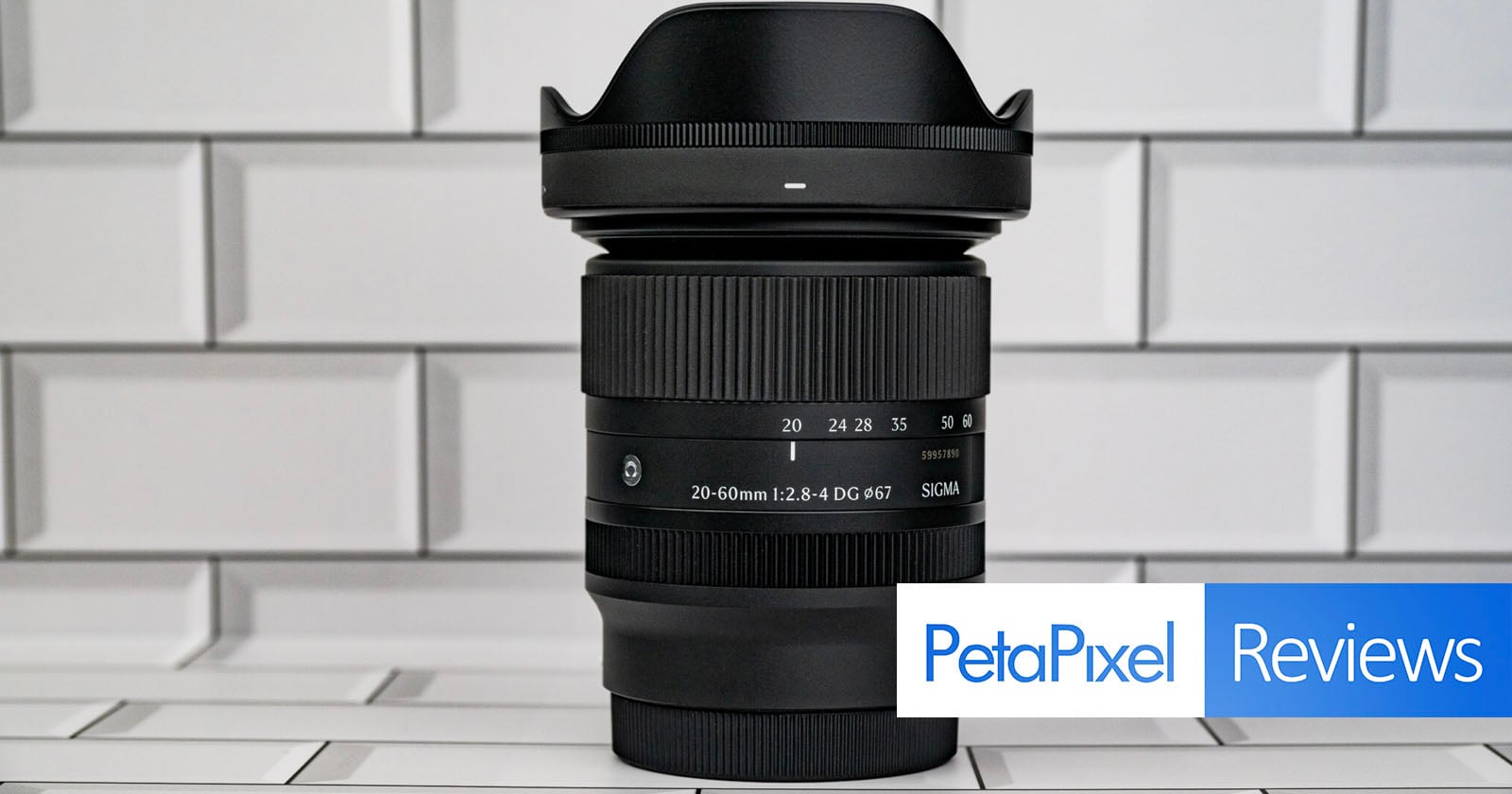
Entering this competitive space is the new Sigma 20-60mm f/2.8-4 DG Contemporary lens, priced at $849. Designed for mirrorless ecosystems, this new optic offers a compelling alternative for Sony E-mount and Panasonic/Sigma/Leica L-mount users alike. By balancing an ultra-wide 20mm starting point with a brighter variable maximum aperture than much of its competition, Sigma has crafted a lens tailored for travel shooters, vloggers, and run-and-gun documentarians.

Main Facts: What is the Sigma 20-60mm f/2.8-4 DG Contemporary?
The Sigma 20-60mm f/2.8-4 DG Contemporary is a lightweight, weather-sealed standard zoom lens built specifically for full-frame mirrorless cameras.
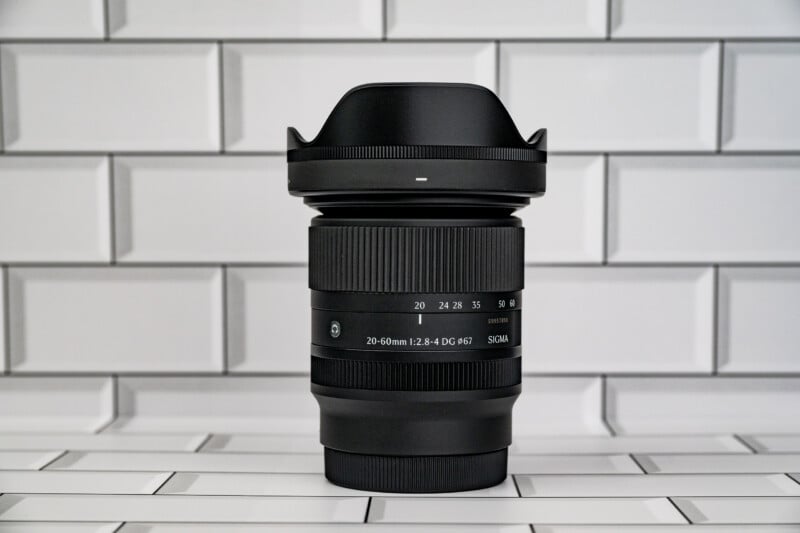
- Focal Length: 20–60mm
- Aperture Range: f/2.8 at the wide end, stepping down to f/4 at the telephoto end.
- Weight: 13.2 ounces (375 grams)
- Filter Thread: 67mm
- Mount Availability: Sony E-mount and L-mount
- Price: $849 USD
- Autofocus Motor: High-speed linear motor
Positioned squarely against established options like the Sony 20-70mm f/4 G and the Panasonic 20-60mm f/3.5-5.6, the Sigma strikes a unique middle ground. It delivers a faster aperture than both competitors at the wide end while undercutting the Sony in price and vastly outperforming the Panasonic in light-gathering capability.
Chronology: Field Testing the Lens in the Real World
The journey of evaluating the Sigma 20-60mm f/2.8-4 began ahead of its official rollout, with intensive hands-on testing during live events, including field trials at the Sony Kando event.

Initial Build and Handling Impressions
Upon first handling the lens, its diminutive footprint is immediately striking. Weighing just 375 grams, it feels remarkably balanced on a compact mirrorless body. Sigma designed the physical chassis with the minimalist ethos typical of its Contemporary line. The barrel features a smooth zoom ring and a manual focus ring, though it notably lacks a dedicated physical AF/MF toggle switch.
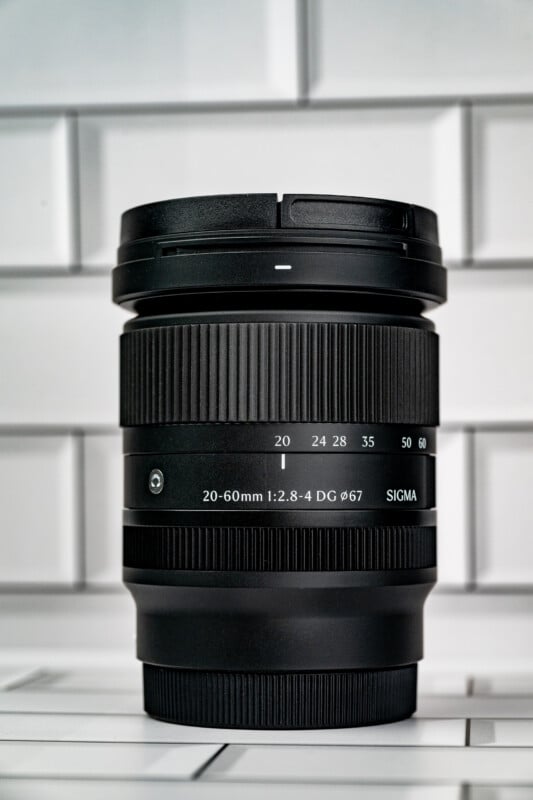
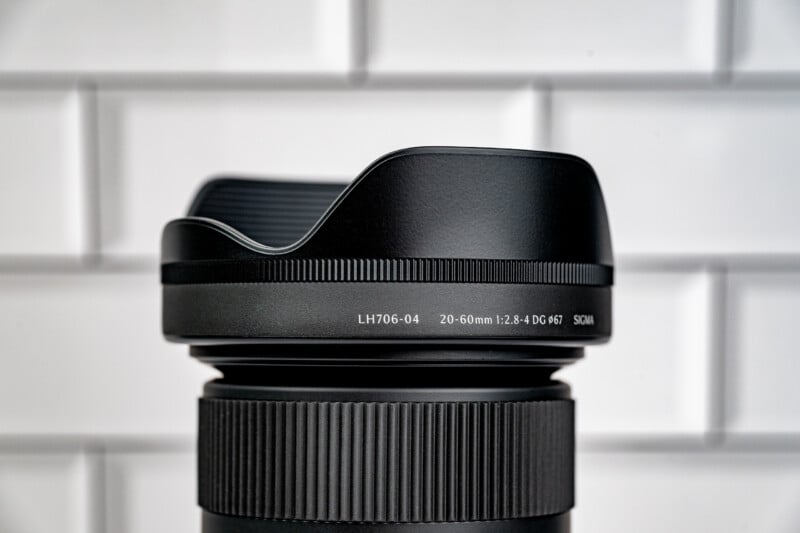
While the manual focus ring exhibits a slightly loose, tactile feel, it performs adequately in the field. Internally, Sigma equipped the lens with a high-speed linear motor, ensuring that autofocus acquisition remains snappy and reliable. Weather sealing and dust resistance are built directly into the mount and chassis, providing peace of mind when shooting in unpredictable outdoor conditions. A standard lens hood is included in the box.
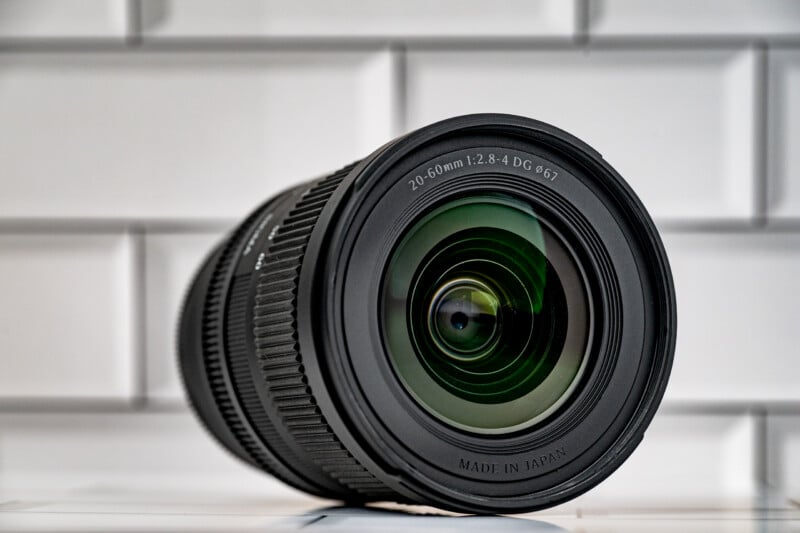
Optical Performance and Real-World Shooting
Testing the lens at its widest 20mm focal length—where optical flaws are typically most pronounced—revealed impressive flare resistance. Sigma’s proprietary lens coatings continue to excel at suppressing ghosting, though stopping down the aperture can occasionally introduce minor purple ghosting across the frame’s diagonal. Sunstars, however, are decidedly average and unlikely to be a primary selling point for landscape purists.
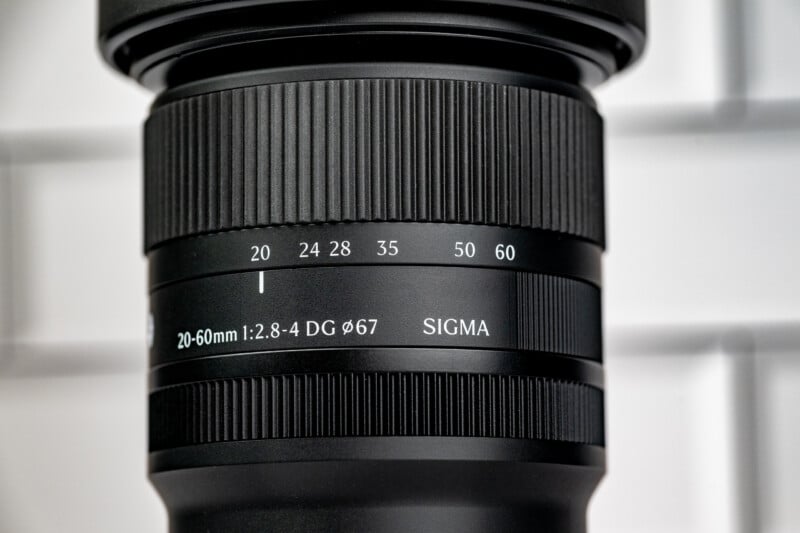
Macro capability is another unexpected highlight. The lens achieves its best close-up performance near the 35mm focal range, yielding a highly respectable maximum macro reproduction ratio of 1:2.3. This allows for detailed close-ups of flora and fauna, adding significant utility to an already flexible focal length.
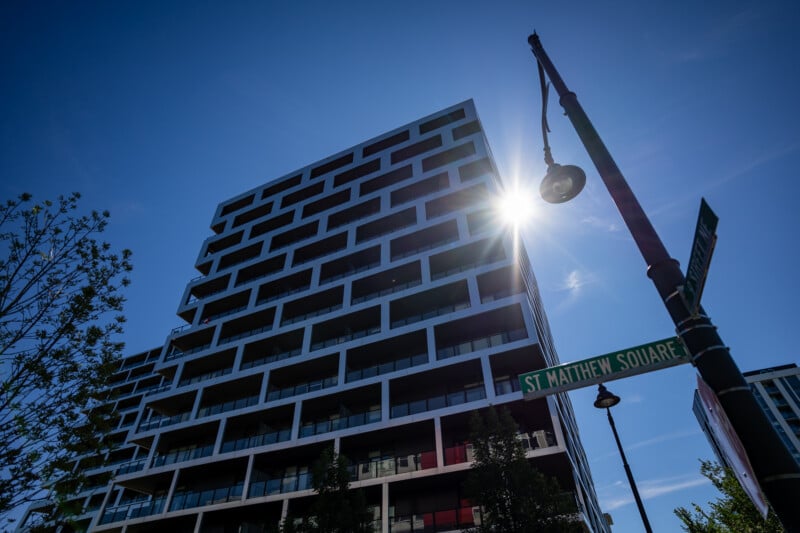
Supporting Data: Sharpness, Aberrations, and Bokeh
To provide a comprehensive evaluation, the lens was subjected to rigorous studio sharpness tests alongside real-world tracking scenarios.
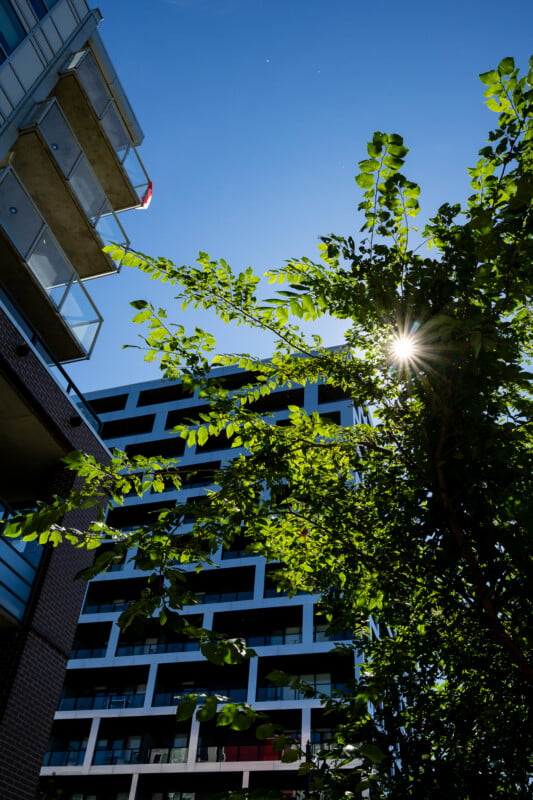
- Sharpness (20mm): Wide open at f/2.8, the lens delivers good central contrast and detail, though corner sharpness exhibits noticeable softness. Stopping down to narrower apertures quickly cleans up the corners and enhances overall contrast.
- Sharpness (60mm): At the telephoto end, the lens performs admirably. Center sharpness at f/4 is high, and corner consistency is remarkably even across the frame.
- Chromatic Aberration: Minor longitudinal chromatic aberration (LoCA) can be detected, though it is strictly confined to the 20mm end when shot wide open at f/2.8.
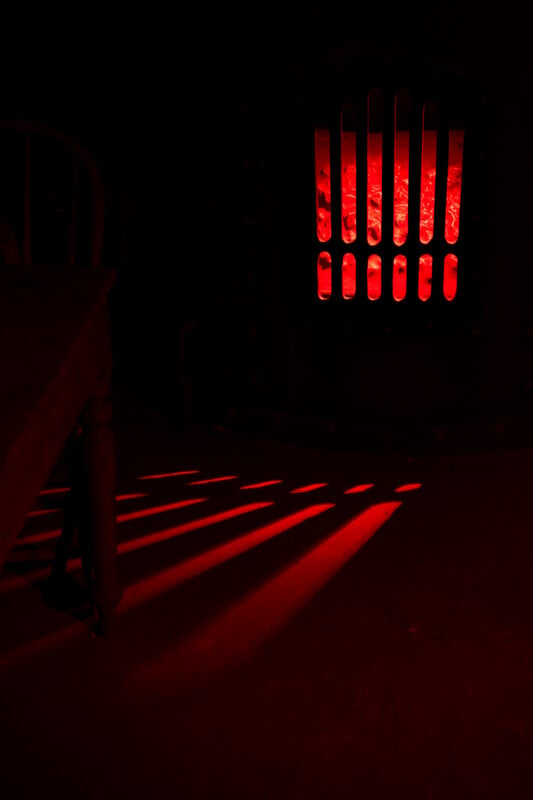
- Bokeh Quality: The out-of-focus background blur is average. Specular highlights exhibit subtle "onion-ring" patterns, leading to a busier, slightly harsh bokeh rendering that neither stands out as exceptional nor disappoints severely.
Official Responses and Market Positioning
Sigma’s engineering philosophy for the Contemporary line prioritizes a balance of optical merit, physical mobility, and cost-effectiveness. By offering a fast f/2.8 aperture at 20mm, Sigma is directly addressing creator demands for low-light capability in compact packages.

While the manufacturer has not released an extensive press statement beyond standard product specifications, industry reception highlights the strategic positioning of the lens. By keeping the retail price at $849, Sigma has slotted the product into a sweet spot for enthusiasts who find premium $1,200+ alternatives cost-prohibitive.

Implications: Who Should Buy the Sigma 20-60mm f/2.8-4?
The introduction of this lens carries distinct implications for different subsets of creators, particularly videographers and budget-conscious ecosystem users.

For Videographers and Vloggers
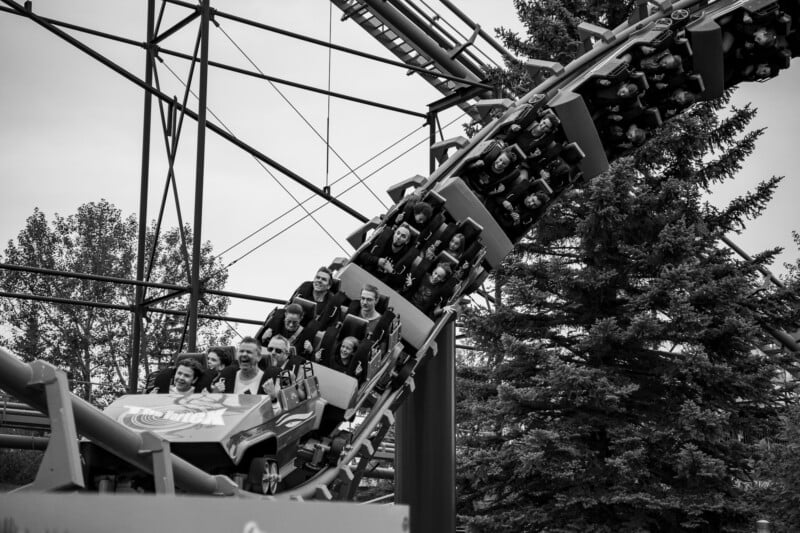
Video creators working with gimbals will find much to love here. The physical footprint is small enough to balance easily on compact motorized stabilizers, and zooming through the range does not violently shift the camera rig’s center of gravity. Furthermore, the f/2.8 wide-end aperture provides essential light-gathering capability for evening vlogs or dim indoor environments.

The primary caveat for video shooters is lens breathing; the field of view shifts noticeably as focus is adjusted. Despite this, burgeoning cinematographers will likely overlook this quirk given the lens’s overall utility.
For Sony Users
Sony shooters have long praised the Sony 20-70mm f/4 G for its reach, but it commands a steeper price tag of around $1,200 and is restricted to a fixed f/4 aperture. The Sigma 20-60mm trades 10mm of telephoto reach for a brighter f/2.8 aperture at the wide end and saves the buyer over $300. For street, travel, and environmental portrait shooters, that extra stop of light is often worth the trade-off.
For Panasonic Users
Panasonic mirrorless users gain an even more interesting choice. While Panasonic’s own 20-60mm f/3.5-5.6 is exceptionally affordable—often heavily discounted in kit bundles—it is optically slower and less robust. The Sigma 20-60mm is superior in nearly every metric, most notably maximum aperture and build quality, making it a worthy upgrade for L-mount enthusiasts seeking professional performance without professional weight.

Verdict
The Sigma 20-60mm f/2.8-4 DG Contemporary proves that photographers no longer need to sacrifice convenience to get great results. Delivering a bright 20mm wide end, solid sharpness, and robust weather sealing in a package weighing just 375 grams, it represents an outstanding value proposition. For any creator operating within the Sony E-mount or L-mount ecosystems who wants to travel light without compromising on creative range, this lens is an easy recommendation.
 Raul Delapena Setiawan
  rifanmuazin
  Ammar Sabilarrohman