
 By Sagoh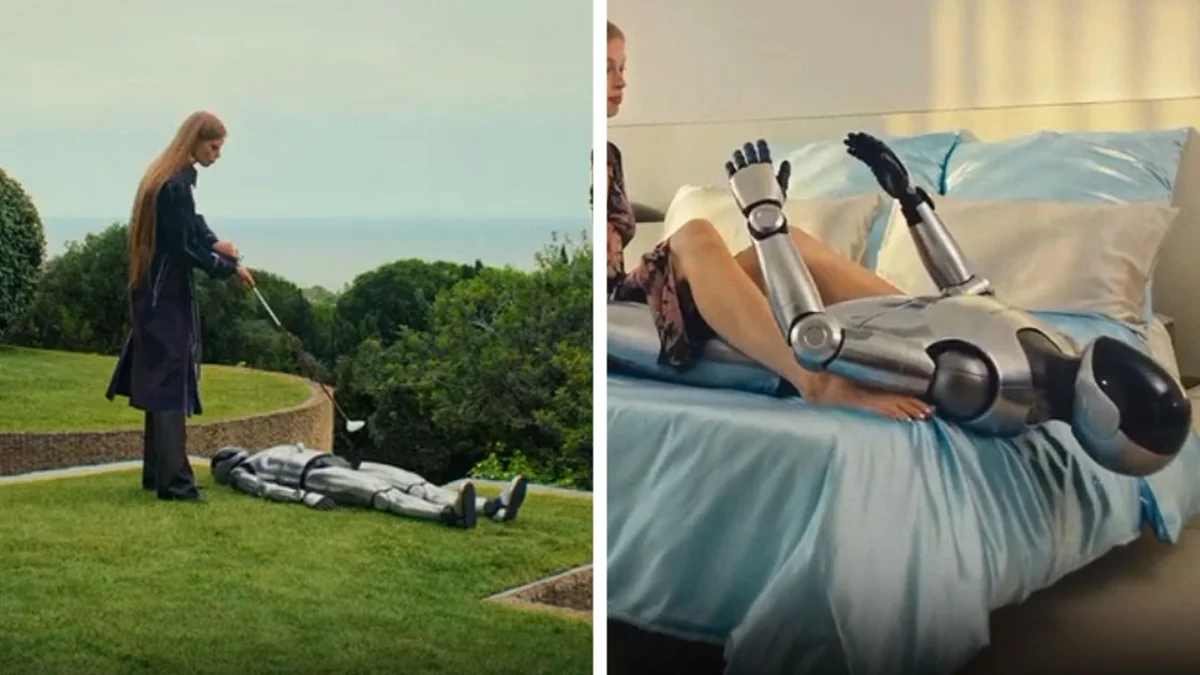
Fashion has long masqueraded as a revolutionary force, draping itself in the aesthetics of rebellion while tethered to the rigid machinery of mass production and market trends. However, the latest campaign from Spanish fashion house Desigual—titled "Born to Disobey"—seeks to strip away that artifice. By framing human intuition against the cold, calculated logic of artificial intelligence, Desigual has launched a provocative cinematic manifesto that is as much a cultural critique as it is a brand statement. At its heart lies a pointed, irony-drenched performance by Vivian Jenna Wilson, whose participation adds a layer of real-world subtext that has sent ripples through the tech and fashion industries alike.
The Architecture of the Campaign
The centerpiece of "Born to Disobey" is a striking short film that pits human imperfection against the sterilized, robotic future. In the film, Vivian—the estranged daughter of Tesla CEO Elon Musk—engages in a series of surreal, defiant interactions with a robot named "DESI 84." The name is a nod to the year Desigual was founded in Barcelona, grounding the brand’s history in a narrative of nonconformity.
The choreography of the film is intentionally jarring. Vivian is seen teasing, manipulating, and ultimately rejecting the robotic entity, which is designed to mimic the movements of the Tesla Optimus. From walking the robot on a leash to attempting to teach it the nuances of human intimacy, the film highlights a fundamental incompatibility between machine learning and human spirit. The campaign’s climax—in which the robot, unable to process the chaos of human behavior, malfunctions and repeatedly bangs its head against a wall—serves as a blunt metaphor: some systems are simply not meant to be "fixed" by algorithms.
A Chronology of Rebellion
The timeline of this project aligns with an increasingly tense public discourse regarding AI.
- The Conceptual Phase: Desigual sought to evolve its long-standing brand identity, which has historically prioritized eccentricity, color, and self-expression. They partnered with the creative agency ProdCo and the director trio PSG (Yukihiro ‘Sho’ Shoda, Pau López, and Gerardo del Hierro) to conceptualize a campaign that felt urgent rather than purely aesthetic.
- The Casting: The decision to cast Vivian Jenna Wilson was a strategic masterstroke that transformed a standard fashion advertisement into a lightning rod for public discussion. Wilson, who has previously voiced strong skepticism regarding AI’s encroachment on human creative agency, brought an authentic weight to the role.
- The Production: Interestingly, the robot seen in the film is not a piece of high-end hardware, but a human actor who meticulously studied footage of the Tesla Optimus to replicate its specific, jerky, and utilitarian gait. This irony—that a human had to be "roboticized" to play a machine—underscores the campaign’s point about the dehumanization of modern technology.
- The Launch: Released in the wake of intensifying global warnings from AI researchers—including those from Anthropic who have cautioned about the existential risks posed by advanced intelligence—the campaign arrived at a moment of peak cultural sensitivity.
Supporting Data: The Human vs. Machine Divide
The "Born to Disobey" campaign is underpinned by the growing anxiety surrounding the displacement of human labor. According to reports from various creative labor unions, the integration of generative AI in design, copywriting, and illustration has led to a 30% reduction in entry-level creative roles over the past two years.
Desigual’s creative team leveraged this data to inform their visual language. The robot in the film is depicted as the ultimate "system" worker: compliant, predictable, and devoid of the nuance required for true art. By juxtaposing this with Vivian’s vibrant, unpredictable persona, the brand is positioning itself as an advocate for the "human-in-the-loop" philosophy. The inclusion of the 1920 play R.U.R. (Rossum’s Universal Robots) by Karel Čapek—the work that introduced the word "robot" to the world—is a deliberate Easter egg. It reminds the audience that the concept of the robot has always been tied to the fear of the slave turning on the master, a trope that is rapidly moving from science fiction to reality.
Official Responses and Creative Vision
In discussions regarding the campaign’s creation, the directorial team at PSG noted that Vivian’s character arc required little to no script guidance. Her genuine, lived-in skepticism toward the "robotic" nature of modern corporate and technological systems allowed her to embody the brand’s ethos of defiance naturally.
Desigual’s official statement on the project serves as a philosophical anchor for the campaign: "The greatest rebellion is no longer about fighting against the system but about refusing to be part of it. When everything invites you to obey, the answer is attitude, irony, and the freedom to be yourself."
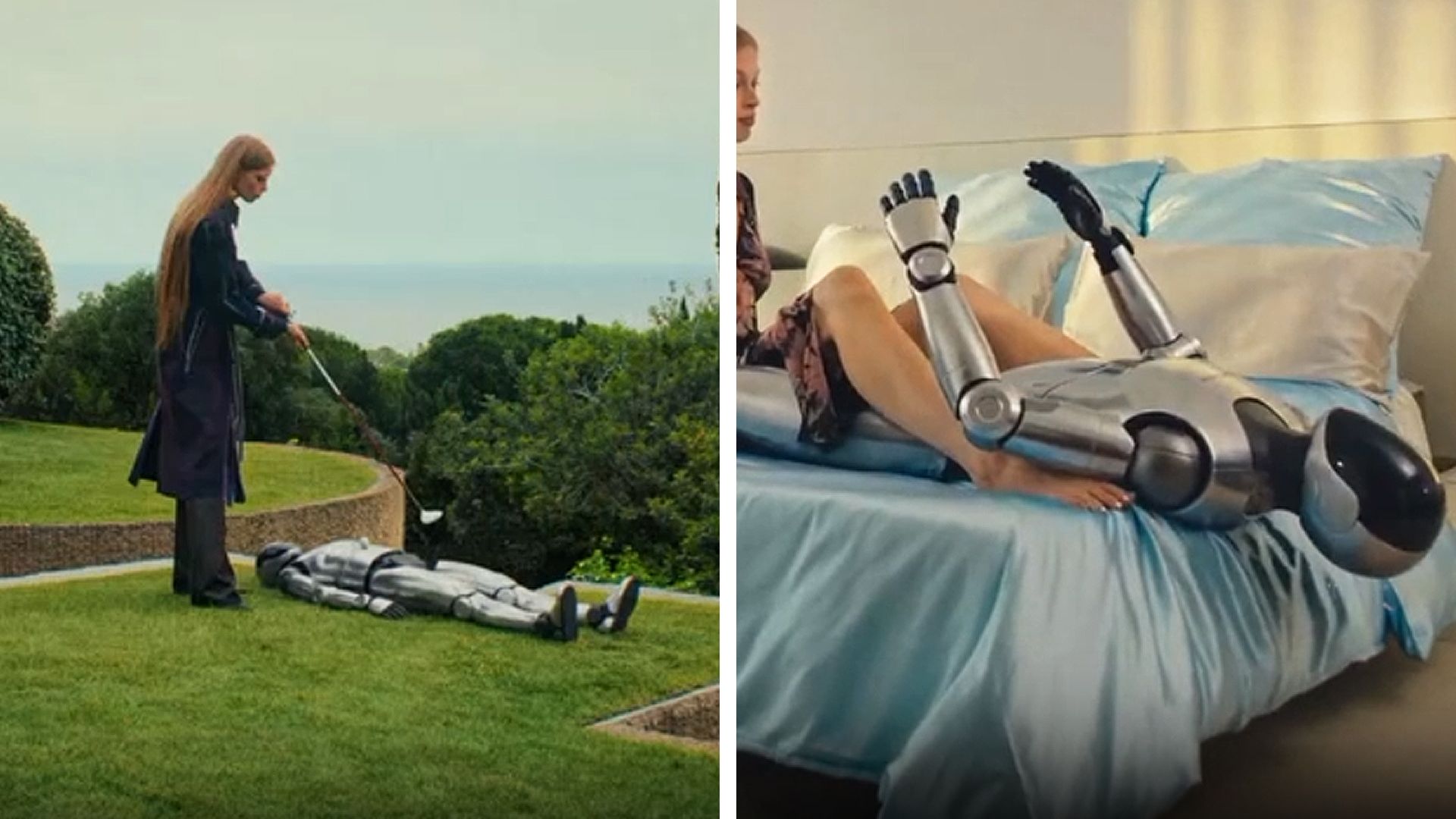
While the brand has not explicitly mentioned Elon Musk in their press materials, the "Star Wars-like" undertones of the campaign are impossible to ignore. The casting of Musk’s daughter to "disobey" a machine inspired by her father’s own technological ambitions creates an Oedipal tension that elevates the ad from a simple commercial to a piece of high-stakes performance art. It is a rare instance where a fashion brand manages to weaponize the private lives of its talent to mirror a broader societal conflict.
Implications for the Future of Branding
The success—and controversy—of "Born to Disobey" signals a shifting landscape in advertising. Consumers, particularly Gen Z and Millennials, are increasingly wary of "purpose-driven" marketing that feels manufactured. Desigual has navigated this by choosing a path of aggressive authenticity.
1. The Death of the "Safe" Ad
By aligning with a polarizing figure like Vivian Jenna Wilson, Desigual has effectively ruled out the possibility of a "safe" reception. However, in an attention-starved economy, the brand has gained massive cultural capital. The implications are clear: brands that are willing to take a stance, even at the risk of alienating certain demographics, are more likely to achieve the kind of viral resonance that traditional media spend cannot purchase.
2. The AI Backlash
The campaign acts as a barometer for the broader "anti-AI" sentiment currently permeating the creative industries. By presenting the robot as the "enemy of spontaneity," Desigual is capitalizing on the fears of designers, artists, and writers who feel that their unique human touch is being commoditized by large language models and image generators.
3. Fashion as Political Commentary
Fashion has historically been a tool for political expression, from the punk movement’s safety pins to the protest shirts of the 1970s. Desigual is attempting to reclaim this mantle by positioning its clothing not just as a fabric choice, but as a uniform for those who refuse to be "programmed." The implication is that what you wear is a reflection of your resistance to a world that demands optimization, efficiency, and compliance above all else.
Conclusion: A Radical Act of Individuality
"Born to Disobey" is more than a seasonal campaign; it is a declaration of independence from the algorithmic constraints that are increasingly defining our digital lives. By pitting a human who embodies the spirit of nonconformity against a cold, metallic representation of the "future," Desigual has successfully tapped into the zeitgeist.
In a world where AI is predicted to reshape every facet of our existence—from the mundane to the existential—the most radical act remaining is the refusal to fit into the box. Whether it is the design of a garment or the design of a life, Desigual argues that the "system" is an illusion. The real power, the film suggests, lies in the malfunction, the glitch, and the deliberate act of disobedience. As the campaign reaches its conclusion, it leaves the audience with a hauntingly simple question: If you are not in control of your own programming, are you truly living, or are you just waiting to be upgraded? For Desigual and Vivian Jenna Wilson, the answer is clear: the only way to remain human is to be the chaos that the machine cannot calculate.
 Laily UPN
  Asep Darmawan
  Basiran