
 By Basiran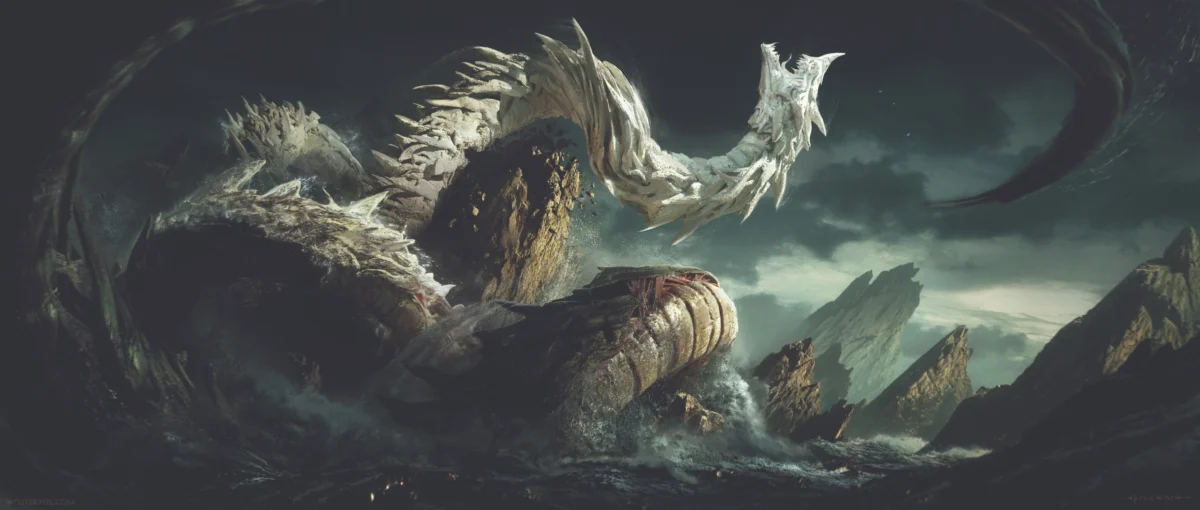
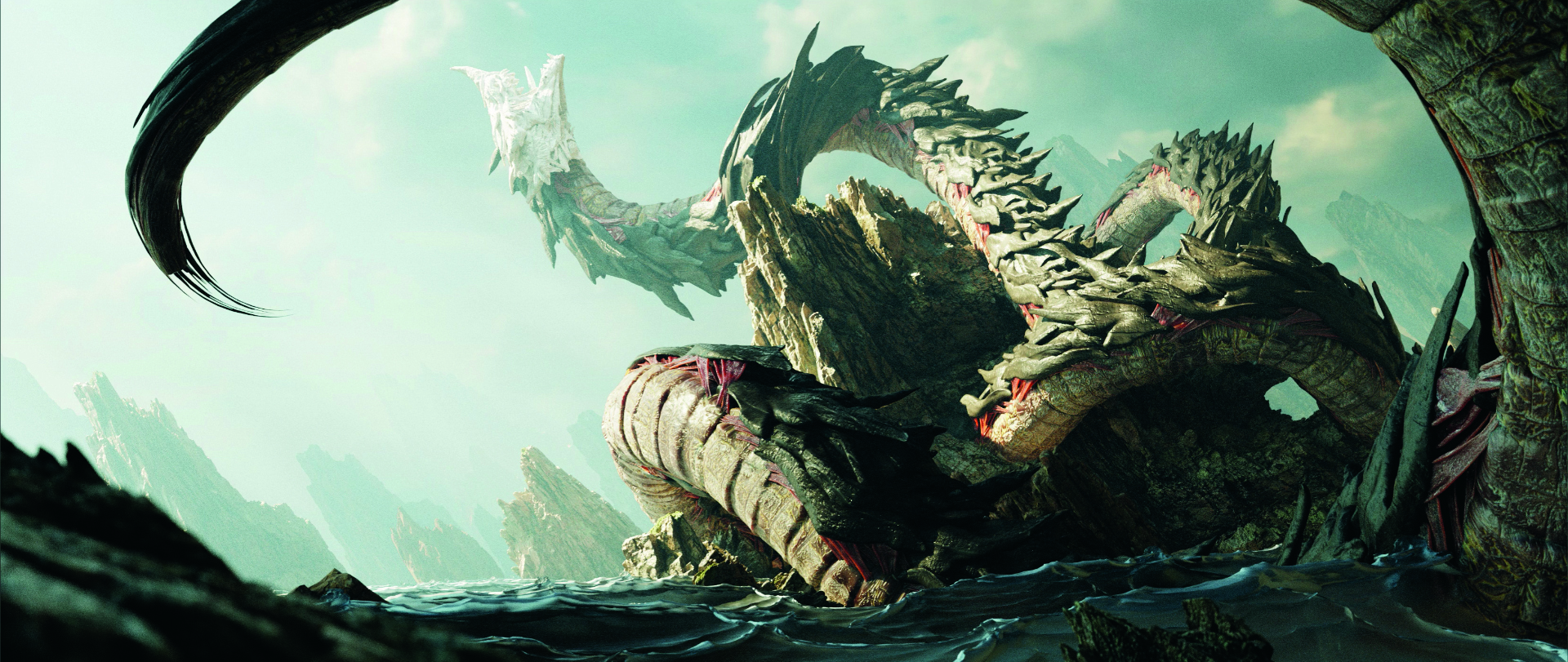
In the world of high-concept digital cinematography, few challenges are as daunting as capturing the intersection of organic life and geological permanence. The "God of Bones" project, currently in development as an ambitious short film helmed by visionary director Paul Coulthard, serves as a masterclass in this delicate balance. At the heart of the project is a singular, breathtaking vista: a colossal serpent, caught in the final, agonizing moments of its life, calcifying into stone as it collapses.
The creation of this sequence was not merely an exercise in 3D modeling; it was a complex production pipeline that required blending traditional artistic intuition with cutting-edge digital sculpting and atmospheric rendering. To pull back the curtain on this project, we explore how a collaborative team—led by the expertise of artist Wojtek Fus—transcended initial compositional limitations to deliver a cinematic moment that evokes both immense weight and the haunting stillness of a halted death.
The Genesis of a Vision: Conceptual Foundations
The journey of the "God of Bones" serpent began with a foundational concept sketch by Paul Coulthard. In early pre-production, the primary hurdle was not the technical execution, but the narrative resonance. Coulthard’s initial vision was clear: he wanted to capture a moment of "violent stillness." The serpent needed to feel as though it had been petrified by some ancient, sudden curse at the height of its demise.
"The initial compositions weren’t quite hitting the mark regarding scale and weight," explains the artist involved in the project. "We needed the audience to feel the crushing gravity of this creature, not just see it."
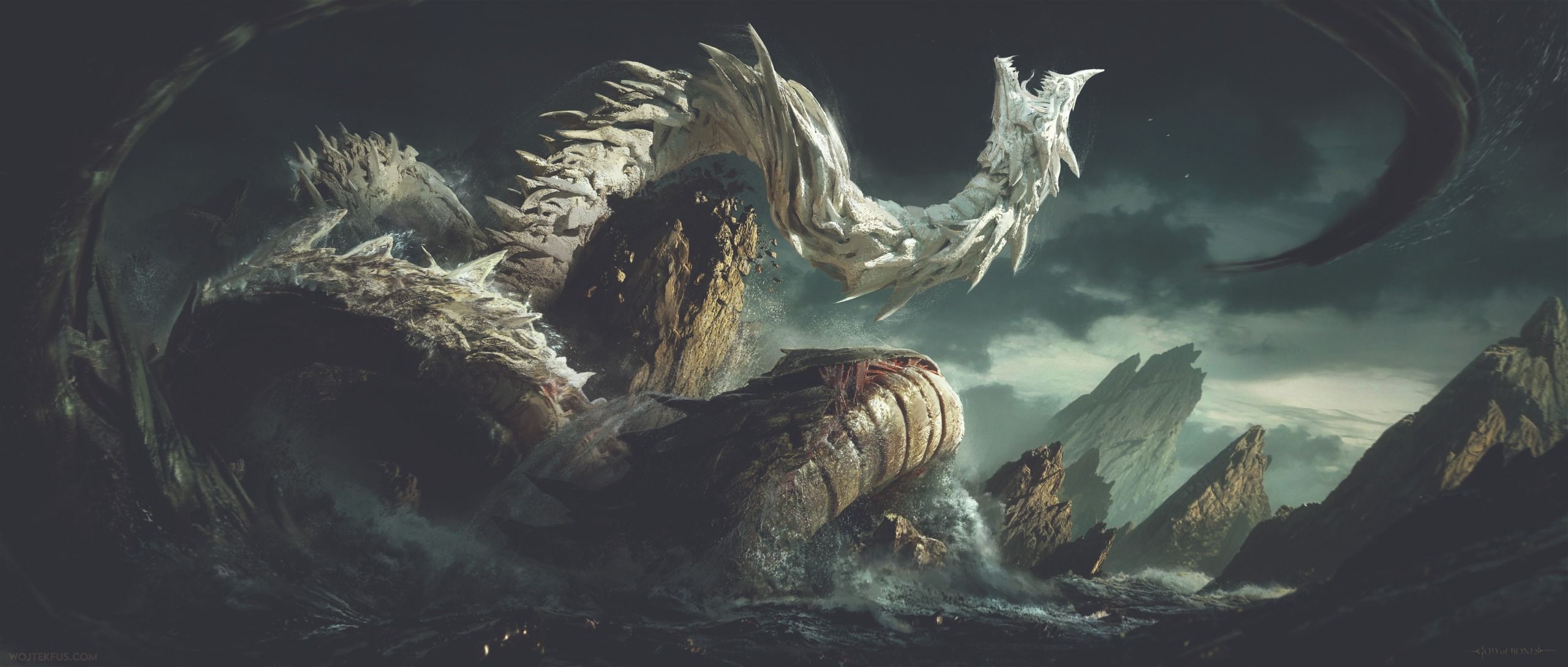
The sketch served as the North Star for the production. It defined the rhythm of the serpent’s body—a serpentine curve that implied a collapse—and established the spatial relationship between the creature and its environment. By focusing on the "death throes," the team moved away from a static, museum-piece look toward something more dynamic, violent, and visceral. This conceptual phase was critical; without the rhythm established in that initial drawing, the subsequent 3D modeling would have lacked the necessary narrative thrust.
Chronology of Creation: From Blockout to Final Render
The transition from a two-dimensional sketch to a three-dimensional, high-fidelity environment was a multi-stage process that utilized a sophisticated digital toolset.
Phase I: The 3D Layout in Blender
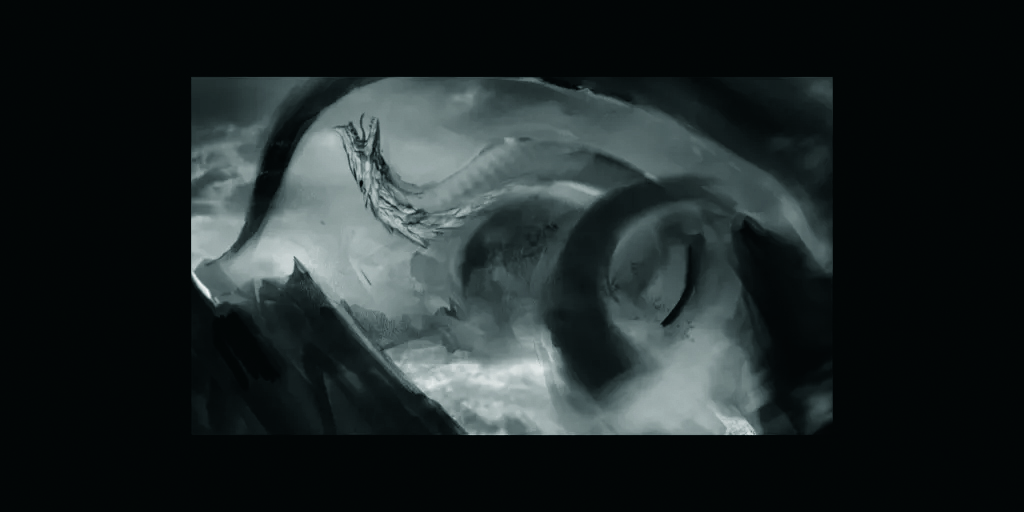
The team utilized Blender as the primary environment for blocking out the scene. The goal during this stage was structural integrity. By placing the serpent within a massive, jagged rock formation, the artists were able to test the scale of the creature against the landscape.
The collaboration between Coulthard and the creative team focused on "cinematic instability." The environment had to feel precarious, as if the serpent’s collapse had caused the very earth around it to fracture. This stage of the process is often the most overlooked by laypeople but is perhaps the most important for the final feel of the shot. If the scale is off by even a small margin, the serpent loses its "god-like" quality and becomes a mere prop.
Phase II: Structural Design and Modeling
Once the layout was locked, the focus shifted to the serpent itself. The design of the creature was supervised by Christian Bull, with the intricate modeling handled by Laurens Rasti and Wilmar Ballespi of the studio Shoot First.
The modeling team faced a unique challenge: they weren’t just creating a snake; they were creating a creature transitioning into mineral form. This meant the mesh needed to accommodate both the soft, undulating skin of a reptile and the hard, crystalline structures of calcification. The team had to ensure that the transition points—where the flesh turned to stone—felt natural and weathered, as if the process had been occurring for centuries.
Phase III: Integration, Lighting, and The "Final Flip"
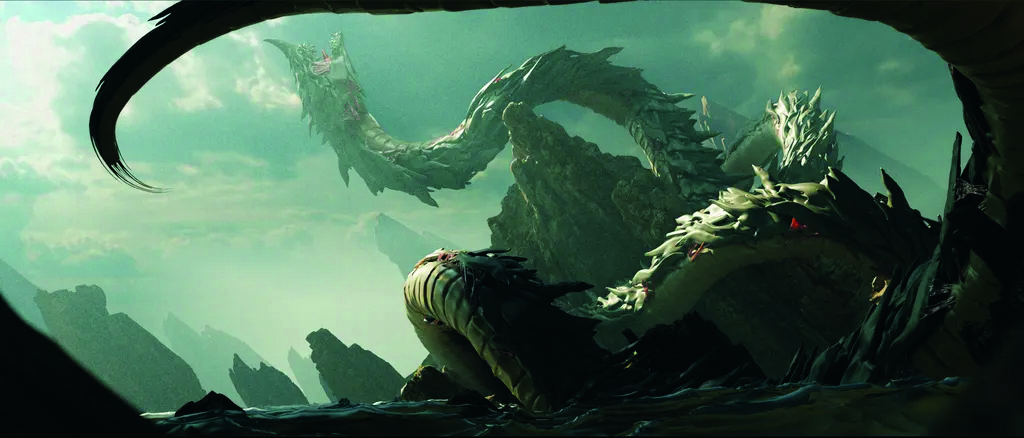
The final phase involved rendering and a rigorous paintover process. The team integrated high-resolution photography with digital textures to create the "ocean spray" and atmospheric mist that surround the base of the serpent. This was essential for grounding the image; without the interplay of light on the mist and the spray of water against the rock, the scene would have felt "flat" or purely synthetic.
Interestingly, one of the final creative decisions was to flip the entire composition. This is a common but powerful trick in digital art; by reversing the image, the team discovered a more compelling sense of movement and visual balance that had been hidden by the initial orientation. This final adjustment proved to be the "aha!" moment that solidified the image’s impact.
Supporting Data: The Technical Requirements for Large-Scale Assets
Producing a shot of this magnitude requires more than just artistic talent; it requires a robust hardware infrastructure. Creating high-poly, large-scale creatures like the God of Bones serpent puts immense strain on a workstation’s RAM and GPU capabilities.
For artists looking to replicate this level of detail, the industry standard has shifted toward high-core-count processors and dedicated ray-tracing GPUs. When dealing with assets that require complex scattering (such as the rocks and debris) and high-fidelity texture maps for the calcification effects, the following hardware considerations are paramount:
- Memory (RAM): A minimum of 64GB is recommended to handle the sheer density of the environment, especially when dealing with high-resolution displacement maps.
- GPU Power: Modern rendering engines like Cycles or Octane rely heavily on VRAM. A card with at least 16GB of VRAM ensures that the scene can be rendered without frequent crashes or the need for memory-intensive optimization.
- Drawing Tablets: The final paintover—the process of adding the finer, painterly details to the render—requires precision. Industry-standard pen displays (such as those from Wacom or Huion) are essential for the subtle blending of the calcification effects.
Official Responses and Creative Implications
While the "God of Bones" remains in the development phase, the industry response to the test renders has been overwhelmingly positive. Critics and fellow artists have praised the project for its "unapologetic scale" and the clever use of texture to tell a story of transformation.
"The project represents a shift toward more tactile, physically grounded digital art," says an industry analyst. "Instead of leaning into the ‘clean’ look of many modern CGI films, Coulthard and his team have opted for something that feels ancient, eroded, and heavy. It’s a return to the classic monster-movie sensibility, but with the technical precision of the 2020s."
The implications of this workflow are significant. By prioritizing the "paintover" stage—the manual intervention of an artist after the computer has done the heavy lifting—the "God of Bones" team has managed to bridge the gap between cold, sterile rendering and the warmth of traditional illustration. This hybrid approach is likely to become the blueprint for indie short films looking to achieve a "feature-film" aesthetic on a limited budget.
The Road Ahead: Why Process Matters
The story of the "God of Bones" is a testament to the fact that great art is rarely a solo act. It is the result of constant feedback loops, from the initial pencil sketch to the final digital retouch. The project serves as a reminder to aspiring 3D artists that software is merely a tool; the core of the work lies in the conceptual vision and the willingness to pivot, flip, and refine until the image resonates with the intended emotional weight.
As the film moves forward, the "God of Bones" stands as a beacon for what is possible when artists refuse to settle for the first iteration of a scene. Whether it is through the meticulous design of a calcifying serpent or the atmospheric depth of a rocky vista, the team has proven that in the world of visual storytelling, the difference between a good shot and a great one often lies in the details that most people will never consciously notice, but will absolutely feel.
For those interested in exploring the world of digital art further, the techniques utilized here—specifically in Blender and post-processing paint—are covered extensively in publications like ImagineFX. As the industry continues to evolve, keeping up with these hybrid workflows will be essential for the next generation of visual storytellers.
 Asep Darmawan
  rifanmuazin
  Reynand Wu