
 By Muslim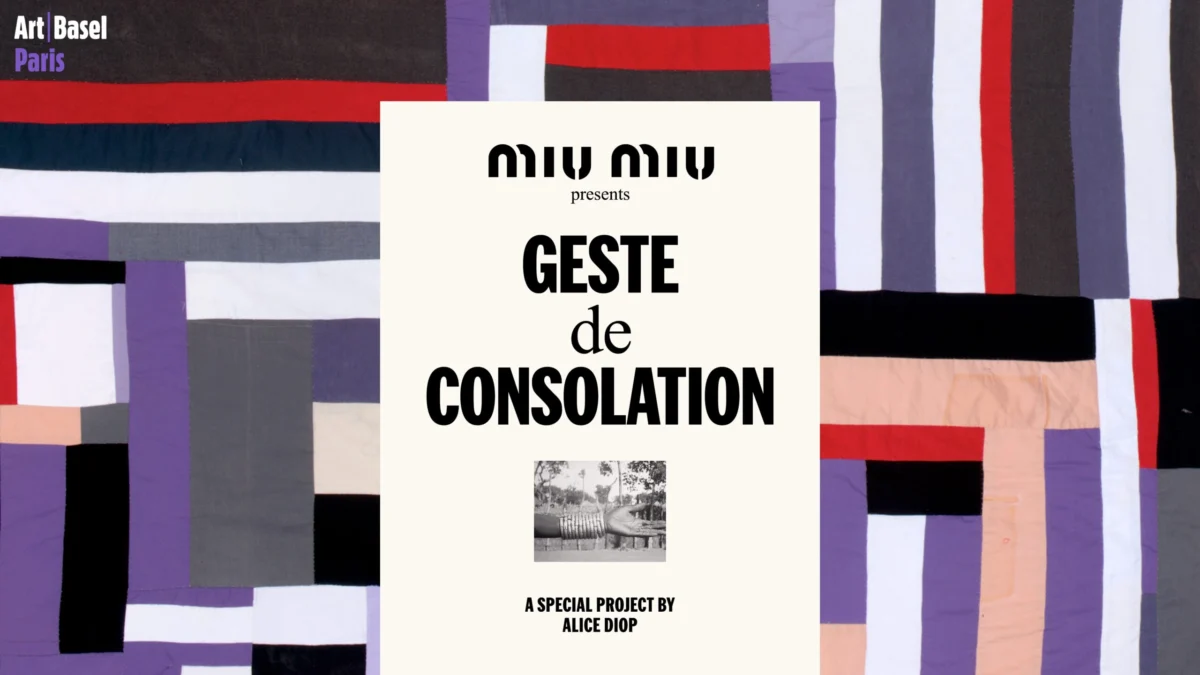
In a powerful convergence of high fashion, contemporary art, and cinematic inquiry, acclaimed French filmmaker Alice Diop is set to unveil her inaugural exhibition, Geste de Consolation (Gesture of Consolation), this October. Hosted at the historic Palais d’Iéna in Paris—the storied venue that serves as the architectural home for Miu Miu’s runway presentations—the exhibition marks a significant milestone in Miu Miu’s ongoing partnership with Art Basel Paris.
Building upon the thematic foundations of her short film Fragments for Venus, which premiered at the Venice Film Festival last year as part of the Miu Miu Women’s Tales series, Diop’s exhibition seeks to dismantle the historical fetishization of Black women in Western art. By transforming the Palais d’Iéna into a multi-sensory landscape of film, photography, sculpture, poetry, and performance, Diop is crafting a space that functions not merely as a gallery, but as a site of profound cultural repair.
The Genesis of the Vision: From Cinema to Exhibition
Alice Diop, a filmmaker whose body of work consistently interrogates the intersections of identity, migration, and the lingering shadows of colonialism, has spent the last decade establishing herself as a vital voice in global cinema. Her transition from the screen to the gallery is a natural evolution of her desire to probe the visual archives that have shaped, and often distorted, the perception of Black womanhood.
Geste de Consolation emerges directly from the intellectual labor of her Venice project, Fragments for Venus. That film challenged viewers to confront the ways in which Western art history has historically objectified the Black female body. In this new exhibition, Diop shifts the focus from critique to creation, inviting a dialogue between the past and the present.
“I want my curation to center on acts of consolation conceived by Black women artists, each active in their own discipline, to repair the fetishizing gaze to which centuries of art history have confined us,” Diop stated in a recent press release.
Chronology of a Curatorial Journey
The exhibition is structured as a pilgrimage through four distinct spaces, each designed to elicit a specific emotional and intellectual response. The chronological and thematic flow of the show is intended to mirror the process of healing from historical exclusion.

- The Archive of the Gaze: The first room acts as a foundational anchor. It features an immersive video installation composed of archival images and film excerpts. These visual fragments are the raw materials that have defined Diop’s own artistic trajectory and her understanding of how the "Black female gaze" is constructed.
- The Intellectual Sanctuary: A second space functions as a curated library, housing a collection of the director’s favorite literary works. This room emphasizes the importance of storytelling in the reclamation of identity, bridging the gap between silent visual art and the spoken word.
- The Stage of Resonance: A central hub of the exhibition, this space will host a rigorous schedule of programming, including readings of foundational texts by literary giants such as Zora Neale Hurston, Audre Lorde, Marie NDiaye, and Zadie Smith. These literary sessions will be interspersed with live concerts and dance performances, grounding the exhibition in the vitality of contemporary Black expression.
- The Sentinel of Spirit: The exhibition reaches its emotional and physical climax with the inclusion of Simone Leigh’s monumental bronze sculpture, Sentinel (Mami Wata). Representing an elongated female form encircled by a serpent—an homage to the powerful West African water spirit—the work serves as a silent guardian, standing in defiance of the historical marginalization of the Black feminine form.
Supporting Data: An Interdisciplinary Roster
Diop’s curation is not a solitary endeavor but a collective assembly of some of the most profound voices in contemporary art. By selecting works from artists such as Zanele Muholi, Mary Lee Bendolph, and Simone Leigh, Diop creates a lineage of creative resistance.
The inclusion of these specific artists is highly strategic:
- Zanele Muholi: Known for their “visual activism,” Muholi’s work in photography serves to document and celebrate the existence of Black LGBTQIA+ individuals, directly countering the erasure of these identities in mainstream visual media.
- Mary Lee Bendolph: As a master of the Gee’s Bend quilt tradition, Bendolph represents a lineage of Black female labor, communal history, and aesthetic brilliance that has long been overlooked by the institutional art world.
- Simone Leigh: By anchoring the show with Leigh’s Sentinel, Diop aligns herself with an artist whose work has successfully brought the complexities of Black female subjectivity into the center of the contemporary art market, most notably during her representation of the United States at the Venice Biennale.
Official Responses and Strategic Partnerships
The partnership between Miu Miu and Art Basel Paris, which began in 2024, has been defined by a commitment to fostering intellectual discourse beyond the immediate sphere of fashion. By commissioning a filmmaker of Diop’s caliber to occupy the Palais d’Iéna, Miu Miu is signaling a pivot toward a more interdisciplinary model of luxury branding.
Miu Miu’s role as the official public program partner of Art Basel Paris underscores the brand’s long-standing dedication to the "Women’s Tales" initiative. Since its inception, the project has provided a platform for female directors to explore the relationship between femininity, fashion, and the female condition. The staging of Geste de Consolation is, in many ways, the culmination of this series’ evolution into the fine arts sector.
The Wider Implications: Why This Matters Now
The significance of Geste de Consolation lies in its insistence on "consolation." In an era where cultural debates regarding representation, repatriation, and the legacy of the colonial gaze are at the forefront of the global conversation, Diop’s project offers a nuanced alternative to mere protest.
By framing her work as an act of "repair," Diop acknowledges the trauma embedded in art history while refusing to allow that trauma to be the sole defining feature of the Black female experience. The exhibition argues that Black women artists are not merely responding to their exclusion from the canon; they are building their own, parallel systems of meaning, beauty, and authority.

Academic and Professional Standing
Alice Diop’s credibility to lead such an endeavor is underscored by her extensive professional background. Beyond her accolades—which include the Silver Lion at the 2022 Venice Film Festival for Saint Omer and the award for Best Documentary at the 2021 Berlin International Film Festival for We—Diop is a respected academic. Her teaching appointments at institutions such as NYU, Yale, Harvard, and the Sorbonne demonstrate a deep-seated commitment to the pedagogical aspects of art.
Furthermore, her current work on an adaptation of Michel Leiris’s Phantom Africa highlights her dedication to re-evaluating the anthropological texts that have historically defined the relationship between the West and the African continent. This intellectual rigor is precisely what sets Geste de Consolation apart from typical fashion-adjacent art events.
Exhibition Details
Geste de Consolation will be open to the public from October 21 to October 25. Given the high profile of both the curator and the venue, the exhibition is expected to be one of the most anticipated highlights of the Art Basel Paris week.
To facilitate accessibility, Miu Miu will open online registration for guided exhibition tours beginning October 8 via their official website. For scholars, art enthusiasts, and followers of Diop’s cinematic career, this five-day window offers a rare opportunity to witness the translation of a revolutionary cinematic eye into a physical, architectural space.
As the fashion industry continues to grapple with its own role in the historical construction of beauty standards, Diop’s exhibition serves as both a mirror and a catalyst—a reminder that the most profound fashion of the future may well be found in the acts of memory and reclamation we perform today.
 Pevita Pearce
  Ammar Sabilarrohman
  Iffa Jayyana