
 By Iffa Jayyana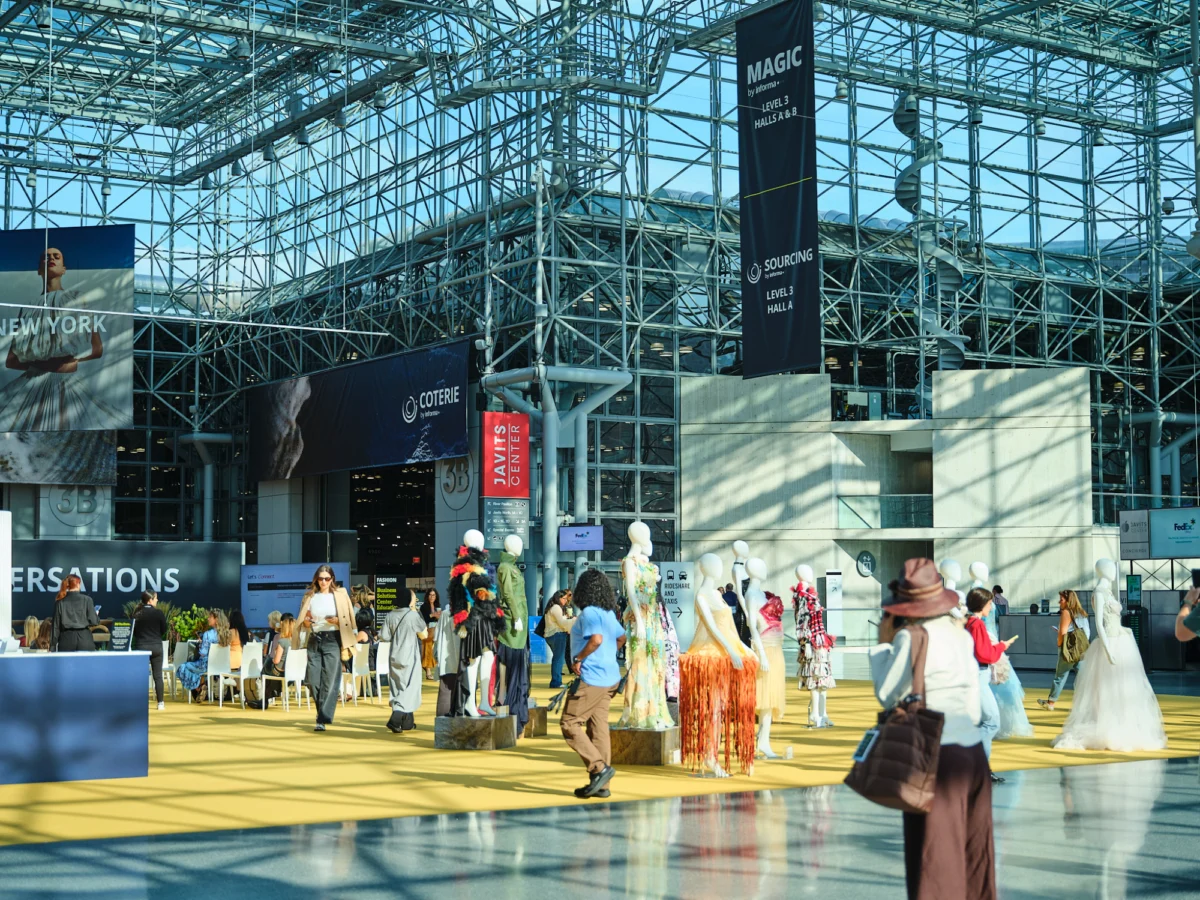
The Jacob K. Javits Convention Center in New York City recently served as the epicenter of the global fashion industry, hosting the latest iteration of the Coterie trade show. Over three days, the event brought together an eclectic mix of international brands, high-profile retailers, and industry tastemakers. While the show was officially billed as a preview for the Spring 2027 season, the atmosphere on the floor suggested a more nuanced reality: a retail landscape defined by a hybrid approach, balancing forward-looking collections with immediate, high-demand fall inventory.
The event, which concluded this past Friday, reinforced Coterie’s evolution from a traditional trade show into a multifaceted "ecosystem." By bridging the gap between brand discovery and commercial execution, the event successfully navigated the complexities of today’s retail environment, where agility and novelty are the primary currencies of trade.
The State of the Industry: Trends and Aesthetic Shifts
The prevailing mood at Coterie was one of optimism, characterized by a return to vibrancy. Across the show floor, three core elements dominated the buyer conversation: bold prints, saturated color palettes, and textural complexity.
The Evolution of Denim
Denim remains a cornerstone of the contemporary wardrobe, but the silhouette is undergoing a significant transformation. At the Mavi booth, marketing executive Katie Libertelli noted that the "skinny jean" era has firmly receded. In its place, buyers were overwhelmingly drawn to wide-leg cuts and low-rise silhouettes.
"These are easy looks that pair perfectly with a tank top," Libertelli explained. "They offer a versatility that allows the consumer to dress them up or down depending on the occasion." Mavi’s "Sandy" low-rise jean, available in 30-inch and 32-inch inseams, has emerged as a key retail driver at $118, while the boot-cut "Vicky" style has found a secondary life as a viral favorite among digital influencers. For Spring 2027, the focus is shifting toward lighter denim washes and innovative fabrications, such as the brand’s Tencel French Terry—a material that has gained significant traction in their men’s line and is now crossing over into women’s interest.
Texture and Tone: The Fall/Spring Hybrid
For brands like Matty M., the strategy involved a dual-track presentation. While the industry looks toward spring, the current demand for immediate delivery remains high. Brand director Lauren Carter highlighted that satin prints, novelty detailing, and heavy textures are defining the current seasonal pivot.

Suede, in particular, has emerged as a standout, with pieces like the brown suede dress retailing at $198. "Fig is a particularly popular color for the fall season," Carter noted, adding that buyers are currently prioritizing intricate detailing, specifically the combination of satin with delicate lace, to provide customers with elevated, tactile experiences.
Coterie as an "Ecosystem": Growth and Innovation
Purvi Kanji, vice president of events for Coterie, Fashion by Informa, emphasized that the show’s success lies in its ability to foster connections that transcend simple wholesale transactions. "Coterie features 146 new brands this season, representing approximately 23 percent of the show floor," Kanji stated. "We are no longer just a trade show; we are an ecosystem that connects brands, buyers, and industry leaders in a way that fuels sustainable growth for all parties."
Global Reach and Market Segmentation
The reach of the event was truly international, with exhibitors hailing from more than 30 countries. The diversity of the floor—covering categories from contemporary and premium apparel to destination-specific wear, footwear, accessories, and beauty—provided a comprehensive view of the global retail market.
The presence of major retailers such as Nuuly, Julian Gold, Hemline, Galeries Lafayette, Anthropologie, and Nikki Beach Lifestyle underscored the event’s importance as a premier sourcing hub for both high-end boutiques and major retail chains.
Regional Perspectives: The "Look-at-Me" Factor
A fascinating narrative emerged regarding the divide between European and American consumer tastes. Lyn Baskett, CEO of the leather brand Mauritius, provided a candid assessment of these cultural differences. Known for their ethically produced, vegetable-tanned lambskin, Mauritius observed that American buyers are far more interested in novelty and high-impact color than their European counterparts.
"The European market is not as much of a ‘watch-me’ attitude," Baskett explained. "In Europe, you see a preference for traditional basics, browns, and blacks. In America, it is very much ‘look at me.’ The American customer wants to be noticed." This sentiment was echoed in the design of their short jackets, which are specifically cut to pair with high-waisted pants—a direct response to the decline of skinny-fit denim in the U.S. market.

This hunger for the unique was also palpable at the Desigual booth. Deke Stoklosa, head of retail/wholesale for North America, noted that their clients are seeking "hand-curated" pieces that serve as visual magnets in retail environments. With wholesale prices ranging from $24 for accessories to $150 for statement dresses, the brand’s focus on bright, bold prints and patchwork designs is a strategic move to capitalize on the desire for distinctive, "pop-out" fashion.
Destination, Occasion, and Lifestyle
The show also highlighted the resilience of resort and occasion wear. Hale Bob, a brand synonymous with print-heavy design, leaned into a palette of kelly greens, bright blues, and vibrant pinks. Sales director Cathy Cooley noted that their pieces are staples in exclusive environments like The Breakers Palm Beach and various country clubs. The brand’s commitment to trademarking its print and color combinations ensures a level of exclusivity that specialty stores and resort retailers find indispensable.
Meanwhile, the "lifestyle" category continues to expand. Varley, an elevated contemporary loungewear brand, showcased the shift toward pastel-heavy colorways—baby blue, butter yellow, and soft pink—for the spring season. Their "DoubleSoft" fabrication, a viscose-blend knit, exemplifies the current consumer desire for performance-ready apparel that maintains a sophisticated, "dressed-up" aesthetic suitable for both errands and social outings.
Implications for the Future of Retail
The data from this season’s Coterie show suggests three critical implications for the fashion industry moving into 2027:
- The Rise of the Hybrid Season: Brands can no longer rely on rigid seasonal cycles. The dual-track approach—balancing immediate fall deliveries with Spring 2027 previews—is becoming the industry standard to accommodate volatile supply chains and shifting consumer spending habits.
- The Premiumization of Casual: Whether it is loungewear (Varley) or denim (Mavi), the "elevated casual" category is dominating the market. Consumers are looking for comfort, but they are unwilling to sacrifice the "novelty" and "detail" that justify premium price points.
- Regional Nuance is Essential: As evidenced by the Mauritius and Desigual booths, global brands must tailor their output based on geography. The American market’s appetite for "look-at-me" design is a clear indicator that bold, statement-making apparel will continue to drive wholesale interest in the U.S. throughout the coming year.
As the industry looks toward the upcoming seasons, the Coterie experience proves that the future of fashion retail lies in the intersection of digital-first viral trends and the tactile, human-centric connection of a physical marketplace. By fostering a collaborative ecosystem, Coterie is not just observing the changing tides of the fashion world—it is providing the platform upon which the next cycle of the industry is being built.
 Nana Wu
  Suro Senen