
 By Evan Lee Salim
In an era defined by an exponential surge of machine-generated text, synthetic graphics, and automated video feeds, digital marketers face an unprecedented paradox. Audiences are hungrier than ever for credible information, yet they are drowning in a sea of digital noise. Recent data highlights the scale of this consumption: approximately 38% of U.S. adults regularly source news on Facebook, while 35% rely on YouTube. As feeds overflow with low-value, automated output, brands face a critical challenge—how to maintain a consistent, engaging presence without burning out creative teams on endless original production.
The strategic solution gaining widespread adoption across B2B and B2C landscapes is content curation. Far more than simply reposting a link or retweeting a peer, modern content curation has evolved into an essential editorial discipline. By acting as trusted guides—filtering signal from noise and adding meaningful context—organizations can build authentic thought leadership, enrich community engagement, and maintain a robust social calendar efficiently.

Main Facts: Defining the Modern Curation Workflow
At its core, content curation is the systematic process of discovering, synthesizing, and sharing high-value external content tailored to an audience’s specific interests, typically augmented by original commentary.
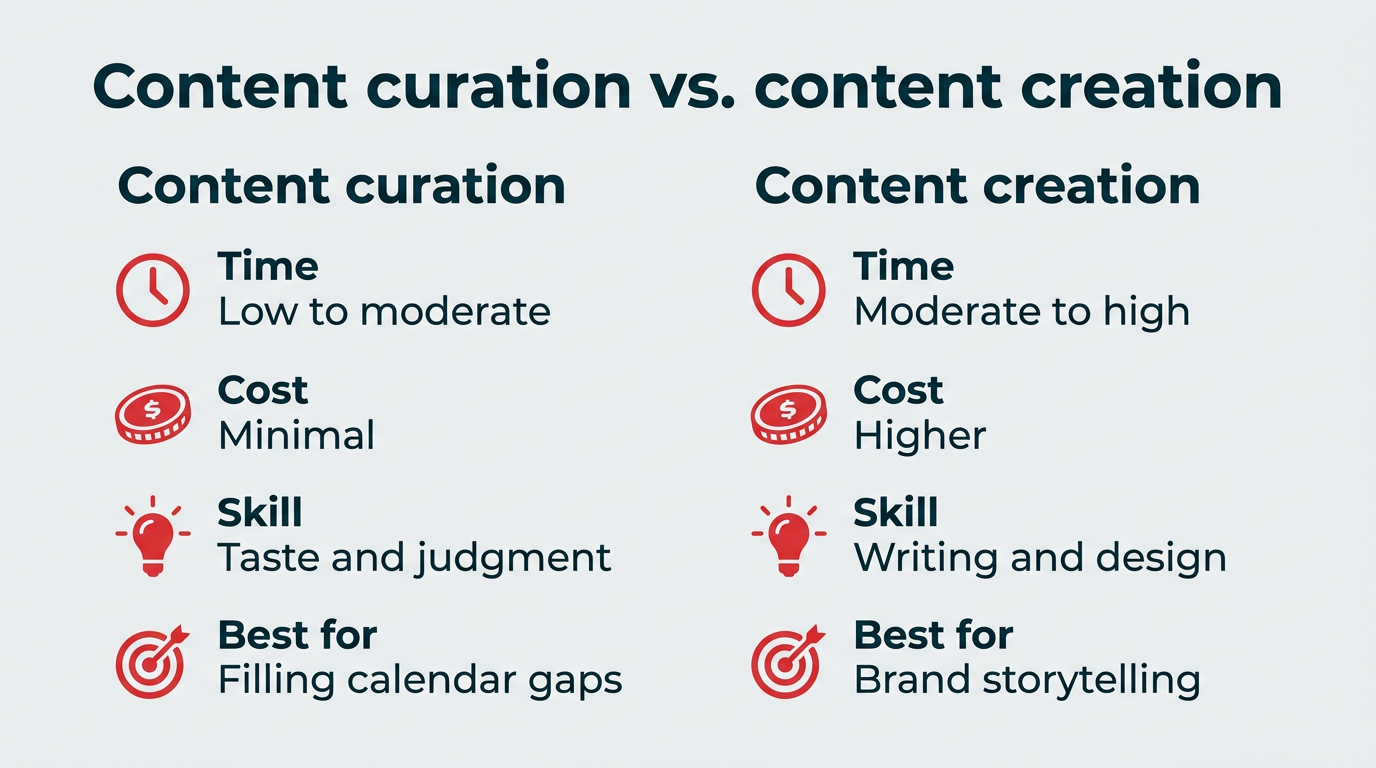
Unlike content creation—which requires significant investments in copywriting, custom graphic design, video production, and SEO strategy—curation relies heavily on taste, judgment, and context-setting. It does not replace original storytelling; rather, it complements it. While original content establishes a brand’s proprietary narrative and product marketing goals, curated content bridges calendar gaps, introduces diverse perspectives, and keeps conversational momentum alive without demanding heavy production budgets.

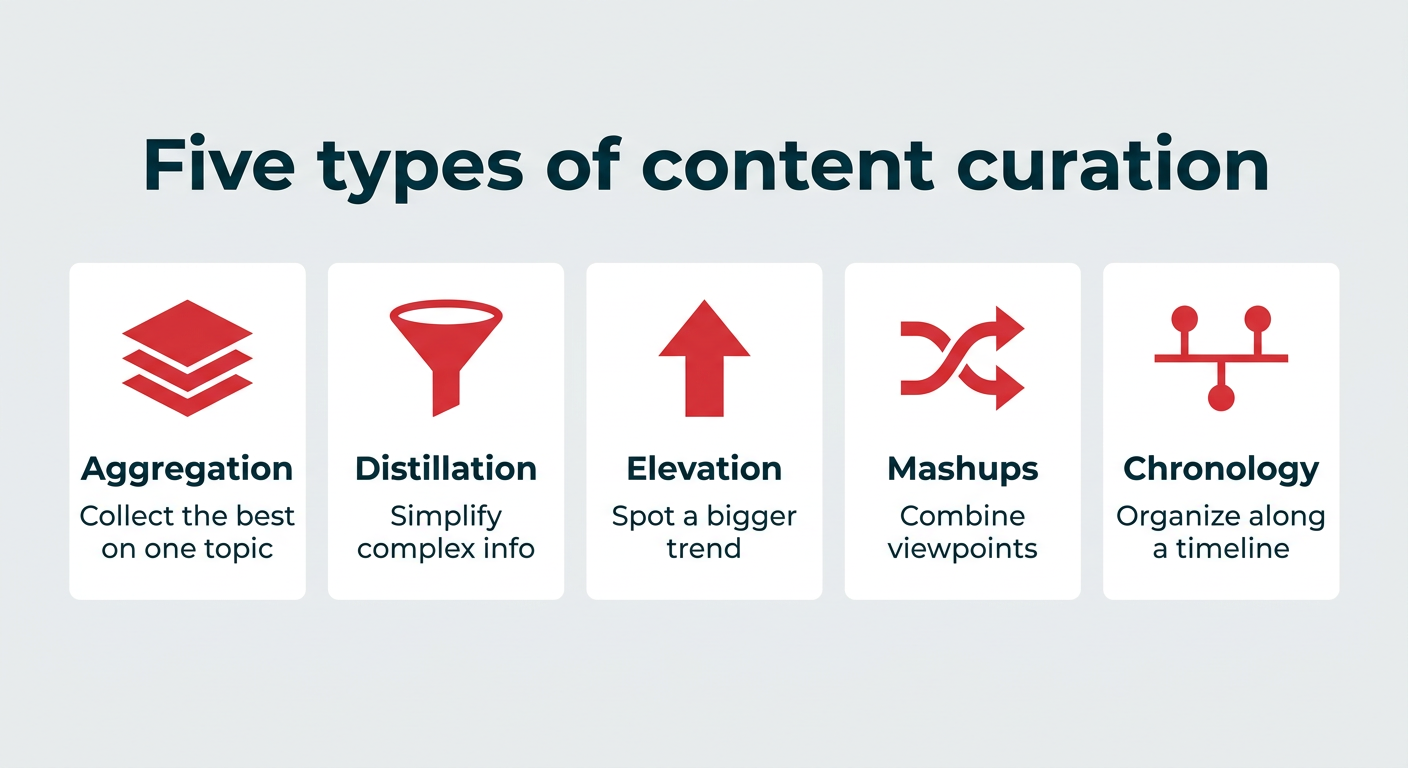
Industry professionals generally categorize curation into five distinct methodologies:
- Aggregation: Pulling together the finest pieces of content on a specific topic into a singular, easily digestible destination, such as a weekly link roundup.
- Distillation: Stripping away the complexity of dense, long-form material (such as a 60-page research report) and condensing it into core takeaways or informative graphics.
- Elevation: Identifying emerging patterns across smaller, disparate conversations and explicitly naming the broader trend backed by collected evidence.
- Mashups: Combining contrasting or complementary viewpoints from various practitioners to spark fresh discourse.
- Chronology: Organizing historical data or platform updates along a timeline to track systemic evolution.
Chronology: The Evolution of Curation in the Digital Age
The practice of gathering and sharing external information has undergone a dramatic transformation over the past two decades:
- The Early RSS Era: Curation began primarily as a technical function. Content creators utilized Really Simple Syndication (RSS) readers to automatically aggregate blog posts and news items, manually pushing them to web properties and early social channels.
- The Social Curation Boom: As platforms like Twitter (now X), Facebook, and LinkedIn matured, curation shifted from automated hoarding to human-led discovery. Brands recognized that sharing industry news established baseline relevance, though curation often lacked a distinct editorial voice.
- The AI Inflection Point: By the mid-2020s, the mass adoption of generative AI tools drastically altered content volumes. Social feeds flooded with generic, automated content. Consequently, audiences began heavily favoring human editorial judgment.
- The Modern Ecosystem (2026): Today, curation is treated as a sophisticated, repeatable marketing workflow. Platforms integrate advanced social listening applications—such as Lumen within Hootsuite Social OS—to pinpoint real-time audience interests across the broader web, shifting the curator’s role from manual searcher to high-level editorial director.
Supporting Data: Why Curation Drives Efficiency and ROI
Integrating curated materials into a cross-channel marketing strategy yields measurable operational and brand benefits:
- Cost and Time Efficiency: Producing original thought leadership requires multi-departmental review cycles, writing talent, and design resources. Conversely, sharing a vetted industry report with a unique executive take can be executed efficiently in minutes.
- Algorithmic Diversification: Maintaining a balanced content mix—frequently adhering to frameworks like the 70/20/10 rule (70% proven material, 20% experimental, 10% high-risk innovation) or dedicating 40% to 60% of a schedule to curated items—prevents echo chambers and keeps audiences engaged.
- Relationship Building: Tagging original creators, highlighting user-generated content (UGC), and recognizing industry peers builds immediate goodwill without self-serving transactional motives.
| Dimension | Content Curation | Content Creation |
|---|---|---|
| Primary Definition | Finding, framing, and sharing existing content | Producing original media assets from scratch |
| Time Investment | Low to moderate | Moderate to high |
| Financial Cost | Minimal | Higher (production, writing, design) |
| Core Skill Required | Taste, judgment, contextual framing | Writing, graphic design, technical production |
| Strategic Best Fit | Calendar management, thought leadership, community building | Brand storytelling, direct product marketing, SEO authority |
| Practical Example | Sharing an industry benchmark study alongside a brand commentary | Publishing an original company whitepaper or branded video |
Official Responses and Strategic Perspectives
Industry leaders emphasize that the value of curation lies entirely within the editorial layer.
Michelle Martin, noted content strategist and contributor, underscores that copying, pasting, and broadcasting external links without context is a failing strategy. "There is a certain finesse to social media content curation," Martin notes. "It must be treated as a repeatable process rather than a last-minute scramble to fill a blank calendar slot."
Furthermore, communication specialists advocate for strict ethical standards when sharing third-party content. Proper attribution—including explicit creator tags, active links, and transparent framing—is non-negotiable. Passing off curated insights as proprietary output damages brand equity and erodes audience trust.

Implications: Implementing the 7-Step Curation Workflow
For social media teams looking to operationalize curation without falling into common traps, executing a disciplined, seven-step framework is vital:
1. Define Content Pillars and Audience Parameters
Establish three to five core thematic boundaries for your brand. If a piece of external content does not strictly align with these pillars, discard it. Ensure buyer personas are clearly mapped out so that shared items address specific audience pain points.

2. Determine Your Content Mix Ratio
Set clear expectations for your publishing calendar. Whether opting for a heavy curation balance or a modest supplement, maintaining a structured mix prevents feed fatigue and highlights scheduling gaps early.
3. Source From High-Quality Inputs
Expand discovery beyond standard social feeds. Utilize social listening tools, such as Lumen in Hootsuite Social OS, to index blogs, industry forums, analyst briefings, and product reviews where substantive industry discussions occur.

4. Add Distinct Perspective
Never let a link speak for itself. Use caption formulas that answer why the audience should care, highlight specific statistics, or frame a debate to prompt active comment sections.
5. Credit Original Creators Diligently
Always attribute sources clearly. Tag authors and creators on their preferred platforms, and provide direct links to full reports or articles.
6. Schedule and Publish Consistently
Leverage comprehensive social media management platforms to queue curated shares alongside original campaigns. This ensures an unbroken stream of valuable content even during periods of heavy internal production.
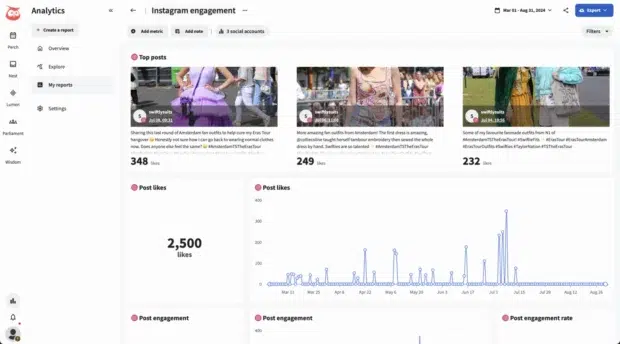
7. Track Performance Metrics and Refine
Monitor engagement rates, click-throughs, and share metrics specifically for curated posts using unified analytics dashboards. Adjust content pillars, source lists, and posting cadences based on empirical data rather than assumptions.

Conclusion: Balancing Automation with Human Judgment
As artificial intelligence continues to accelerate the sheer volume of digital content in 2026, the brands that win consumer attention will not be those that produce the most, but those that curate the best. By pairing advanced listening and scheduling infrastructure with human taste, empathy, and editorial rigor, organizations can successfully cut through the noise, establish genuine thought leadership, and cultivate lasting digital communities.
 Raul Delapena Setiawan
  Dwi Wanna
  Asep Darmawan