
 By Asep Darmawan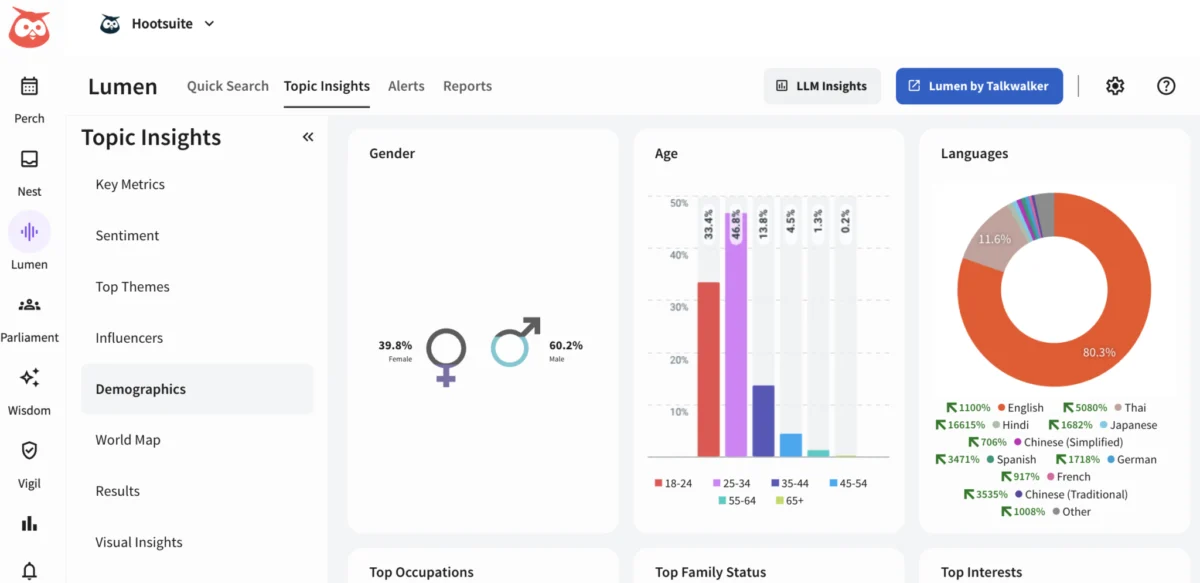
In the modern digital economy, social media has long transcended its origins as a casual digital playground. For enterprise organizations, small businesses, and global brands alike, social media channels are foundational pillars of brand equity, community building, and direct revenue generation. However, as global social media ad spend barrels toward an estimated $338.75 billion, the pressure on marketing leaders to justify every dollar has never been higher.
Enter social media measurement: the systematic process of leveraging data and advanced analytics tools to evaluate brand performance, understand audience behavior, and tie social output to overarching business goals. Moving far beyond vanity metrics like raw follower counts, modern measurement bridges the gap between creative execution and corporate strategy, proving to executive leadership precisely how social contributes to pipelines, customer retention, and long-term brand reputation.

Main Facts: What Is Social Media Measurement and Why Does It Matter?
At its core, social media measurement is the only reliable alternative to guesswork. By continuously evaluating performance indicators, brands can observe how their target audience thinks, behaves, and engages compared to competitors.
The Evolution from Vanity Metrics to Actionable KPIs
Historically, social media success was frequently evaluated through "vanity metrics"—data points like total followers or cumulative likes that looked impressive on a slide deck but rarely influenced business decisions. Modern measurement, by contrast, focuses on actionable Key Performance Indicators (KPIs). For example, pairing a follower growth rate with demographic shifts reveals whether a brand is attracting its actual target market.

Effective measurement provides critical insights across five core pillars:
- Audience Insights: Uncovering foundational demographics (such as the fact that 84% of U.S. adults use YouTube compared to roughly half on Instagram) alongside behavioral insights like peak active hours.
- Target Market Preferences and Pain Points: Discerning what problems your brand solves best by analyzing how ideal customers interact with your content.
- Competitive Intelligence: Benchmarking performance, monitoring competitors’ posting frequencies, and tracking social share of voice to spot emerging threats and strategic gaps.
- Content Performance: Analyzing broad macro-trends (overall reach and follower growth) alongside micro-level metrics (best-performing content formats, caption lengths, and call-to-action effectiveness).
- Brand Awareness, Perception, and Reputation: Combining quantitative mention volumes with qualitative sentiment analysis to gauge how the public feels about the brand in real-time.
Chronology: The Lifecycle of Setting Up a Social Media Measurement Strategy
Implementing an effective social media measurement framework is not a one-time task; it is an ongoing, repeatable cycle. Organizations looking to overhaul their analytics typically follow a structured, five-step chronological process:
1. Establishing Clear Goals and Mapping KPIs
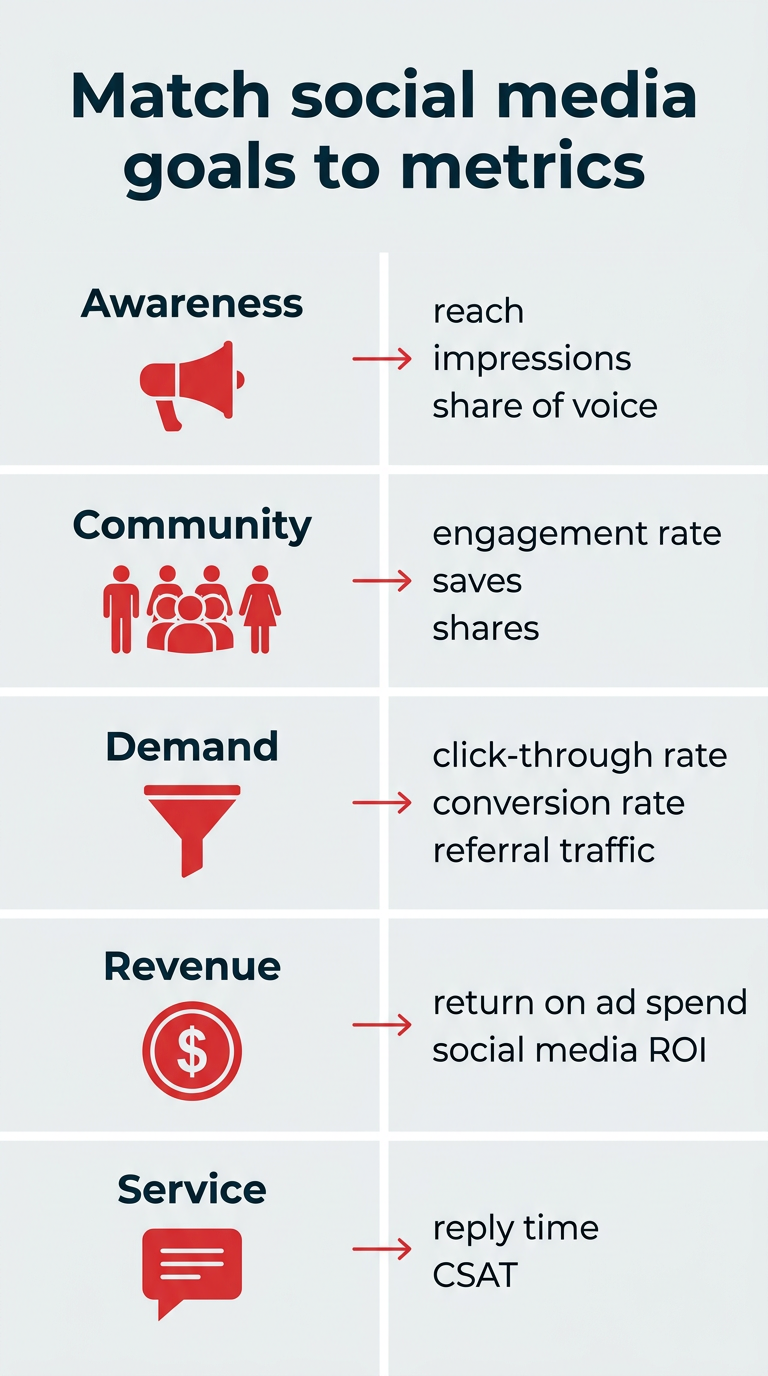
The process begins by aligning social media objectives with broader business outcomes. Rather than collecting data simply because it is accessible, teams map specific goals to a curated selection of KPIs before opening a single dashboard.
2. Selecting the Right Metrics
Once goals are established, teams choose metrics that directly gauge progress. For instance, a brand focusing on brand awareness on TikTok will prioritize reach and audience growth, whereas an e-commerce brand driving sales via Instagram shopping focuses heavily on conversion metrics.
3. Deploying Analytics and Social Listening Infrastructure
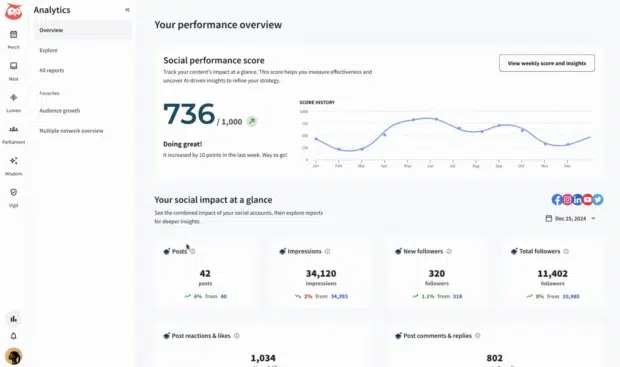
Organizations must establish the technological foundation required to capture data. While native platform analytics offer a free, low-barrier starting point, they operate in silos. Enterprise teams often deploy unified platforms—such as Hootsuite Social OS (incorporating tools like Perch for content analytics and Lumen for listening)—to centralize data and eliminate manual consolidation.
4. Integrating Social Data with CRM Systems
To prove true return on investment (ROI), social tools must connect directly to Customer Relationship Management (CRM) platforms like Salesforce. This integration allows sales and support teams to view full customer histories, attribute closed-won deals accurately to social touchpoints, and present pipeline contributions to leadership.
5. Reporting, Reassessing, and Optimizing
The final phase involves turning reports into decision points. By reviewing data weekly for tactical adjustments and monthly for strategic trends, teams can isolate variables, document repeatable wins, and continuously optimize their approach.
Supporting Data: Mapping Business Goals to Key Metrics
To ensure every metric on a dashboard earns its place, digital marketers map corporate objectives directly to specific performance indicators and tracking environments.
| Business Goal | Key Metrics | Where to Track |
|---|---|---|
| Brand Awareness | Reach, impressions, social share of voice, follower growth | Lumen, Native Platform Analytics |
| Engagement | Engagement rate, comments, shares, saves | Perch, Native Platform Analytics |
| Lead Generation | Click-Through Rate (CTR), conversion rate, social referral traffic | Google Analytics, CRM |
| Revenue & ROI | Return on Ad Spend (ROAS), social media ROI, Cost Per Click (CPC) | Ad Platforms, CRM, Hootsuite Social OS |
| Customer Satisfaction | Customer Satisfaction Score (CSAT), Net Promoter Score (NPS), reply time | Nest, CRM |
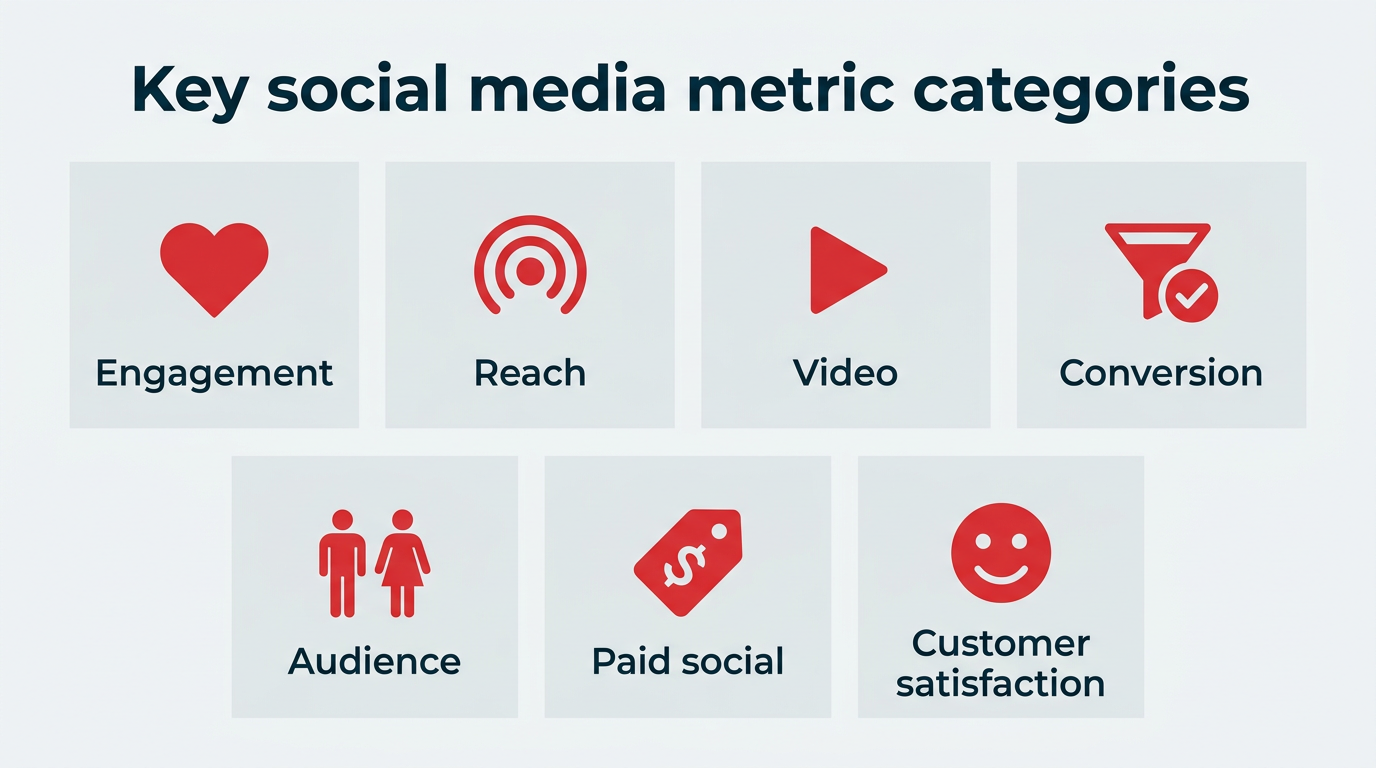
Breakdown of Essential Metric Categories
- Engagement Metrics: Measuring the depth of interaction. Comments signal higher interest than likes, while content "saves" indicate strong future intent.
- Reach Metrics: Quantifying brand visibility and determining the percentage of content reaching non-followers—a key indicator of algorithmic amplification and brand awareness success.
- Video Performance Metrics: Tracking watch time, completion rates, and view thresholds to understand how video formats (like Reels or TikToks) resonate compared to static imagery.
- Conversion Metrics: Measuring real business outcomes, such as leads, sign-ups, and sales, frequently optimized using multi-touch attribution models.
- Paid Social Metrics: Evaluating ad spend efficiency through metrics like CPC, ROAS, Cost Per Mille (CPM), and paid CTR when analyzed alongside organic findings.
- Customer Care Metrics: Monitoring support response volumes and reply times as consumers increasingly utilize social channels as primary customer service touchpoints.
Official Industry Insights and Tool Ecosystems
As measurement practices mature, industry analysts emphasize the integration of diverse tracking methods. According to recent marketing data, nearly 47% of U.S. marketers plan to increase investments in marketing mix modeling (MMM) and incrementality testing to gain fairer attribution across complex consumer journeys.
To execute these strategies, organizations rely on a robust ecosystem of specialized tools:
- Hootsuite Social OS: A comprehensive operating system combining publishing, engagement, listening (via Lumen by Talkwalker), and advanced custom reporting into a unified dashboard with CRM integrations.
- RivalIQ: A specialized competitive analysis tool utilizing machine learning to uncover competitor strategies, hashtag performance, and boosted-post detection.
- Google Analytics (GA4): The essential complementary tool for tracking post-click on-site behavior, social referral traffic, and UTM-tagged conversion paths.
Implications: Building a Culture of Actionable Reporting
The ultimate test of any social media measurement program lies in its reporting cadence. Data that sits unread in a spreadsheet holds no corporate value.
Tailoring Reports to Audiences
Effective reporting requires segmenting information based on who is consuming it:
- Practitioners and Content Creators require granular, post-level details to refine daily creative execution and scheduling times.
- Executive Leadership requires high-level summaries focusing on pipeline contribution, risk mitigation, and clear strategic recommendations.
By leveraging real-time monitoring to spot sentiment shifts before they escalate into crises, and by linking social outputs directly to corporate revenue streams, organizations can elevate social media from an experimental marketing channel into an indispensable engine of business growth.
 Raul Delapena Setiawan
  Evan Lee Salim
  Dwi Wanna