 By rifanmuazin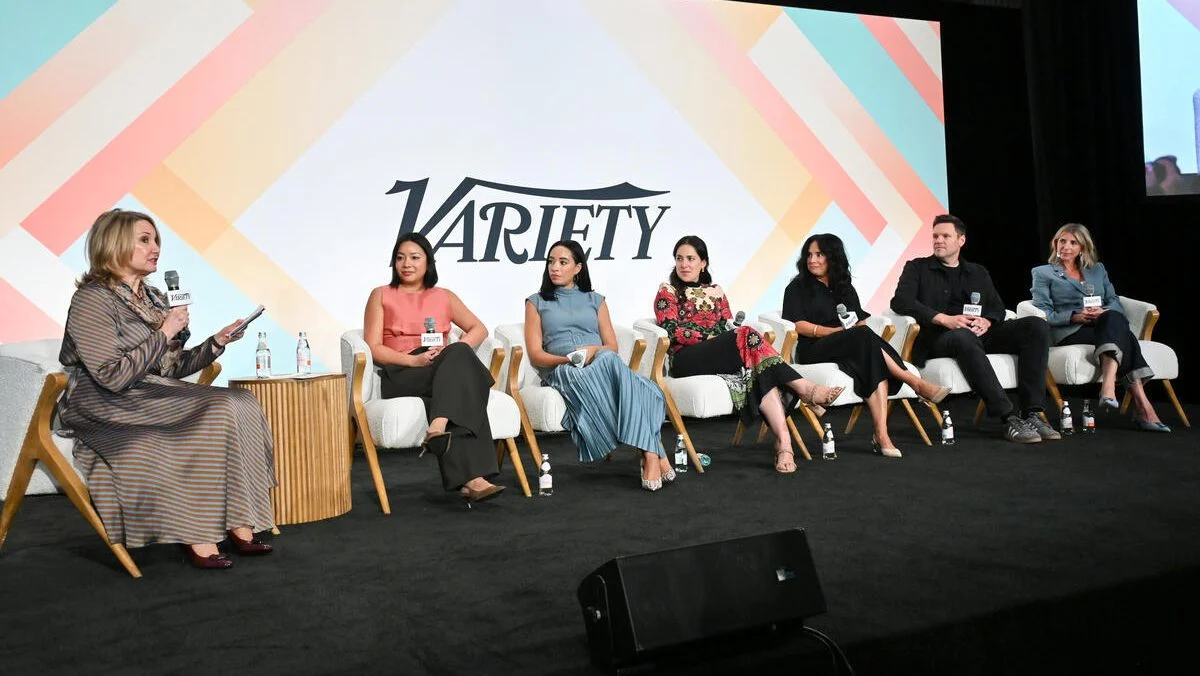
The traditional marketing playbook—a rigid, top-down approach where studios meticulously spoon-feed promotional materials to a passive audience—has officially been rendered obsolete. In its place, a new, volatile, and deeply participatory era of entertainment marketing has emerged, driven by the relentless democratization of content creation and the shifting habits of the digital-native generation.
This seismic shift was the central focus of a high-level panel discussion at Variety’s Entertainment and Technology Summit in Los Angeles this past Thursday. Moderated by Variety publisher and co-president Dea Lawrence, the panel brought together industry heavyweights from TikTok, Spotify, Pinterest, AMC Global Media, Lionsgate, and the youth-culture agency Archrival to dissect how the creator economy is fundamentally altering the way movies, television, and digital experiences are consumed and marketed.
The Shift Toward Participatory Culture
For decades, entertainment marketing was defined by "gatekeeping." Studios controlled the release of trailers, posters, and key art with tactical precision, dictating the narrative arc of a product launch. Today, that model has collapsed. In an ecosystem dominated by social media and short-form video, studios are increasingly relinquishing control, allowing fans to seize the narrative and offer their own "takes" on beloved properties.
This "participatory culture" is not merely an optional add-on; it is the engine of modern engagement. Dawn Yang, Global Head of Entertainment for TikTok, noted that the platform has become the digital town square for film and television discourse.
"That participatory culture of co-creation is unique to us," Yang stated. "We see over 12 million TV and film-related posts uploaded by our users every single day. That sheer volume gives you a window into how hungry the audience is to take ownership of the stories they love."
From Passive Viewers to Professionalized Fans
Perhaps the most striking evolution in the marketing landscape is the professionalization of the fan base. Brands are no longer just looking to advertise to fans; they are hiring fans to create the advertising itself.
Briana McElroy, Global Head of Digital Marketing at Lionsgate, provided a masterclass in this philosophy. She revealed that Lionsgate actively recruits TikTok creators to produce content for their official brand channels. These creators are masters of the "edit"—a specific style of fan-driven, highly rhythmic, and emotionally resonant video content that has become a staple of youth culture.
"If you consume it, you know it," McElroy explained. "We’re talking about 15-to-18-year-olds who have an incredible instinct for expressing love for a musician, a movie, or a character. The temptation for a major studio is to try to replicate that ‘fan-made’ look in-house. But we realized: why try to fake it? If we are chasing authenticity, the best way to do it is to hand the keys to the fans. The resulting advertising is, frankly, more credible than anything we could have produced internally."
Beyond the "Gen Z" Monolith
One of the most provocative arguments presented during the summit came from Jenny Haggard, Global Head of Thought Leadership at Spotify. Haggard issued a stark warning to her peers: stop using "Gen Z" as a broad, lazy brush to paint an entire generation of consumers.
"The first mistake marketers make is treating Gen Z as one group," Haggard said. "I was a very different person at 14, dancing to NSYNC, than I was at 29, working as a professional in New York City. Life stage is a far better predictor of behavior than birth year."
Haggard also challenged the prevailing industry obsession with short-form content. While many executives operate under the assumption that younger audiences lack the attention span for long-form media, Spotify’s internal data suggests otherwise.
"A third of our older Gen Z listeners are streaming 100% of two-hour-long podcast episodes," she revealed. "This tells me that Gen Z isn’t allergic to long-form content; they are allergic to shitty content. It is our responsibility as marketers to create better, more engaging stories rather than defaulting to six-second soundbites."
Building Ecosystems of Experience
If the goal is no longer just "getting noise out there," what is the new metric for success? Ben Harms, Chief Growth Officer at Archrival, argued that the winners of the next decade will be those who pivot from "attention-grabbing" to "value-adding."
"We’ve optimized and engineered everything to the point where we’ve lost the magic," Harms observed. "The brands that will win are those building ecosystems of human connection. It’s about creating moments that transcend the screen and embed the brand into the actual lives of consumers."
Pinterest is leading this charge by bridging the gap between digital fandom and physical reality. Sara Pollack, Global Head of Consumer Marketing at Pinterest, highlighted the platform’s recent collaboration with Warner Bros. for the release of Practical Magic 2. Instead of just running digital ads, Pinterest identified the specific "vibes" Gen Z was searching for—herbalism, tarot, and apothecaries—and built pop-up experiences where fans could craft candles or participate in readings.
"It moves the relationship beyond just an impression, a like, or a share," Pollack said. "We turned their fandom into a tangible, fulfilling experience. That is how you build long-term loyalty."
The "Choose-Your-Own-Adventure" Marketing Future
The challenge for legacy brands, according to Kim Granito, CMO of AMC Global Media, is creating "on-ramps" that accommodate different levels of fan commitment. Using The Walking Dead—a franchise that has spanned 15 years—as a case study, Granito explained that marketing must be as layered as the fan base itself.
"There are fans who show up for every spinoff, and there are fans who dress up as characters at Comic-Con," Granito noted. "The passion is the same; the expression is just different. Our job is to create a ‘choose-your-own-adventure’ journey. We have to provide entry points for the casual viewer and deep-dive lore for the superfan, and we have to do it in a way that feels organic to their specific community."
Implications for the Industry
The consensus from the Variety panel was clear: the era of the "polished, top-down campaign" is ending. The implications for the entertainment industry are profound:
- Ceding Control is Mandatory: Studios must accept that their intellectual property will be remixed, re-edited, and critiqued by the public. Attempting to suppress this or over-produce content is a losing strategy.
- Data Must Be Contextualized: As Spotify’s data suggests, demographic labels like "Gen Z" are becoming increasingly useless. Marketers must pivot toward "life stage" analysis and qualitative data that tracks actual consumption habits rather than age-based assumptions.
- Experiential Marketing is the New Currency: As digital spaces become saturated, the value of physical, tangible, and "real-world" extensions of digital franchises is skyrocketing. Brands that can help fans "live out" their fandom—whether through Pinterest boards that lead to pop-ups or TikTok trends that lead to community events—will dominate the cultural conversation.
- Authenticity is an Action, Not a Buzzword: By hiring fans to create content, brands like Lionsgate are acknowledging that they are no longer the sole authorities on their own stories.
As the panel concluded, the message to entertainment executives was firm: the audience has moved into the director’s chair. The most successful marketers of the coming decade will not be those who dictate the story, but those who provide the best tools for their fans to tell it for them.
 Pevita Pearce
  Suro Senen
  Ammar Sabilarrohman