
 By Suro Senen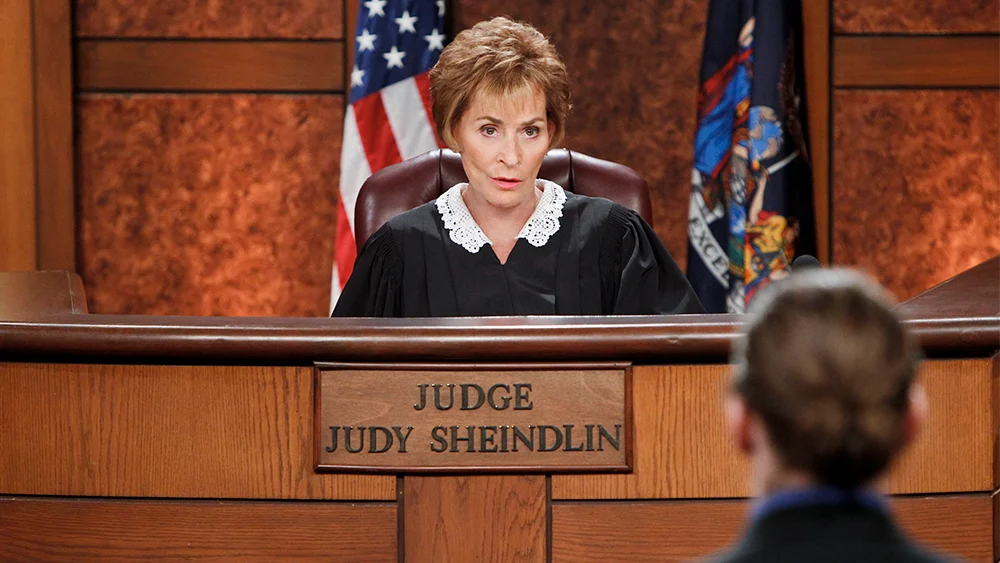
For over thirty years, the image of Judge Judith Sheindlin—perched behind a bench, lace collar crisp, eyes narrowed in skepticism—has been a staple of the American living room. She is, by all accounts, the undisputed matriarch of the courtroom television genre. Yet, as she prepares for the upcoming CBS and Paramount+ special Judge Judy: Unfiltered and Unforgettable, premiering September 22, Sheindlin admits that her path to global icon status was entirely accidental. Had it not been for a serendipitous 1993 60 Minutes segment, she would have likely remained exactly where she was happiest: the New York family court.
The Path Not Taken: A Life in Family Court
Reflecting on her career, Sheindlin remains remarkably grounded about what could have been. “I was comfortable. I loved the family court. I really did,” she tells Variety. “It was a tough place to work, and I loved the work that I did there. It was important. Some you really did get an opportunity—if you broke sweat—and you were able to change a life. And that doesn’t happen to people often.”
For Sheindlin, the prospect of a quiet retirement at 72, perhaps working as a judicial hearing officer a few days a week before retreating to a beach condo in the South, was not a disappointment—it was the plan. “I think I would have been very happy, and fulfilled,” she muses. Instead, fate intervened in the form of correspondent Morley Safer. After profiling her for 60 Minutes, the segment caught the eye of producer Larry Lyttle. Recognizing a unique, no-nonsense magnetism that the public had never seen before, Lyttle persuaded Sheindlin to transition from the bench to the television set. The result was Judge Judy, a show that would not only define a career but single-handedly revitalize the daytime court genre when it premiered in 1996.
Chronology of a Television Titan
The trajectory of Sheindlin’s career is a study in consistency and evolution. After the 60 Minutes profile launched her into the public consciousness, she became a cultural phenomenon. At her peak, she was not merely a television star; she was the highest-paid personality in the medium, commanding a salary upwards of $45 million annually.
However, the "Judge Judy" brand was never just about ratings. It was about a specific brand of moral clarity. Following a legendary three-decade run that redefined syndication, Sheindlin eventually transitioned away from the daily grind of her flagship show. Yet, "retirement" is a term that does not apply to the 81-year-old power player. Today, she oversees a production empire under her Queen Bee Productions banner, managing a suite of legal programming including Hot Bench, Judy Justice, Tribunal Justice, and Justice on Trial.
The baton of on-air adjudication has now been passed to the next generation. Her son, Adam Levy, a former district attorney and defense attorney, launched his own program, Adam’s Law, on CBS this past September. For Sheindlin, this is the ultimate validation of a lifetime spent championing the principles of law and order.
The Philosophy of the Bench: A Contrast in Styles
Despite sharing a surname and a profession, Sheindlin is quick to point out the stark differences between her approach and that of her son, Adam Levy.
“He likes to know everything about a case before he goes in. He likes to exhaust all the evidence and do whatever background information he can do on the litigants,” Sheindlin explains. “That’s the way he has always walked as a litigator. I was a ‘seat of the pants’ girl. I wasn’t an actress. If I were given a piece of evidence that I was supposed to see for the first time and I had to feign, ‘Oh my goodness, look at this,’ I couldn’t do it.”
This distinction highlights the evolution of the genre. While Sheindlin relied on her razor-sharp intuition and the immediate, raw reactions that made her a meme-worthy star, Levy’s approach is rooted in the methodical, exhaustive preparation of the modern prosecutor. Sheindlin possesses an unwavering faith in her son’s success, rooted in her belief that the audience’s hunger for truth, justice, and life guidance remains insatiable. “He believes in the law and he believes in the justice system, the concepts of law and order, right and wrong. And he’s smart as a whip,” she says. “Maybe 20 years from now, people are going to say, ‘Do you watch Adam’s Law? His mother had a show once.’”
Innovation and the "Baby Judy" Vision
Ever the forward-thinker, Sheindlin is currently expanding her reach into the world of animation. Utilizing the internet’s long-standing obsession with "Baby Judy" memes—images of a baby’s head superimposed onto her iconic robe and lace collar—she is developing an animated series.
She describes the project as an "edgy" exploration of contemporary social issues. The premise, as she details it, involves a college graduate who sues a prospective employer under the Americans with Disabilities Act after being rejected for an entry-level job. His reason for the rejection? He demanded a private bathroom due to a self-described "smallish" anatomical insecurity. The case lands in the court of "Baby Judy," providing a satirical, poignant lens through which to view modern entitlement and the legal system. It is a bold, experimental move that signals Sheindlin’s desire to remain relevant to younger audiences while staying true to her core message of personal responsibility.
The Foundations of Responsibility: Personal Influence
Behind the stern rulings and the quick-witted zingers, Sheindlin’s worldview is informed by a profound sense of duty—a trait she attributes to her own mentors. She recalls a specific interaction with her sixth-grade teacher, Irving Bernstein. After she missed a few days of school, Bernstein called her home to check on her well-being.
“That made me feel that he must think I’m special. I grew up with that sense that my sixth-grade teacher cared about me,” she says. This experience shaped her belief that authority figures have an inherent obligation to influence the lives of those under their care for the better.
This philosophy manifests in her "responsibility" doctrine: “If you want to eat, you have to work. We like to think we come from a type of humanity that if you can’t walk and you need help, we help you and we keep you going. But if you can walk but choose not to walk, then I don’t want to have to support you.”
Implications: A Lasting Cultural Legacy
As the Unfiltered and Unforgettable special approaches, the implications of Sheindlin’s career are clear. She did more than just preside over small-claims disputes; she transformed the courtroom into a classroom for civic duty.
Sheindlin views her massive platform as a gift that allowed her to deliver a consistent message: good citizenry, self-reliance, and the necessity of preparing the next generation to be better than the last. “I certainly have been handed the gift of having a second and third career that has not only been satisfying and gratifying, but it allowed me to deliver a message of the importance of good citizenry and taking care of yourself and personal responsibility,” she reflects.
While the television landscape has shifted significantly since 1996, and the digital age has democratized how justice is viewed and critiqued, Judge Judy Sheindlin remains a singular force. Whether she is in a courtroom, a boardroom, or an animated series, her presence serves as a reminder of the power of conviction. She has spent thirty years in the public eye, and as she looks toward the future, she offers a simple, stoic promise: “I’m still standing.”
For millions of fans, the gavel may have been passed, but the lessons of the bench—the importance of honesty, accountability, and the courage to call things exactly as they are—remain etched in the cultural fabric she helped weave. Her journey, from a family court judge to a media titan, serves as a testament to the fact that when one embraces their work with absolute commitment, they don’t just change lives—they change the world.
 Pevita Pearce
  rifanmuazin
  Ammar Sabilarrohman