
 By Ammar Sabilarrohman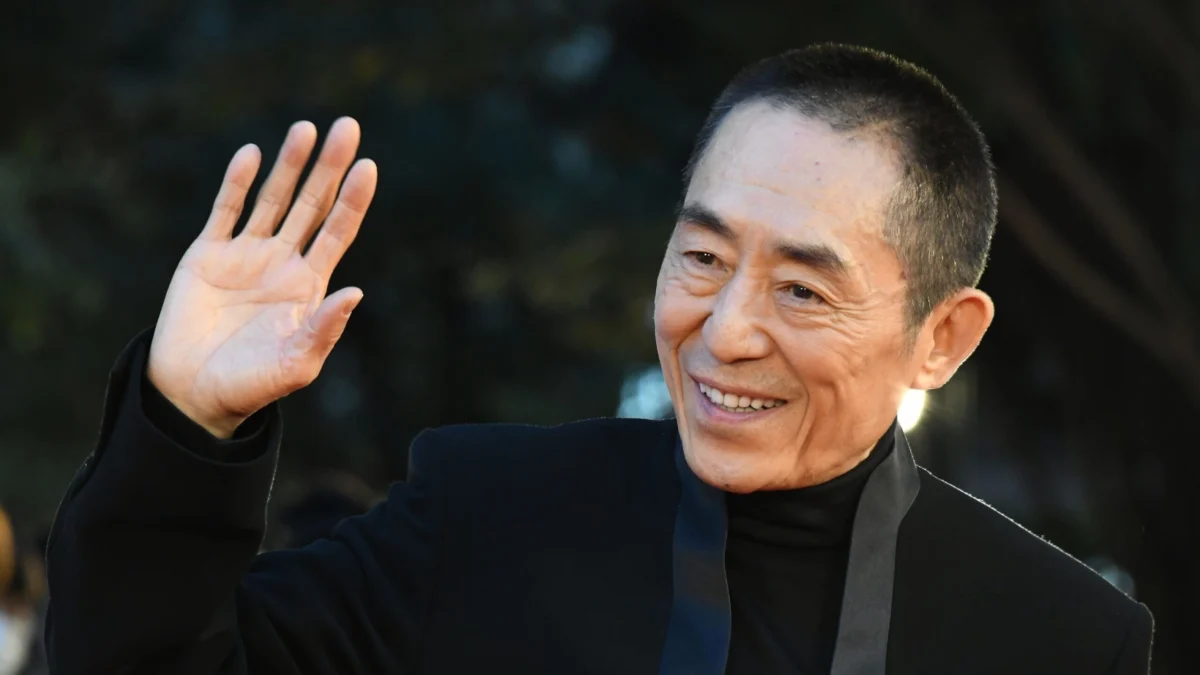
The cinematic world has turned its gaze toward South Korea as the Busan International Film Festival (BIFF) prepares for its 31st edition. In a move signaling the festival’s escalating prestige on the global stage, organizers have officially unveiled a powerhouse jury for the event’s Competition section. Heading this distinguished panel as Jury President is none other than the legendary Chinese auteur Zhang Yimou, a filmmaker whose career has not only defined the Fifth Generation of Chinese cinema but has also served as a bridge between Eastern storytelling and Western critical acclaim.
As the festival cements its status as a FIAPF-accredited A-list event, the stakes for this year’s competition have never been higher. With the Best Film winner now securing a direct qualification path to the Academy Awards for Best International Feature Film, the 31st BIFF is poised to become a critical battleground for global prestige.
The Maestro at the Helm: Zhang Yimou’s Legacy
Zhang Yimou’s appointment as jury president is more than a symbolic gesture; it is a profound nod to the history of the medium. Zhang is one of the few directors in history to have conquered the "Big Three" European festivals. His 1987 debut, Red Sorghum, famously captured the Golden Bear at Berlin, signaling the arrival of a transformative new voice in cinema. He followed this with two Golden Lions at Venice—for The Story of Qiu Ju (1992) and Not One Less (1999)—and the Grand Prix of the Jury at Cannes for the poignant masterpiece To Live (1994).
Beyond his festival dominance, Zhang has maintained a rigorous, diverse output that spans three Academy Award nominations and five Golden Globe nods. His influence transcends the screen, as evidenced by his monumental work directing the opening and closing ceremonies for both the 2008 Beijing Summer Olympics and the 2022 Beijing Winter Olympics.
Despite his global stature, Zhang remains deeply committed to the evolving landscape of Asian cinema. His connection to Busan runs deep, dating back to 2010 when his film Under the Hawthorn Tree served as the festival’s opening title. Today, his energy remains undiminished, with recent hits like One Second (2021) and Full River Red (2023) keeping him at the forefront of the industry. Industry insiders are also keenly awaiting his upcoming adaptation of the global phenomenon The Three-Body Problem, a project that promises to marry his signature visual grandiosity with high-concept science fiction.
The Jury: A Mosaic of Asian Cinematic Visionaries
Joining Zhang on the seven-person jury is an eclectic and highly decorated group of artists, each representing a unique facet of the contemporary film landscape.
The panel includes Bi Gan, the Chinese director whose atmospheric, dream-like narratives have captivated audiences worldwide. His recent work, Resurrection (2025), made a splash at last year’s inaugural BIFF Competition, where it walked away with the Artistic Contribution prize. Bi’s earlier works, Kaili Blues (2015) and Long Day’s Journey Into Night (2018), have established him as a master of long-take cinematography and non-linear storytelling.
The jury also features actor-director Moon Choi, a powerhouse in the Korean industry. Known for her critically acclaimed performances, she famously won the Actor of the Year award at BIFF in 2018 for Our Body. Her transition into producing and directing, most recently evidenced by her involvement in Bedford Park, brings a grounded, multi-hyphenate perspective to the jury’s deliberations.
Japanese director Ishikawa Kei rounds out the artistic expertise on the panel. A graduate of Poland’s prestigious Łódź Film School, Ishikawa has developed a reputation for taut, psychologically complex dramas. His debut, Gukoroku – Traces of Sin (2016), premiered at Venice, while his 2022 film A Man was selected as the closing film at Busan, subsequently sweeping eight Japan Academy Film Prizes.
The committee is completed by three formidable figures:
- July Jung: A trailblazing South Korean director who recently became the first woman from her country to have three of her features invited to the Cannes Film Festival. Her latest work, Dora (2026), is among the high-profile titles featured in this year’s BIFF program.
- Tran Thi Bich Ngoc: A stalwart of the Vietnamese film industry with three decades of experience, Tran has been instrumental in backing regional cinema through projects like Big Father, Small Father and Other Stories. She currently leads the DANAFF Talents program, nurturing the next generation of Asian filmmakers.
- Samal Yeslyamova: A Kazakhstani actress of immense range, Yeslyamova garnered international acclaim by winning Best Actress at Cannes for her harrowing performance in Ayka (2018). Her deep history with Busan—spanning previous jury service and a starring role in the 2019 festival opener The Horse Thieves. Roads of Time—provides the jury with institutional continuity.
A Chronology of Prestige: From Regional Hub to Global Titan
The trajectory of the Busan International Film Festival is a study in exponential growth. Founded in 1996, it was initially conceived as a platform to foster Asian cinema at a time when the region’s industry lacked a unified voice. Over the past three decades, it has evolved from a local gathering into the premier film festival in Asia.
The recent accreditation by FIAPF (International Federation of Film Producers Associations) as an A-list festival—placing Busan in the same category as Cannes, Berlin, Venice, Sundance, and Toronto—is the culmination of this long-term strategy. This status is not merely honorary; it dictates the festival’s infrastructure, the caliber of its guests, and the global impact of its awards.
The 31st edition, scheduled for October 6–15 at the Busan Cinema Center and venues throughout the city, represents the most significant chapter in this history. Running in tandem with the festival is the 21st Asian Contents & Film Market (Oct. 10–13), which serves as the primary engine for industry deals, co-production discussions, and distribution negotiations across the continent.
Supporting Data: The Economic and Creative Stakes
The Competition section will evaluate 13 films, all vying for the prestigious Busan Award. The total prize pool of KRW 110 million (approximately $80,350) is distributed across five key categories: Best Film, Best Director, Special Jury Prize, Best Actor, and Artistic Contribution.
However, the value of the Best Film prize has been radically altered by the festival’s new A-list designation. With the winner now gaining an automatic qualifying pathway for the Academy Awards’ Best International Feature Film category, the Busan Award has effectively become a "Golden Ticket" for studios and independent producers aiming for Hollywood recognition. This shift is expected to attract a higher tier of international submissions, further intensifying the competition for the 13 coveted slots.
Official Perspectives and Industry Implications
Festival organizers have framed this year’s jury as a deliberate balance between "legacy and future." By appointing Zhang Yimou, the festival honors the giants who built the foundation of Asian cinema, while the inclusion of younger talents like Bi Gan and July Jung ensures that the judging criteria remain receptive to contemporary trends in digital aesthetics and social storytelling.
For the filmmakers in competition, the implications are vast. A win at Busan no longer simply offers regional validation; it provides an immediate global platform and a direct line to the Oscars. This creates a high-pressure, high-reward environment that will likely see more international sales agents and streaming platforms focusing their acquisitions efforts on the Busan slate.
Furthermore, the integration of the Asian Contents & Film Market (ACFM) ensures that the creative energy of the festival is matched by economic momentum. As platforms like Netflix, Disney+, and regional players look to capitalize on the "Asian wave," the ACFM has become the essential venue for securing content that resonates with both local and global audiences.
Looking Forward: A Festival in Motion
As Busan prepares to open its doors this October, the atmosphere is one of anticipation. The city, which has long embraced its identity as a cinematic capital, will once again host the world’s most influential directors, producers, and actors.
The 31st Busan International Film Festival is more than just a celebration of moving images; it is a definitive statement that the center of the cinematic universe is shifting. Under the steady gaze of Zhang Yimou and his esteemed jury, the festival will not only crown the best films of the year but will also set the agenda for the next decade of Asian storytelling.
With the October 6 start date approaching, the film industry waits to see which of the 13 competition films will seize this historic opportunity to ascend to the global stage. As the curtains rise at the Busan Cinema Center, one thing is certain: the world will be watching.
 Basiran
  Ali Ikhwan
  Siti Muinah