
 By Lina Hope
By Food Industry Analysts
When it comes to the pantheon of American fast-food icons, few rival the cultural dominance of Chick-fil-A and Kentucky Fried Chicken (KFC). Both chains are titan pioneers of Southern-style poultry, having shaped the landscape of modern quick-service restaurants (QSR) for decades. KFC’s franchise era officially took flight in 1952, proving that mass-produced, commercially fried chicken could be executed as a reliable, repeatable business model on a national scale. Meanwhile, Chick-fil-A founder S. Truett Cathy revolutionized convenience dining by introducing the nation’s first wildly popular fast-food fried chicken sandwich, permanently altering how Americans consume poultry on the go.
Despite their shared cultural footprint, walking into a Chick-fil-A versus a KFC delivers fundamentally distinct culinary and sensory experiences. Behind the counter, the journey of the chicken—from raw commodity to finished product—diverges significantly. Variations in seasoning profiles, liquid washes, frying oils, cooking techniques, and structural preparation (such as bone-in versus boneless cuts) separate these two fast-food empires.
Main Facts: The Anatomy of Fast-Food Poultry
At their core, both chains specialize in fried chicken, but their operational philosophies and final menu outputs are starkly different.
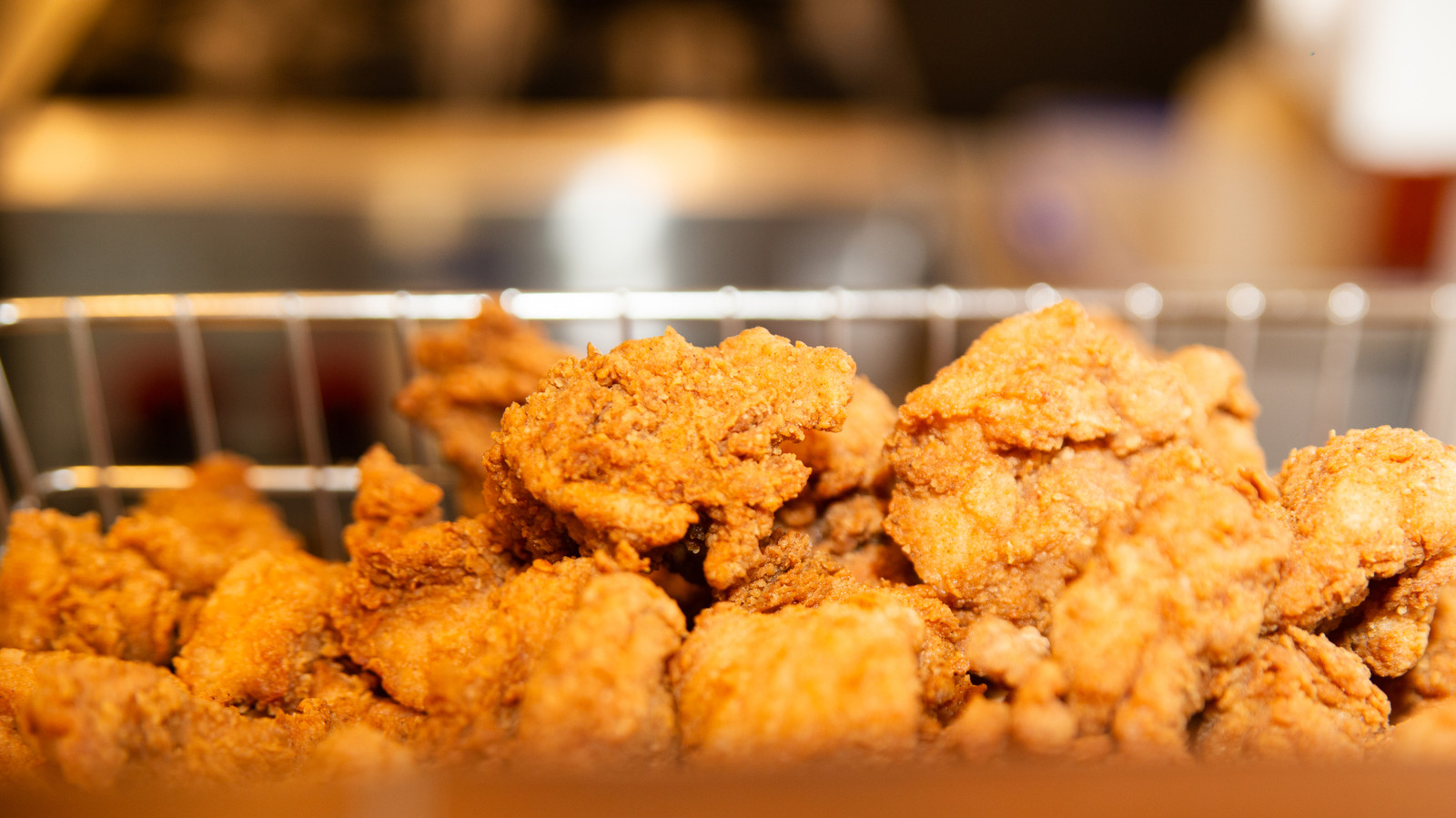
Chick-fil-A has built its multi-billion-dollar empire almost exclusively on boneless chicken. Its hallmark product, the Original Chicken Sandwich, features a tender breast filet flanked by two pickles on a toasted buttered bun. The brand’s identity is inextricably linked to boneless preparation, a direct nod to Truett Cathy’s original invention at his early diner, the Dwarf House.
Conversely, KFC is globally recognized for its bone-in offerings, headlined by the legendary "Original Recipe" chicken, alongside its popular "Extra Crispy" line. While KFC has steadily expanded its portfolio to include boneless tenders, nuggets, and sandwiches, its institutional identity remains rooted in buckets of fried drumsticks, thighs, wings, and breasts.
Beyond the bones, the structural differences are governed by the invisible chemistry of the kitchen: the seasoning blends, the liquid binding washes, and the cooking fats utilized to achieve that coveted golden crunch.
Chronology: The Evolution of Two Poultry Giants
To understand how Chick-fil-A and KFC arrived at their current culinary distinctions, it helps to examine their historical timelines and operational milestones:
- 1930s–1940s: Colonel Harland Sanders develops his secret blend of 11 herbs and spices and perfects his pressure-frying technique in Corbin, Kentucky. Simultaneously, S. Truett Cathy opens the Dwarf Grill (later the Dwarf House) in Hapeville, Georgia, where he invents the boneless fried chicken breast sandwich.
- 1952: The modern franchising era of KFC begins as Sanders signs his first official franchise agreement, exporting pressure-fried Southern chicken across the United States.
- 1964: Colonel Sanders sells KFC to a group of investors led by John Y. Brown Jr. and Jack Massey, though he remains a public spokesman.
- 1967: Truett Cathy officially founds Chick-fil-A, opening the very first standard corporate location in a suburban Atlanta shopping mall.
- 1970s: KFC introduces its "Extra Crispy" line, utilizing a double-dredging technique and open-top fryers rather than pressure cookers—a move famously criticized by Colonel Sanders after his departure from active management.
- Mid-2000s: Chick-fil-A adjusts its internal kitchen recipes, modifying its pre-breading treatments. Around the same time, KFC shifts its frying fat infrastructure to accommodate changing health landscapes.
- 2007: KFC transitions system-wide to low-linolenic soybean oil (LLSO) to eliminate artificial trans fats across its operations.
- Present Day: Both chains continuously experiment with menu diversification. While Chick-fil-A occasionally tests niche bone-in products at specialized concepts like the Little Blue Menu, KFC aggressively balances its traditional bone-in buckets with modern boneless wraps, nuggets, and tenders.
Supporting Data: Behind the Kitchen Doors
The sensory divide between a Chick-fil-A sandwich and a KFC drumstick is not accidental; it is engineered through precise culinary science and ingredient sourcing.
1. The Seasoning Profiles
Because proprietary spice blends are among the most heavily guarded trade secrets in the food industry, neither company publishes its exact formula. However, culinary analysis and insider revelations provide a clear picture of their flavor architectures.
Chick-fil-A’s seasoning leans heavily into savory and sweet notes. Industry consensus and former employee disclosures suggest the blend incorporates paprika, mustard powder, sugar, black pepper, and monosodium glutamate (MSG) to enhance umami. For years, popular culinary lore insisted Chick-fil-A brined its chicken in pickle juice. However, former employees have clarified that while pickle juice was once a staple marinade component, a recipe overhaul in the mid-2000s phased out this practice in favor of precise proprietary spice slurries.
KFC, on the other hand, relies on Colonel Sanders’ famous shroud of mystery surrounding his 11 herbs and spices. Reverse-engineered copycat recipes—widely tested and validated by food scientists—suggest the blend relies on salt, thyme, basil, oregano, celery salt, black pepper, mustard powder, paprika, garlic salt, ground ginger, and white pepper. While corporate KFC denies these formulas, blind taste tests frequently demonstrate striking similarities.
2. The Wash: Eggs vs. Water
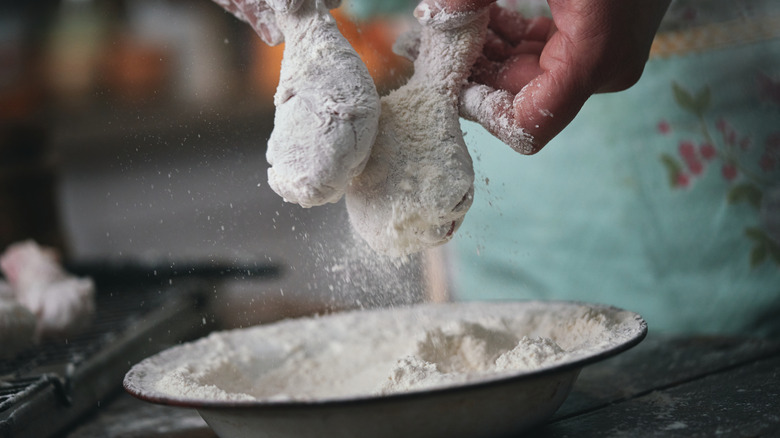
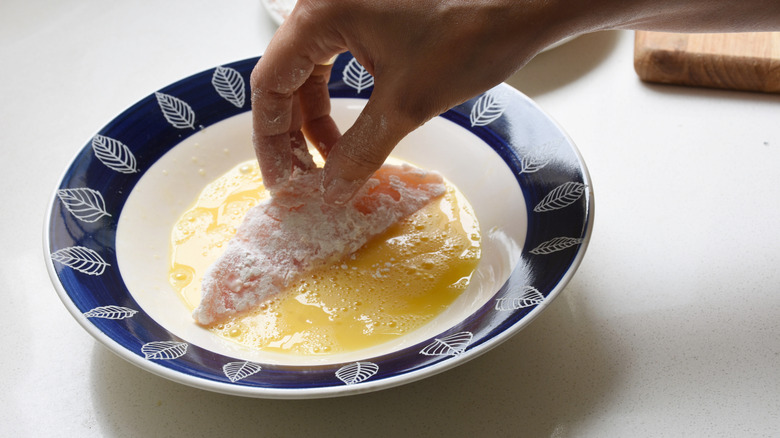
The "wash" is the liquid layer applied to raw, floured chicken to ensure the outer breading coating adheres properly during frying. The choice of wash profoundly impacts moisture retention and structural integrity.
According to insider accounts, Chick-fil-A dips its chicken cutlets into a rich egg-and-milk wash. The structural viscosity of beaten eggs acts as an industrial-grade adhesive for the seasoned flour, while the milk proteins assist with superior moisture retention inside the meat. This explains why Chick-fil-A filets consistently emerge exceptionally juicy with a tightly bound, uniform crust.
In contrast, KFC utilizes plain cold water for its standard washes. While water is undoubtedly cheaper—saving millions in system-wide operational and ingredient costs—it is a notably weaker binder. This operational choice directly correlates with a common consumer critique: KFC’s breading is historically prone to flaking or sliding off the meat entirely.
3. The Cooking Oils
The choice of frying oil dictates not only flavor notes but also smoke points, shelf life, and allergen profiles.
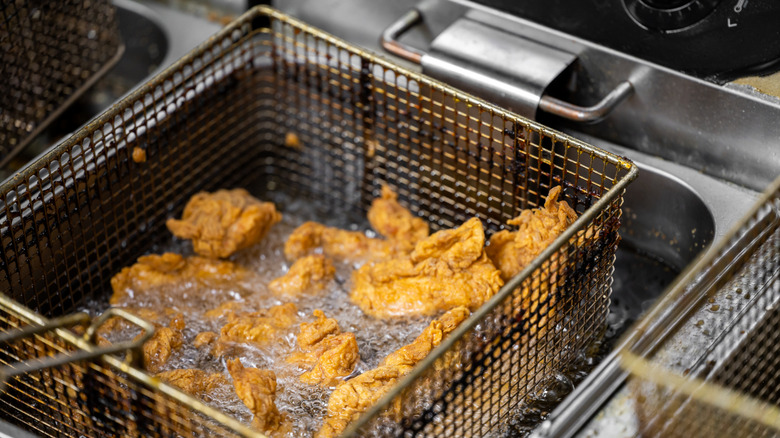
- Chick-fil-A: Uses 100% refined peanut oil for all breaded chicken products. Crucially, the extreme heat and chemical refinement process removes nearly all peanut proteins, making it largely safe for individuals with peanut allergies (though severe allergy sufferers are still advised to exercise caution).
- KFC: Transitioned to low-linolenic soybean oil (LLSO). LLSO contains zero artificial trans fats and boasts high oxidative stability, meaning it resists degradation when exposed to light, oxygen, and the relentless high heat of a commercial kitchen turning out continuous batches of chicken.
4. Preparation Techniques and Crispiness
The method of cooking dictates texture. Both chains utilize commercial pressure fryers for their signature items (Chick-fil-A’s sandwich and KFC’s Original Recipe), which traps steam inside the vessel to cook the chicken rapidly while keeping the interior exceptionally moist.
However, KFC’s Extra Crispy line breaks this rule. Introduced in the 1970s, Extra Crispy is double-dredged in seasoned flour and cooked in traditional open-top deep fryers rather than pressure cookers. This creates a deeply craggy, shatteringly crisp exterior. Interestingly, this innovation drew the ire of Colonel Sanders himself after he sold the company; in a 1978 interview with the Associated Press, Sanders famously dismissed Extra Crispy as "a damn fried doughball stuck on some chicken."
Official Responses and Corporate Strategy
Both corporate entities remain tight-lipped regarding exact proprietary formulas, treating their kitchens like high-security vaults. When public debates arise regarding copycat recipes, pickle brine rumors, or oil formulations, corporate representatives typically issue standard statements emphasizing quality control, proprietary preparation methods, and fresh-daily sourcing.
KFC’s public relations strategy often leans into the mystique of the original recipe, periodically leaning on marketing campaigns that highlight the vault in Louisville, Kentucky, where the original handwritten recipe by Colonel Sanders is allegedly kept under lock and key. Chick-fil-A, conversely, emphasizes its hospitality and operational efficiency, focusing public messaging on supply chain transparency—such as their commitment to sourcing 100% cage-free eggs and antibiotic-free chicken.
Implications: The Future of Fast-Food Poultry
The subtle and stark differences between Chick-fil-A and KFC carry broad implications for the fast-food industry at large.
First, they highlight how operational economics dictate culinary output. KFC’s reliance on water washes and high-volume soybean oil reflects a legacy model designed for massive global scalability across thousands of international units. Chick-fil-A’s investment in egg-and-milk washes and refined peanut oil underscores a deliberate choice to prioritize product consistency and premium mouthfeel, even if it commands higher input costs.
Second, the structural divergence between boneless and bone-in items mirrors changing consumer habits. Modern consumers increasingly prioritize convenience, portability, and "desk-friendly" dining—trends that heavily favor Chick-fil-A’s boneless sandwich model. Meanwhile, KFC’s continued dominance in family-style buckets proves that communal, traditional bone-in fried chicken retains deep cultural resonance and steady generational demand.
Ultimately, while both chains dominate the American poultry market, their diverging methodologies prove that achieving fast-food greatness leaves plenty of room for individual interpretation—whether driven by a secret blend of 11 herbs and spices or a meticulously engineered, pickle-free chicken sandwich.
 Pevita Pearce
  Muslim
  Sagoh
Sagoh 