
 By Muslim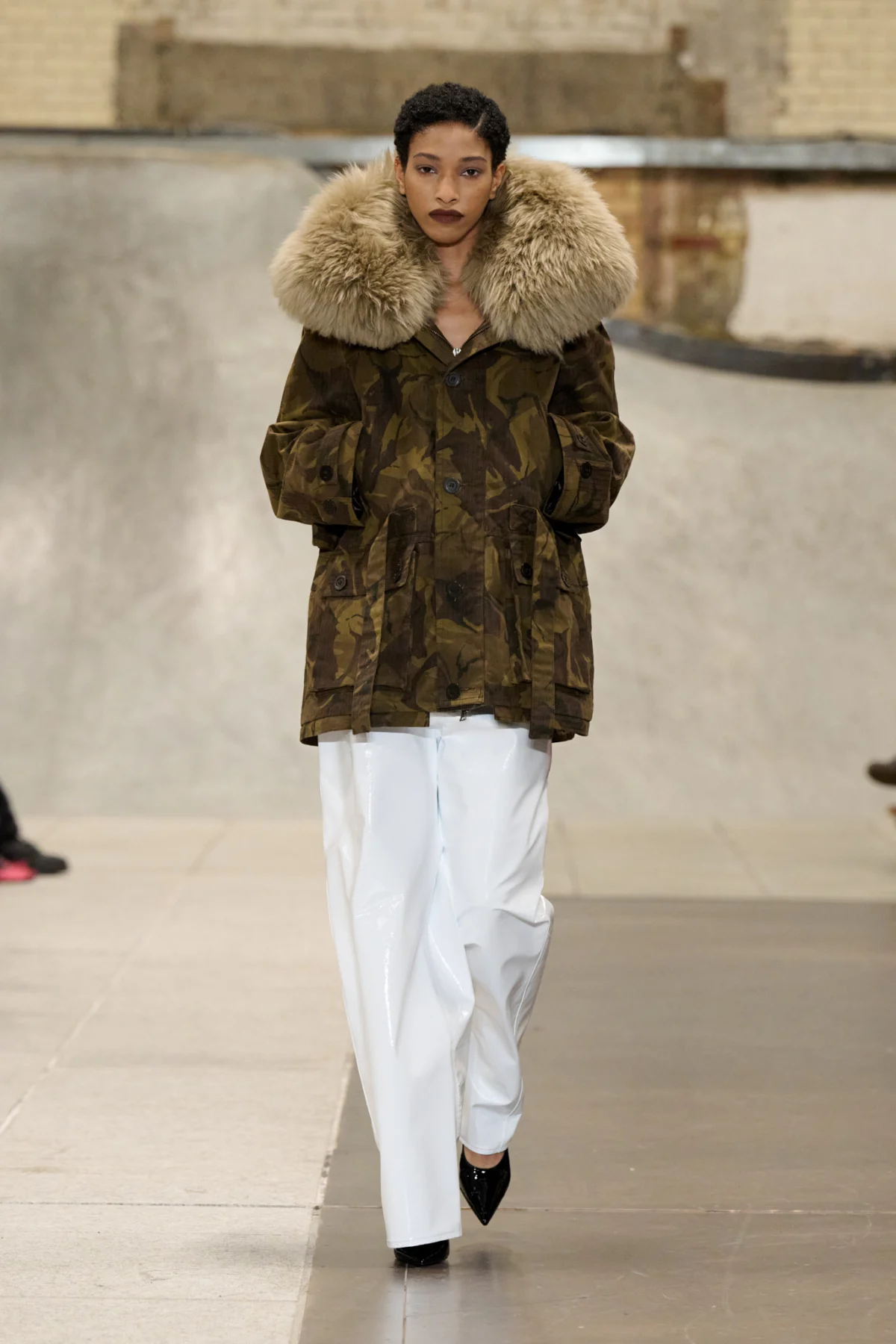
In the ever-shifting landscape of the global fashion industry, few institutions hold as much weight for emerging talent as Fashion East. Founded by Lulu Kennedy, the non-profit incubator has served as the launchpad for a generation of designers who have gone on to redefine the aesthetic vernacular of the 21st century. This season, the organization reaffirmed its status as a radical laboratory, presenting a collective of four designers—Jacek Gleba, Goyagoma by Traicelene Pratt, Louis Mayhew, and newcomer Mémé—who abandoned safe, commercial trajectories in favor of raw, experimental processes.
Hosted at Manor Place—a unique intersection of culture and community, functioning as a collaborative sports hub and creative space curated by Nike and Palace—the event felt less like a traditional runway show and more like an immersive gallery of future-proof design.
The Chronology of an Immersive Showcase
The presentation was carefully sequenced to guide the audience through a narrative of discovery. Upon entering the industrial-chic confines of Manor Place, guests were immediately confronted with a photographic exhibition by Louis Mayhew. Rather than leading with garments, Mayhew chose to document his creative process. The walls were adorned with blown-up, high-definition candid photographs depicting models styled in deconstructed polo shirts and eclectic costume jewelry sourced from local charity shops.
Following the visual immersion of the photography, the experience transitioned into the physical collections. The atmosphere shifted from the static beauty of the images to the kinetic energy of the runway. The collections were presented as a dialogue between textures—a playful, tactile exploration of soft tailoring that relied heavily on layers of tulle, intricate lace cutouts, and vibrant, saturated embroideries.
The Designers: A Deep Dive into Experimental Process
Louis Mayhew: The Accidental Curator
Louis Mayhew’s contribution stood out for its refusal to adhere to traditional runway expectations. When asked about the decision to frame his collection through photography, Mayhew was humble about the process. “I didn’t plan on producing an exhibition,” he admitted. “The way that I guided myself through research, it just sort of happened.” By focusing on reconstructed archival garments, Mayhew highlighted the beauty of the "found" object, challenging the industry’s reliance on new raw materials and favoring a narrative-driven approach to sustainable fashion.
Mémé: The Architect of Illusion
A recent graduate of the prestigious Central Saint Martins, Mémé brought a seasoned perspective to the showcase, drawing on an impressive pedigree that includes stints at Alexander McQueen and Maison Margiela. Mémé’s work represented a triumph of material science. By fusing traditional tailoring techniques with advanced knitting, the designer created the distinct visual illusion of paper. The garments were designed to be tactile; when scrunched or manipulated, the fabric folded into entirely new, geometric forms, suggesting that the wearer is an active participant in the garment’s final silhouette.
Goyagoma by Traicelene Pratt: A Heritage-Led Evolution
Bahamian designer Traicelene Pratt marked a significant departure from his previous work. Known for his "obsessive" and rigorous approach to pattern making, Pratt pivoted toward the emotive power of embroidery and embellishment. Drawing deeply from his Bahamian heritage, his collection featured a striking black sheer maxi dress characterized by intricate, labor-intensive needlework. Perhaps the most arresting piece was a heavy-duty polo shirt entirely encrusted with pearl sequins, designed to mimic the appearance of broken ocean shells—a poignant metaphor for the intersection of luxury fashion and the natural environment.
Jacek Gleba: The Material Alchemist
Jacek Gleba presented a collection that served as a masterclass in material exploration. His methodology was grounded in sustainable innovation, specifically his collaboration with the Spanish eco-friendly denim specialist, Jeanologia. Gleba utilized the brand’s proprietary technology to experiment with sustainable denim washing, resulting in intricate cutout jean jackets and fitted "jorts" (jean shorts) defined by elaborate top-stitching. Beyond denim, Gleba pushed the boundaries of structure, using lace to anchor complex cutout patterns and adorning trousers with cascades of sequins that caught the light with every movement.
Supporting Data: The Shift Toward Slow Fashion
The collective output of these four designers signals a broader shift within the London fashion scene. For years, the industry was driven by a relentless pace of production, but the Fashion East showcase highlights a move toward "slow fashion" and experimental craftsmanship.
The reliance on sustainable partners like Jeanologia indicates that young designers are no longer viewing eco-consciousness as an afterthought; it is now an integrated component of the design phase. By utilizing technology to minimize water usage and chemical waste in denim production, Gleba is representative of a cohort that prioritizes the longevity of the planet alongside the longevity of the garment. Furthermore, the use of charity-shop jewelry by Mayhew underscores the rising trend of "upcycling" as a legitimate high-fashion practice, removing the stigma once associated with pre-loved materials.
Official Responses and Industry Reception
The critical reception of the showcase has been overwhelmingly positive, with industry insiders praising Fashion East’s continued ability to spot "raw" talent before it is polished by the commercial pressures of the market.
"This season was about the process as much as the product," noted one lead stylist in attendance. "When you see designers like Mémé taking a technical approach to fabric manipulation, or Pratt looking inward to his roots, you realize that the next wave of designers isn’t interested in just making clothes—they are interested in making statements about how we live, how we consume, and what we define as beautiful."
The choice of venue, Manor Place, was also a deliberate signal from the organizers. By collaborating with a space that champions both sport and art, Fashion East validated the idea that high fashion does not need to be sequestered in the gilded halls of traditional venues. Instead, it thrives in spaces where community and creativity intersect.
Implications for the Future of London Fashion
The implications of this showcase are manifold. First, it cements the role of the fashion incubator as a vital buffer against the homogenizing forces of global luxury conglomerates. By providing these designers with the resources and the platform to fail—or to experiment—Fashion East ensures that the creative spirit of London remains unpredictable and vital.
Second, the move toward materiality and hand-craftsmanship suggests that the next decade of fashion will be defined by the "tactile." In an era of digital saturation and AI-generated imagery, consumers are increasingly gravitating toward objects that show the marks of the human hand—whether that is the needlework of Traicelene Pratt or the paper-like knits of Mémé.
Finally, the collaboration between these designers and established, eco-conscious manufacturers serves as a blueprint for the future. The integration of sustainable supply chains into the very fabric of independent labels is no longer a "niche" concern; it is the baseline requirement for any designer seeking to remain relevant in a world facing a climate crisis.
Conclusion
Fashion East’s latest presentation was more than a series of runway walks; it was a manifesto for a new era of design. By elevating the voices of Jacek Gleba, Goyagoma by Traicelene Pratt, Louis Mayhew, and Mémé, the incubator has reminded the industry that the most exciting work happens when designers are given the freedom to deconstruct, reconstruct, and experiment. As these designers prepare to graduate to the next level of their careers, they carry with them the lessons of Manor Place: that fashion is at its most powerful when it is transparent, heritage-conscious, and daringly experimental. The future of London fashion is not just bright—it is tactile, sustainable, and undeniably bold.
 Nana Muazin
  Layla Zulfa
  Asro
Asro 