
 By Nana Muazin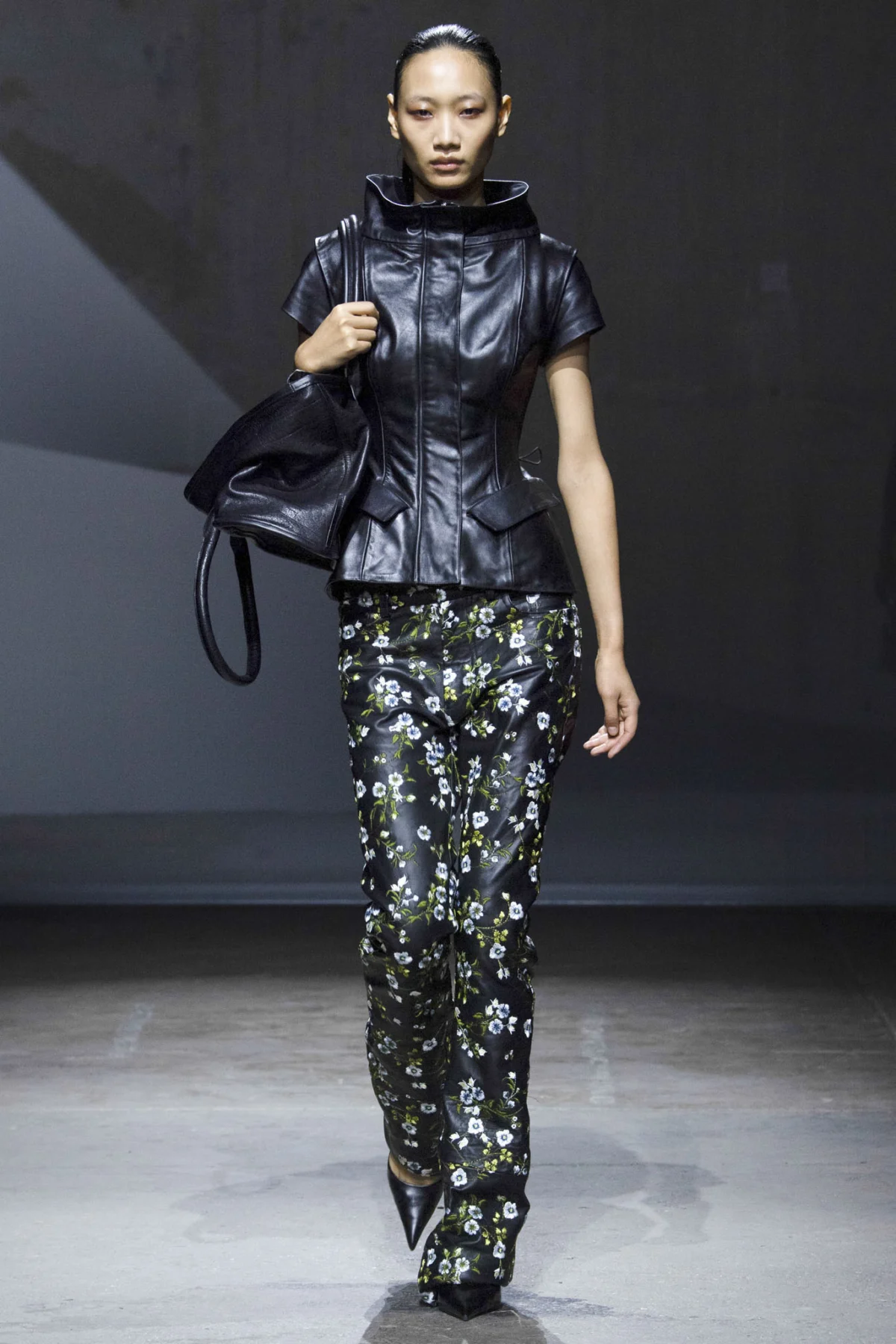
In the high-stakes environment of London Fashion Week, where spectacle often eclipses substance, Petra Fagerström’s debut runway outing arrived as a masterclass in controlled, intellectual design. The Central Saint Martins alumna, already distinguished as a finalist for the prestigious LVMH Prize, presented her Spring 2027 collection, "Swedish Summer," with a level of maturity that suggests a designer who has already mastered the balance between avant-garde experimentation and commercial viability.
The show was not merely a collection of garments; it was a manifesto on the modern woman, articulated through the language of duality, material subversion, and technical innovation.
The Evolution of an Aesthetic: From AI to Reality
Fagerström’s rise to prominence began with a conceptual exploration of artificial intelligence’s encroaching role in the fashion industry. Initially, her work felt like a digital interrogation of the human form. However, for her London debut, she pivoted toward a more grounded, pragmatic perspective.
"I have a very clear idea of the woman I am designing for and what her daily needs are," Fagerström explained backstage, noting that this clarity allowed her to move away from the purely theoretical. "I want to work around the duality of a woman. I’m not interested in resolving or suppressing these contradictions; I’m interested in finding a way to let them coexist in the same garment, and ultimately, in the same woman."
This philosophy defines the "Swedish Summer" collection. It is a wardrobe that acknowledges the friction between professional expectations and personal rebellion. By grounding her aesthetic in reality, Fagerström has managed to create pieces that feel destined for the luxury shop floor rather than just the museum archive.
Chronology of a Coherent Vision
The runway presentation unfolded with a narrative rhythm that moved from the structured to the subversive. The collection opened with silhouettes rooted in 1940s and 1950s couture archetypes—conservative, "well-behaved" shapes that served as a canvas for her radical interventions.
As the show progressed, the "glitching" effect became more pronounced. Fagerström utilized a technique of material juxtaposition that challenged the viewer’s perception. A quintessential Bar jacket, an icon of mid-century restraint, was reimagined in fitted, high-gloss leather, transforming a symbol of traditional femininity into a sharp, architectural statement of power.
Further into the collection, the structural play reached its zenith with a trench coat designed to remain permanently open. The traditional canvas exterior appeared to be splitting apart, exposing a delicate, hand-embroidered leather underlayer adorned with intricate floral motifs. This "split-shell" technique served as a physical metaphor for the collection’s central thesis: the internal state of a woman breaking through her exterior constraints.
Technical Innovation: The Lenticular Revolution
Perhaps the most impressive facet of the collection was Fagerström’s mastery of optical illusions. By integrating hand-stitched, lenticular pleats, the designer allowed her garments to hold two distinct visual identities simultaneously.
One standout dress, which appeared to be a classic tweed skirt suit while the model was stationary, flickered into a vision of lace and lingerie as she walked. Another piece utilized similar technology to transition from a printed representation of intimate apparel to a serene, natural landscape. These were not merely gimmicks; they were sophisticated applications of textile engineering that enforced the idea of the "double-front" language—a design signature that suggests the wearer is never just one thing, but rather a shifting mosaic of personas.
Supporting Data: The Business of Hybridity
While the show was a triumph of creativity, it was equally a demonstration of business acumen. In an era where many emerging designers struggle to translate runway concepts into revenue, Fagerström has developed a clear pipeline for growth.
The introduction of her first accessory line, developed in collaboration with London-based designer Eden Tan, signifies a strategic shift toward building a lifestyle brand. The bags, which mirror the collection’s double-front language, were not mere afterthoughts; they were constructed with the same rigorous attention to material detail as the apparel. By entering the leather goods market so early in her trajectory, Fagerström is positioning her label as a long-term business pillar rather than a fleeting creative experiment.
The collaboration with Tan—a designer known for his own boundary-pushing upcycling—highlights Fagerström’s ability to build a professional ecosystem that supports her creative ambitions. This partnership suggests that the brand is ready to scale, moving beyond the niche appeal of the runway into the broader luxury market.
Official Responses and Industry Reception
Industry analysts and critics have responded with overwhelming enthusiasm, noting that Fagerström’s "Swedish Summer" successfully navigates the often-treacherous waters of "wearable art." By avoiding the trap of pure ornamentation, she has established a brand identity that is simultaneously cerebral and accessible.
"It is rare to see a designer who can balance such complex technical narratives with such a refined sense of wearability," noted one industry commentator following the show. "Fagerström isn’t just making clothes; she is making a case for the modern, multifaceted woman."
Her standing as an LVMH Prize finalist has undoubtedly heightened expectations, yet the London debut proved she is more than capable of handling the scrutiny. Her ability to articulate a clear design language—where the garment itself functions as a debate between past and future—has placed her at the forefront of a new generation of designers who prioritize the "why" as much as the "what."
Implications: The Future of the "Swedish Summer"
The success of this collection carries significant implications for the direction of the London fashion scene. For several seasons, London has been criticized for being either too focused on "raw" talent or too detached from the realities of the retail market. Fagerström bridges this gap.
Her "well-behaved with a rebellious undercurrent" aesthetic is a direct response to the current cultural climate, where consumers are increasingly looking for clothes that offer more than just aesthetic pleasure. They want narrative, they want technical depth, and they want versatility.
Looking forward, the success of the lenticular pleating and the leather goods line suggests that the brand’s future lies in constant, iterative innovation. If Fagerström continues to refine this "double-front" language, she is likely to secure a permanent place in the luxury firmament.
Moreover, the "Swedish Summer" collection serves as a template for how designers can effectively integrate emerging technology without losing the human touch. By using digital-inspired techniques to create physical, tactile experiences, she has found a way to bridge the divide between the digital age and the artisanal traditions of couture.
Conclusion
Petra Fagerström’s London debut was a sophisticated, coherent, and highly ambitious outing that cements her status as one of the most exciting talents in contemporary fashion. Through a combination of historical reimagining, technical daring, and a sharp eye for commercial potential, she has created a collection that is as intellectually stimulating as it is beautiful.
As she moves forward, the challenge for Fagerström will be to maintain this high standard of duality. The fashion industry is a fickle landscape, but with a clear vision of the woman she is dressing and a commitment to pushing the boundaries of what a garment can do, she is well-equipped for the long journey ahead. "Swedish Summer" is more than a title; it is the beginning of a new chapter in which the contradictions of the modern woman are finally given the runway space they deserve.
 Layla Zulfa
  Asro
Asro  Suro Senen