
 By Asro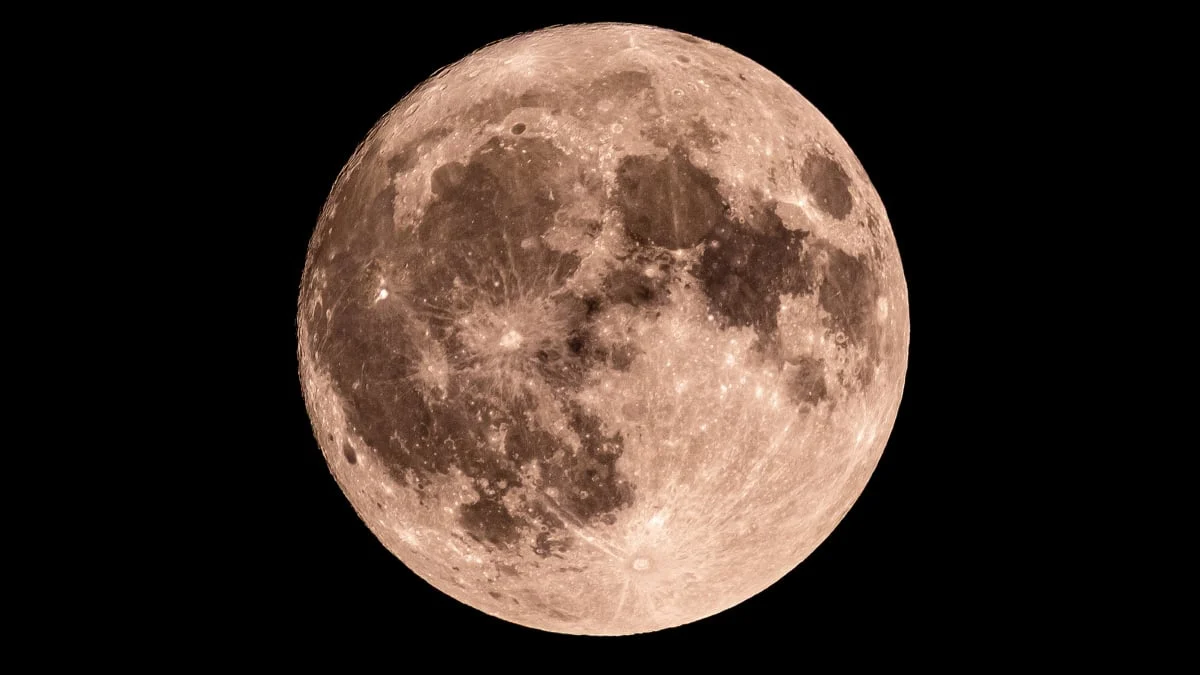
As the autumnal transition takes hold, the night sky offers a brilliant centerpiece for observers across the globe: the Harvest Moon. Reaching its peak illumination on Saturday, September 26, this month’s full moon serves as both a cultural milestone and a fascinating astronomical event. With the lunar disk appearing 100% illuminated, stargazers are presented with a prime opportunity to engage in amateur astronomy, whether through the naked eye or advanced optical equipment.
Main Facts: The Anatomy of the Harvest Moon
The term "Harvest Moon" is steeped in agricultural tradition rather than purely astronomical classification. Historically, it refers to the full moon that occurs closest to the autumnal equinox. In the era before widespread electrical lighting, farmers relied heavily on the light of this moon to extend their working hours, allowing them to gather their crops late into the evening.
As of September 26, NASA’s Daily Moon Guide confirms that the lunar body has reached its full phase. While the "official" moment of peak fullness occurs on a specific day, the moon will maintain its luminous, rounded appearance for several nights, providing a generous window for those looking to capture photographs or simply enjoy the nighttime radiance.
The moon’s appearance is not merely a trick of the light; it is the result of the moon’s orbital geometry. When the moon is in the "Full" phase, it is positioned on the opposite side of the Earth from the Sun. This alignment allows the entire face of the moon visible to us to be bathed in direct sunlight.
Chronology: Understanding the Lunar Cycle
The moon is in a constant state of flux, navigating a complex orbital dance that repeats every 29.5 days. This period, known as the synodic month, dictates the progression of lunar phases.
The Eight Phases of the Lunar Cycle
To understand why we see what we see, it is helpful to break down the progression of the moon’s journey:
- New Moon: The moon is positioned between the Earth and the Sun. Consequently, the side facing our planet remains in shadow, rendering it nearly invisible to the naked eye.
- Waxing Crescent: As the moon continues its orbit, a slim sliver of light begins to appear on the right-hand side (when viewed from the Northern Hemisphere).
- First Quarter: Approximately one week after the New Moon, we see a "half-moon." In this phase, the right half of the disk is illuminated.
- Waxing Gibbous: The light continues to grow, moving past the halfway point until the moon is nearly, but not quite, fully lit.
- Full Moon: The Earth, Moon, and Sun are in near-perfect alignment, with the Earth in the middle. The entire face of the moon is visible, reflecting maximum solar light.
- Waning Gibbous: Post-fullness, the moon begins its descent back into darkness, with the light starting to recede from the right side.
- Third Quarter (Last Quarter): The moon again appears as a half-disk, but this time the illumination is on the left side.
- Waning Crescent: Finally, the moon shrinks to a thin sliver on the left side before disappearing into the New Moon phase once more.
The next Full Moon is projected to occur on October 25 or 26, depending on the observer’s specific longitudinal timezone, continuing the perpetual rhythm of the cosmos.
Supporting Data: Observing the Surface
While the moon is often appreciated as a singular, glowing orb, high-quality viewing—or even a keen eye—reveals a topography defined by violent history and ancient volcanic activity.
Naked-Eye Observations
Even without optical aids, the "Man in the Moon" imagery is actually a collection of maria (Latin for "seas"). These dark patches are ancient basaltic plains formed by volcanic eruptions billions of years ago. Tonight, observers should look for:
- Mare Crisium: Located in the moon’s northeastern quadrant, this circular basin stands out against the brighter lunar highlands.
- Mare Fecunditatis: A massive, sprawling sea that spans the eastern region.
- Oceanus Procellarum: The "Ocean of Storms," the largest of the dark maria, covering a vast portion of the moon’s western face.
Binocular Astronomy
If you have access to standard binoculars, you can bridge the gap between casual observation and scientific exploration.
- Posidonius Crater: A prominent crater on the edge of the Mare Serenitatis, known for its complex interior structure.
- Alphonsus Crater: Situated near the center of the lunar disk, this crater is a site of significant geological interest due to its dark-haloed explosive vents.
- Mare Frigoris: The "Sea of Cold," stretching across the far north of the lunar disk.
Telescopic Targets
For those with a telescope, the surface becomes a map of human achievement and geological turmoil. You may be able to identify:
- Apollo 12 and 16 Landing Sites: While not visible as physical hardware due to the extreme distance, the landing regions can be identified. Apollo 12 touched down in the Oceanus Procellarum, while Apollo 16 landed in the rugged Descartes Highlands.
- Schiller Crater: A distinct, elongated crater in the southwestern quadrant, unique for its unusual, oblong shape, likely formed by a grazing impact.
Official Responses and Scientific Context
NASA emphasizes that the lunar phases are a direct consequence of the moon’s orbital position relative to the Earth and the Sun. "The Moon does not produce its own light," NASA’s lunar experts explain. "What we perceive as moonlight is merely the reflection of solar rays bouncing off the lunar regolith."
The agency encourages public engagement with these events through its "Daily Moon Guide." By tracking the exact percentage of illumination, NASA aims to demystify celestial mechanics for students and amateur astronomers alike. This cycle of light and shadow serves as the foundation for timekeeping systems used by civilizations for millennia, and it remains the primary way we measure the rhythm of our closest neighbor in space.
Implications: The Cultural and Scientific Legacy
The Harvest Moon represents a convergence of human history and physical science. Throughout human development, the moon has acted as a timekeeper, a navigational aid, and a subject of deep cultural reverence.
Agricultural Significance
The legacy of the Harvest Moon reminds us of a time when the sky dictated the pace of human survival. The extra illumination provided by this specific full moon meant the difference between a successful harvest and a winter of scarcity. Today, while modern agriculture is less reliant on lunar cycles, the tradition persists as a way to connect with the seasonal transitions of the Earth.
Future Exploration
As we look toward the next cycle, the scientific community is shifting its gaze back to the lunar surface. With programs like Artemis and private sector missions targeting the lunar South Pole, our relationship with the moon is evolving from observation to exploration. We are no longer just looking at the Apollo landing sites; we are preparing to return, this time with the intent of establishing a sustainable presence.
The Psychological Impact
Beyond the science, there is an undeniable psychological draw to the Full Moon. From a biological perspective, the increased ambient light has historically influenced nocturnal activity patterns. In the modern era, the Full Moon serves as a "call to the outdoors," encouraging people to step away from their screens and look upward.
As you head outside on this Saturday night, remember that you are participating in an activity that has been performed by humans for as long as we have walked the Earth. Whether you are using a professional telescope or simply gazing up from your backyard, the Harvest Moon serves as a reminder of our place in the solar system—a small, blue planet caught in the gravitational embrace of a luminous, ever-changing neighbor.
As the light begins to wane in the coming days, remember that the cycle is never truly broken; it is merely waiting for the next rotation, the next orbit, and the next opportunity to illuminate the night.
 rifanmuazin
  Laily UPN
  Lina Irawan