
 By Nila Kartika Wati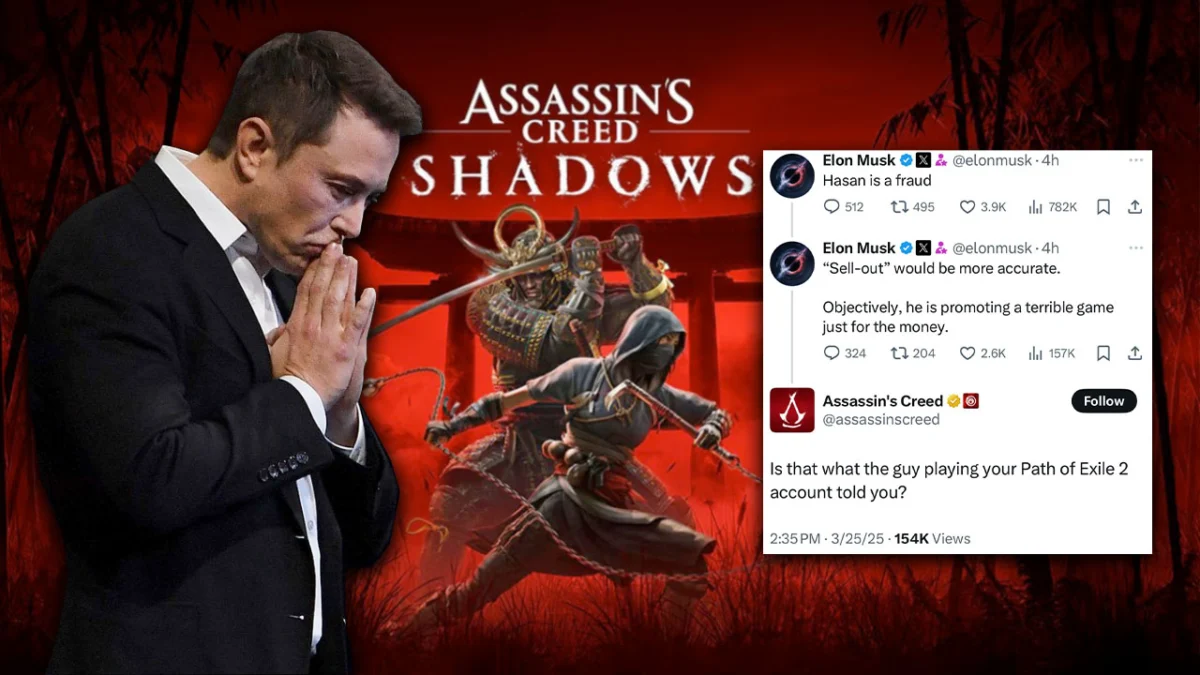
SAN FRANCISCO — In the ever-unpredictable theater of online discourse, billionaire tech mogul and X (formerly Twitter) owner Elon Musk found himself on the receiving end of a viral corporate roasting this week. The official social media account for Ubisoft’s flagship franchise, Assassin’s Creed, delivered a devastating public blow to Musk on his own platform, instantly generating hundreds of thousands of likes and triggering a tidal wave of schadenfreude across the digital landscape.
The exchange highlights a broader, ongoing cultural war intersecting high-profile tech figures, prominent political streamers, video game developers, and the notoriously unforgiving ecosystem of online gaming communities. What began as a routine online grievance from a conservative video game commentator quickly snowballed into a multi-tiered public relations spectacle, culminating in Musk being publicly reminded of his own recent, highly publicized gaming scandals.
Main Facts
The core of the controversy centers on a public disagreement that unfolded on X between Elon Musk, political commentator and Twitch streamer Hasan Piker, and prominent video game critic Mark Kern (widely known online by his handle @Grummz).
The dispute ignited when Kern criticized the development team behind the upcoming title Assassin’s Creed: Shadows for partnering with and sponsoring Hasan Piker—a prominent left-wing streamer—to play and promote the game on his channel. Kern’s critique drew the attention of Musk, who stepped into the conversation to blast Piker. Musk publicly labeled the streamer a "fraud" and a "sell out," accusing him of promoting a "terrible game just for the money."
Rather than letting the attack go unanswered, the official X account for @AssassinsCreed interjected with a sharp, highly targeted retort. Referencing Musk’s notorious Path of Exile 2 "account-boosting" controversy from earlier this year, the account replied to Musk with a pointed jab: "Is that what the guy playing your Path of Exile 2 account told you?"
The tweet quickly achieved legendary status on the platform, amassing over 400,000 likes overnight and thoroughly "ratioing" Musk—a term used when a reply drastically outperforms the original post in engagement, signaling public disapproval or mockery of the original author. The corporate burn not only stole the spotlight from Musk’s initial critique but also reignited a wave of internet memes poking fun at the billionaire’s well-documented struggles to establish credibility within gaming subcultures.
Chronology of Events
To fully understand how a corporate video game account came to publicly humiliate the owner of a major social media platform, it is necessary to trace the sequence of events leading up to the viral clash.
Phase 1: The Path of Exile 2 Exposure (January 2025)
Months prior to the Assassin’s Creed incident, Musk had been attempting to cultivate an image as an elite, hardcore gamer, specifically showcasing his high-level character in Grinding Gear Games’ action role-playing game, Path of Exile 2. However, eagle-eyed veterans of the game quickly noticed glaring discrepancies during Musk’s livestreams.
Despite operating a high-rank, overpowered character, Musk played with the spatial awareness and tactical clumsiness of an absolute beginner, blundering across maps and failing basic mechanics. Furthermore, publicly available server and game data revealed that Musk’s account was logging in from Asian servers or utilizing a VPN to simulate an Asian IP address—an inexplicable anomaly unless someone else was operating the character.
Faced with mounting cryptographic and circumstantial proof, Musk eventually confessed to "account boosting," attempting to normalize the behavior by tweeting, "It’s impossible to beat the players in Asia if you don’t, as they do!" The admission cemented a running joke among gaming communities that Musk was a "fraud gamer" who outsourced the difficult parts of video games to professionals while taking the public credit.

Phase 2: The Assassin’s Creed: Shadows Sponsorship (Recent)
Ubisoft ramped up its marketing campaign for Assassin’s Creed: Shadows, employing standard industry practices by partnering with high-profile content creators across platforms like Twitch and YouTube to drive awareness and pre-orders. Among those selected was Hasan Piker, a leftist political commentator with a massive streaming audience.
Phase 3: Kern’s Critique and Musk’s Intervention
Mark Kern (@Grummz), a vocal critic of modern game development practices and frequently a central figure in anti-"woke" gaming culture wars, took to X to condemn Ubisoft’s decision to sponsor Piker. Kern argued that partnering with polarizing political commentators detracted from the artistic integrity of the game.
Seizing upon Kern’s post, Elon Musk amplified the sentiment to his hundreds of millions of followers. Dropping into the thread, Musk characterized Piker as a transactional hypocrite, writing that the streamer was pushing a "terrible game just for the money."
Phase 4: The Streamer Duel and the Corporate "Ratio"
As the argument escalated, Hasan Piker exchanged a series of sharp barbs with Musk. The back-and-forth—mediated largely through screenshots and commentary by Kern—saw Piker challenge Musk to a high-stakes "duel" in FromSoftware’s notoriously difficult action RPG Elden Ring. In response, Musk fired back by calling Piker "chickens—" for allegedly blocking him on the platform.
While the two figures traded insults, the official @AssassinsCreed social media manager dropped the hammer. By invoking Musk’s prior Path of Exile 2 boosting scandal, the Ubisoft account effectively short-circuited Musk’s moral high ground, questioning how someone who pays others to play games for him could credibly accuse a streamer of being a "fraud" or a "sell out."
Supporting Data and Digital Impact
The quantitative metrics surrounding the incident underscore the sheer scale of the digital mockery. Within twelve hours of publication, the @AssassinsCreed reply crossed the 400,000-like threshold, a staggering figure for a corporate brand account interacting directly with a platform owner.
| Metric Category | Details |
|---|---|
| Platform | X (formerly Twitter) |
| Target of Mockery | Elon Musk (Owner of X) |
| Instigator of Roast | Official @AssassinsCreed Account |
| Engagement Milestone | 400,000+ likes overnight |
| Underlying Scandal | Path of Exile 2 Account Boosting (January 2025) |
| Secondary Participants | Hasan Piker (Twitch Streamer), Mark "Grummz" Kern (Critic) |
The virality of the post prompted a swift influx of community reaction memes. Numerous users leaned into the dramatic irony of the situation, referencing the popular meme format "I was unfamiliar with your game" to praise the Ubisoft social media team for their tactical precision. Others circulated clips and screenshots of Musk’s clumsy Path of Exile 2 streams, juxtaposing them against his aggressive rhetoric toward professional streamers.
Furthermore, a significant number of digital commentators highlighted the profound irony that Musk had expended $44 billion to acquire a platform, only to find himself routinely "cooked" and publicly out-maneuvered on it by corporate marketing teams and independent content creators alike.
Official Responses and Stakeholder Positions
While Elon Musk did not immediately issue a direct, formal response to the Assassin’s Creed barb—opting instead to focus his energy on his ongoing digital feud with Hasan Piker—the broader ecosystem of stakeholders reacted predictably along ideological and tribal lines.
- Ubisoft and the Assassin’s Creed Team: Aside from the viral tweet, the corporate entity maintained a strategic silence, allowing the community engagement to speak for itself. In the modern era of social media marketing, a high-impact, culturally literate "roast" by an official brand account is frequently treated as a massive public relations victory, driving organic impressions far exceeding traditional advertising budgets.
- Hasan Piker: Piker leaned heavily into the public spat, using his streaming platform to dissect Musk’s commentary, highlight the absurdity of being called a "fraud" by someone caught paying for video game progression, and entertaining the prospective Elden Ring duel challenge.
- Mark Kern (@Grummz): Kern continued to position the dispute within the context of ongoing debates surrounding corporate gaming sponsorships, industry culture, and the influence of political commentators on creative media properties.
Implications for Corporate Social Media and Gaming Culture
The incident serves as a fascinating case study in the evolving dynamics of corporate communication, platform ownership, and internet subcultures.
- The Erosion of Corporate Deference: Historically, official corporate accounts—especially those belonging to massive publishers like Ubisoft—maintained a sanitized, overly polite veneer when interacting with high-profile users, let alone the billionaire owner of the platform they were hosting their content on. The willingness of the @AssassinsCreed account to publicly mock Musk signals a shift toward a more aggressive, chronically online brand voice that prioritizes viral engagement and internet cultural capital over traditional corporate diplomacy.
- The Fragility of "Gamer" Credibility: For figures like Elon Musk, who frequently attempt to leverage gaming culture as a tool for populist relatability and community building, authenticity is heavily scrutinized. As demonstrated by both the Path of Exile 2 fiasco and the subsequent Assassin’s Creed ratio, attempts by public figures to fake expertise or posture as hardcore enthusiasts are met with swift, unyielding institutional and community backlash.
- The Weaponization of Platform Architecture: The phenomenon of the "ratio" on X remains one of the most potent equalizers in modern digital media. Regardless of who owns the infrastructure or commands algorithmic privileges, the collective will of online communities—and occasionally rogue corporate social media managers—can rapidly dismantle a narrative, proving that online prestige cannot be bought for $44 billion.
 Azzam Bilal Chamdy
  Laily UPN