
 By Laily UPN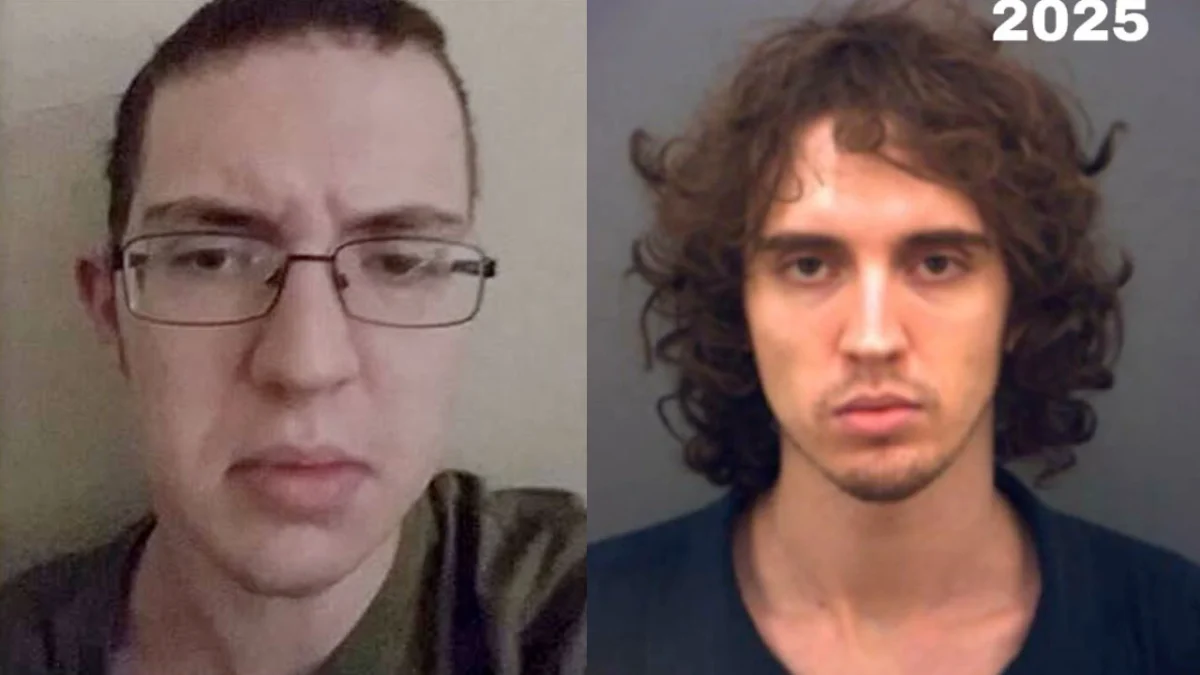
Main Facts
In late April 2025, a newly surfaced photograph of Patrick Crusius—the perpetrator of the 2019 El Paso Walmart mass shooting—traveled rapidly across mainstream and fringe social media platforms. Crusius, who is currently serving multiple consecutive life sentences for carrying out one of the deadliest targeted attacks against Latinos in modern American history, occupies a unique and deeply disturbing space in contemporary internet culture. For years, he has been known to millions of internet users not primarily as a convicted domestic terrorist, but as the living blueprint behind "Chudjak," a crude, highly recognizable line-drawing caricature born out of the anonymous imageboards of 4chan.
The newly leaked image, purportedly a booking photograph or holding facility snapshot dating back to July 2023, shows Crusius without his signature glasses, sporting longer, curly hair and facial scruff. The contrast between this updated appearance and his gaunt, bespectacled mugshot from 2019 triggered an unexpected and bizarre wave of dark humor, irony, and surreal meme creation. Across platforms like X (formerly Twitter) and Reddit, users expressed disbelief at his altered appearance, joking that the inspiration behind the apocalyptic "Billions Must Die" meme had undergone a paradoxical "glow-up."
While the viral spread of the photograph offered a stark reminder of the bizarre ways real-world atrocities bleed into digital folklore, it also exposed the profound detachment of online subcultures from the grim realities of mass violence. Legal experts, internet historians, and safety advocates have watched the phenomenon with alarm, noting how easily the human tragedies behind internet memes can be abstracted into surreal punchlines within the unregulated ecosystems of social media.
Chronology of Events
The digital life cycle of this recent leak began in the subterranean corners of Reddit before exploding into the broader public consciousness via X.
- Late 2019: Following his arrest for the El Paso Walmart shooting, imageboard users on 4chan’s notorious
/pol/(Politically Incorrect) board isolate Crusius’s physical features to create the "Chudjak" Wojak variation. The drawing becomes a staple of doomerist internet humor, eventually spawning the ubiquitous catchphrase, "The West has fallen. Billions must die." - July 2023: According to records and context provided by digital investigators, a holding facility in El Paso captures a new photograph of Crusius in connection with ongoing federal and state legal proceedings. This image differs significantly from his original 2019 booking photo, showing him without glasses and with grown-out, curly hair.
- April 21, 2025: Crusius appears in court for a high-profile hearing where he formally pleads guilty to capital murder charges, sporting a beard and glasses that contrast with the mid-2023 holding photo.
- April 25, 2025: A Reddit user operating under the handle
/u/uncanealguinzaglioposts what they claim is the July 2023 federal mugshot to the subreddit/r/masskillers, allegedly acquired via a Freedom of Information Act (FOIA) request. The post is swiftly deleted by moderators, likely due to violations of Reddit’s Terms of Service regarding the dissemination of certain restricted institutional imagery, but not before the image is successfully scraped and saved by digital archivists. - April 27, 2025: An X user (@TruueDiscipline) shares the image alongside the caption, "This is what chudjak looks like now… feel old yet?" The tweet goes viral, accumulating over 1.2 million views and 17,000 likes within 48 hours.
- Late April 2025 (Post-Viral Phase): The internet responds with a flurry of ironic commentary. Users generate side-by-side comparisons likening Crusius to an "indie rock singer," post satirical reactions of shock, and debate the surreal implications of a mass murderer achieving meme-driven notoriety. Simultaneously, the original poster clarifies the timeline of the leaked photograph, pointing out that subsequent court appearances in April 2025 show Crusius having returned to a different appearance altogether.
Supporting Data and Context
To understand the viral shock surrounding Crusius’s 2023 photograph, one must examine the mechanics of meme mutation within internet subcultures. The "Chudjak" is part of the broader "Wojak" or "MS Paint" meme ecosystem, which originated more than a decade ago as simple reaction faces before evolving into an intricate, multivalent language of political extremism, self-loathing, and ironic detachment.
| Element | Detail |
|---|---|
| Perpetrator | Patrick Crusius (Convicted of the 2019 El Paso Walmart shooting) |
| Meme Origin | 4chan /pol/ board, late 2019 |
| Associated Catchphrase | "The West has fallen. Billions must die." |
| Leak Date (Alleged) | July 2023 photo surfaced on Reddit on April 25, 2025 |
| Viral Catalyst | X post by @TruueDiscipline on April 27, 2025 (>1.2M views) |
| Legal Status | Serving multiple consecutive life sentences in federal and state prison |
The phrase "Billions Must Die," frequently attached to the Chudjak caricature, functions as a hyper-exaggerated parody of sincere doomerism and far-right accelerationism. Over time, the meme was decoupled from its horrific real-world origins, entering mainstream internet slang where teenagers and young adults use variations of "the west has fallen" to mock minor inconveniences or absurd lifestyle changes. Consequently, when a real, physical photograph of the actual human being behind the cartoon surfaced, many younger internet users experienced cognitive dissonance—having known the face only as a flat, pixelated line drawing.
Official Responses and Institutional Reactions
The dissemination of Crusius’s holding photos highlights ongoing tensions between transparency laws, platform governance, and the ethics of digital archiving.

The initial leak on Reddit’s /r/masskillers community was met with swift administrative action. Subreddit moderators and automated trust-and-safety protocols removed the post within hours of publication. While the Freedom of Information Act (FOIA) allows citizens to request federal records—including certain mugshots and institutional documents—platforms like Reddit and X maintain strict internal policies against content that glorifies mass killers, shares unauthorized sensitive institutional media, or violates the privacy of correctional facilities.
However, the decentralized nature of modern social media ensures that once an image escapes a tightly moderated forum, containment is virtually impossible. X users readily re-uploaded the photograph, bypassing platform filters by framing the content through layers of irony, satire, and meta-commentary. Content moderation algorithms struggle to evaluate contextual irony, often leaving viral posts untouched unless explicitly reported for harassment or policy violations.
Legal representatives for victims of the El Paso shooting, as well as advocacy groups monitoring digital extremism, have repeatedly cautioned against the gamification of mass shooters. While the internet treats figures like Crusius as abstract cartoon characters or digital lore, the human cost of his actions remains a raw wound for the families of the 23 people killed and nearly two dozen others injured on August 3, 2019.
Implications
The viral reaction to Crusius’s altered appearance underscores a broader, deeply unsettling trend in digital culture: the complete abstraction of real-world violence into disposable internet content.
When a mass murderer becomes a meme template, the horror of their crimes is swallowed by layers of irony. To millions of online users, the name "Patrick Crusius" or "Chudjak" evokes laughter, absurd video edits, and sarcastic commentary rather than the victims of white supremacist terrorism. This detachment allows individuals—particularly younger generations immersed in imageboard culture—to engage with extremist iconography without necessarily endorsing its ideological roots, though the line between "ironic" engagement and radicalization is dangerously thin.
Furthermore, the obsession with the physical changes of incarcerated criminals—often colloquially referred to online as "prison glow-ups"—reveals a morbid curiosity embedded within true crime and internet subcultures. When criminals are thrust into the spotlight through leaked documents or photographs, social media treats them not as condemned felons facing justice, but as characters in an ongoing, multi-year reality television drama.
Ultimately, the recirculation of Crusius’s photo serves as a grim case study in how the internet flattens history. A horrific tragedy that forever altered an American city is reduced to a punchline on a timeline, proving that in the digital age, nothing is too sacred, too dark, or too tragic to be turned into a meme.
 Suro Senen
  Basiran
  Layla Zulfa