
 By Lina Hope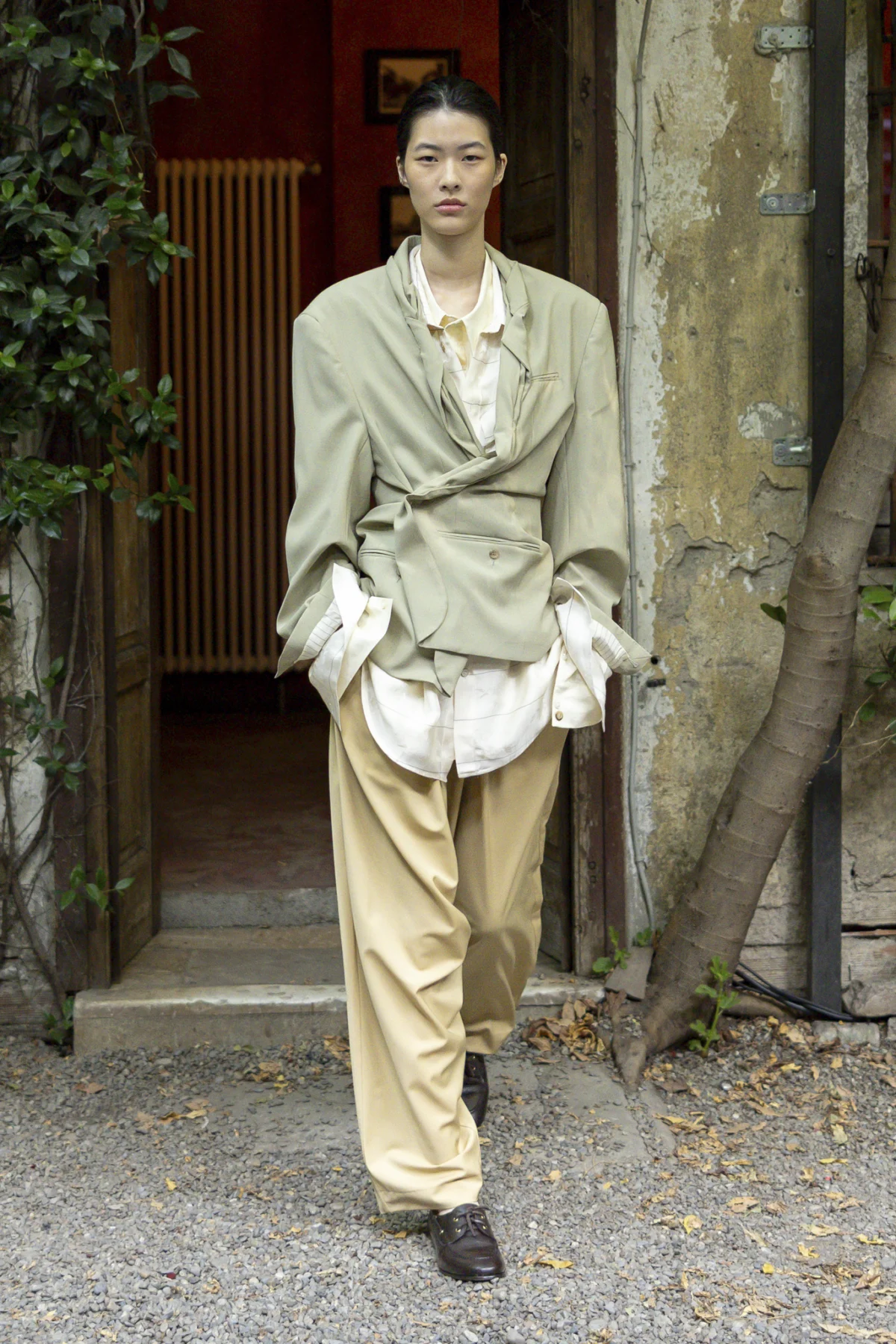
In the evolving landscape of contemporary menswear, few designers possess the surgical precision required to dismantle the classics while maintaining their structural integrity. Luca Lin, a rising force in the world of independent design, has once again signaled his intent to challenge the boundaries of the sartorial canon. His latest collection is not merely an exercise in garment production; it is a masterclass in pattern-making, a rigorous interrogation of the wardrobe staple, and a testament to the potential of circularity in high fashion.
The Evolution of the Silhouette: Main Facts
At the heart of Lin’s latest offering is a profound commitment to the art of the cut. By utilizing deadstock fabrics—textiles salvaged from the archives of luxury houses and mills—Lin addresses the industry’s pressing sustainability concerns without compromising on aesthetic ambition. His methodology is rooted in the "deconstruct-to-reconstruct" philosophy, where the blazer and the shirt are treated not as fixed templates, but as malleable sketches.
The collection is defined by a series of deliberate interventions. Blazers have been re-engineered with twisted lapels that subvert traditional lines, while sleeves and back panels have been opened to introduce a sense of kinetic fluidity. The silhouettes are intentionally oversized, a nod to the fluidity of modern gender expression, yet they retain a poised, almost architectural quality. Perhaps most striking is the treatment of trousers, which feature voluminous, multi-fold constructions—a design signature that has become synonymous with the Lin aesthetic.
Chronology of a Creative Vision
To understand the trajectory of Lin’s work, one must observe the gradual progression of his technique over the last four seasons. Initially recognized for his minimalist approach to shirting, Lin transitioned into more complex outerwear in his previous collection, where he first experimented with the "twisted lapel" concept.
This season represents the culmination of those experiments. The chronology of the development phase was marked by a shift toward materiality. By focusing exclusively on deadstock, Lin was forced to adapt his patterns to the limitations of existing fabric quantities. This constraint, rather than stifling his creativity, served as the primary catalyst for the collection’s unique character.
In the weeks leading up to the runway presentation, the atelier saw a pivot toward sculptural experimentation. While the early phase of the collection focused on the refinement of the blazer, the final fortnight was dedicated to the integration of unexpected accessories and the realization of the collection’s experimental finale—a bamboo-clad qipao that served as a polarizing departure from the earlier, more relaxed looks.
Supporting Data: The Anatomy of the Collection
Lin’s work is characterized by a "subtlety of impact," where the devil is not just in the detail, but in the functional subversion of the garment. Key technical elements include:
- Raw-Cut Intersections: A hallmark of the collection is the intentional raw-cut opening located just below the belt line. This allows for a seamless, intentional tuck-in of loose-fitting shirts, creating a silhouette that appears effortless yet is structurally complex.
- The Button Protocol: In a nod to the "make-do-and-mend" ethos, Lin utilized a collection of discarded, mismatched buttons. Each garment functions as a unique piece, with the buttons serving as a tactile signature that breaks the uniformity of mass production.
- Chromatic Strategy: The color palette is strictly tonal. By adhering to a restrained spectrum—ranging from sand and slate to deep obsidian—Lin allows the geometry of the pattern-making to take center stage. The absence of jarring color draws the eye to the folds, seams, and overlaps that define the garments.
- Collaborative Synergy: The collection’s grounded, functional appeal was bolstered by strategic partnerships. Footwear was provided by Saucony and Scarosso, providing a bridge between high-fashion tailoring and urban utility, while eyewear by Akoni added a sharp, modernist finish to the styling.
Official Perspectives and Industry Response
During a brief post-show discussion, Lin emphasized his desire to "elevate the mundane." When asked about the recurring use of the multi-fold pant, he noted, "It is about giving the garment a sense of history. These folds hold the memory of the motion of the person wearing them. It is not just about a wide leg; it is about how the fabric negotiates with gravity."
Industry critics have largely praised the collection for its technical maturity. "Lin is no longer just designing clothes; he is designing a system of dressing," remarked one lead editor. However, the reception of the final piece—the sculptural bamboo qipao—was mixed. While some lauded the homage to his Asian roots as a brave, avant-garde statement, others felt it disrupted the cohesive, relaxed narrative of the preceding looks.
Implications: The Future of Tailoring
The implications of Luca Lin’s work extend far beyond the runway. By proving that high-concept tailoring can be achieved through deadstock materials, Lin provides a blueprint for smaller, independent labels to navigate the tension between luxury and environmental responsibility.
The success of this collection suggests a broader shift in the market. Consumers are increasingly turning away from "fast-fashion" interpretations of tailoring and toward designers who prioritize pattern-making ingenuity. Lin’s willingness to experiment—even when it results in a look that feels "out of place"—indicates a designer who is willing to take risks to find his own language.
Furthermore, his collaborative approach demonstrates an understanding of the modern wardrobe’s ecosystem. By pairing his experimental tailoring with established names like Saucony and Akoni, he positions his brand as a lifestyle-adjacent entity, one that is rooted in craft but designed for the realities of contemporary urban life.
The Experimental Pivot: A Closing Note
The qipao that concluded the show serves as a thematic bridge to Lin’s next chapter. While it felt discordant within the context of the relaxed, oversized blazer-and-trouser lineup, it signaled a move toward material experimentation. Whether Lin continues to blend traditional cultural silhouettes with modern deconstruction remains to be seen, but the intent is clear: he is interested in the intersection of heritage and innovation.
As the industry looks toward the next cycle, the focus will undoubtedly remain on whether Lin can synthesize these disparate elements—the mundane and the experimental—into a more cohesive whole. For now, he remains one of the most compelling voices in the field, a designer who treats the blazer not as a static object, but as a living, breathing entity capable of constant reinvention.
In the final analysis, Luca Lin is doing more than just making clothes. He is forcing a conversation about the value of the pattern, the integrity of the material, and the necessity of the unexpected. In a world of repetitive design, his ability to twist a lapel or manipulate a fold is a radical act of creativity that continues to demand our attention.
Summary of Key Elements
| Element | Description |
|---|---|
| Focus | Deconstruction and restructuring of classic tailoring. |
| Materiality | Exclusive use of deadstock fabrics and reclaimed buttons. |
| Design Language | Oversized silhouettes, multi-fold pants, twisted lapels. |
| Collaborations | Saucony, Scarosso, Akoni. |
| Polarizing Element | The bamboo-sculpted qipao finale. |
| Goal | To elevate the mundane through experimental pattern-making. |
 Pevita Pearce
  Raul Delapena Setiawan