
 By Nana Muazin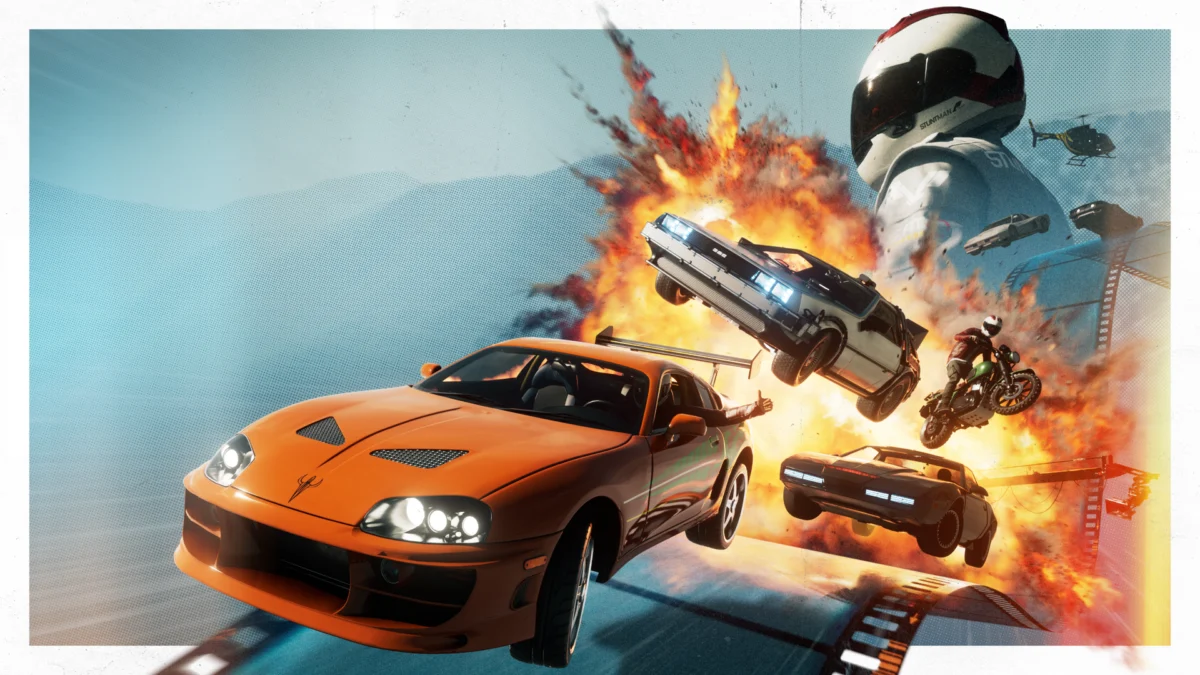
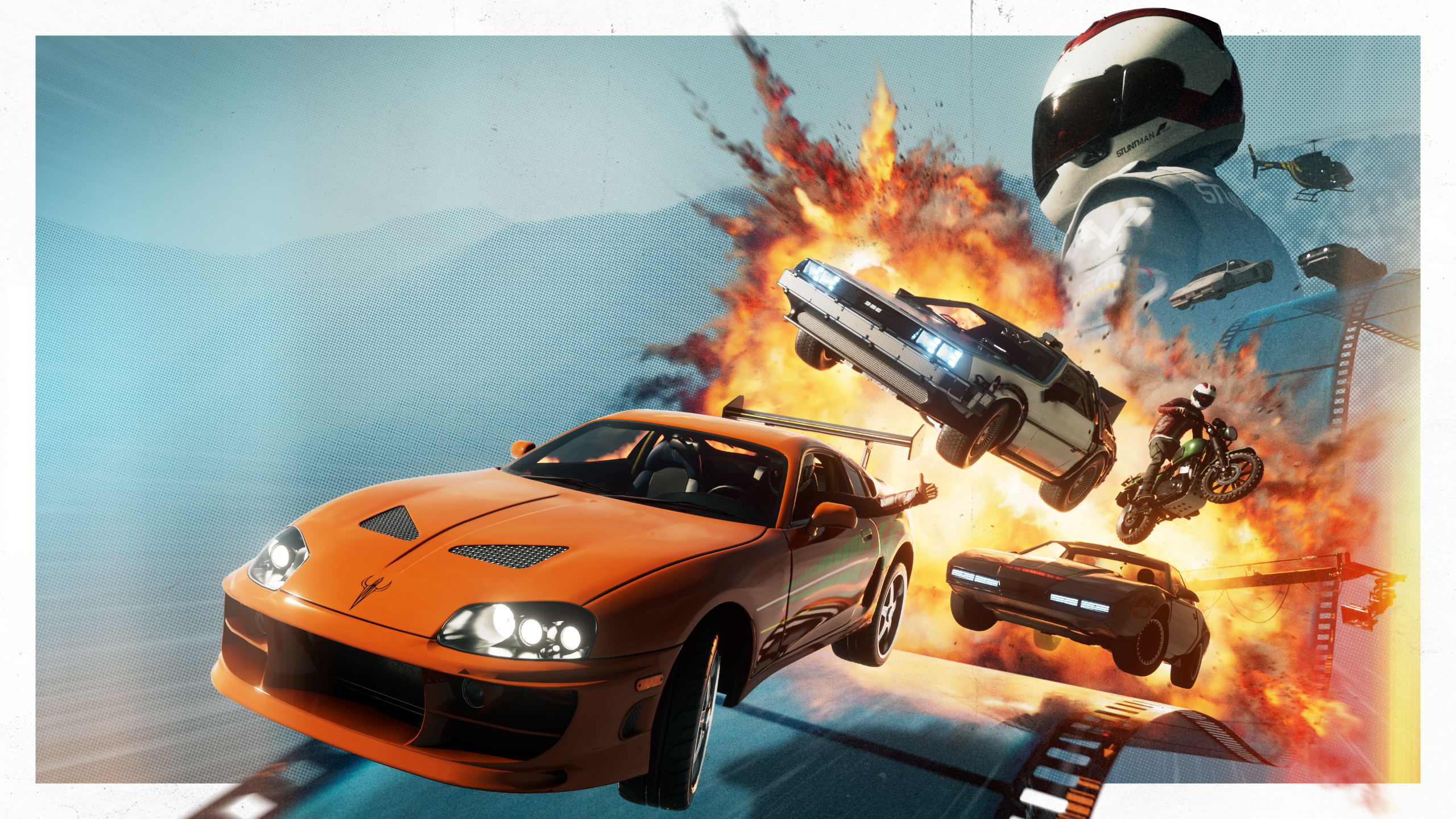
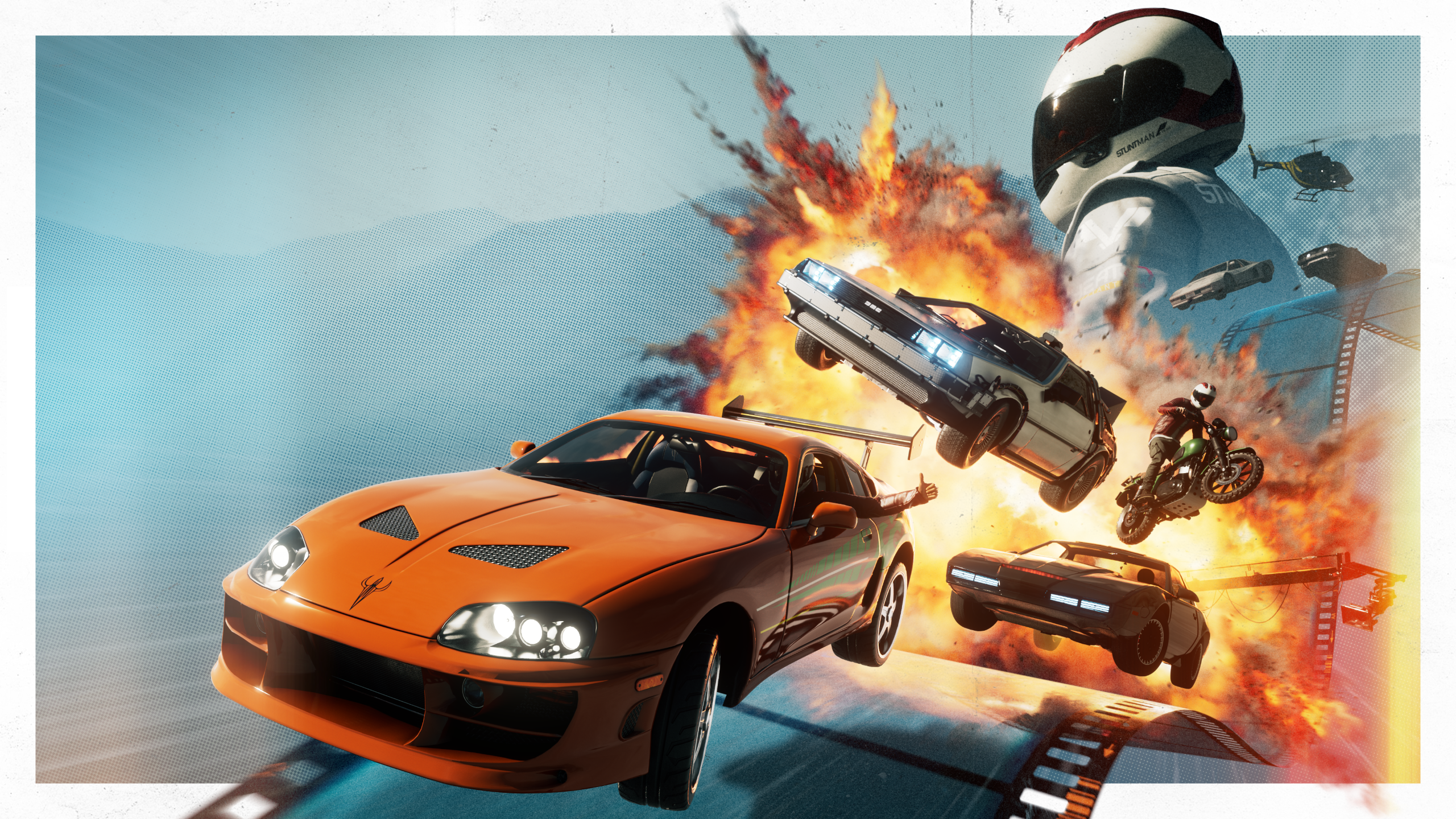
In the high-octane world of video game development, few things are as risky—or as potentially rewarding—as resurrecting a dormant cult classic. For those who grew up in the early 2000s, the name Stuntman evokes memories of precision driving, temperamental directors, and the singular satisfaction of nailing a complex sequence in one perfect take. Now, after years of silence, the franchise is roaring back to life. Saber Interactive has officially unveiled Stuntman: Hollywood, a project that promises to bridge the gap between cinematic spectacle and interactive gameplay.
But as the industry pivots toward massive, sprawling open-world experiences, Stuntman: Hollywood is taking a different approach. By leaning into iconic film intellectual property (IP) and "bite-sized" gameplay, Saber Interactive is betting that players are still hungry for the high-stakes precision of the silver screen.
The Evolution of an Icon: From Reflections to Modern Day
To understand the weight of this revival, one must look at the history of the original title. Developed by Newcastle-based Reflections Interactive and released in 2002 under the Infogrames banner, the original Stuntman was a revelation. It offered players a consequence-free, albeit punishingly difficult, sandbox where they could live out the life of a Hollywood professional. It was never about winning a race; it was about performance, timing, and hitting your marks exactly as the director demanded.
The 2007 sequel, Stuntman: Ignition, further refined these mechanics, adding more polish and variety. However, as the industry shifted focus toward online multiplayer and live-service models, the franchise fell into obscurity. The rights eventually drifted through various corporate hands, landing under the expansive umbrella of the Embracer Group.
The road to Stuntman: Hollywood has been anything but conventional. The project’s inception occurred during a turbulent period for Saber Interactive. Following its 2020 acquisition by the Embracer Group and its subsequent sale in 2024—a $247 million deal to a company owned by Saber co-founder Matthew Karch—the studio found itself with a new lease on life and a renewed focus on its internal strengths.
A Strategic Synergy: The Universal Pictures Connection
One of the most fascinating aspects of Stuntman: Hollywood is its provenance. Chief Creative Officer Tim Willits, speaking at Gamescom, revealed that the project was born from a perfect storm of opportunity and industry relationships.
"Stuntman was an IP that Embracer owned," Willits explained. "When we were part of that family, we looked at the team we had, their experience in the driving genre, and the assets we had at our disposal. We also had this incredible, pre-existing relationship with Universal Pictures through our work on Jurassic Park and Turok. Universal saw the potential, and they were enthusiastic from the start."
This collaboration with major studios is becoming a cornerstone of Saber’s growth strategy. While many publishers view licensing as a secondary revenue stream, Saber is treating it as a primary design pillar. By securing the rights to The Fast and the Furious, Knight Rider, Miami Vice, Back to the Future, Jurassic World, and Death Race, the developers have effectively built a digital theme park of Hollywood’s most iconic vehicular moments.
Hands-On: A Masterclass in "Bite-Sized" Gameplay
In an era of 100-hour role-playing games and endless battle passes, Stuntman: Hollywood feels refreshingly focused. During a hands-on demo at Gamescom, the "bite-sized" philosophy was front and center. The demo consisted of five distinct stunt runs, each clocking in between five and ten minutes.
Despite the short duration, the intensity is palpable. Players are guided by an in-ear director who provides real-time feedback. The gameplay loop is a delicate balance of navigation and performance: you must drift at specific markers, maintain speed for jumps, and thread the needle through tight obstacles—all while the director monitors your proximity to hazards.
The game is designed to be forgiving enough for casual players but demanding enough for those seeking perfection. Failure isn’t a permanent setback; it’s a lesson. If you miss a turn or fail to trigger a sequence correctly, the game allows for a limited number of mistakes before requiring a retry. This loop creates a strong "just one more go" compulsion, as players naturally gravitate toward higher ratings and the mastery of the route.
The Cinematic Aesthetic: Beyond Mere Branding
Visually, Stuntman: Hollywood succeeds by avoiding the trap of hyper-realism. Instead of aiming for a sterile, photo-realistic simulation, the developers have opted for a style that honors the source material.
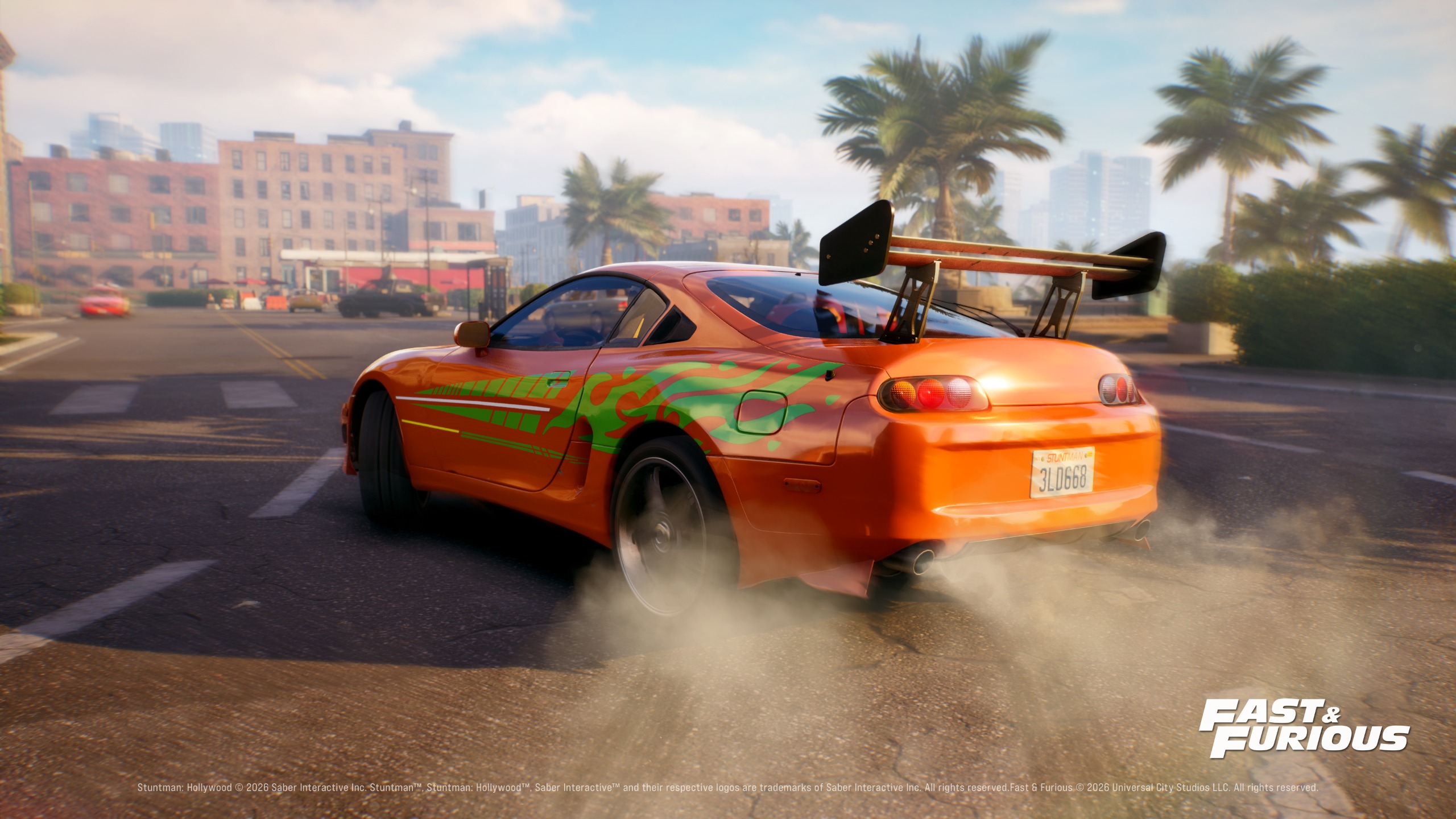
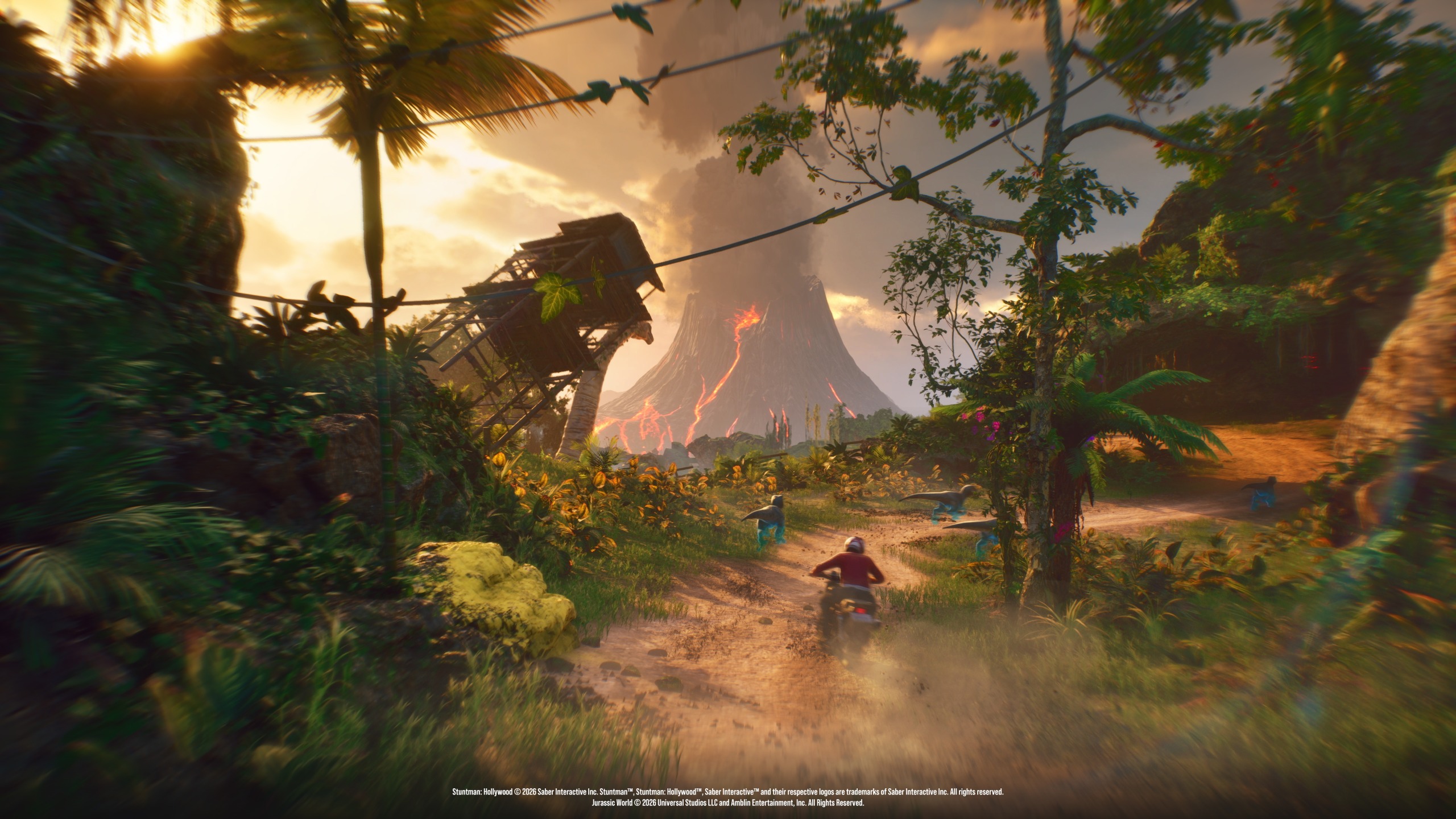
The aesthetic shifts depending on the set. The Miami Vice sequences are drenched in the neon-soaked, pastel hues of 1980s Florida, while the Jurassic World levels lean into the rugged, visceral terrain of a dinosaur-infested island. It is a visual nod to the era of each film, which serves to deepen the immersion for fans of these properties.
Furthermore, the vehicle handling reflects the character of the cars themselves. Whether you are behind the wheel of a white Ferrari Testarossa, KITT from Knight Rider, or the time-traveling DeLorean, each machine possesses a unique "feel" that is augmented by the game’s arcade-style drifting mechanics.
Implications for the Industry
The success of Stuntman: Hollywood could signal a shift in how mid-sized studios approach licensed IP. Saber Interactive is demonstrating that by fostering deep, collaborative relationships with film studios—like their work with Lionsgate on the upcoming John Wick title—publishers can create games that feel authentic to the source material rather than like rushed, cynical cash-grabs.
Tim Willits’ admiration for directors like Chad Stahelski, who directed the John Wick films, highlights this trend. "Chad is a huge gamer," Willits noted. "If you watch a John Wick movie, it feels like a video game. That’s the kind of synergy that makes for a great project."
Conclusion: A Love Letter to Cinema
Stuntman: Hollywood is poised to be more than just an exercise in nostalgia. While it is certainly a love letter to the films that defined our childhoods, it is also a well-crafted, high-intensity driving experience that understands the value of pacing.
In a gaming landscape that often equates "bigger" with "better," there is a distinct space for titles that prioritize focused, high-octane fun. By stripping away the bloat and focusing on the pure, adrenaline-fueled satisfaction of a perfectly executed stunt, Saber Interactive has identified a niche that has been left vacant for far too long.
As we look toward the 2027 release on PlayStation 5, Xbox Series X/S, and PC, one thing is clear: the stuntman is back, and he is ready to take center stage. Whether or not it can maintain its momentum throughout a full campaign remains to be seen, but if the initial demo is any indication, the road ahead is going to be one wild ride.
 Iffa Jayyana
  Muslim
  Sagoh
Sagoh 