
 By Laily UPN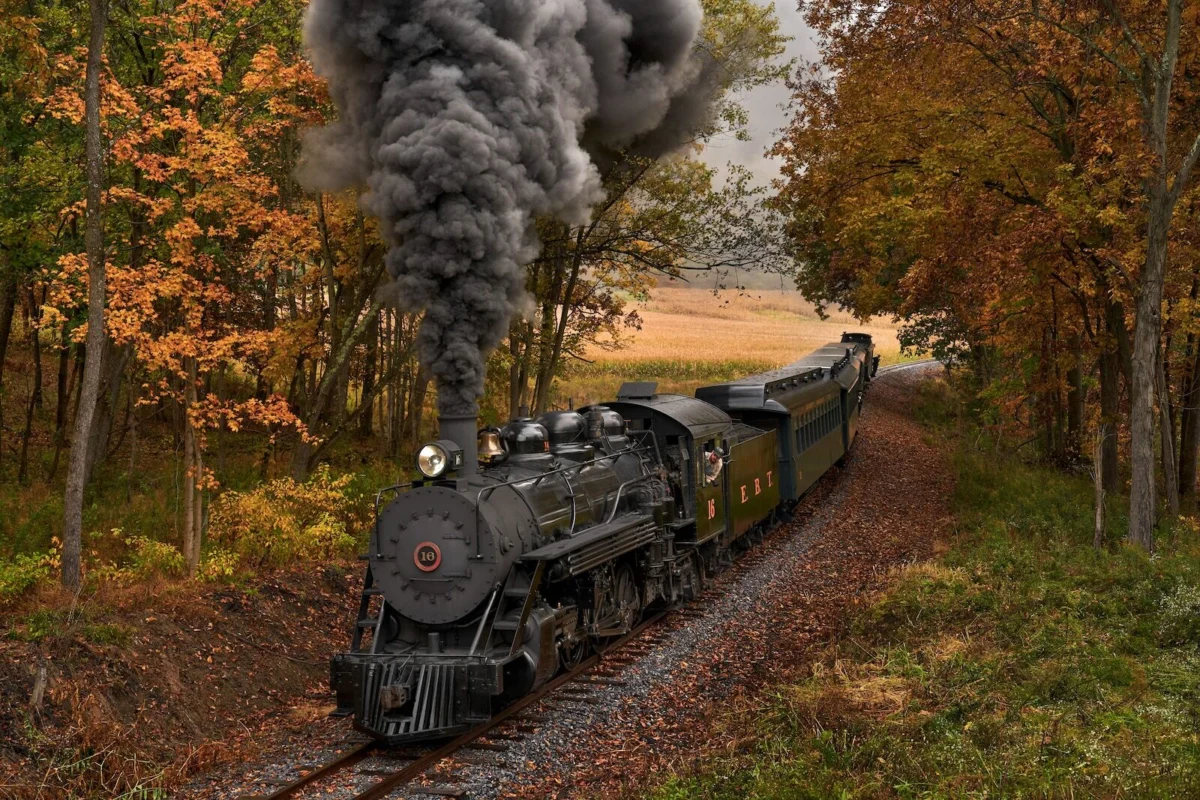
In the rolling, mist-covered valleys of Central Pennsylvania, a remarkable industrial relic has defied the erosion of time. The East Broad Top (EBT) Railroad, an engineering marvel that once served as the lifeblood of the region’s coal industry, stands today as a living museum. Following a decades-long dormancy that left the site frozen in the mid-20th century, the EBT has been meticulously resurrected, offering a rare, sensory-rich journey back to the golden age of steam power. As the only surviving three-foot-gauge common carrier railroad east of the Rocky Mountains, the EBT is not merely a tourist attraction—it is a National Historic Landmark that serves as a vital bridge between the industrial past and modern heritage tourism.
The Foundations of Industry: A Chronology of the EBT
The story of the East Broad Top began in 1872, during an era when the railroad was the primary artery of American commerce. Designed to navigate the challenging, narrow topography of the Appalachian region, the line adopted a three-foot narrow-gauge track system. For over eight decades, the EBT was a bustling hub of activity, hauling vast quantities of coal out of the Central Pennsylvania mines to feed the insatiable furnaces of a growing nation.
However, the post-World War II era brought a seismic shift in transportation economics. As trucking and larger, more efficient standard-gauge lines dominated the landscape, the EBT’s narrow-gauge operations became increasingly obsolete. In 1956, the freight service ceased, marking what many assumed was the permanent end of the line.
What happened next, however, was a historical anomaly. When the final trains pulled into the yard, the crews essentially walked away, leaving the locomotives, the machinery, and the rolling stock exactly where they stood. The Smithsonian Institution would later describe the site as one of the most intact 19th-century industrial complexes in the United States. This "frozen-in-time" quality saved the railroad from the scrappers’ torch. Designated a National Historic Landmark in 1964, the property underwent a long, arduous process of stabilization and restoration, finally resuming operations as a heritage railroad in 2021. Today, the revived EBT represents a triumphant victory for historic preservationists.
Supporting Data: The Experience of the Rails
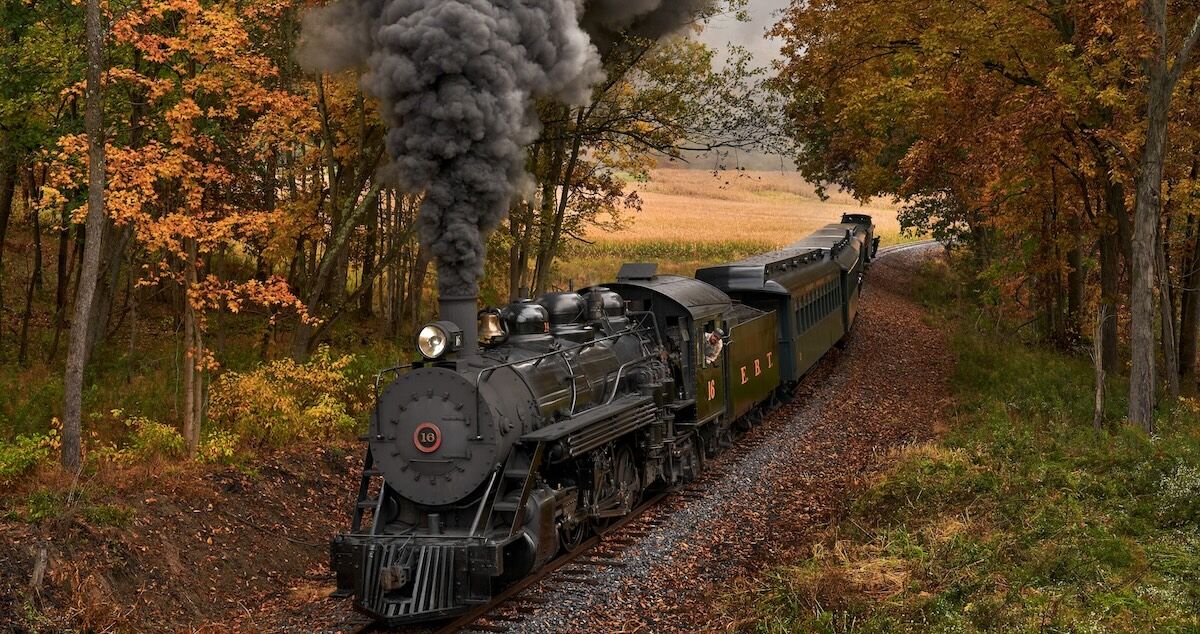
While the EBT offers year-round programming—ranging from the chilly, atmospheric "Winter Spectacular" in February to festive holiday excursions in December—the railroad truly comes alive when the Appalachian forests turn to vibrant shades of amber and crimson.
Seasonal Excursions
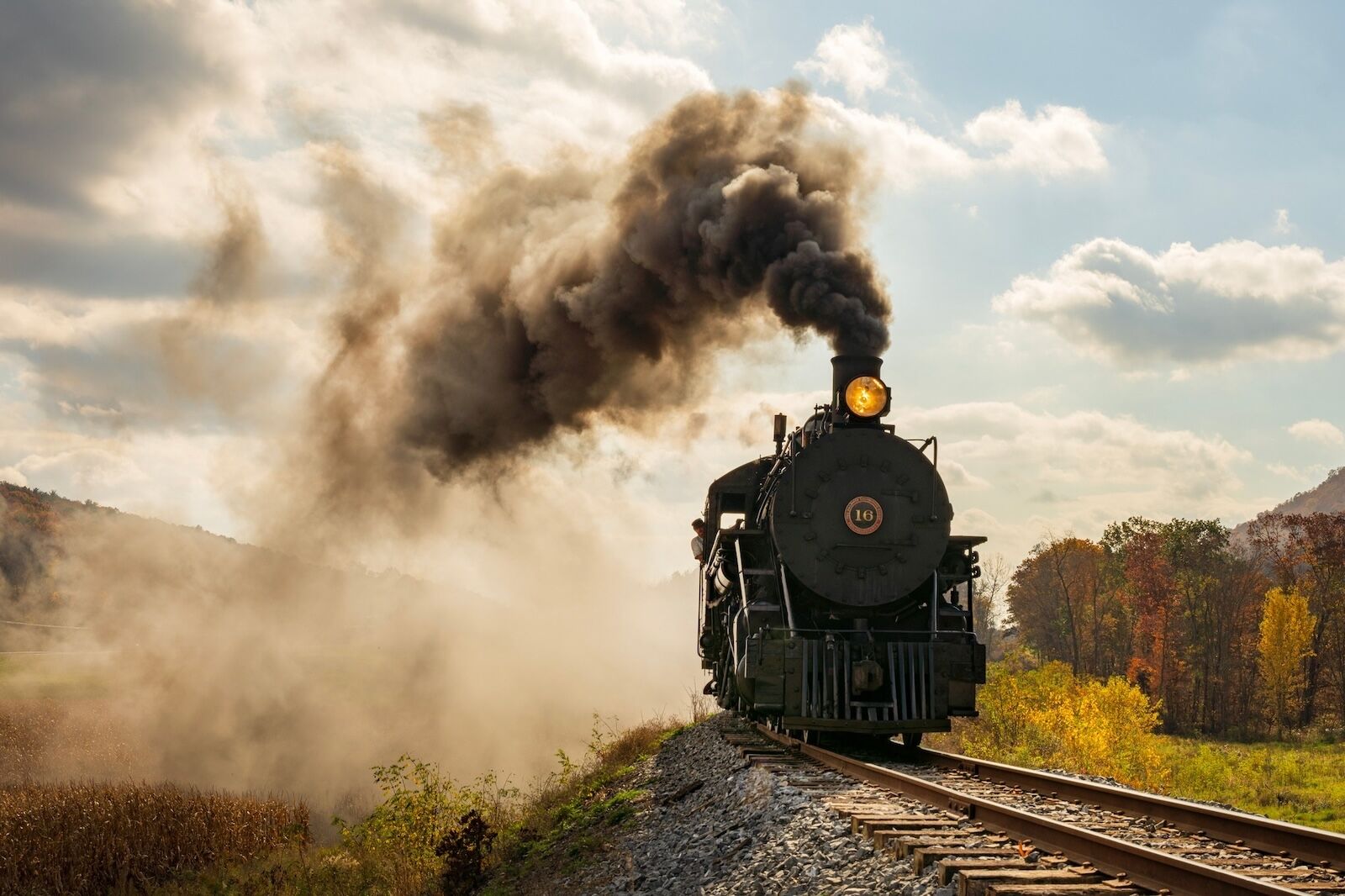
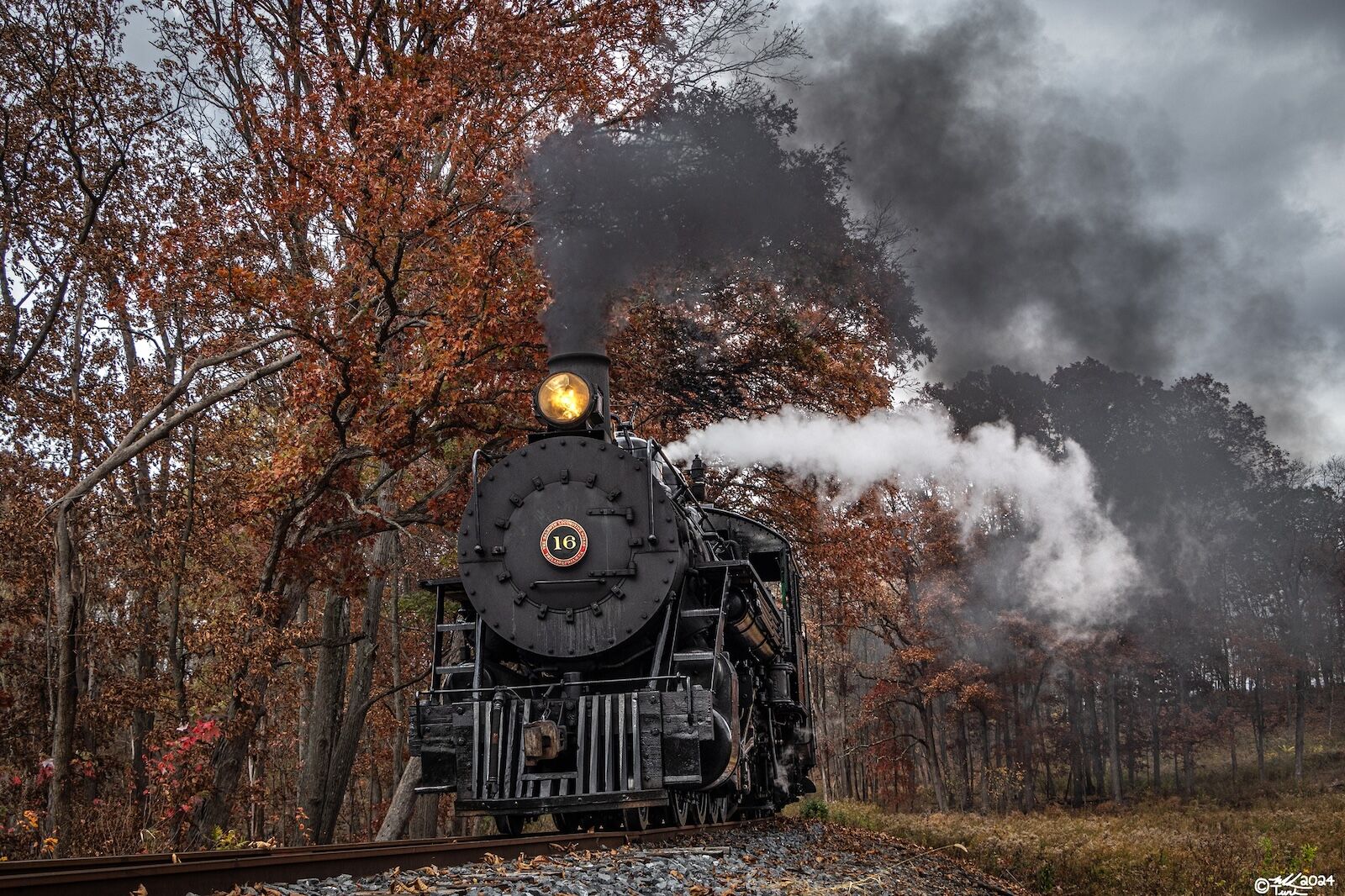
Through October 31, the Orbisonia Station serves as the departure point for three daily excursions (10:30 AM, 12 PM, and 1:30 PM), with an additional 3 PM departure on select dates. These trains are pulled by century-old, coal-fired steam locomotives, a mechanical experience that involves the visceral heat, sound, and scent of coal smoke that defined early industrial travel.
The signature experience is the Northbound Colgate Grove Excursion. This nine-mile, one-hour roundtrip winds through the serene farmland and dense forests of the Aughwick Valley. Passengers are afforded the unique opportunity to disembark at Colgate Grove, the midpoint of the route, for a 1.5-hour picnic layover. This allows visitors to linger under the canopy of fall foliage before catching a later train back to the station.
For those seeking a deeper historical immersion, the Southbound Pogue Excursion offers a trip along track segments that remained silent for nearly 70 years. This route is available on limited dates, such as September 12 and October 3. Passengers interested in the full experience can opt for a combo package, which provides a $10 discount on the combined fares of both routes.
Classes of Service and Logistics
The EBT offers four distinct tiers of service, each providing a different perspective on the journey:
- Enclosed Cars: Featuring padded seats and operable windows, ideal for those seeking comfort.
- Open-Air Cars: Outward-facing bench seats shaded by a canopy, providing an unobstructed view of the valley.
- Historic Caboose: A quintessential railroad experience for enthusiasts.
- The Cinder Car: A roofless, open-sided carriage for the purist who accepts a bit of soot as part of the authentic steam-era experience (protective eyewear is strongly encouraged).
Pricing remains accessible, with coach, open-air, and cinder car tickets at $25 for adults and $15 for children (ages 2–12). Caboose seats are priced at $30 and $20, respectively. In a commitment to inclusivity, every train carries at least one ADA-accessible car, ensuring that the history of the rails is available to all.
Beyond the Tracks: The Industrial Complex
For the true enthusiast, the journey does not end at the depot. The EBT offers comprehensive guided tours of the railroad’s original infrastructure. The complex includes the roundhouse—where locomotives have been housed since the early 1900s—and the largest belt-driven machine shop in the United States. The latter is a masterpiece of early industrial engineering, where the power of a single steam engine is transferred through a complex system of belts and pulleys to run the entire workshop.
Visitors are advised to budget at least three hours to fully appreciate the combination of the train ride and the guided facility tours. Because tickets are not sent via email, guests must arrive at the Orbisonia Station 30 minutes prior to their departure to check in. Advance online reservations are highly recommended, as the intimate nature of the heritage experience often leads to sell-out dates during peak foliage season.
Family Engagement: The Pumpkin Patch Express
Understanding the importance of community and family-oriented tourism, the EBT organizes the "Pumpkin Patch Express." Running on select dates in October (October 10, 11, 17, 18, 24, 25, and 31), this 2.5-hour experience is specifically tailored for younger generations.
The program includes a train ride to Colgate Grove, where families spend 90 minutes engaged in autumn-themed activities: hay bale wagon rides, mini-golf, bounce houses, costume contests, and pumpkin decorating. A key highlight is that every child’s ticket includes a pumpkin to take home. This initiative serves as a critical bridge between history and modern community engagement, ensuring that the railroad remains relevant to the local families of Central Pennsylvania.
Implications for Preservation and Tourism
The successful operation of the East Broad Top Railroad carries significant implications for industrial preservation. The site proves that historic sites do not need to be static, "do not touch" exhibits. By operationalizing the machinery, the EBT creates a dynamic, living history that provides an economic engine for its host region while fostering a deeper public appreciation for the technical achievements of the 19th century.
However, the challenge of maintaining century-old steam locomotives remains substantial. The expertise required to fire, maintain, and safely operate these machines is a rare skill set in the 21st century. The EBT’s commitment to training a new generation of engineers and conductors is, in itself, a form of heritage preservation.
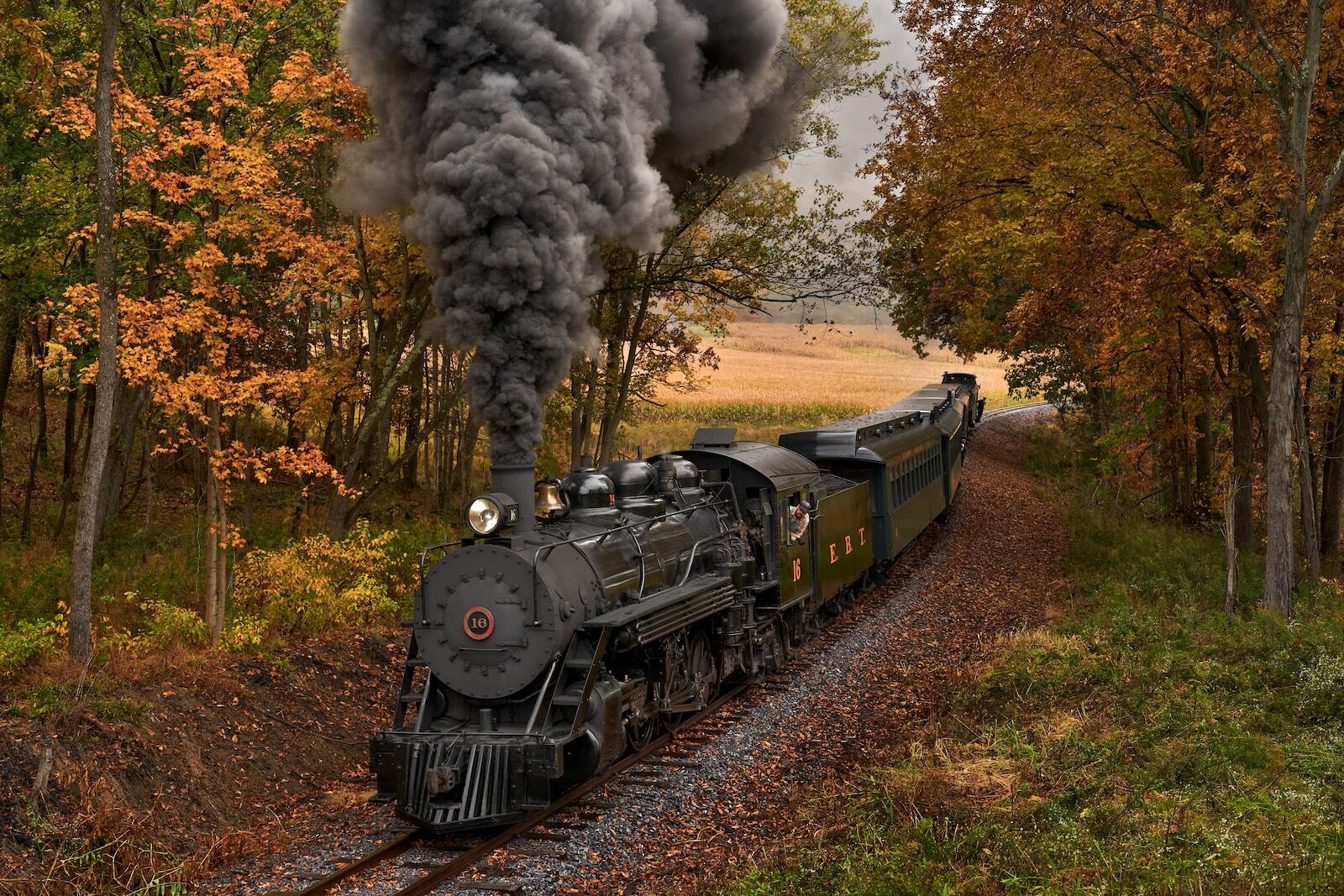
As the railroad continues to expand its offerings and restore further sections of its historic track, it serves as a model for other derelict industrial sites. By balancing the need for safety and modern regulations with the authenticity of the experience, the EBT has successfully transformed a relic of the "Coal Age" into a sustainable, vibrant destination for the modern traveler. Whether you are an industrial historian, a fan of scenic landscapes, or a family looking for a unique autumn tradition, the East Broad Top offers a window into a world that, against all odds, has refused to fade away.
 Nana Wu
  Jia Lissa
  Evan Lee Salim