
 By Azzam Bilal Chamdy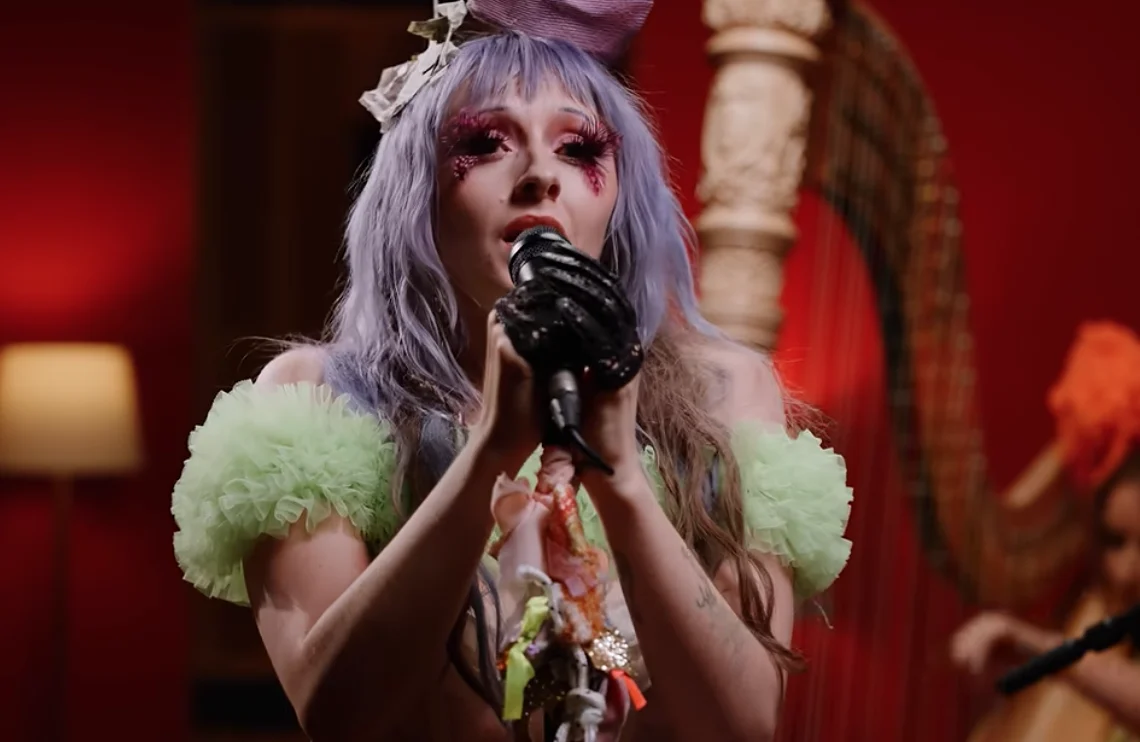
Introduction: A Tribute to a Pop Icon
In a heartfelt homage to the foundational sounds of her youth, the genre-blurring artist Ashnikko made a high-profile debut on the legendary Australian radio segment triple j’s Like A Version. Stepping into the studio while amidst her current tour across Australia, the “Stupid” singer delivered a theatrical and meticulously arranged cover of Gwen Stefani’s 2004 solo breakout hit, “What You Waiting For?”
The performance was more than a routine cover; it was a curated moment of musical reverence. Accompanied by a full backing band—notably featuring the delicate, atmospheric textures of a harpist—Ashnikko transformed the high-energy dance-pop original into an electropop spectacle that remained tethered to the rhythmic DNA of the 2004 classic while layering it with her own signature, experimental flair.
Main Facts: The Intersection of Eras
Ashnikko’s appearance on triple j highlights the cyclical nature of musical inspiration. For the artist, whose real name is Ashton Nicole Casey, Gwen Stefani’s debut solo studio album, Love. Angel. Music. Baby. (often abbreviated as L.A.M.B.), was not merely an album but a blueprint for her future career.
- The Track: “What You Waiting For?” served as the debut solo single for Stefani following her tenure with the ska-rock legends No Doubt.
- The Setting: The performance took place in the triple j studios in Australia, a platform widely regarded as a rite of passage for both domestic and international acts.
- The Twist: Ashnikko’s version moved away from the sharp, jagged production of the original, leaning into a more atmospheric, maximalist pop aesthetic that mirrors her own trajectory in the industry.
- The Original Song: Released in 2004, the song reached No. 47 on the Billboard Hot 100, while the parent album peaked at No. 7 on the Billboard 200.
Chronology: From 2004 to the Present
To understand the significance of this performance, one must look at the timeline that bridges two very different eras of pop music.
2004: The Birth of a Solo Star
In late 2004, Gwen Stefani transitioned from the frontwoman of No Doubt to a solo powerhouse. The release of Love. Angel. Music. Baby. was a cultural event, blending hip-hop, electronic, and pop in a way that felt avant-garde for the mid-2000s. “What You Waiting For?” was the provocative opening statement of that record, questioning the artist’s own motivation and fear of failure.
2019: The Digital Breakthrough
Ashnikko, born in 1996, was a child when L.A.M.B. dominated the charts. She spent her formative years internalizing the aesthetic and sonic choices of the era. Her own breakthrough occurred in 2019 with the viral success of "Stupid." The track, fueled by TikTok, propelled her into the global consciousness, securing a platinum certification and a No. 90 spot on the Billboard Hot 100.
2023–2026: The Evolution of an Artist
In 2023, Ashnikko solidified her place in the alternative pop landscape with the release of her debut album, Weedkiller. The project reached the Billboard 200, showcasing her ability to blend hyperpop with industrial, rap, and grunge elements. The 2026 triple j appearance marks a new chapter, where the artist is now confident enough to explicitly pay homage to the icons who paved the way for her genre-fluid approach.

Supporting Data: Commercial and Cultural Context
The impact of both artists can be quantified through their Billboard chart history and broader industry influence.
Gwen Stefani’s Legacy
Stefani’s career is defined by cross-genre success. Her debut solo work remains a gold standard for pop experimentalism.
- "Hollaback Girl": Became Stefani’s first solo No. 1 hit on the Billboard Hot 100, a track that redefined the "cheerleader" pop aesthetic.
- "Rich Girl": Another cornerstone of her solo success, solidifying her status as a global brand.
- Awards: As a four-time Grammy winner, Stefani’s influence extends far beyond her chart positions; she is a fashion icon, a mogul, and a quintessential pop auteur.
Ashnikko’s Rise
Ashnikko has carved out a niche that is notoriously difficult to maintain in the modern streaming era: the "genre-blurring" artist.
- The Viral Effect: By leveraging social media platforms, she bridged the gap between internet culture and traditional industry success.
- Genre Fluidity: By refusing to be pinned down to just rap or just pop, she has built a "devoted following" that values her aesthetic, choreography, and lyrical themes of empowerment and subversion.
Official Responses and Interviews
In her conversation with triple j hosts Abby Butler and Tyrone Pynor, Ashnikko offered a rare glimpse into her creative process and personal life.
The Inspiration Behind the Choice
When asked why she chose "What You Waiting For?", Ashnikko was emphatic. "It is the song of my childhood," she stated. She explained that the track was the specific catalyst that made her realize she wanted to pursue music professionally. She noted that Stefani’s fearlessness in changing her sound and identity was a formative influence on how she approaches her own visual and musical presentation.
Life Outside the Studio
Beyond the music, the interview veered into the unexpected. Ashnikko discussed her passion for bird watching—a hobby she uses to ground herself amidst the chaos of international touring. She also elaborated on the importance of choreography in her live shows, noting that movement is as essential to her storytelling as the lyrics themselves. This emphasis on performance art explains the high level of production value she brought to her Like A Version set, including the inclusion of a harpist, which added a haunting, ethereal layer to the otherwise high-octane song.
Implications: Why This Matters
The triple j Like A Version segment has become an "Australian institution," serving as a bridge between established classics and the current wave of modern artists. Ashnikko’s cover is significant for several reasons:
1. The Validation of Hyperpop
By taking a 2004 pop song and re-imagining it through an electropop/alternative lens, Ashnikko is essentially closing the gap between the "pop" of the 2000s and the "hyperpop" of the 2020s. It validates the idea that the experimental pop of the past is the foundation for the digital-first artists of today.
2. The Multi-Generational Dialogue
Artists like Gwen Stefani paved the way for the "pop-alternative" hybrid. When a modern, genre-defying artist like Ashnikko chooses a Stefani track, it signals a respectful nod to the lineage of pop experimentation. It forces a new generation of fans to look backward at the source material, while simultaneously showing older fans the evolution of those sounds.
3. The Future of Live Performance
The use of a full backing band—and specifically a harpist—suggests that Ashnikko is looking to evolve her live show into a more orchestral, cinematic experience. It signals a shift away from "backing-track-only" performances toward a more organic, multi-instrumental arrangement, which is a common path for artists seeking longevity and critical acclaim in the industry.
Conclusion: A Legacy Continued
Ashnikko’s debut on triple j was a masterclass in how to pay tribute without losing one’s own identity. By selecting a song that was both deeply personal and culturally significant, she succeeded in bridging the gap between her own career and that of her idol.
As she continues to tour and develop her sound, it is clear that Ashnikko is not just a beneficiary of the pop landscape built by artists like Gwen Stefani; she is an active participant in evolving that landscape for a new generation. With her blend of visual storytelling, choreography, and a refusal to be defined by a single genre, Ashnikko is proving that the spirit of the early 2000s—fearless, colorful, and unapologetic—is alive and well in the modern era.
Whether she is talking about bird watching or the intricacies of pop production, Ashnikko remains a singular voice in contemporary music, and her Like A Version performance will undoubtedly be remembered as a high-water mark for the segment in 2026.
 Pevita Pearce
  Raul Delapena Setiawan
  Evan Lee Salim