
 By Nila Kartika Wati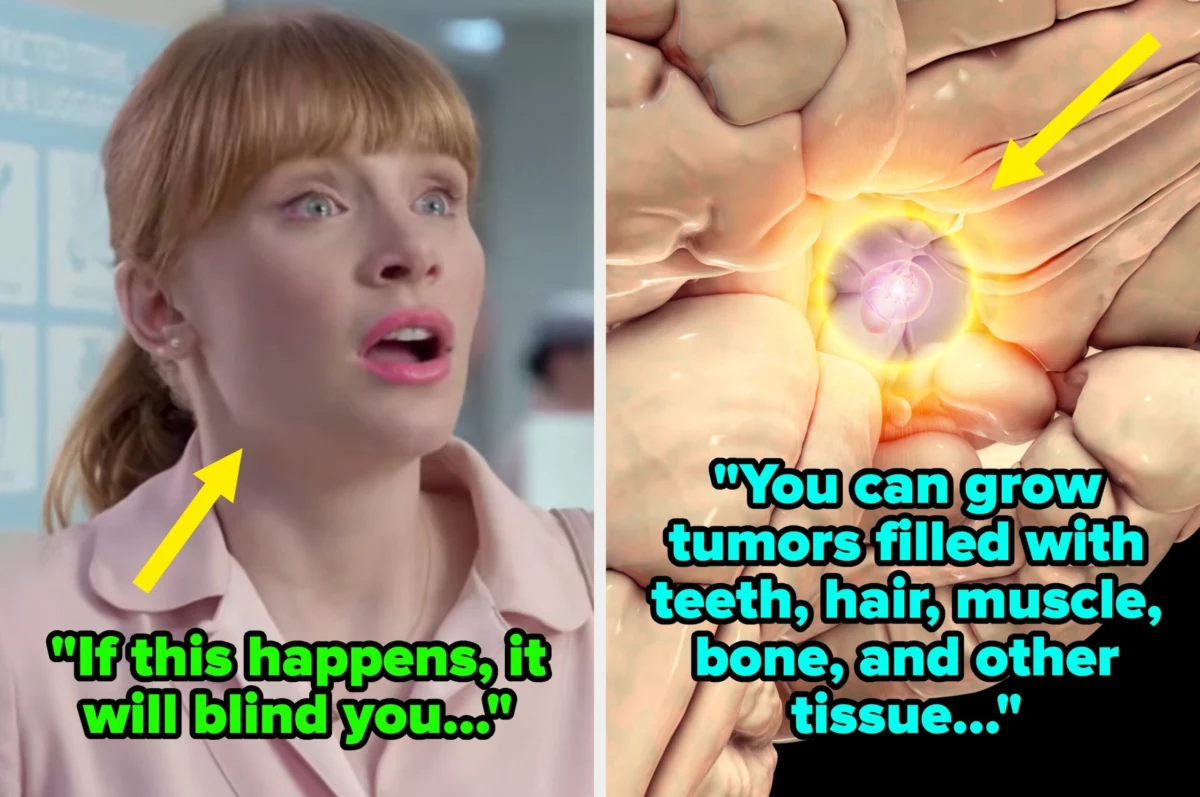
Warning: This article contains graphic descriptions of biological processes and medical phenomena that some readers may find disturbing.
The human body is an engineering marvel. Capable of running marathons, composing symphonies, and healing from catastrophic injuries, it represents the pinnacle of millions of years of evolutionary refinement. Yet, beneath our outer layer of skin lies a labyrinth of biological systems that can be bizarre, unsettling, and, at times, profoundly disturbing.
Recently, Reddit user u/Mr-Bones-6150 posed a deceptively simple question to the online community r/biology: What are the weirdest and most disturbing body facts you know? The thread, alongside complementary discussions across biological forums, elicited thousands of responses from scientists, medical professionals, students, and curious laypeople.
From organs that operate independently to microscopic parasites that call our faces home, here is an in-depth look at 19 of the most shocking revelations about human biology, categorized by their systemic implications, medical chronology, and physiological mechanisms.
Part 1: Structural Oddities and Evolutionary Quirks
The human blueprint is far from flawless. Remnants of our evolutionary past and the physical constraints of our development leave us with anatomical structures that seem almost counterintuitive.
1. The Disconnected Fallopian Tubes
In engineering, critical pathways are expected to be sealed and secure. Yet, the human reproductive system features a striking structural gap: a woman’s fallopian tubes are not directly connected to her ovaries.
- The Mechanism: Every month during ovulation, an egg is released into the abdominal cavity. Finger-like tendrils known as fimbriae must actively "catch" the floating egg to guide it into the uterus.
- Implication: This detached layout is a bizarre design for a process as vital as reproduction, occasionally leading to ectopic pregnancies where fertilized eggs implant outside the uterus.
2. The Unanchored Intestines
During abdominal surgeries, surgeons frequently need to move large sections of the intestines out of the way to access other organs. When the procedure is complete, these vital organs do not need to be meticulously rearranged with surgical precision.
- The Mechanism: Supported by the mesentery—a fold of tissue that attaches the intestines to the abdominal wall—the bowels possess a remarkable degree of autonomy. Once the patient is stitched back up, the intestines naturally shift and resettle into their correct positions independently.
3. Reversed Body Plans (Situs Inversus)
While the standard human anatomy places the heart slightly to the left and the liver on the right, a rare congenital condition called situs inversus completely reverses this internal layout.
- Implication: Individuals with complete situs inversus often live entirely normal, healthy lives. Many remain completely unaware of their anatomical anomaly until they undergo medical imaging or surgery for an unrelated issue.
Part 2: Neurological Mysteries and the Central Nervous System
The brain and nervous system govern our existence, yet they harbor mechanisms capable of operating independently—and sometimes against—our conscious selves.
4. The Severed Corpus Callosum
The corpus callosum is the dense bundle of neural fibers that bridges the left and right hemispheres of the brain, allowing them to communicate. Historically, this bridge was surgically severed (corpus callosotomy) as a drastic medical treatment for severe, drug-resistant epilepsy.
- Implication: Despite the two halves of the brain no longer being able to communicate directly, patients undergoing this procedure can still function mostly the same in daily life, highlighting the brain’s extraordinary neuroplasticity.
5. Pregnancy-Induced Brain Remodeling
Recent neurological studies have revealed that pregnancy permanently alters a mother’s brain structure. Specifically, it can shrink or prune grey matter in areas associated with "theory of mind"—the cognitive capacity to understand that other people have independent thoughts and feelings.
- Implication: Far from being a form of damage, this permanent structural shift is now understood as an evolutionary optimization process, fine-tuning the maternal brain for heightened infant care and social awareness.
6. The Enteric Nervous System: Our "Second Brain"
Humans possess a massive, complex network of neurons lining the gastrointestinal tract known as the Enteric Nervous System (ENS).
- Implication: Often referred to as our "second brain," the ENS can operate independently of the central nervous system. Modern neuroscientific research increasingly links the ENS to emotional regulation, stress responses, and overall mental health via the gut-brain axis.
Part 3: Cellular Self-Destruction and Toxic Traps
At the microscopic level, the body’s internal chemistry is a delicate balance. When disrupted, the very systems designed to keep us alive can turn lethal.
7. Immune Privilege and Sympathetic Ophthalmia
The eyes possess a unique evolutionary adaptation called "immune privilege," meaning they are largely separated from and unrecognized by the body’s systemic immune system to prevent damaging inflammation in a delicate organ.
- The Mechanism: If severe trauma damages an eye, exposing its internal proteins to the bloodstream for the first time, the immune system may recognize these proteins as foreign invaders. Consequently, it can launch an aggressive autoimmune attack against the damaged eye—and, in rare cases, the healthy eye as well.
8. The Lethal Trap of Crush Syndrome
When a human body part is crushed under heavy pressure—such as a collapsed structure or a heavy tire—the injury is compounded by a deadly physiological ticking clock.
- The Mechanism: While the pressure is applied, toxins (such as myoglobin, potassium, and lactic acid) build up inside the trapped, dying tissue. Once the crushing weight is lifted, these accumulated toxins flood back into the systemic circulation, causing acute kidney failure, cardiac arrest, and sudden death within minutes. This phenomenon, known as crush syndrome, explains why an apparently stable trapped victim can deteriorate rapidly upon being freed.
9. Mitochondrial Sabotage by Toxins
Cellular respiration relies on mitochondria to produce adenosine triphosphate (ATP), the energy currency of the cell. However, certain substances can completely halt this process.
- The Mechanism: Poisons like cyanide, as well as toxic overdoses of aspirin or chemical weight-loss agents like 2,4-Dinitrophenol (DNP), disrupt mitochondrial function. DNP, for instance, uncouples oxidative phosphorylation, forcing the mitochondria to frantically burn fuel without producing ATP, rapidly generating fatal amounts of body heat.
10. Self-Cannibalism in Extreme Starvation
Under conditions of prolonged, severe starvation, the human body resorts to a grim survival mechanism: autophagia on a systemic scale.
- The Mechanism: Deprived of external nutrients, the body begins breaking down its own non-essential tissues for energy. Eventually, it consumes skeletal muscle and even begins to catabolize the tissue of the heart itself, highlighting the body’s desperate, biological drive to sustain vital brain function at all costs.
Part 4: Pathology, Parasites, and Anatomical Anomalies
Human anatomy also intersects with external organisms and pathological growths in ways that test the boundaries of comfort.
11. Teratomas: Tumors Containing Organs
Among the most bizarre pathological phenomena are teratomas—a type of germ cell tumor.
- The Mechanism: Because germ cells have the potential to differentiate into any type of tissue, teratomas can grow complex structures containing fully formed hair, teeth, bone, muscle, and even rudimentary neural tissue or thyroid glands. They are typically benign or malignant growths treated primarily through surgical excision.
12. Microscopic Face Mites (Demodex)
You are never truly alone. The majority of adult humans host millions of microscopic arachnids known as Demodex mites living within their hair follicles and sebaceous glands—particularly around the eyebrows, eyelashes, and scalp.
- Implication: These tiny organisms feed on dead skin cells and sebum. While generally harmless, an overpopulation of Demodex can lead to skin conditions such as rosacea or blepharitis.
13. The Stomach’s Self-Digestion
The hydrochloric acid and digestive enzymes produced in the human stomach are potent enough to dissolve metal coins.
- The Mechanism: To prevent the stomach from digesting itself, the organ relies on a thick, continuous mucosal lining that secretes protective bicarbonate. If this barrier is compromised by bacterial infection (Helicobacter pylori) or excessive NSAID use, the stomach acids begin eroding the organ’s own tissue, resulting in painful peptic ulcers.
Part 5: Chronology and Forensic Discoveries
Medical professionals, coroners, and pathologists frequently encounter realities that challenge our understanding of mortality and pathology.
14. Urachal Remnants: Leaking Umbilicus
During embryonic development, the urachus is a canal that connects the fetal bladder to the umbilical cord. Normally, this structure obliterates and closes before birth, turning into a fibrous cord.
- The Mechanism: In a small percentage of individuals, the urachus fails to close completely. This anatomical anomaly can result in a patent urachus, where urine or blood intermittently leaks directly out of the belly button.
15. The En Bloc Removal of the Tongue
During post-mortem autopsies, forensic pathologists sometimes perform specialized extractions where the tongue is removed en bloc—meaning it comes out entirely in one piece along with the underlying pharyngeal and laryngeal structures of the throat. This allows examiners to study the upper airway and surrounding structures without compromising tissue integrity.
16. Olfactory Traces of Chronic Alcoholism
Coroners and pathologists working in forensic medicine have noted a distinct olfactory anomaly in cases involving chronic, severe alcohol abuse.
- The Mechanism: Autopsies of individuals with advanced alcohol addiction have revealed that brain tissue can absorb and retain volatile compounds over long periods, occasionally emitting a strong, distinct vodka-like odor upon craniotomy.
17. Pigmentation of the Brain (Meningeal Melanocytes)
While skin color is determined by melanin-producing cells in the epidermis, pigment cells are not restricted to the exterior.
- The Mechanism: Melanocytes are also naturally scattered throughout the arachnoid mater—one of the protective meningeal membranes cushioning the brain. Individuals with darker complexions, as well as some individuals with lighter complexions, may possess higher concentrations of these cells, occasionally resulting in visible dark patches directly on the surface of the brain.
18. Asphyxiation via Heavy Inhalants (Sulfur Hexafluoride)
While most people associate asphyxiation with drowning or choking, the bloodstream can also be starved of oxygen via the inhalation of dense gases.
- The Mechanism: Sulfur hexafluoride is a dense, non-toxic gas famously used to artificially lower the pitch of the human voice (the inverse of helium). However, because it is significantly heavier than air, it can pool and linger inside the lungs. Unlike light helium, which naturally drifts out of the respiratory tract, trapped sulfur hexafluoride can displace oxygen long enough to cause dangerous hypoxic events.
19. The Philosophical Hot Dog Paradox
Concluding our biological survey on a lighter, philosophical note from the internet collective: since some traditional hot dogs consist of meat encased in animal intestine, consuming one temporarily integrates foreign intestinal tissue into your own digestive tract—leading internet commentators to jokingly ponder whether the consumer momentarily becomes the hot dog.
Implications and Summary
These 19 biological facts serve as a humbling reminder of the complex, fragile, and often strange machinery that keeps us alive. Far from being a pristine, perfectly optimized machine, the human body is a patchwork of evolutionary compromises, chemical balances, and hidden ecosystems. Understanding these realities not only satisfies our morbid curiosity but also deepens our appreciation for the resilience of human biology against internal and external threats.
 Lina Hope
  Asro
Asro  Neng Nana