
 By rifanmuazin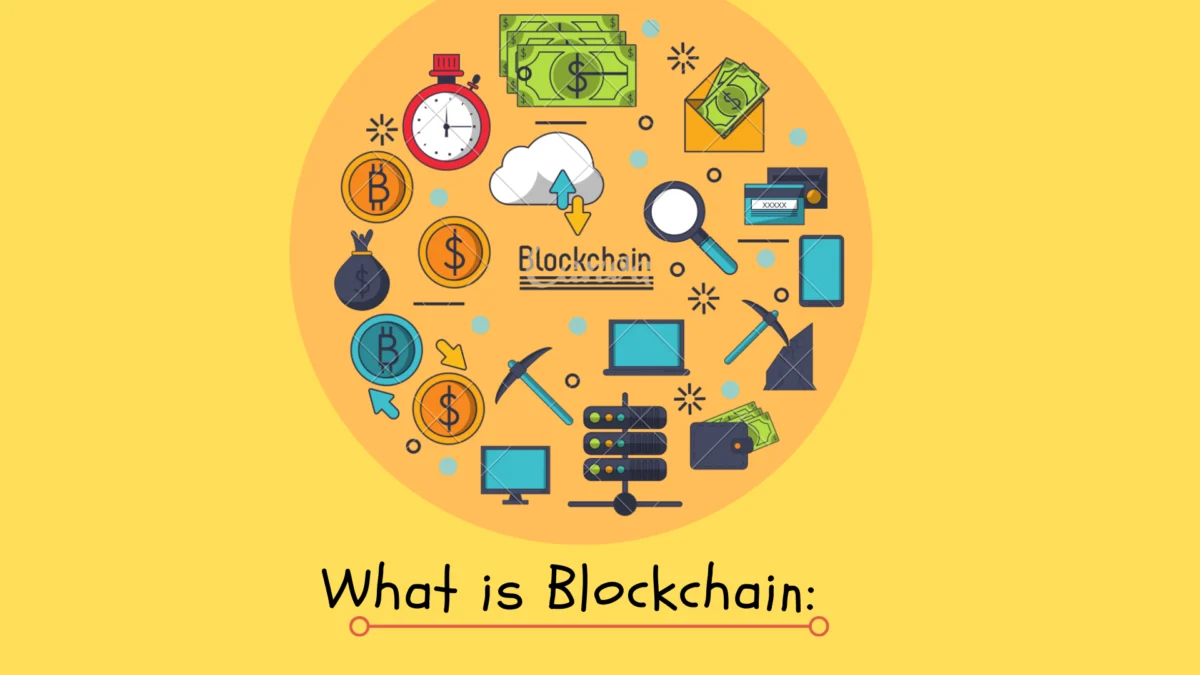
In an era defined by digital transformation, the traditional pillars of trust—banks, governments, and centralized corporations—are facing an unprecedented challenge. For decades, conducting an online transaction required a third party to verify your identity, secure your funds, and validate the exchange. Today, that paradigm is shifting. The catalyst for this change is blockchain technology, a decentralized innovation that promises a future of transparent, secure, and peer-to-peer interactions without the need for intermediaries.
While often conflated with the volatile world of cryptocurrency, blockchain is, in essence, the underlying infrastructure that makes digital assets viable. It is a distributed ledger technology (DLT) that records information in a way that makes it difficult or impossible to change, hack, or cheat the system.
The Core Fundamentals: What is Blockchain?
At its simplest level, a blockchain is a distributed database shared among the nodes of a computer network. Unlike a traditional database, which is stored on a centralized server managed by an administrator, a blockchain stores data in digital blocks that are cryptographically linked together.
When a transaction occurs, it is broadcast to a network of computers (nodes). These nodes validate the transaction using complex algorithms. Once verified, the transaction is bundled with others into a "block." This block is then permanently chained to the previous one, creating an immutable, chronological history of data. Because every node in the network possesses a copy of this ledger, the system is inherently resilient; if one node fails or is compromised, the integrity of the entire network remains intact.
A Chronological Evolution: From Theoretical Roots to Global Adoption
The history of blockchain is a testament to the convergence of mathematics and computer science.
- 1991: The Genesis of Timestamps. Mathematicians Stuart Haber and W. Scott Stornetta first conceptualized a cryptographically secured chain of blocks to ensure that document timestamps could not be backdated or tampered with.
- 1998: The Vision of Bit Gold. Software developer Nick Szabo proposed "Bit Gold," a decentralized digital currency protocol that laid the conceptual groundwork for secure, peer-to-peer electronic cash systems.
- 2008-2009: The Satoshi Nakamoto Breakthrough. The release of the Bitcoin whitepaper by the pseudonymous Satoshi Nakamoto introduced the world to the first successful implementation of a blockchain. Nakamoto solved the "double-spend" problem, allowing for a decentralized currency to exist without a central authority.
- 2015-Present: Smart Contracts and Beyond. The launch of the Ethereum blockchain introduced "smart contracts"—self-executing code that automates agreements when specific conditions are met. This propelled blockchain from a currency-focused tool to a versatile platform for enterprise applications.
Implications: Why Decentralization Matters
The true power of blockchain lies in its decentralized nature. In a centralized system, data is stored in a single location—a "honeypot" for hackers. If that server is breached, all sensitive information is at risk.
Blockchain eliminates this single point of failure. By distributing information across thousands of nodes globally, it ensures that no single entity has unilateral control over the ledger. This architecture guarantees the authenticity and irreversibility of data. Whether it is a financial transaction, a land title, or a medical record, once the information is added to the blockchain, it becomes a permanent part of the historical record, verifiable by anyone with access to the network but modifiable by no one.
Beyond Finance: Real-World Applications
While Bitcoin brought blockchain into the public consciousness, the technology’s utility extends far beyond finance. Industries across the spectrum are leveraging its transparency to solve complex logistical and safety challenges.
Supply Chain Integrity
IBM’s Food Trust is a prime example of blockchain in action. By tracking a food product’s journey from farm to grocery shelf, companies like Walmart and Unilever can identify the source of contamination in seconds rather than months. In the event of an E. coli or Salmonella outbreak, this capability can literally save lives and prevent massive food waste.
Healthcare and Data Privacy
Blockchain provides a secure framework for managing patient records. It allows for interoperability between different healthcare providers while ensuring that patients retain control over their sensitive medical history, which remains encrypted and immutable.
Legal and Administrative
The technology is increasingly being explored for managing digital identities, voting systems, and legal contracts. By removing the need for manual notarization and administrative verification, blockchain can significantly reduce the overhead costs of legal processes.
The Pros and Cons: A Balanced Perspective
The Advantages
- Transparency: All participants in a blockchain network have access to the same version of the truth.
- Security: Cryptographic hashing makes data tampering virtually impossible.
- Efficiency: By removing intermediaries, transactions can be settled in minutes rather than days.
- Cost-Effectiveness: Reduced reliance on third-party auditors and middle-men lowers operational expenses.
The Challenges
- Energy Consumption: Some Proof-of-Work consensus mechanisms, like those used by early versions of Bitcoin, require significant electrical power.
- Scalability: As networks grow, processing thousands of transactions per second remains a technical hurdle.
- Regulatory Uncertainty: Governments are still developing frameworks to oversee decentralized assets, leading to potential legal hurdles for companies.
- Irreversibility: If a user loses their private keys or makes a mistake, there is no "reset button" or customer support to reverse the transaction.
Frequently Asked Questions
Is blockchain the same as cryptocurrency?
No. Cryptocurrency is a digital asset, while blockchain is the foundational technology that enables that asset to exist securely without a bank.
Can a blockchain be hacked?
While theoretically possible, it is extremely difficult. A hacker would need to control more than 51% of the network’s computing power to alter the ledger, a feat that is prohibitively expensive and technically impractical for established networks.
Who owns the blockchain?
No one. It is a decentralized, distributed ledger. Each participant in the network owns a portion of the infrastructure, ensuring that power remains distributed.
How does it compare to a standard database?
A standard database is controlled by an administrator who can edit or delete entries. A blockchain is a append-only ledger; once data is recorded, it cannot be deleted or modified, providing a permanent and verifiable audit trail.
The Road Ahead: 2026 and Beyond
As we look toward the next decade, the integration of blockchain into mainstream industry appears inevitable. We are moving beyond the "experimental" phase of the technology. As global enterprises continue to adopt decentralized ledgers for supply chain management, identity verification, and cross-border settlements, the skepticism that once defined the industry is being replaced by practical, value-driven implementation.
The evolution of blockchain is not just about digital money; it is about the evolution of trust. By shifting the burden of verification from human institutions to mathematical code, we are building a more resilient, transparent, and efficient digital infrastructure. Whether you are an entrepreneur looking to optimize your logistics or a consumer seeking greater control over your personal data, blockchain offers a glimpse into a future where digital interactions are as secure as they are seamless.
The revolution is already underway—and in the coming years, it will likely touch every facet of our digital lives.
 Ammar Sabilarrohman
  Ali Ikhwan
  Pevita Pearce