
 By Nila Kartika Wati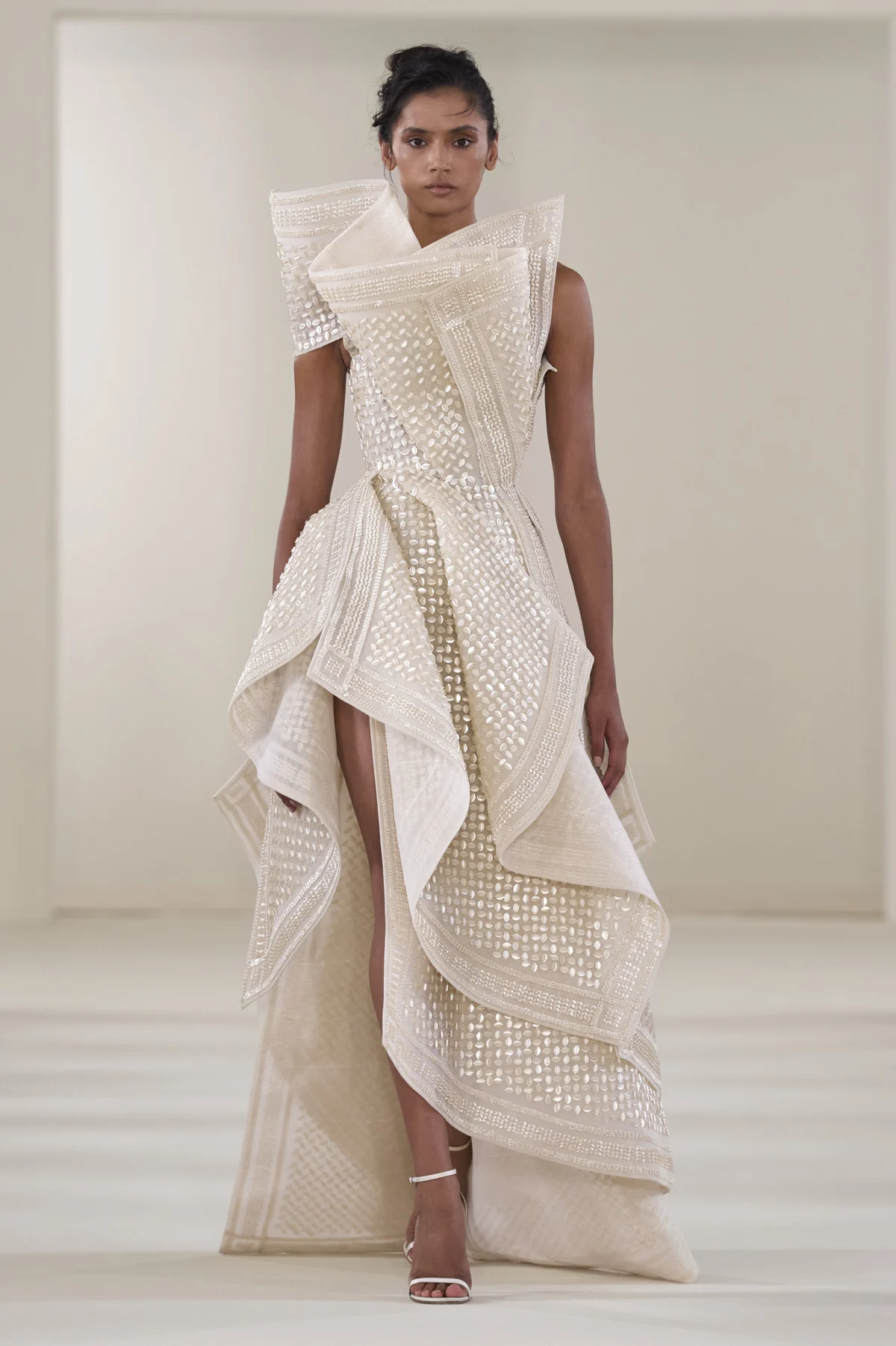
In the complex and often fractious theater of global geopolitics, the Middle East is frequently caricatured as a region defined by discord and volatility. However, as the fashion world converged for the most recent cycle of Couture Week, Syrian-born designer Rami Al Ali offered a profound counter-narrative. Through the medium of high fashion, Al Ali argued that the region’s true essence lies not in its divisions, but in an enduring, unspoken unity—a shared heritage forged in the sun, the sand, and the ancient currents of history.
The Philosophy of Unity Amidst Catastrophe
For Rami Al Ali, the runway serves as more than a platform for aesthetic display; it is a space for socio-cultural commentary. Speaking following his fall couture show, Al Ali reflected on the recent flashpoints that have dominated headlines across the Middle East. Rather than emphasizing the political fractures that occupy the global consciousness, he pivoted toward a more humanistic observation.
“When we have something catastrophic, we’ve noticed how much we are really united instead of separated,” Al Ali stated. His collection, which was met with critical acclaim, served as an artistic manifestation of this solidarity. He emphasized that regardless of national borders, the inhabitants of the Gulf region and the wider Middle East share an intrinsic DNA: “the same roots—identity, craft, sun, [the] desert.”
By drawing inspiration from the vast, shifting expanse of the desert, Al Ali sought to distill these shared cultural markers into a collection characterized by “finely dosed drama.” The result was a sartorial journey that mirrored the temporal progression of the desert day, charting the transition of light from the pale luminescence of dawn to the deep, obsidian shadows of dusk.
Chronology of the Collection: A Desert Narrative
The collection’s narrative arc was meticulously structured to reflect the environmental and cultural nuances of the region.
The Opening: Resilience and the Ghutra
The show opened with a striking gown that immediately grounded the collection in regional tradition. Featuring intricate geometric folds and shimmering mother-of-pearl embellishments, the piece was a direct homage to the ghutra—the traditional square scarf worn throughout the Gulf. While historically associated with male attire as a practical shield against the harsh desert elements, Al Ali reimagined the garment for the female form.
“When a woman wears one, it signifies resilience and protection,” the designer noted. By elevating a utilitarian accessory into the realm of high couture, Al Ali successfully bridged the gap between traditional functionalism and contemporary high-end fashion.
The Mid-Day Shift: Dunes and Textures
As the show progressed, the palette evolved, mirroring the shifting colors of desert dunes and the mercurial nature of desert light. The color story began with pearly whites and brilliant golds, gradually deepening into sophisticated grays and final, dramatic blacks—each piece imbued with a subtle, radiant shimmer.
The craftsmanship displayed during this segment was particularly noteworthy. Al Ali utilized layered mother-of-pearl sequins and crystals to mimic the organic texture of palm-tree scales, applying them to sleek column dresses. A standout piece was an asymmetric gold gown, the weave of which was inspired by the fabric of traditional Bedouin tents. Al Ali described this juxtaposition as simultaneously “rough, natural [yet] very luxurious,” capturing the paradox of life in the arid landscape.
The Synthesis: The Silk Road Influence
In the final stages of the show, the collection turned its gaze toward the historical significance of the Middle East as a global crossroads. Al Ali’s designs incorporated motifs that paid tribute to the Silk Road—the ancient trade route that facilitated not only the exchange of goods but the cross-pollination of artistic techniques.
“Through the Silk Road, we have been given and taken a lot,” Al Ali explained. This ethos was evident in the delicate damask work, the precision of his gold-leaf applications, and the curling, stylized botanical motifs that have evolved through centuries of intercultural contact. These elements served as a reminder that the region’s identity is not monolithic, but a layered accumulation of influences from both East and West.
Supporting Data: The Aesthetics of Effortless Elegance
Beyond the thematic weight of the collection, the technical execution solidified Al Ali’s position as a master of contemporary couture. The silhouettes favored a long, lean column aesthetic, providing a sense of verticality that felt both regal and grounded.
Critics noted that the collection’s most charming moments were those that defied the rigid perfection often associated with couture. Al Ali experimented with an “undone” quality—an asymmetric draped sheath that appeared as though it had been effortlessly pinned into place, and a gown featuring a strategically placed strap that gave the illusion of having slipped. This calculated imperfection demonstrated a level of confidence in his craft; the folds were far too precise to be accidental, revealing a designer who understands that true luxury often lies in the appearance of ease.
Implications: The Role of the Designer in the Modern Era
Rami Al Ali’s latest show serves as a case study in how designers can navigate the tension between pure sculptural fantasy and the practical, wearable needs of their clients. In a fashion week polarized by designers who seek to create avant-garde, otherworldly monuments and those who aim to dress the "life less ordinary" of the well-heeled, Al Ali occupies a unique middle ground.
His work speaks to a client who values cultural depth but demands modern wearability. By grounding his fantasy in the reality of his own heritage, he provides a form of "intellectual luxury." The implications of this approach are significant: it signals a shift in the fashion industry where storytelling is no longer peripheral to the garment but central to its value proposition.
Official Responses and Industry Reception
The critical reception of the collection highlighted its success in balancing cultural heritage with global appeal. Industry analysts noted that Al Ali’s ability to weave sociopolitical commentary into the fabric of his work—without veering into the didactic—distinguishes him from his contemporaries.
“Al Ali isn’t just making clothes; he is curating a cultural dialogue,” remarked one fashion critic present at the show. The consensus among the attendees was that the collection successfully reclaimed the narrative of the Middle East from the tropes of "powder keg" geopolitics, replacing it with a vision of resilience, beauty, and historical connectivity.
Conclusion: A Legacy in Motion
As the global community continues to grapple with instability, the importance of cultural ambassadors like Rami Al Ali cannot be overstated. By centering his couture house on the principles of unity and the shared beauty of the desert, he challenges the reductive lenses through which the Middle East is often viewed.
His latest collection was not merely a series of gowns; it was an argument for the endurance of human connection. Through the marriage of mother-of-pearl and crystal, of silk and gold leaf, and of traditional silhouettes and modern drapery, Al Ali provided a tangible, shimmering reminder that even in the most challenging climates, there is beauty in the roots that hold a people together. As he looks toward the future of his maison, Al Ali remains a testament to the idea that fashion, at its highest level, is an essential tool for human understanding and a necessary balm for a fractured world.
 Neng Nana
  Ali Ikhwan
  Lina Hope