
 By Laily UPN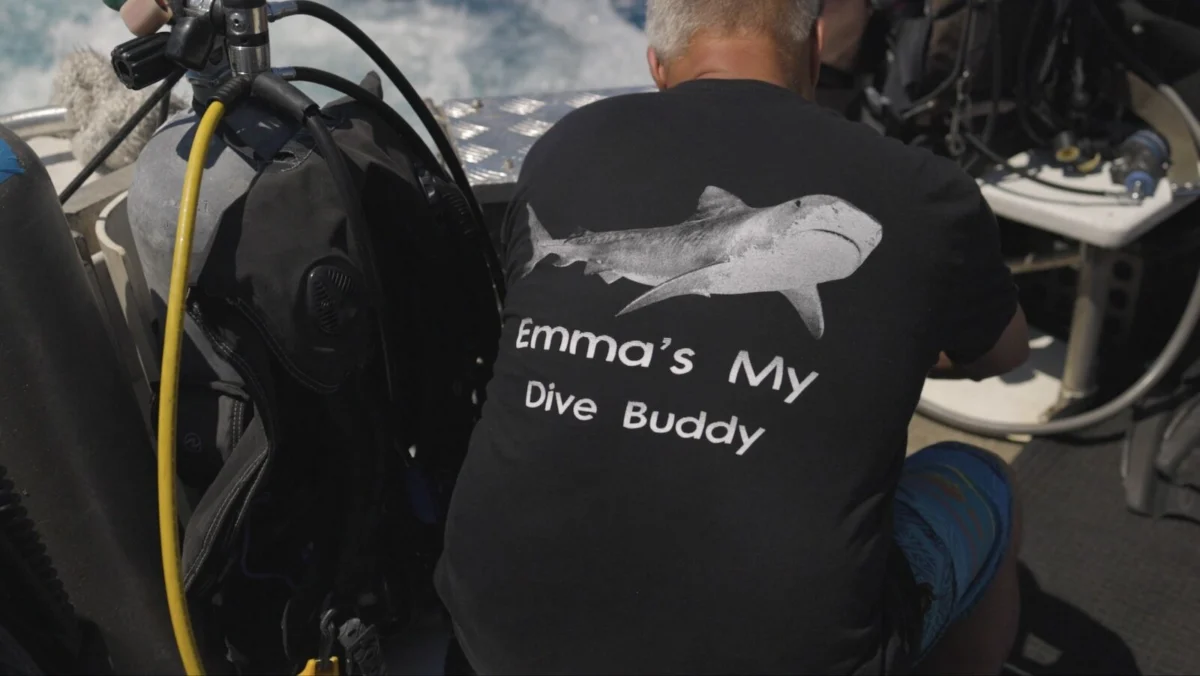
In the crystalline, shallow waters of the Little Bahama Bank, roughly 19 miles west of West End, Grand Bahama, lies a stretch of seabed known as "Tiger Beach." For most, the name evokes primal fear—a haunt for one of the ocean’s most formidable apex predators. But for Jim Abernethy, a pioneering conservationist and dive operator, this sandy expanse is not a site of terror; it is a classroom, a sanctuary, and a place of unlikely friendship.
Abernethy’s work at Tiger Beach has challenged the binary perception of sharks as either bloodthirsty monsters or mindless automatons. At the center of this narrative is Emma, a 15-foot tiger shark whose relationship with Abernethy has spanned over two decades. Their connection, marked by the removal of embedded fishing hooks and a mutual recognition that transcends species boundaries, has become the focal point of a global movement to change how humanity views the marine world.
The Genesis of an Unlikely Alliance: A Chronology
The story of Abernethy and Emma began in 2001, a moment that would fundamentally alter the trajectory of shark conservation. While diving at Tiger Beach, Abernethy encountered the massive tiger shark, clearly distressed by a deep-seated fishing hook lodged in her mouth. Recognizing the animal’s pain, Abernethy performed a delicate, risky procedure to remove the hardware.
That single act of intervention sparked an enduring bond. In the years that followed, Emma began to display behaviors that defied conventional marine biology. When Abernethy’s boat arrives at the site, Emma is frequently waiting beneath it, a silent sentinel welcoming her human companion.
The chronology of their interaction is not merely anecdotal; it is medicinal. Over the past twenty years, Abernethy has removed hundreds of fishing hooks from sharks throughout the region. Emma alone has required the removal of four additional hooks since their first meeting, each instance serving as a testament to the persistent threat human activity poses to these creatures. This ongoing dialogue—a human providing relief and a predator offering trust—has turned Emma into perhaps the most recognizable wild shark on the planet.
Debunking the Myth of the "Man-Eater"
Despite the cinematic portrayals of sharks as relentless human-hunters, the empirical data tells a vastly different story. The Florida Museum of Natural History’s International Shark Attack File (ISAF) recorded just 47 unprovoked shark bites worldwide in 2024, with only four fatalities. These figures are significantly lower than the long-term annual average of 70, suggesting that the public’s perception of "shark-infested waters" is a psychological construct rather than a biological reality.
Researchers are quick to point out that the statistical probability of being bitten by a shark is infinitesimal. For beachgoers, the actual dangers of the ocean—such as rip currents, dehydration, and drowning—pose risks that are orders of magnitude higher than any predatory threat.
Abernethy encapsulates this shift in perspective with a simple, poignant rephrasing: "A shark attack is misnamed. It’s really a shark mistake." He argues that in the rare instances where a human is bitten, the behavior is almost always driven by curiosity or misidentification rather than malicious intent. By educating the public, Abernethy hopes to dismantle the reflexive fear that has led to decades of aggressive shark control programs and ecological mismanagement.
The Economic and Ecological Value of a Living Predator
The Bahamas stands as a global leader in marine protection, having declared its waters a formal shark sanctuary in 2011. This decision was not merely altruistic; it was a calculated economic strategy. A landmark 2017 study revealed that sharks and rays contribute approximately $114 million annually to the Bahamian economy, with the overwhelming majority of that revenue generated by eco-tourism and diving.
However, the tiger shark’s value extends far beyond tourism dollars. As apex predators, tiger sharks are the "gardeners" of the ocean. Their presence is essential for maintaining the health of seagrass meadows, which are critical carbon sinks in the fight against global warming. By patrolling these areas, tiger sharks prevent green turtles from overgrazing the seagrass, ensuring that these underwater forests remain robust enough to sequester carbon effectively.
Yet, despite their vital role, the species remains listed as "Near Threatened" on the IUCN Red List. Population estimates suggest a decline of nearly 30 percent over the last three generations. This downward trend is driven by a trifecta of human pressures: poorly regulated industrial fishing, state-sanctioned shark culls, and the devastating demand for shark fins. When we lose the tiger shark, we do not just lose a magnificent animal; we lose the biological checks and balances that maintain the integrity of our oceans.
The Conservationist’s Mission: From Fear to Advocacy
Abernethy’s work is channeled through his nonprofit, Wildlife VOICE, which focuses on mentoring the next generation of conservationists. His philosophy is one of patient, hands-on intervention, though he is the first to warn that his methods are not for the uninitiated.
"Handling sharks should be left to those who know what they’re doing," Abernethy cautions. His training emphasizes "removal with affection rather than force," a technique that relies on de-escalation and understanding the animal’s body language. He encourages divers to enter the water with sharks—not as conquerors, but as guests—to witness the reality of these creatures firsthand. By moving from a position of fear to one of empathy, he believes that people can become the most effective advocates for ocean health.
The Broader Implications for Global Marine Policy
The relationship between Abernethy and Emma serves as a microcosm for the larger challenge of human-wildlife coexistence. It highlights a critical question: Can we move away from the exploitation of marine life and toward a model of stewardship?
For the Bahamas, the answer is a resounding yes. The success of the shark sanctuary model proves that a live shark is worth exponentially more to a coastal economy than a dead one. Yet, on a global scale, the policy gap remains wide. Many nations still treat sharks as pests or commodities rather than foundational elements of a healthy planet.
The implications of this neglect are grave. As climate change continues to stress marine ecosystems, the role of apex predators in ecosystem resilience becomes even more critical. Protecting tiger sharks is, by extension, an act of climate defense.
Conclusion: Dismantling the Fear
For decades, Matador Network has documented the complex intersection of tourism, diving, and conservation. The story of Jim Abernethy and Emma is the culmination of this work. It is a story about the power of an individual to change a narrative. By dismantling the fear that has defined our relationship with sharks for over a century, Abernethy is not just saving individual animals; he is reshaping the cultural and political will required to protect the oceans.
As the full film of their journey—now available on Matador Originals—demonstrates, the ocean is not a place to be feared, but a world to be understood. Emma is not a monster; she is a wild, intelligent being who has taught a human that when we offer compassion, we often receive trust in return. In an era of environmental uncertainty, that lesson may be the most important one we have left to learn.
 Layla Zulfa
  Lina Irawan
  Nana
Nana 