
 By Asep Darmawan
For decades, the microwave oven has occupied a paradoxical space in the modern kitchen. To the culinary purist, it is often dismissed as a symbol of laziness or a shortcut that compromises the integrity of a meal. Yet, even the most prestigious chefs quietly rely on these machines for quick tasks, such as softening butter or tempering chocolate. Despite being the most ubiquitous appliance in the Western home, the science behind the "magic box" remains shrouded in superstition and misunderstanding.
To separate fact from fiction, we consulted Bryan Quoc Le, a prominent food scientist and the founder of Mendocino Food Consulting. By examining the physics of electromagnetic radiation and the chemistry of food degradation, we can finally put these pervasive myths to rest.
The Science of the "Magic Box": Understanding How Microwaves Work
To understand why so many myths persist, one must first grasp the basic mechanics of microwave heating. Unlike a conventional oven, which relies on convection or radiation to heat the air around the food, a microwave uses electromagnetic waves—specifically, non-ionizing radiation—to excite water molecules within the food itself.
This process, known as dielectric heating, forces polar molecules (like water) to rotate at incredible speeds as they try to align with the rapidly shifting electromagnetic field. This molecular friction generates heat. It is a highly efficient method of energy transfer, which explains why a microwave can reheat a casserole in three minutes that would otherwise take half an hour in a traditional oven.
1. Myth: Microwaves Destroy Food Nutrients
The Reality: All cooking methods degrade nutrients; the microwave is actually one of the most efficient at preservation.
A common anxiety among health-conscious cooks is that the "radiation" in a microwave somehow strips food of its nutritional value. This fear is largely unfounded. According to Bryan Quoc Le, "Some nutrients, such as Vitamin C and B vitamins, are heat-sensitive, meaning any form of cooking—boiling, steaming, or baking—will degrade them."
The crucial factor in nutrient retention is not the method of heating, but the duration of exposure. Because microwaves cook food significantly faster than conventional methods, the food spends less time subjected to thermal stress. Research consistently shows that microwave-steaming vegetables, for instance, retains more water-soluble vitamins than boiling them in a large pot of water, where nutrients leach into the cooking liquid.
2. Myth: Microwaves Work by "Irradiating" Food
The Reality: Microwave radiation is fundamentally different from the radioactive materials found in nuclear power or X-ray machines.
The word "radiation" is often misused in public discourse, conjuring images of nuclear fallout. In physics, radiation simply refers to the emission of energy as electromagnetic waves. Sunlight is a form of radiation, as is the light from a lamp.
"Microwaves are a type of radiation in the same sense that sunlight is radiation," explains Le. "These are not the kind of radiation normally created from radioactive substances." The specific wavelength used in ovens is designed to penetrate food and interact with water molecules. Its history is rooted in military radar technology; in the 1940s, an engineer noticed that a chocolate bar in his pocket melted while he was standing near a live radar set. The technology is safe, controlled, and does not leave food "radioactive" or altered at a molecular level beyond the heat applied.
3. Myth: It’s Dangerous to Stand Near a Running Microwave
The Reality: Modern safety standards and the physics of the Faraday cage make standing in front of your microwave perfectly safe.
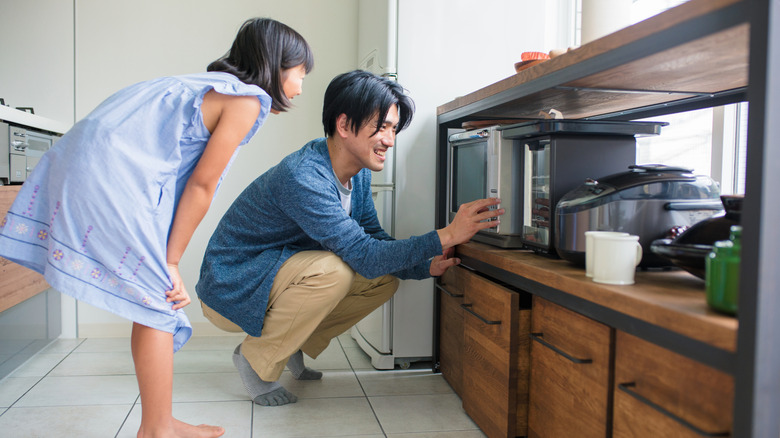
Many people treat a microwave like a hazardous chemical spill, stepping back as soon as they hit "start." This caution is unnecessary. Microwave ovens are constructed with metal shielding and fine mesh screens over the glass door that act as a Faraday cage. This mesh prevents the microwaves from escaping, ensuring the energy stays contained within the cavity.
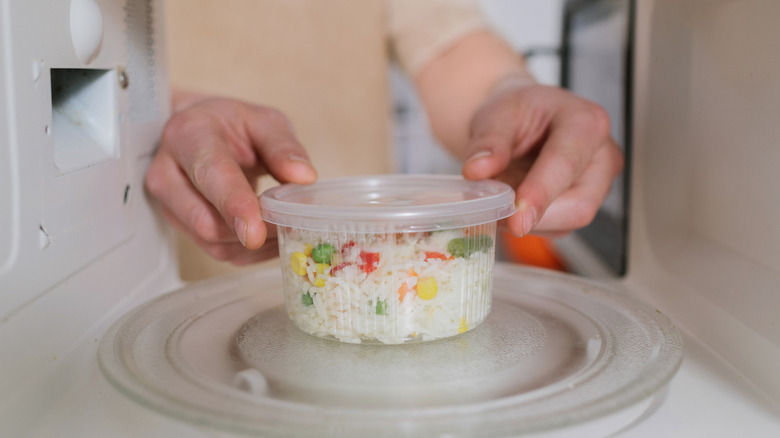
"The microwave door is designed to block the larger microwave radiation wavelengths," says Le. Furthermore, because these waves are non-ionizing, they do not possess the energy to damage human DNA or cause the types of long-term health effects associated with high-energy ionizing radiation. In fact, staying near the microwave is often beneficial, as it allows the user to stir or rotate the food to prevent the uneven heating common to the technology.
4. Myth: Anything You Can Cook on a Stove, You Can Cook in a Microwave
The Reality: The microwave lacks the ability to create the Maillard reaction, limiting its culinary range.
During the 1970s and 80s, the marketing of microwave ovens promised a revolutionary way to cook everything from beef stews to cakes. While technically possible to reach a food-safe temperature, the result is rarely desirable.
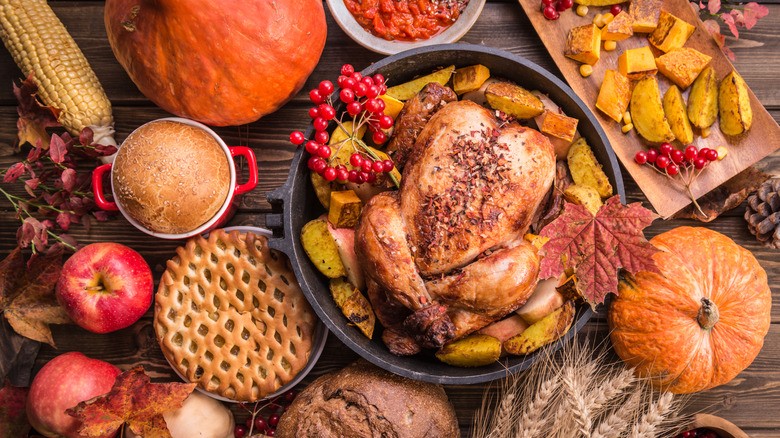
The limitation lies in the physics of the machine. "Microwaves work by exciting water molecules directly," Le explains. "You are not going to see foods experience the Maillard reaction through microwaving." The Maillard reaction—the chemical interaction between amino acids and reducing sugars that produces the brown, caramelized, and savory crust on seared steaks or roasted vegetables—requires temperatures typically exceeding 300°F (149°C). Since microwaves primarily heat the water inside food to boiling (212°F/100°C), the food will remain pale, soft, and lacking in flavor complexity.
5. Myth: Microwaved Food Should Heat Evenly
The Reality: Uneven heating is a physical inevitability, not a defect.
If you have ever pulled a bowl of soup from the microwave only to find the edges boiling while the center is ice cold, you aren’t alone. This is not a failure of your appliance; it is a byproduct of standing waves.
Electromagnetic waves reflect off the metal walls of the oven, creating "hot spots" where waves overlap and "cold spots" where they cancel each other out. The turntable is a clever engineering workaround, but it cannot fully account for the density and geometry of the food. Le advises that for optimal results, users should heat food in 30 to 60-second intervals, stirring in between to manually redistribute the heat, and allowing the dish to rest for a moment after cooking to let the temperature equilibrate.
6. Myth: Plastic Containers are Always Safe to Use
The Reality: Heat and fats can cause plasticizers to migrate into your food.
While the microwave itself is safe, the vessels we use within it are a different story. Many plastic containers contain additives like BPA (bisphenol A) or phthalates to improve durability or flexibility. These chemicals are known endocrine disruptors.
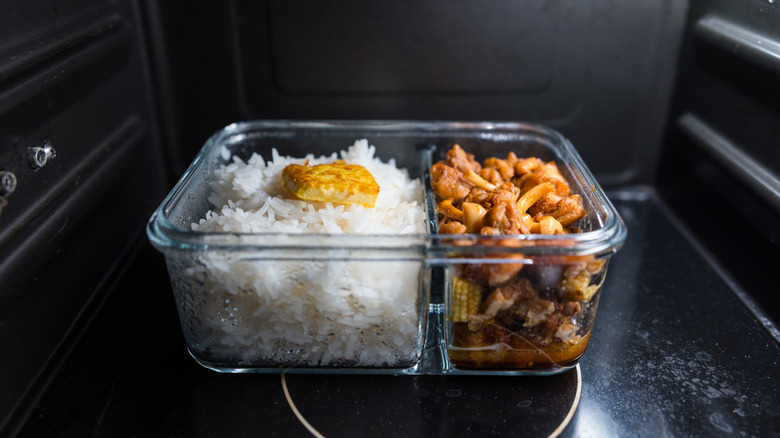
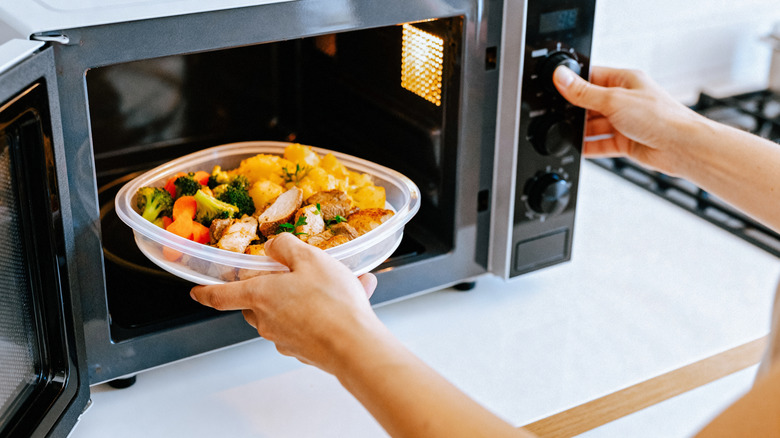
"Microwaves can create regions where the temperature rises very quickly, especially if there are fats or oils," says Le. "This results in the fats dissolving many of the plasticizers found in plastic." When these chemicals migrate into your food, they can interfere with hormonal functions. To mitigate this risk, it is best to transition to glass or ceramic containers. If you must use plastic, ensure it is clearly labeled "microwave-safe," and avoid using containers that show signs of wear, such as scratches, cracks, or discoloration, as these compromised surfaces are more likely to leach chemicals.
Chronology of Microwave Innovation
- 1945: Percy Spencer, a Raytheon engineer, patents the use of microwave energy for cooking after witnessing a candy bar melt.
- 1947: The first commercial microwave oven, the "Radarange," is released. It stands nearly six feet tall and weighs 750 pounds.
- 1967: The first countertop microwave is introduced, making the technology accessible to the average household.
- 1970s-1980s: The "Microwave Era" sees a surge in specialized cookbooks and appliances, though many recipes fail to account for the lack of browning.
- Present Day: Microwaves are standard in over 90% of American kitchens, evolving into a sophisticated tool for modern, time-sensitive cooking.
Implications for the Modern Cook
Understanding these myths changes how we approach our kitchens. We can move past the fear-based marketing of the late 20th century and view the microwave for what it truly is: a specialized tool that excels at rapid heating and steaming. By choosing glass over plastic, accepting the need for stirring, and acknowledging the microwave’s limitations regarding browning, home cooks can maximize the appliance’s efficiency without compromising health or quality.
As food science continues to evolve, the microwave will likely remain a staple, not because it can replace the stove or the oven, but because it handles specific physical tasks better than any other appliance in our arsenal. When used with knowledge rather than superstition, the microwave is a powerful ally in the pursuit of a convenient, efficient, and nutritious meal.
 Neng Nana
  Raul Delapena Setiawan
  Basiran