
 By Ali Ikhwan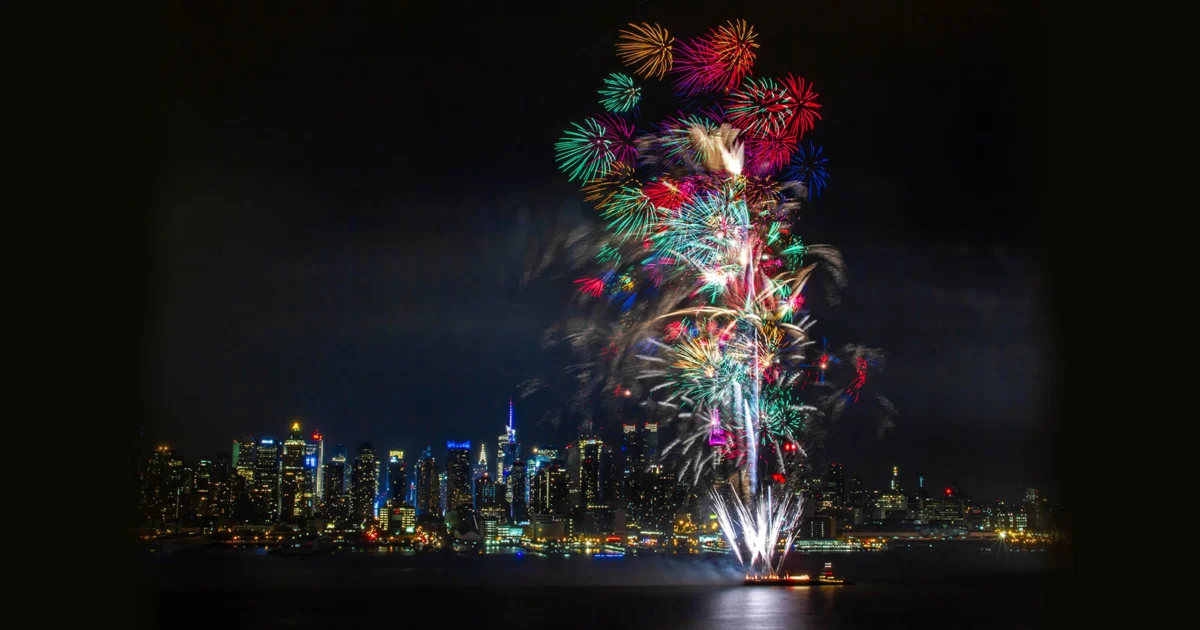
Photographing fireworks is a rite of passage for many photographers, yet it is often constrained by the rigid "textbook" approach of placing a camera on a tripod, setting a long exposure, and hoping for the best. While the classic light-trail image remains a staple of the genre, the medium offers a vast, untapped potential for experimentation with light, color, and motion. By moving beyond simple shutter-speed adjustments, photographers can transition from mere documentation to high-level artistic interpretation.
This guide explores five sophisticated techniques—ranging from high-speed precision to manual in-camera masking—that allow you to capture the spectacle of a fireworks display with newfound creative control.
1. The Anatomy of the Burst: High-Speed Freeze Techniques
When the night sky erupts, the traditional instinct is to leave the shutter open for several seconds, resulting in glowing, atmospheric streaks. However, this often obscures the intricate mechanical beauty of the pyrotechnics themselves.
Capturing the Geometry
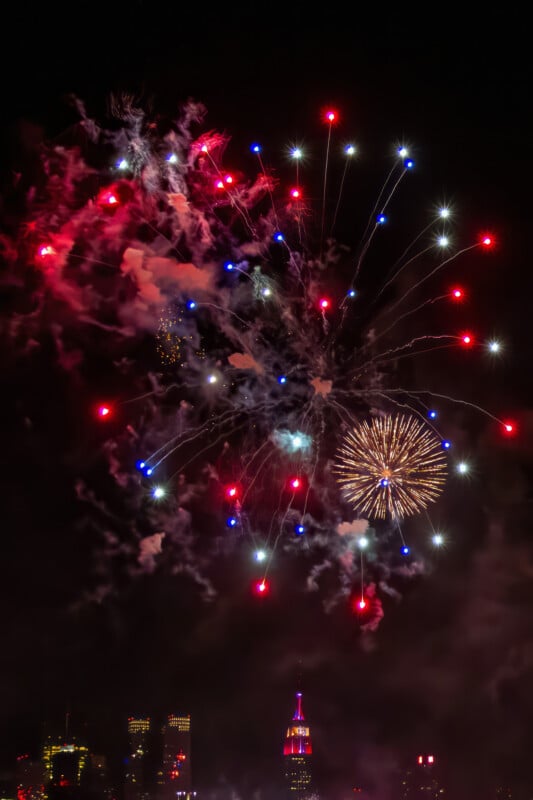
Using a fast shutter speed allows you to "stop time," freezing the molten sparks and geometric patterns of an explosion at its peak. This reveals delicate, crystalline structures that are typically blurred into oblivion during long exposures.
- Technical Setup: Switch your camera to Manual (M) mode. Aim for a shutter speed between 1/250 and 1/1000 of a second. To compensate for the shorter duration of light hitting the sensor, utilize a wider aperture (f/2.8 to f/5.6) and an ISO ranging from 400 to 800, depending on your camera’s sensor capabilities in low-light environments.
- Focus Strategy: Relying on autofocus during a rapidly changing display can lead to missed opportunities. Pre-focusing manually on the approximate altitude where the shells are detonating is the gold standard for consistency.
- Execution: Utilize your camera’s burst mode. By firing a sequence of images as a shell begins its descent, you increase the probability of capturing the "perfect bloom"—the exact millisecond of maximum expansion.
2. The Abstract Approach: Pull-Focus Photography
If the goal is to move away from literal representation, "pull-focus" photography offers a painterly, impressionistic result. This technique involves manipulating the focus ring during a single, extended exposure, effectively turning points of light into elongated, dreamlike streaks and layered textures.
Creating the "Painterly" Effect
Mount your camera securely on a tripod. Set your exposure time for three to six seconds. Begin the exposure with the lens either perfectly sharp or slightly out of focus, and then fluidly rotate the focus ring throughout the duration of the burst.
This process is inherently unpredictable, yielding abstract patterns that differ with every single shot. It transforms the chaotic noise of a finale into a soft, layered tapestry of color. An aperture of f/16 is recommended here, as it extends the exposure time, providing you with a longer window to execute the focus adjustment while keeping the vibrant colors saturated.
3. Contextualizing the Sky: Wide-Angle Storytelling
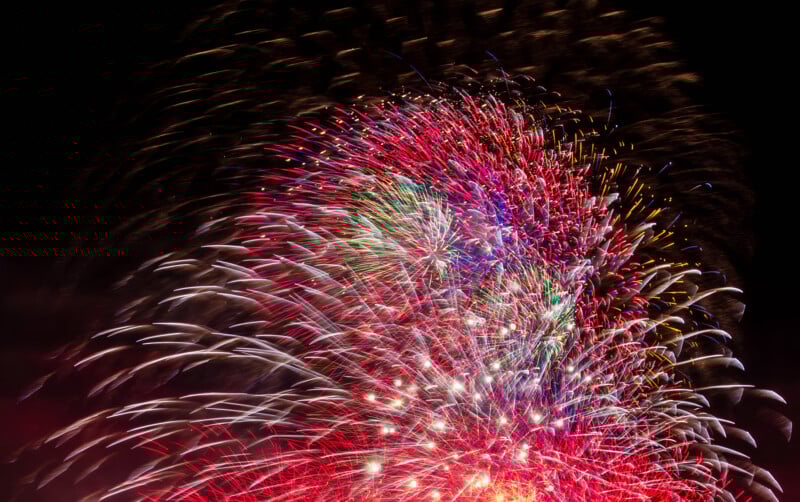
Perhaps the most significant limitation in fireworks photography is the "black void" syndrome—images where the fireworks exist in a vacuum, detached from the environment. To create truly memorable work, you must incorporate the context of the celebration.
Building a Sense of Place
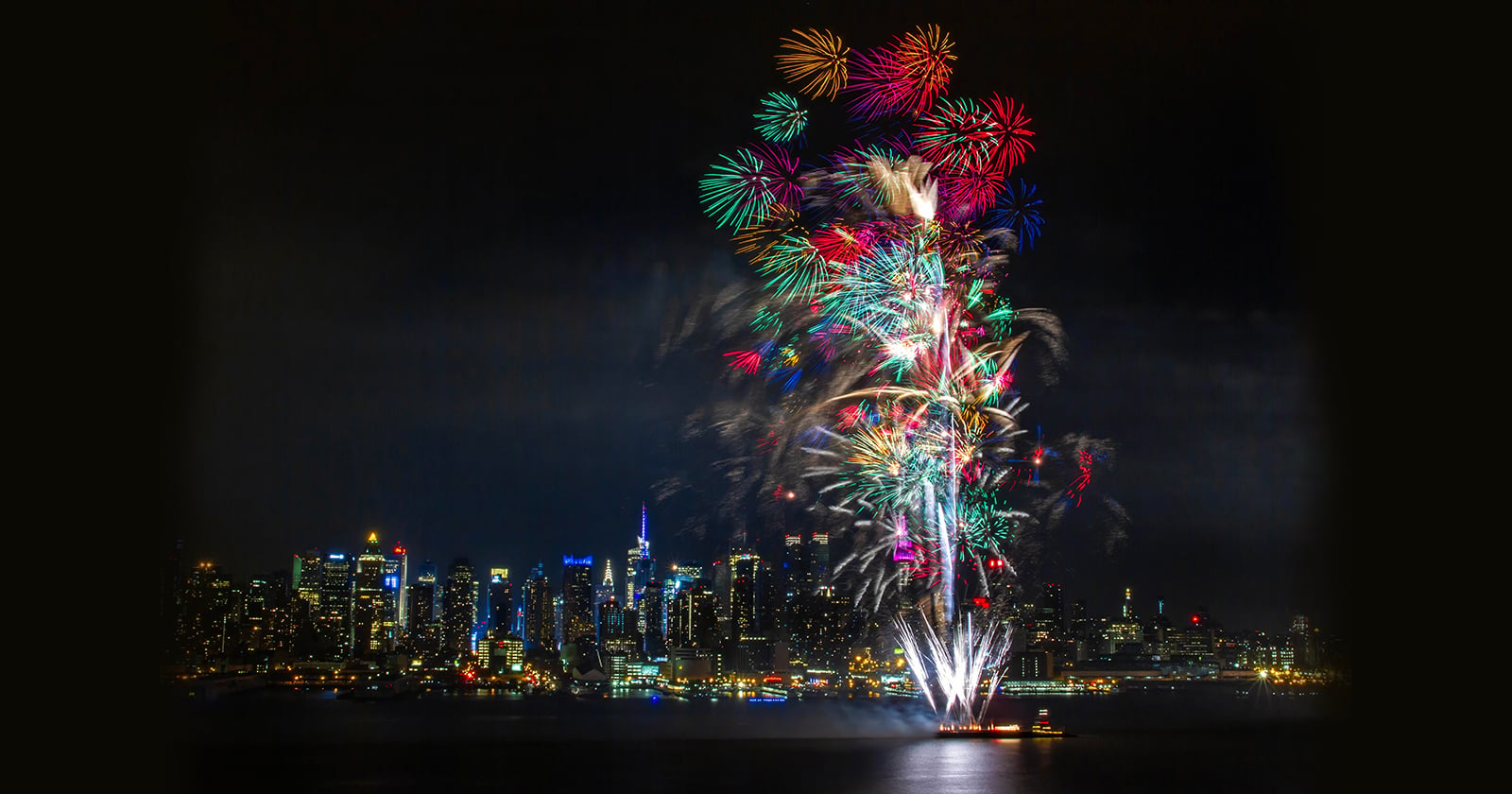
By utilizing a wide-angle lens, you can capture the relationship between the pyrotechnic display and the environment. Whether it is the reflection of the sky on a nearby lake, the silhouette of a bustling crowd, or the architectural grandeur of a city skyline, these elements provide scale.
- Compositional Tips: Use foreground elements like bridges or monuments to frame the sky.
- Technical Balance: To keep both the foreground architecture and the distant fireworks in sharp focus, set your aperture to f/8 or f/11. A shutter speed of two to eight seconds will generally capture the movement of the fireworks while ensuring the ambient city lights remain properly exposed.
4. Digital Darkroom: Multi-Exposure Stacking
A common frustration for professional photographers is the "smoke problem." During a grand finale, the density of smoke from dozens of shells often clouds the sky, resulting in muddy, overexposed images.

The Power of the "Lighten" Blend
Rather than relying on one long exposure, modern digital workflows allow for "stacking." By capturing a series of shorter, cleaner exposures throughout the finale and combining them in post-processing software like Adobe Photoshop, you can bypass the smoke issue entirely.
- The Process: Maintain a locked, steady composition on a tripod. Use manual settings (ISO 100-400, f/8-f/11, 1-4 seconds).
- Stacking: Once you have your sequence, import the files as layers in Photoshop. Change the blending mode of each layer to "Lighten."
- The Result: This tells the software to only retain the brightest pixels from each frame. The fireworks accumulate in the image, but the dark, hazy smoke is filtered out. This produces a "clean" grand finale that captures the intensity of the show without the visual clutter.
5. The Grand Finale: Manual Masking with Black Cardstock
Before digital stacking existed, photographers relied on a technique known as "black carding"—a method that remains arguably the most effective way to control light in-camera.
Precision Control in Real-Time
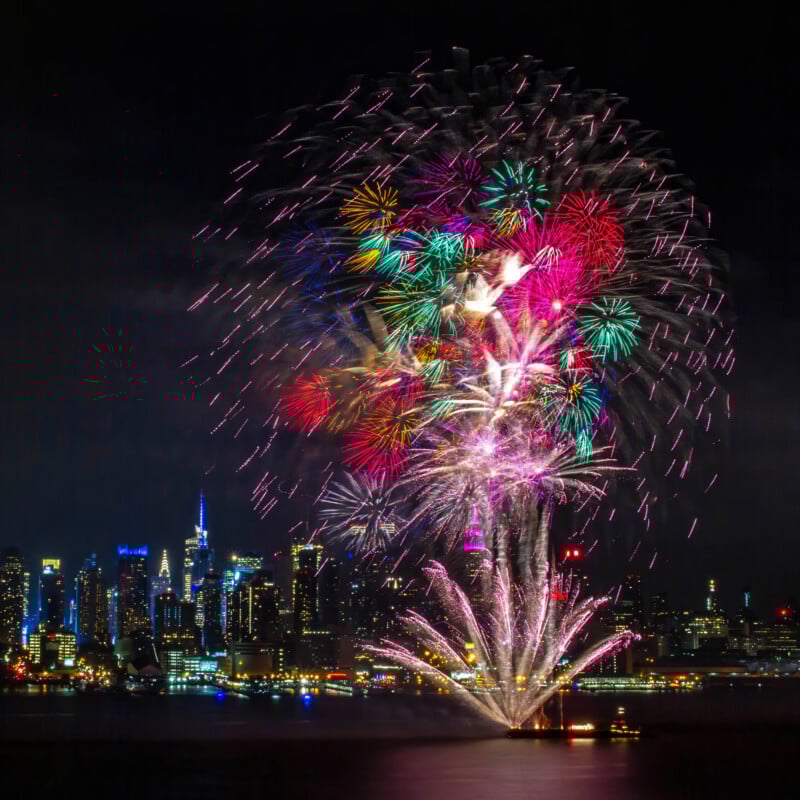
Inspired by traditional darkroom dodging and burning, this technique uses a piece of black cardstock as a physical "shutter" in front of your lens.
- Setup: Place your camera on a tripod in Bulb or Manual mode. Set an aperture of f/11 to f/16 and an ISO of 100.
- The Technique: Start a long exposure (30 to 45 seconds). When a firework is not in the frame or is just beginning its launch, hold the black cardstock in front of your lens without touching the camera. As soon as a firework reaches its peak, pull the card away to expose the sensor to that specific light. Cover the lens again as the trails begin to fade.
- Implications: This allows you to "curate" your image in real-time, preventing overexposure and ensuring only the best, most vibrant bursts make it into your final frame. It is a rhythmic, meditative process that turns the photographer into a live editor.
Summary and Artistic Philosophy
Ultimately, the evolution of fireworks photography mirrors the evolution of the medium itself—moving from the documentation of events to the expression of the artist’s vision.

Key Takeaways for Practitioners:
- Experimentation: Do not fear failure. The unpredictability of fire is the primary challenge and the primary reward of this genre.
- Preparation: Always perform test exposures before the main event. Understanding the ambient light of your location is essential to balancing your composition.
- Personalization: While these five techniques provide a roadmap, they are not rigid rules. The most compelling images often arise when a photographer combines these methods—for example, using a wide-angle lens for storytelling while simultaneously using a black card to manage the light intensity.
As the fireworks season approaches, consider these strategies not as constraints, but as tools. Whether you are using a high-speed shutter to capture the geometry of a single spark or utilizing digital stacking to craft the perfect, smoke-free finale, remember that your goal is to translate the fleeting energy of the night into a permanent, artistic narrative. No two photographers will ever return with the same image, and therein lies the beauty of the craft.
 Raul Delapena Setiawan
  rifanmuazin
  Ammar Sabilarrohman