
 By Ali Ikhwan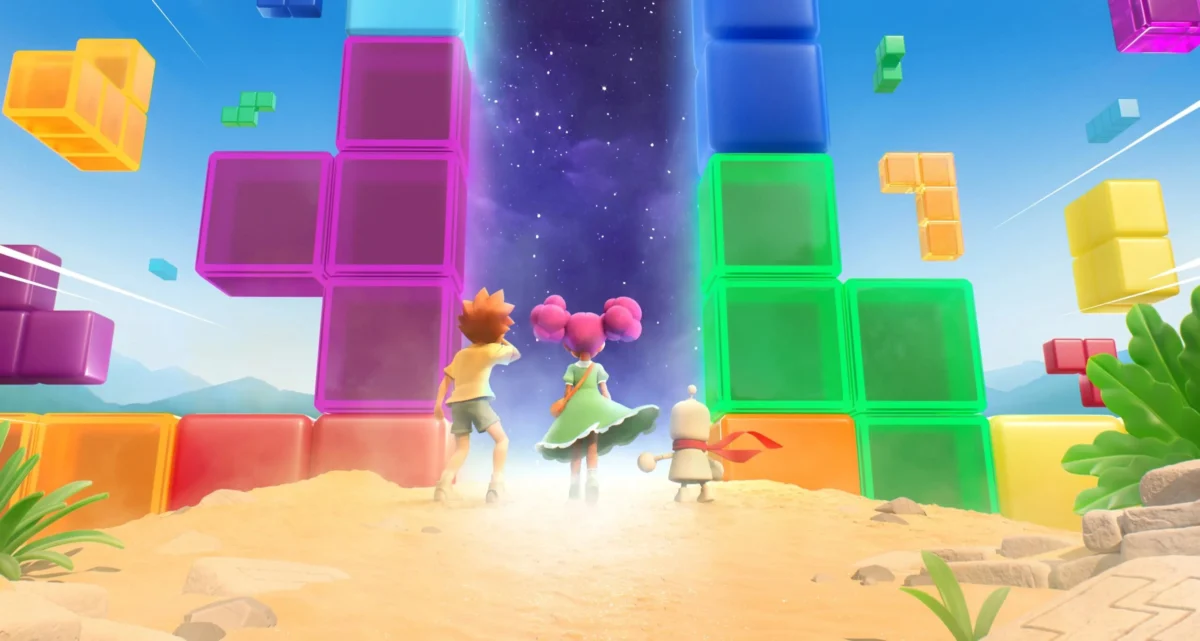
For over four decades, the falling geometric shapes known as Tetriminos have defined a global language of logic, speed, and spatial reasoning. From the smoky arcades of the 1980s to the modern competitive eSports circuit, Tetris has remained a cultural touchstone. Now, The Tetris Company is taking its most ambitious leap yet: transforming the abstract puzzle game into an immersive, CG-animated children’s series titled Tetris: World Builders.
Unveiled at the prestigious Annecy International Animation Film Festival, the project aims to do more than just entertain; it seeks to inspire the next generation of engineers, artists, and problem-solvers through the lens of STEAM (Science, Technology, Engineering, Arts, and Mathematics).
The Core Concept: From Puzzle to Narrative
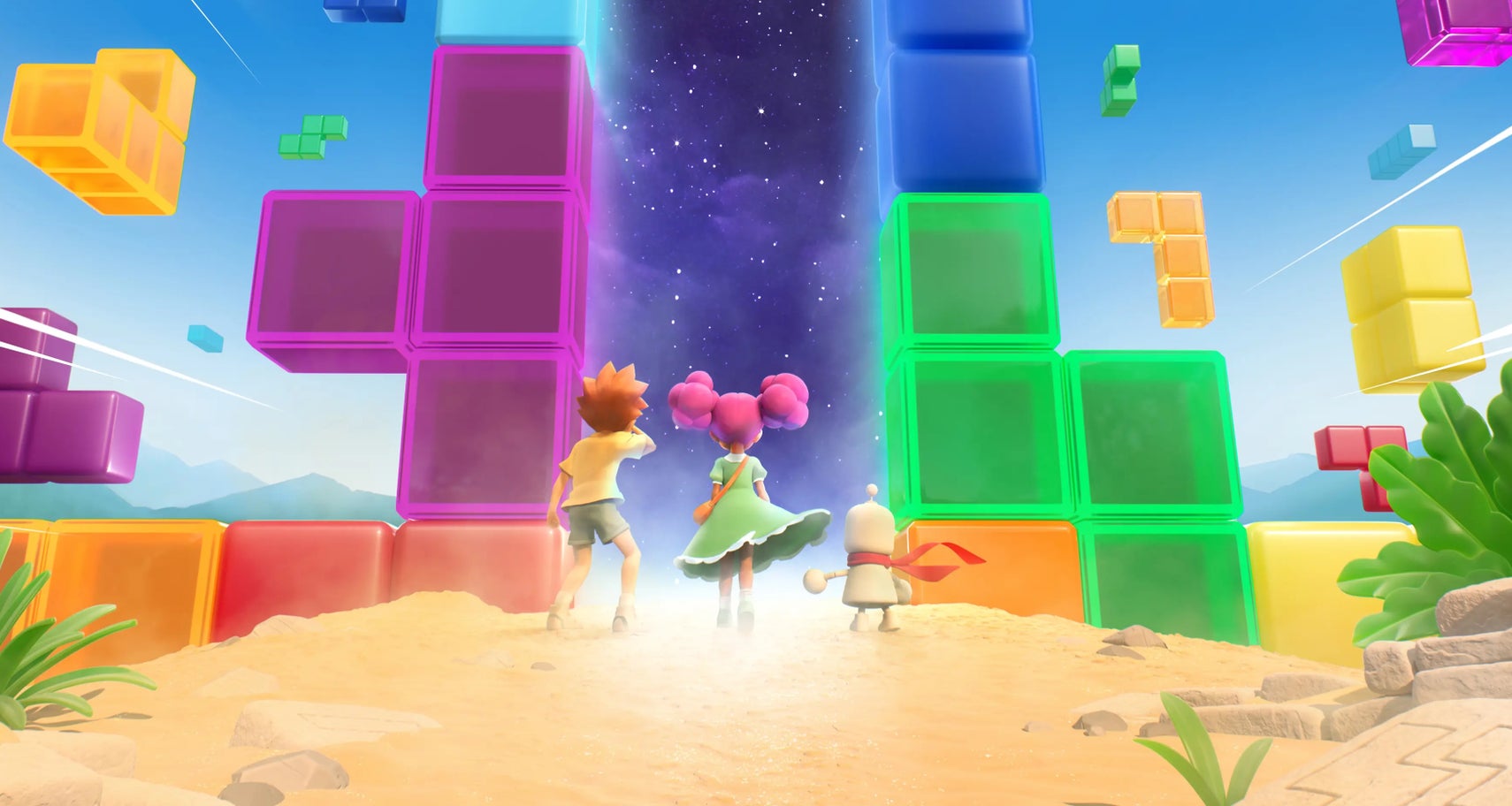
At its heart, Tetris: World Builders is a CG-animated adventure series targeting children aged six and up. The premise takes the familiar mechanics of the game—the falling blocks—and reimagines them as the catalysts for a grand, world-building narrative.
The plot centers on a group of young, fearless "World Builders" who find themselves in a precarious situation when mysterious, massive Tetriminos begin raining down from the sky. Rather than seeing the blocks as a chaotic obstruction, these characters view them as opportunities for transformation. By utilizing ingenuity, teamwork, and STEAM-based problem-solving, the protagonists must reshape their landscapes and solve complex community challenges.
The series promises to bridge the gap between "play" and "learning." By visualizing the iconic geometric language of Tetris as a dynamic tool for construction, the show creators hope to demystify foundational engineering concepts. Whether it is structural integrity or spatial awareness, the show intends to turn the "puzzle-solving mechanics that have captivated players for generations" into a character-driven lesson on innovation and resilience.
Chronology: The Evolution of a Cultural Icon
To understand the significance of this shift, one must look at the trajectory of Tetris as a brand.
- 1984: Alexey Pajitnov creates Tetris at the Dorodnitsyn Computing Centre of the Academy of Sciences of the Soviet Union. The game becomes a global phenomenon, arguably the most recognizable puzzle game in history.
- 1996: The Tetris Company is founded, centralizing the licensing and management of the IP. Under the leadership of Henk Rogers and later Maya Rogers, the brand has been meticulously managed to ensure consistency across platforms.
- 2010s: Tetris expands its footprint through competitive gaming, with the Classic Tetris World Championship (CTWC) elevating the game to a high-stakes eSport.
- 2023–2024: The brand sees a resurgence in interest, bolstered by the Tetris feature film and the Tetris Forever documentary/game anthology, which chronicles the history of the game.
- 2024 (June): Tetris: World Builders is officially announced at the Annecy International Animation Film Festival, signaling a transition from pure gameplay to narrative-based storytelling for the next generation.
The Architects Behind the Vision
The development of Tetris: World Builders is not an isolated experiment but a calculated collaboration with seasoned industry veterans. The project is being produced by TeamTO, a powerhouse in the animation sector.
The creative team includes producers Marco Balsamo and Tara Sibel Demren, who are working alongside executive producer Chuck Williams. Williams brings a wealth of experience to the table, particularly in the realm of video game-to-screen adaptations, most notably his work on the Sonic the Hedgehog franchise. His involvement suggests a commitment to high production values and a deep understanding of how to translate gaming DNA into compelling episodic narratives.
The choice of TeamTO is equally significant. Known for their high-quality CG work and expertise in children’s entertainment, the studio is well-positioned to turn abstract geometric shapes into a vibrant, living world that appeals to a modern audience of young digital natives.
Official Responses: Expanding the Universe
The leadership at The Tetris Company has been vocal about the strategic necessity of this expansion. Maya Rogers, President and CEO of The Tetris Company, emphasized that the goal is to leverage the game’s universal appeal to foster a new set of skills.
"For more than 40 years, Tetris has brought people together through a universal language of logic and play," Rogers stated during the announcement. "With Tetris: World Builders, we are expanding the Tetris universe in an entirely new way, transforming one of the most iconic games of all time into a new adventure that inspires creativity, collaboration, and discovery."
Rogers added, "We are thrilled to partner with TeamTO to bring this vision to life and create a series that celebrates the limitless possibilities that emerge when people build together."
For the company, this move represents a maturation of the brand. By moving into the "edutainment" space, Tetris is securing its relevance for a generation of children who may not have grown up with the original Game Boy, but who are increasingly accustomed to open-ended, creative sandbox games like Minecraft or Roblox.
Implications: The STEAM Education Movement
The inclusion of "Arts" in the acronym STEAM is a critical component of this project. While STEM has been a focus of educational policy for years, the integration of the Arts acknowledges that engineering and technology require creative thinking—the ability to visualize a solution before it is physically constructed.
Building Through Logic
In Tetris, the player is essentially an architect under pressure. You must analyze the space, determine the best fit for a piece, and anticipate future requirements. Tetris: World Builders aims to translate this "spatial logic" into a narrative format. By watching the characters solve problems using these same principles, children are exposed to the fundamental logic of structural engineering.
Community and Collaboration
Modern education stresses the importance of "soft skills," such as teamwork and communication. By positioning the characters as a "fearless team of young World Builders," the series emphasizes that complex global challenges cannot be solved in isolation. This reflects a shift in how engineering is taught in modern universities—moving away from the "lone genius" trope toward collaborative, multi-disciplinary teams.
Market Impact
From a market perspective, this is a savvy move by The Tetris Company. By diversifying into television, they are creating a flywheel effect. A child who enjoys the show is more likely to engage with the game, and vice versa. Furthermore, by aligning the brand with educational values, the company gains significant goodwill from parents and educators, making the Tetris brand a "safer" and more desirable commodity in the cluttered media landscape of the 2020s.
Challenges Ahead: Translating the Abstract
While the potential is high, the creators face a unique challenge: Tetris has no inherent story, no defined characters, and no dialogue. It is a pure, abstract experience.
Critics of video game adaptations often point to the "translation gap"—the difficulty of turning a game’s mechanics into a cohesive plot. However, the success of recent projects like the Super Mario Bros. Movie and The Last of Us proves that audiences are hungry for stories that respect the source material while expanding upon its world.
By focusing on "World Building," the team is cleverly sidestepping the need for a deep lore history. Instead, they are treating the game as a set of natural laws—a cosmic phenomenon that the characters must interact with. If they can successfully merge the fast-paced, high-stress joy of the original game with the character-driven depth of modern animation, Tetris: World Builders could become a flagship for a new era of educational media.
Conclusion: A New Foundation
As Tetris: World Builders enters development, the industry will be watching closely. It represents a bold experiment in how legacy gaming brands can pivot to survive and thrive in a digital-first, content-saturated world.
By grounding its narrative in the pillars of STEAM, The Tetris Company is not just creating a show; they are building a bridge between the digital playgrounds of the past and the scientific challenges of the future. As the trailer for Tetris Forever suggests, the game is timeless, but its reach is only just beginning to evolve. Whether it will spark a genuine interest in engineering among its young viewers remains to be seen, but one thing is certain: when the blocks start falling, the possibilities for innovation are endless.
 Laily UPN
  Nila Kartika Wati
  Asro
Asro 