
 By Sagoh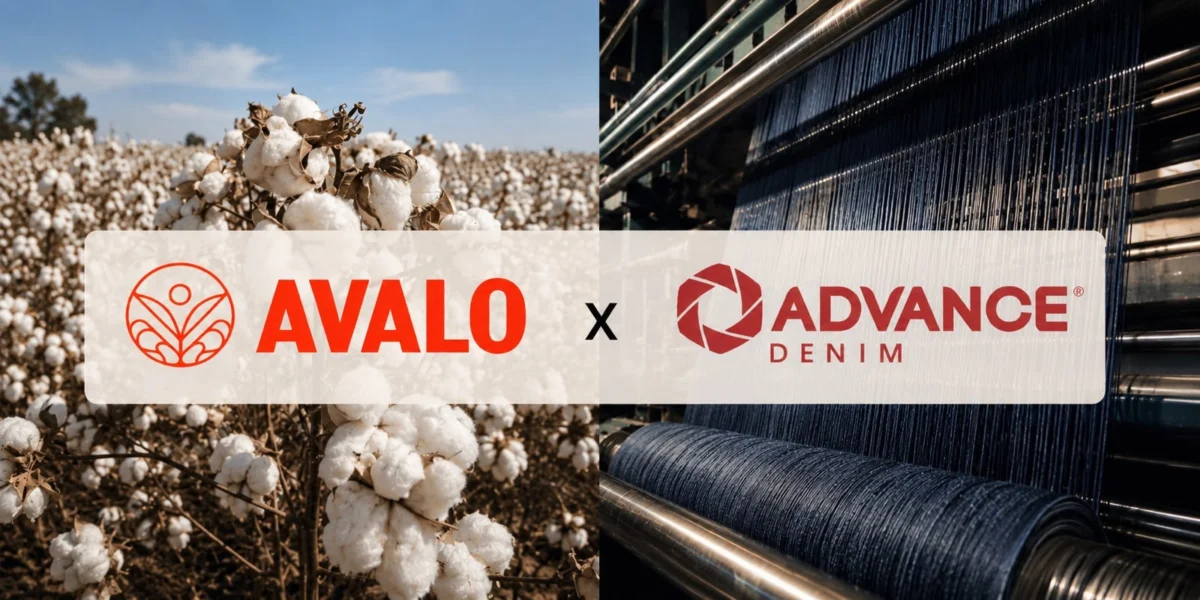
The global apparel industry is facing a reckoning. As environmental regulations tighten and consumer demand for transparency reaches a fever pitch, the foundational raw materials of the fashion world—most notably cotton—are under intense scrutiny. Enter Avalo, a North Carolina-based agricultural biotechnology company that is bridging the gap between high-tech AI innovation and traditional textile manufacturing. In a landmark development for the denim sector, Avalo has officially tapped Advance Denim as its founding mill partner for the Chinese, Vietnamese, and Cambodian markets, signaling a transformative shift in how jeans are grown, sourced, and manufactured.
The Core Partnership: A Strategic Alignment
The multi-year agreement between Avalo and Advance Denim is not merely a supply contract; it is a strategic alignment designed to scale the production of high-quality, dryland cotton. Under the terms of the deal, Advance Denim secures exclusive access to Avalo’s climate-resilient cotton, which will be processed through the mill’s extensive infrastructure to serve the world’s most prominent fashion retailers and global brands.
For the apparel industry, this partnership offers a tangible solution to the “Scope 3” emissions challenge—the indirect greenhouse gas emissions that occur in a company’s value chain. By integrating Avalo’s cotton at the mill level, brands can now source fiber that is fundamentally designed to be lower-impact from the moment it is planted, rather than relying solely on post-production offsets or carbon credit schemes.
A Chronology of Innovation: From Labs to Looms
To understand the significance of this partnership, one must look at the rapid trajectory of Avalo since its inception in 2020.
- 2020: Avalo launches with a mission to utilize AI-powered computational breeding to create climate-resilient crops, ranging from adaptive sugarcane to heat-resistant tomatoes.
- 2023–2024: The company focuses its proprietary "genetics by environment" methodology on cotton, partnering with 10 farmers in Texas to pioneer a new standard for rain-fed, dryland crops.
- June 2025: Avalo validates its flagship cotton program through an independent, cradle-to-gate life cycle assessment (LCA). The results provide empirical evidence of the crop’s massive environmental benefits, including a 100 percent reduction in irrigation requirements compared to conventional cotton.
- July 2025: Avalo announces a circular knit collaboration with Laguna Fabrics and robotics firm CreateMe, signaling its intent to penetrate the fashion market beyond just denim.
- September 2025: The partnership with Advance Denim is finalized, effectively positioning Avalo as a major player in the global denim supply chain just in time for Climate Week in New York.
Data-Driven Sustainability: The Metrics of Change
Modern fashion is built on data, and the Avalo-Advance Denim partnership is structured to deliver it. Every bale of Avalo cotton is enrolled in the U.S. Cotton Trust Protocol (USCTP) regenerative program and is fully traceable via the digital platform Textile Genesis. This creates a "digital passport" for the fiber, allowing brands to make credible, verifiable sustainability claims to their end consumers.
The environmental performance of this cotton is striking. According to the June 2025 life cycle assessment, Avalo’s dryland cotton outperformed conventional crops by significant margins:
- Water Usage: A 100 percent reduction in external irrigation, relying solely on natural rainfall.
- Greenhouse Gas Emissions: A 47 percent reduction in CO2 output, achieved through more efficient crop management and the removal of resource-intensive practices.
- Fertilizer Efficiency: A 75 percent reduction in fertilizer application. This is particularly vital in the current economic climate, where the cost of petroleum-based synthetic fertilizers has become a major pain point for global agricultural profitability.
In 2025 alone, this program successfully produced 351 metric tons of cotton across 2,030 acres of dryland, proving that high-yield, high-quality output is possible without the traditional environmental toll.
The Technological Edge: Why Advance Denim Chose Avalo
Advance Denim is no stranger to the cutting edge. With a long-standing reputation for integrating disruptive technologies, the Chinese mill has previously pioneered the use of Tencel Lyocell HV100, Gracell x Circulose viscose, and Lycra FitSense. Furthermore, the mill’s proprietary "BigBox Dyeing" process—which slashes water usage for indigo dyeing by up to 95 percent—aligns perfectly with the philosophy of Avalo.
Amy Wang, general manager of Advance Denim, noted that the decision to partner with Avalo was driven by a belief that performance and environmental stewardship are not mutually exclusive. "The fiber quality speaks for itself," Wang remarked. "But what truly made this an easy decision was the combination of Avalo’s water reduction and their commitment to regeneration under USCTP and BCI Cotton. Given the increasing risks across the global supply chain, all big textile players need to prioritize these strategies to protect the future of fashion."
Implications for the Global Apparel Market
The ripple effects of this partnership are expected to be profound. By securing a reliable, transparent, and significantly "greener" raw material, Advance Denim is providing its global clients with a clear path to meet their own 2030 and 2050 sustainability targets.
1. Disrupting the Commodity Market
For decades, cotton has been treated as a uniform commodity. Avalo is shifting this paradigm by branding the genetics of the seed itself as the primary source of sustainability. By moving the "impact" work from the end of the supply chain (manufacturing) to the very beginning (the farm), the company is reducing the complexity and cost of sustainability reporting for brands.
2. Risk Mitigation in a Volatile Climate
As water scarcity becomes a chronic issue in cotton-growing regions, reliance on traditional irrigation-heavy farming is becoming a massive business risk. Avalo’s success in rain-fed Texas farming offers a blueprint for geographic diversification and climate-proofing.
3. Signaling a New Industry Standard
Tricia Carey, chief commercial officer at Avalo, believes this partnership acts as a catalyst for the broader industry. "When a mill of this caliber, serving global retailers, commits to low-footprint cotton as a strategic input, it sends a signal that the whole industry feels," Carey stated. The partnership essentially forces competitors to re-evaluate their own sourcing strategies if they wish to remain relevant to major retailers who are now prioritizing supply chain traceability and carbon reduction.
Conclusion: The Path Forward
The collaboration between Avalo and Advance Denim represents a turning point where agricultural biotechnology meets the practical, high-volume needs of the fashion world. By replacing traditional, resource-heavy practices with AI-driven, climate-resilient genetics, the two companies are setting a new standard for what it means to be a "responsible" denim producer.
As the textile industry moves toward a circular and regenerative future, this partnership serves as a roadmap. It demonstrates that the path to a lower-impact fashion industry begins not in the boardroom or the design studio, but in the soil—and that through data, technology, and strategic collaboration, the industry can indeed weave a more sustainable future, one pair of jeans at a time.
 Neng Nana
  Ali Ikhwan
  Lina Hope