By Christina Newberry Published in Digital Marketing & Enterprise Strategy
In the modern digital economy, socialmedia has long transcended its origins as a casual space for brand awareness. Today, it represents a multi-billion-dollar ecosystem where consumer behavior shifts rapidly, ad spend spans massive global budgets, and customer loyalty is won or lost in real time. Yet, as marketing budgets face tighter scrutiny from the C-suite, the mandate for accountability has never been higher.
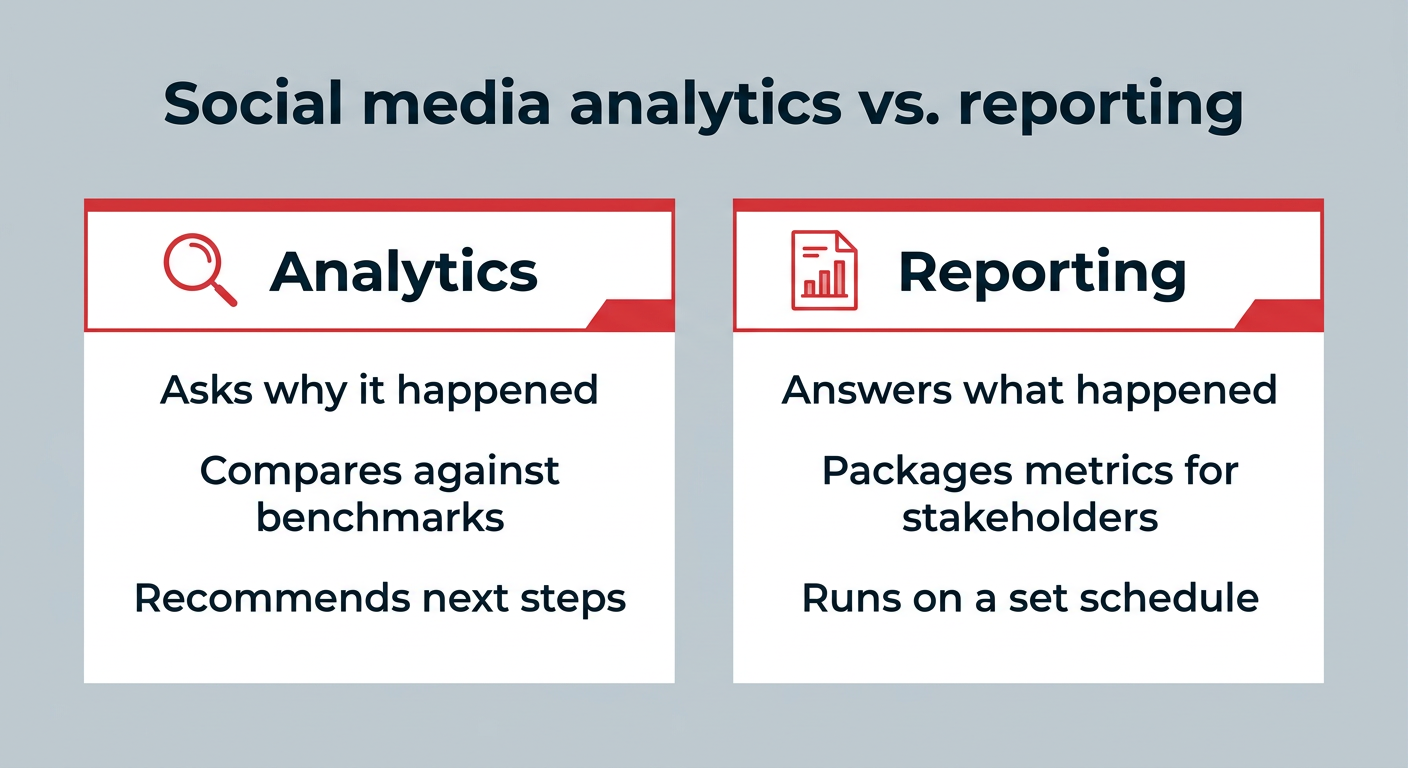
Enter social media analytics: the systematic collection, evaluation, and reporting of data points designed to measure the performance of social media accounts and guide vital business decisions. Far beyond mere vanity metrics like follower counts and passive likes, contemporary analytics provides the empirical foundation necessary to transform social channels from experimental "nice-to-haves" into reliable profit centers.
Main Facts: What Is Social Media Analytics and Why Does It Matter?
At its core, social media analytics evaluates content performance on both macro and micro levels. This comprehensive data stream encompasses owned content (material published directly by a brand), earned content (conversations, tags, and reviews generated organically by the public), and paid media (targeted advertising campaigns).
For enterprise-level organizations, analytics extends far beyond the native dashboards provided by individual platforms. It requires the seamless integration of social data with web analytics, Customer Relationship Management (CRM) databases, and sophisticated business intelligence tools. This unified approach provides leadership teams with a holistic view of brand performance across multiple regions, channels, and business units.
Without structured analytics, marketing teams are forced to make content and budget decisions based on gut instinct rather than hard evidence. By implementing robust analytical frameworks, brands can accurately gauge customer sentiment, spot emerging market trends, and avert public relations crises before they escalate into damaging media events.
Chronology and Evolution: From Vanity Metrics to Integrated Business Intelligence
The practice of measuring social media impact has undergone a radical transformation over the past two decades.
The Early 2000s (The Era of Awareness): Digital marketing focused primarily on email opt-ins, basic website traffic, and primitive follower metrics. Social media was treated as a digital bulletin board with little measurable connection to the bottom line.
The 2010s (The Rise of Native Dashboards): As platforms like Facebook, Twitter (now X), and Instagram matured, they introduced native analytics tools. Brands gained access to basic engagement rates, impressions, and click-through rates. However, data remained siloed within individual apps, making cross-platform comparisons difficult.
The 2020s and Beyond (The Enterprise Integration Era): Facing stricter privacy regulations, fragmented consumer attention, and economic headwinds—such as recent data indicating that over 60% of Chief Marketing Officers (CMOs) cite budget and resource constraints as their top challenge—organizations began demanding unified data ecosystems. Modern analytics platforms now connect social interactions directly to revenue attribution, turning guesswork into a predictable science.
Supporting Data: Understanding the Seven Pillars of Social Media Analytics
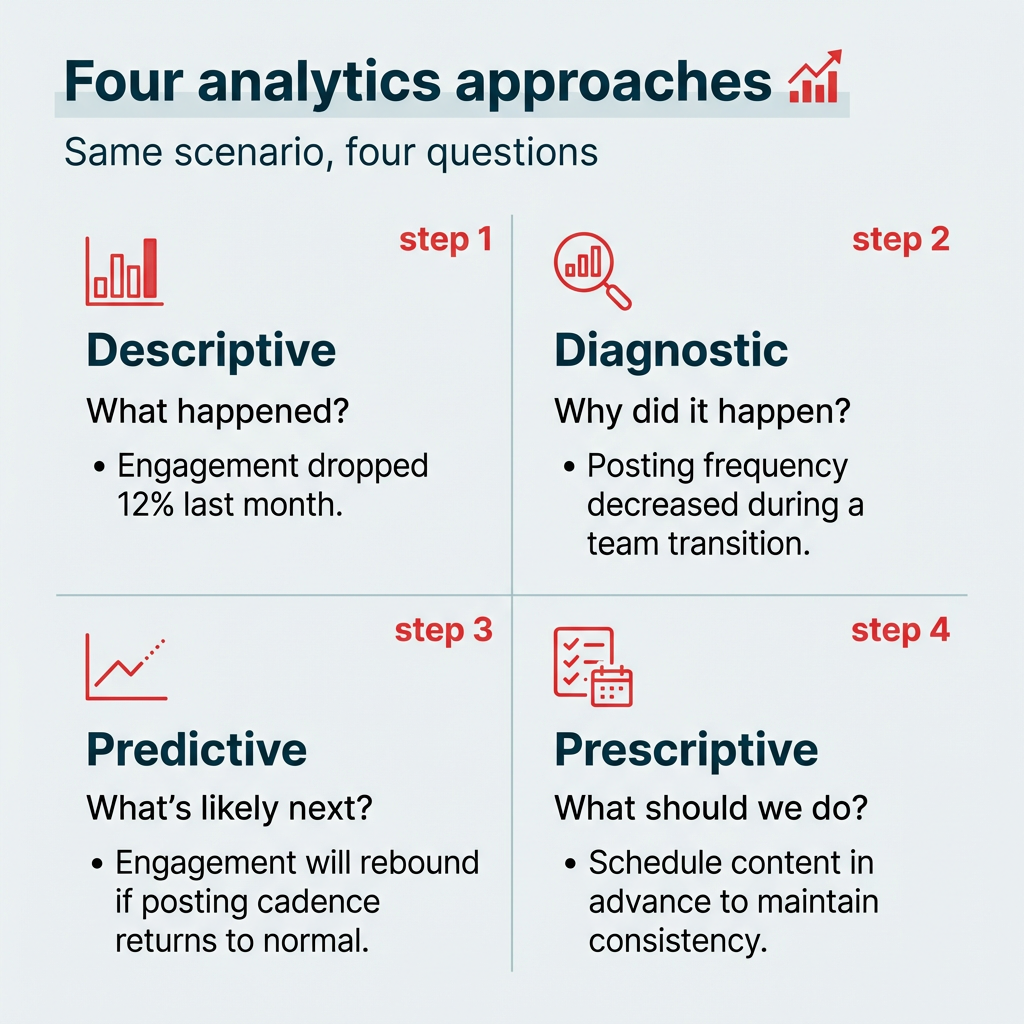
Social media analytics is not a monolith; it is an umbrella term encompassing seven distinct analytical disciplines, each answering a unique strategic question.
+--------------------------+--------------------------------------+----------------------------------------+
| Analytical Type          | Primary Focus                        | Key Metrics Tracked                    |
+--------------------------+--------------------------------------+----------------------------------------+
| Performance Analytics    | Content and profile-level health     | Engagement rate, reach, impressions    |
| Audience Analytics       | Demographic and behavioral insights  | Age, location, active hours, interests |
| Competitive Analysis     | Benchmarking against industry rivals | Share of voice, comparative engagement |
| Social Listening         | Brand mentions and public sentiment  | Mention volume, net sentiment score    |
| Industry Benchmarking    | Macro-level sector standards         | Average engagement rates by platform   |
| Paid Social Analytics    | Advertising campaign efficiency      | CPC, CPM, ROAS, conversion rate        |
| Influencer Analytics     | Partnership ROI and creator value    | Sponsored reach, cost per engagement   |
+--------------------------+--------------------------------------+----------------------------------------+
1. Performance Analytics
This foundational practice tracks a brand’s owned metrics—such as engagement rates, reach, impressions, and follower growth—to evaluate how individual posts and overall profiles perform over time.
2. Audience Analytics
Focusing heavily on who is interacting with a brand, audience analytics evaluates demographic data (age, gender, geographic location) and psychographic traits (interests and values). For instance, consumer research highlights stark generational divides: younger demographics like Gen Z often prioritize visual aesthetics and brand "vibes," whereas older cohorts gravitate toward inspirational or informational content.
3. Competitive Analysis
By comparing a brand’s performance against direct industry competitors, teams gain vital context regarding their market position. Metrics like "share of voice" help organizations identify content gaps left open by rivals.
4. Social Listening and Sentiment Analysis
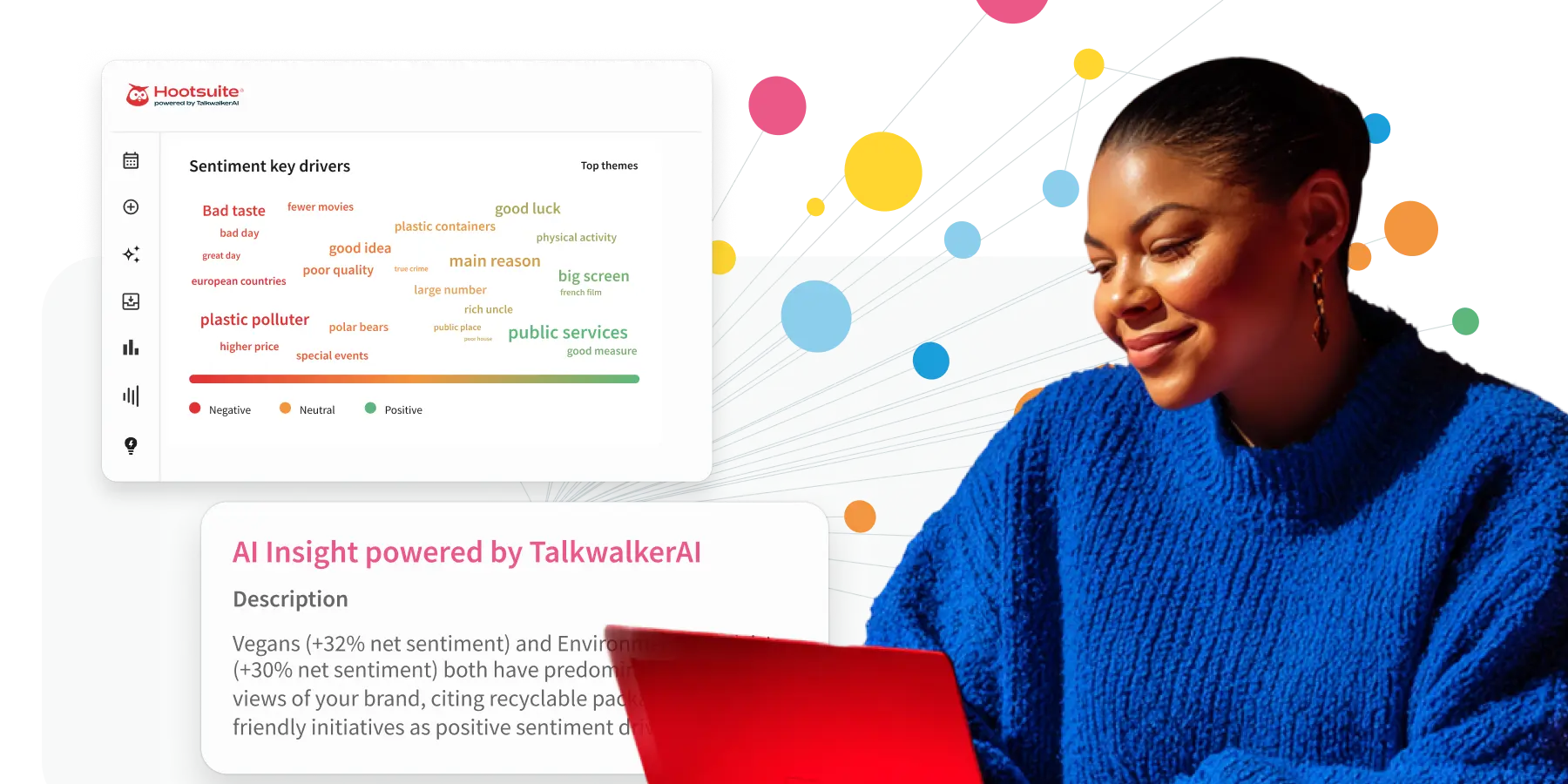
While listening monitors the volume of brand mentions and trending keywords, sentiment analysis digs deeper to decipher the emotional intent behind the public conversation. This ensures brands can detect shifts in consumer perception early.
5. Industry Benchmarking
When reporting to the C-suite, leadership invariably asks: "Are these results actually good?" Industry benchmarking answers this by providing macro-level context across sectors, lending vital credibility to marketing reports.
6. Paid Social Analytics
With global social ad spending surpassing hundreds of billions of dollars annually, paid analytics evaluates cost-per-click (CPC), cost-per-thousand impressions (CPM), return on ad spend (ROAS), and ultimate conversion rates.
7. Influencer Analytics
As influencer marketing budgets expand, brands rely on specialized analytics to isolate which creator partnerships drive genuine business value versus those that fail to convert.
Official Perspectives and Industry Insights
Top marketing executives emphasize that the true value of data lies not in the collection of numbers, but in the speed and accuracy of the subsequent action.
"We make an effort to monitor analytics at frequent enough intervals to notice any trends as they are taking place," notes Jordan Dennison, Digital Marketing Executive at Growthlabs. "This typically involves checks of content within the hour of it being published, the following morning, and then at the end of the week."
Similarly, agile mid-campaign adjustments can rescue underperforming initiatives. Reilly James, Marketing Manager and E-commerce Optimization Expert at William Morris Wallpaper, recalls a pivotal moment:
"During one of our seasonal sales campaigns last year, I noticed a 15% drop in engagement midway through. We switched up our messaging to be more direct… Within a few days, engagement rebounded by 10%, and we saw a subsequent uptick in conversions as well."
Tom Edwards, Founder of Bit Quirky Consulting, advocates for a layered review cadence:
"Daily, we track the basic metrics so we can spot any sudden spikes or drops. Mondays are for reviewing weekend performance. But we reserve Fridays for more in-depth analysis to assess weekly trends. At the end of each month, we dive into detailed reporting, including benchmarking against industry standards."
Implications for the Future of Enterprise Marketing
The transition from isolated reporting dashboards to fully integrated analytics engines carries profound implications for corporate governance and marketing strategy.
Bridging the Gap Between Cost and Profit Centers
Historically, marketing departments were viewed strictly as cost centers—divisions that consumed capital without generating direct, traceable revenue. By deploying advanced attribution tools (such as UTM parameter tracking paired with web analytics and CRM integrations), modern social media managers can definitively prove the social-to-purchase pipeline. When data shows that 70% of consumers who follow brands on social media harbor explicit plans to purchase from them, the argument for increased budget allocation becomes mathematically irrefutable.
Choosing the Right Technology Stack
Organizations must carefully evaluate their tooling infrastructure to avoid data fragmentation. While native platform analytics offer deep channel-specific insights for free, they create operational silos. Unified enterprise platforms—such as Hootsuite Social OS, Rival IQ, Sprinklr, and Google Analytics—allow teams to normalize data, automate reporting workflows, and extract actionable insights via artificial intelligence and machine learning modules.
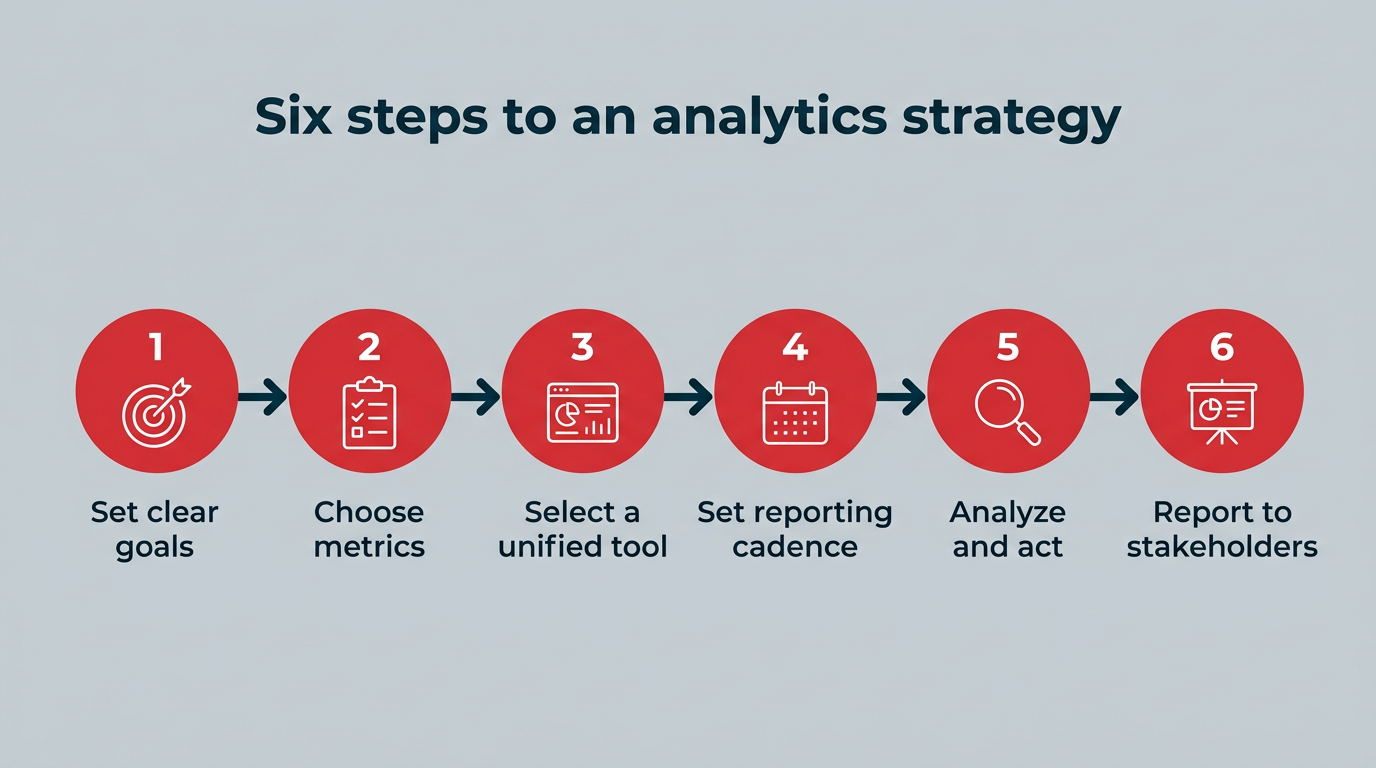
A Six-Step Strategic Framework for Success
To maximize the value of analytics, modern marketing teams must adhere to a repeatable, six-step operational framework:
Set Clear Goals: Align social objectives directly with broader corporate milestones (e.g., boosting a specific product launch).
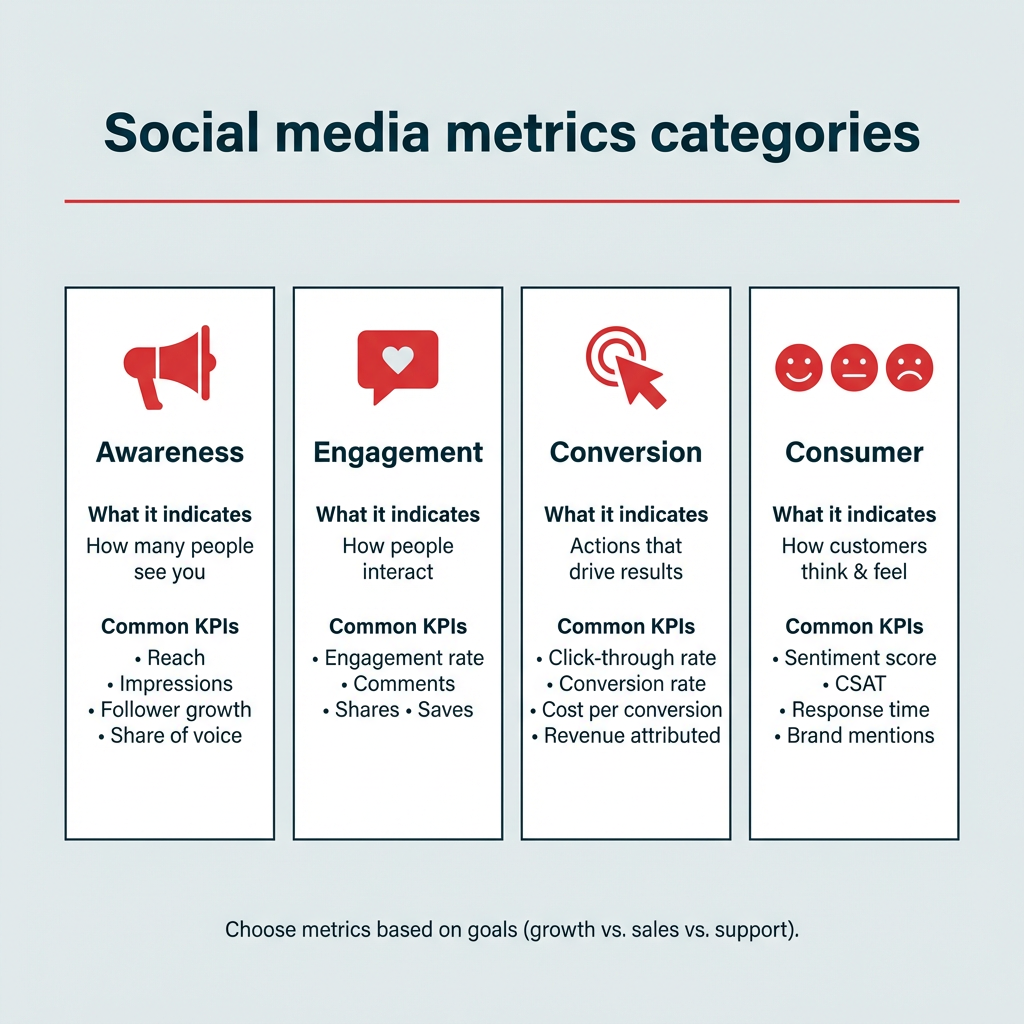
Exercise Restraint with Metrics: Track only 3 to 5 Key Performance Indicators (KPIs) per business goal to avoid dashboard overload.
Implement Unified Tooling: Centralize cross-platform data streams to eliminate manual toggling between native apps.
Establish a Layered Cadence: Combine daily health checks with weekly reviews and deep monthly benchmarking.
Analyze and Iterate: Utilize real-time data anomalies to launch A/B tests, refine messaging, and reallocate ad budgets mid-campaign.
Report with Impact: Translate technical metrics into executive-ready insights that emphasize revenue attribution and business outcomes rather than empty vanity numbers.
Ultimately, mastering social media analytics converts social media from an ambiguous artistic exercise into a precise, measurable catalyst for sustainable business growth.

 By Ammar Sabilarrohman




 Evan Lee Salim
 rifanmuazin
 Iffa Jayyana
