
 By Evan Lee Salim
In an era of rapid information dissemination and fragmented digital landscapes, the integrity of public opinion polling has never been more critical. As policymakers, journalists, and the public look to data to understand the shifting tides of sentiment, the mechanisms behind the collection of this data serve as the bedrock of our understanding. Pew Research Center’s recently released methodologies for the Spring 2026 Global Attitudes Survey and Wave 190 of the American Trends Panel (ATP) provide a masterclass in transparency, demonstrating the rigorous, multi-layered approach required to capture the voice of a diverse and global population.
Main Facts: The Pillars of Modern Polling
At the heart of the Pew Research Center’s 2026 initiatives is a commitment to representativeness. Whether conducting research on a global scale or narrowing the focus to the United States, the goal remains identical: to translate complex social and political realities into accurate, actionable data.
The Spring 2026 Global Attitudes Survey represents an ambitious international endeavor. By utilizing a hybrid model—incorporating telephone, face-to-face, and online interviews—Pew has navigated the diverse infrastructural realities of different nations. These surveys are not monolithic; they are tailored to local contexts under the expert direction of firms such as Gallup, Langer Research Associates, and the Social Research Centre.

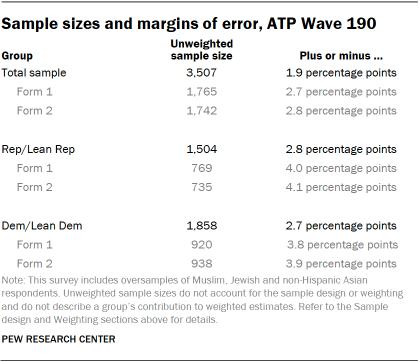
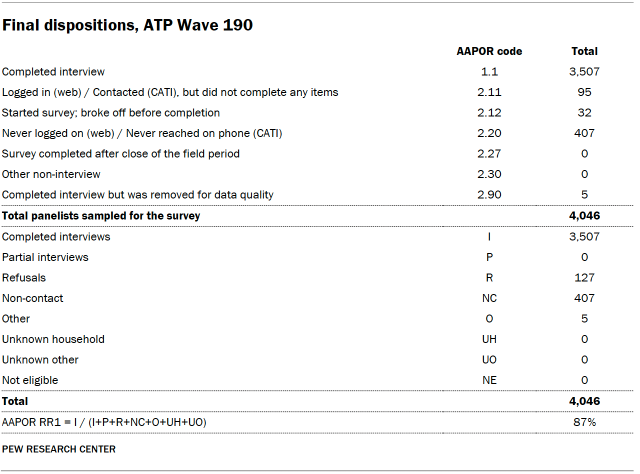
Domestically, the American Trends Panel (ATP) continues to serve as the gold standard for longitudinal studies. Wave 190 of the ATP, conducted in late March 2026, provides a granular look at the U.S. electorate. By leveraging address-based sampling (ABS) and a robust incentive structure, the researchers have managed to maintain a high level of engagement, securing 3,507 responses from a representative sample of U.S. adults.
Chronology: The Lifecycle of a Survey
The creation of a high-stakes poll is a months-long endeavor. The process for ATP Wave 190 offers a clear timeline of how data transitions from raw inquiry to refined insight:
- March 20, 2026: Preparatory work concludes with the mailing of pre-notification postcards to potential phone interviewees, setting the stage for human-led engagement.
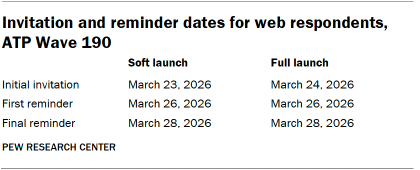
- March 23, 2026: The official start of the field period. A "soft launch" occurs, involving 60 panelists. This crucial phase acts as a diagnostic test, ensuring that the digital architecture—tested rigorously on both PC and mobile devices—functions correctly before the broader deployment.
- March 24, 2026: The full launch commences. Invitations are dispatched to the remaining pool of English and Spanish-speaking panelists via email and SMS, marking the peak of data collection.
- March 23–29, 2026: The active data collection window. Throughout this week, researchers monitor for response patterns, utilizing reminders to maximize participation and maintain the statistical integrity of the panel.
- Post-Collection: The final phase involves intensive data quality checks. Researchers screen for "satisficing"—a phenomenon where respondents provide perfunctory or rushed answers. In this wave, five respondents were excluded to preserve the accuracy of the aggregate dataset.
Supporting Data: The Science of Weighting and Representation
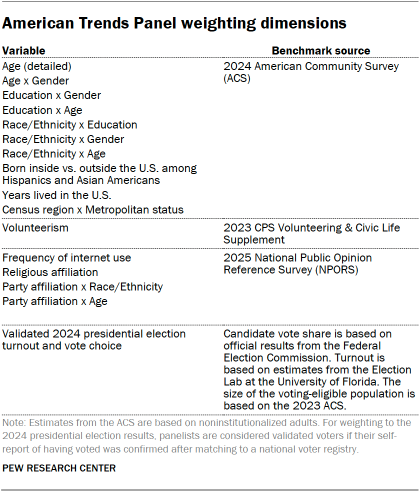
A raw survey sample is rarely a perfect mirror of society. To achieve true representation, Pew Research Center employs a sophisticated weighting process. In the case of the ATP, this begins with a base weight reflecting the probability of an individual being recruited into the panel.
Addressing the Oversample
One of the most important components of the 2026 methodology is the strategic use of oversampling. By intentionally increasing the representation of smaller demographic subgroups—specifically Muslim, Jewish, and non-Hispanic Asian adults—researchers can provide more precise estimates that would otherwise be lost in the "noise" of a smaller sample. Once the data is gathered, these groups are mathematically weighted back to their correct proportions in the broader population, ensuring that the findings reflect the actual makeup of the United States.
Calibrating for Accuracy
The weighting process is iterative. Beyond initial recruitment weights, the data is calibrated against established population benchmarks. This corrects for the inevitable "nonresponse bias"—the reality that certain types of people are more likely to answer a survey than others. By trimming the weights at the 1st and 99th percentiles, the researchers minimize the risk of extreme outliers skewing the final results, a practice that bolsters the reliability of the +/- 1.9 percentage point margin of error.
Official Perspectives: The Philosophy of Categorization
The Pew Research Center’s approach to categorization is designed to provide depth without sacrificing objectivity. In their global and domestic reporting, they maintain strict criteria for how they define groups.
Ideology and Religious Identity
When assessing political ideology, researchers avoid rigid, pre-set definitions, instead allowing respondents to place themselves on a spectrum. This "self-placement" model acknowledges that what constitutes "left" or "right" can vary wildly depending on the national or cultural context. Similarly, religious identification is analyzed only when sample sizes are sufficiently large to ensure statistical reliability. If a group is too small to be analyzed independently, they are still counted in the national totals, ensuring that no voice is excluded from the final narrative.
Economic Classification
The Center adheres to World Bank classifications for high- and middle-income countries. This consistency is vital; it allows researchers to compare results across different reports—whether the topic is the global view of China, the health of democracy, or the nuances of national identity—without the confusion of shifting economic definitions.
Implications: Why Methodology Matters
The implications of this rigorous methodology extend far beyond the pages of a research report. In an age of "fake news" and declining trust in institutions, the transparency provided by Pew Research Center serves as a bulwark against misinformation.
Strengthening Democratic Discourse
When a survey reports that Americans are feeling dissatisfied with their democracy, the validity of that claim rests entirely on the quality of the survey’s design. By documenting every step—from the postal service file coverage (90% to 98% of the population) to the specific incentive structure ($5 to $20 depending on group difficulty)—Pew empowers the reader to evaluate the findings critically.
Future-Proofing Social Research
The shift toward address-based sampling (ABS) and the integration of SMS, email, and live phone interviews represent an adaptation to the changing ways humans interact with technology. The move away from older, random-digit-dial methods reflects a necessary evolution. As people increasingly ignore unknown callers, the ability to reach them via trusted, verified digital channels is the new frontier of social science.
The Human Element
Despite the high-tech nature of online questionnaires and automated weighting, the 2026 reports highlight the enduring importance of the human element. The use of trained interviewers for live telephone calls, the careful testing of mobile interfaces to accommodate diverse users, and the thoughtful calibration of incentives for harder-to-reach groups all underscore a fundamental truth: successful polling is as much about human psychology and empathy as it is about statistics.
As we move through 2026 and beyond, the data produced by these methodologies will continue to shape public policy and social discourse. By maintaining a standard of transparency that invites scrutiny, Pew Research Center does more than just report on the state of the world—it provides the evidence necessary for a functioning, informed society to understand itself. The precision of the 1.9 percentage point margin of error is not just a number; it is a promise of accuracy in an increasingly complex world.
 Muslim
  Nana Muazin
  Siti Muinah