
 By Suro Senen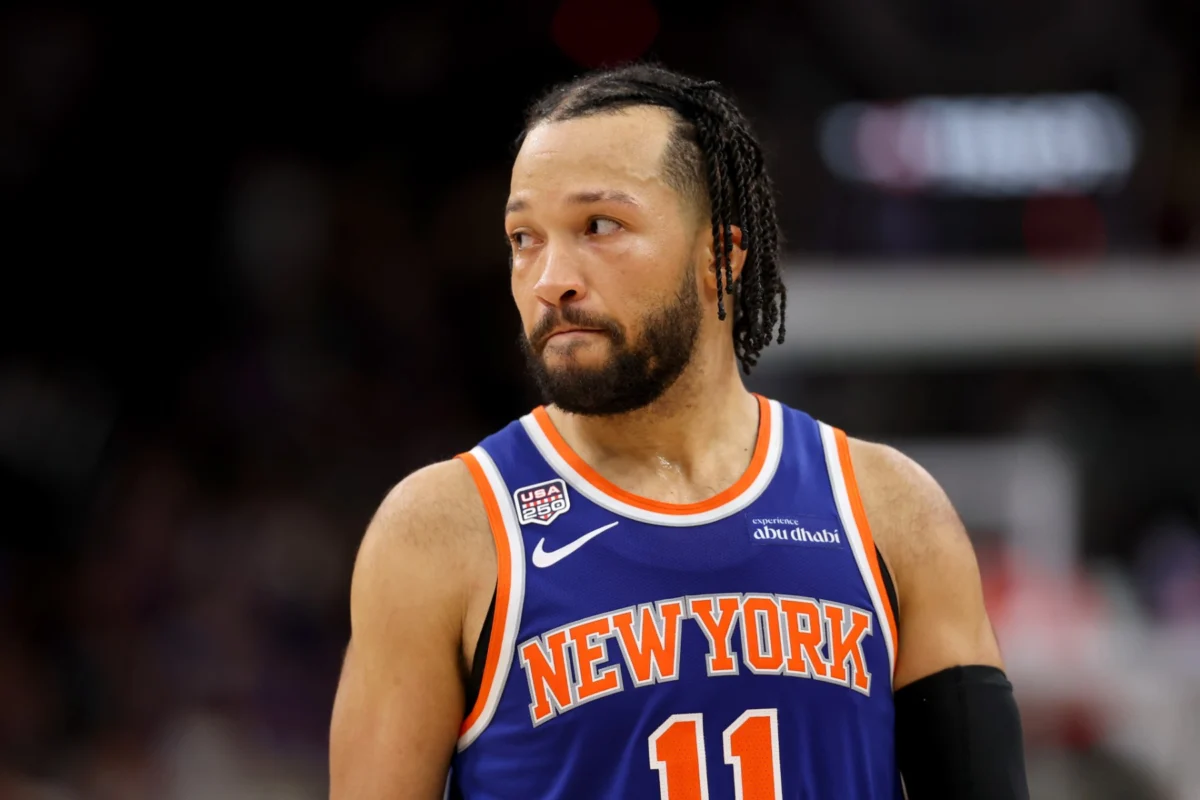
Main Facts: A Collision of Pop Culture and Sports
The intersection of professional sports and global celebrity culture reached a fever pitch this past week as the New York Knicks captured the NBA championship. However, amidst the ticker tape and the historic celebrations, a secondary narrative involving radio analyst Monica McNutt and the legion of fans known as "Swifties" threatened to overshadow the team’s crowning achievement.
The controversy began when McNutt, a respected voice in the Knicks’ broadcasting orbit, openly questioned the authenticity of Taylor Swift’s support for the team during a Game 4 broadcast at Madison Square Garden. What followed was a digital firestorm of criticism directed at McNutt by Swift’s dedicated fanbase. The situation was ultimately defused on the court following the Knicks’ Game 5 victory, when NBA Finals MVP Jalen Brunson—the very man who led the team to the title—publicly urged the fanbase to stand down and extend some grace to the analyst.
A Chronology of the Conflict
The friction point originated on Wednesday, June 10, during Game 4 of the NBA Finals. As the Knicks fought to stay alive in the series, global icon Taylor Swift was spotted in the "Celebrity Row" section of Madison Square Garden, accompanied by the Haim sisters and actress Mariska Hargitay.
As the broadcast cameras turned toward the singer, McNutt’s broadcast partner attempted to capture a photo of the superstar from their vantage point. McNutt, known for her candid and analytical approach, pushed back on the spectacle. "She’s not a Knicks fan. Get out of here, girl," McNutt remarked on-air.
The comment, while seemingly off-the-cuff, acted as a catalyst. Within hours, social media platforms—particularly X (formerly Twitter) and Instagram—were flooded with posts from Swifties asserting the singer’s connection to New York and defending her presence at the game. By the following morning, the backlash had escalated to the point that McNutt felt compelled to address it publicly.
On June 11, McNutt took to Instagram Stories to clarify her stance. She acknowledged the fervor of the fanbase while maintaining her position as a journalist who prioritizes team loyalty. However, she also conceded that she had been unaware of specific evidence of Swift’s fandom, noting that she had "misspoken" regarding the singer’s collection of team memorabilia.
The saga reached its conclusion on June 13, immediately following the Knicks’ championship-clinching victory. As the arena erupted, Brunson, fresh off his MVP performance, encountered McNutt during the post-game festivities. In a gesture of solidarity, Brunson addressed the camera and the fans directly, stating, "I just want to say something to the Swifties. She’s a really good one, cut her some slack. It’s all good, I promise."
Supporting Data: The Celebrity Row Dynamic
To understand why McNutt’s comments triggered such a robust response, one must look at the culture of "Celebrity Row" at Madison Square Garden. For decades, the Knicks have maintained a roster of high-profile, consistent attendees—individuals like Spike Lee, Ben Stiller, and Fat Joe are viewed as "institutional" fans. They are not merely spectators; they are part of the team’s identity.
McNutt, who has covered the organization for five years, framed her commentary through this lens of tenure. Her skepticism wasn’t rooted in a dislike for Swift’s music, but rather in a professional assessment of what constitutes a "Knicks fan" in the context of the team’s historic run.
However, the Swiftie defense provided evidence that contradicted McNutt’s initial premise. Fans were quick to point out that Swift, a long-time resident of New York City, has historical ties to the team, including the ownership of an original Amar’e Stoudemire jersey. The disparity between McNutt’s perception of "fair-weather" celebrity attendance and the fan-researched reality of Swift’s history created a gap that fueled the viral nature of the dispute.
Official Responses and Clarifications
The reaction from the involved parties remained measured despite the intensity of the online vitriol. McNutt’s follow-up commentary served as a masterclass in crisis management. Rather than doubling down or ignoring the situation, she engaged with the fanbase directly, acknowledging their passion while redirecting the focus toward the team’s pursuit of a title.

"I said what I said. Here’s the deal, if I’m wrong — I am wrong, apparently," McNutt noted in her Instagram video. By validating the fans’ passion while simultaneously reminding them of her own context—having not seen the singer at games over the past two seasons—she humanized the misunderstanding.
Crucially, McNutt successfully shifted the narrative prior to the final game. By labeling the controversy a "big fat nothingburger" and emphasizing that "we have bigger fish to fry," she signaled to the audience that the Knicks’ championship run was the only story that mattered.
The intervention by Jalen Brunson was the final, definitive word. By using his platform as the newly crowned Finals MVP to defend a member of the media, Brunson demonstrated the type of leadership that characterizes championship-caliber players. His request to "cut her some slack" effectively neutralized the remaining toxicity, turning a moment of potential public relations damage into a footnote in the team’s celebration.
Implications for Sports Journalism and Fandom
The episode highlights a growing trend in the modern sports landscape: the collision of traditional sports journalism with the hyper-engaged, highly mobilized digital fanbases of global pop stars.
1. The Power of Social Media Fandom
The incident serves as a case study in the power of modern parasocial relationships. Swifties, often noted for their ability to organize and influence public discourse, proved that they are a force to be reckoned with even in the traditional male-dominated sphere of sports broadcasting. Their ability to quickly produce receipts (the jersey evidence) and maintain a consistent narrative forced a media professional to pause and re-evaluate her public stance.
2. The Role of the "Local" Analyst
For figures like McNutt, the role is twofold: they are journalists, but they are also deeply embedded in the "local" culture of a team. The expectation from fans is that their analysts will possess an encyclopedic knowledge of the team’s ecosystem. When an analyst makes a claim that flies in the face of the fans’ collective memory, the resulting backlash is a reminder of how high the stakes are for those covering legacy franchises.
3. The Athlete as a Mediator
Brunson’s role in this conflict suggests that modern athletes are increasingly aware of the peripheral noise surrounding their games. In an era where players have their own media channels and direct lines to fans, Brunson’s choice to mediate this specific dispute speaks to a desire to protect the integrity of the team’s inner circle. By shielding McNutt, he maintained the harmony between the broadcast team and the players, ensuring that the focus remained on the basketball.
4. The "Celebrity Row" Paradox
Finally, the conflict brings into question the future of celebrity attendance at major sporting events. As more global icons attend NBA games, the distinction between "fan" and "spectator" will continue to blur. The controversy suggests that as these worlds collide, the media will need to navigate these appearances with greater nuance, acknowledging that even the most casual celebrity appearance can carry weight for the fanbase.
Conclusion: A Championship Finish
Ultimately, the incident serves as a testament to the scale of the Knicks’ victory. The fact that the story shifted from a minor controversy about pop culture allegiance to a post-game defense by the Finals MVP underscores the reality that the team’s success was the ultimate antidote to the drama.
Monica McNutt’s ability to navigate the criticism with grace and Jalen Brunson’s leadership in silencing the noise proved that even in the high-pressure environment of the NBA Finals, a culture of respect and professional unity can prevail. As the dust settles in New York, the focus remains where it should be: on a championship team that navigated both the challenges of the court and the complexities of the public stage to reach the pinnacle of the sport.
 Raul Delapena Setiawan
  Muslim
  rifanmuazin