
 By Iffa Jayyana

Introduction: The Anti-Glamour Billionaire
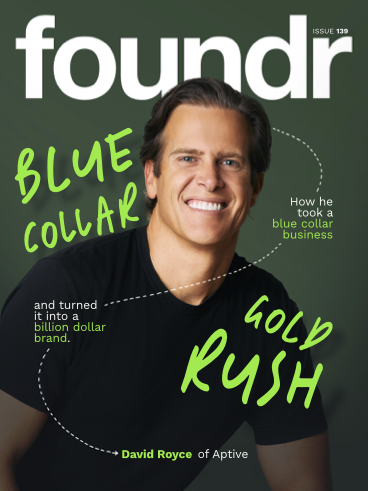
Success is rarely found in the glittering boardrooms of Silicon Valley or the high-stakes trading floors of Wall Street. According to David Royce, founder and chairman of Aptive Environmental—the third-largest residential pest control service in North America—true wealth often hides in the shadows of "unsexy" industries.
While conventional wisdom pushes graduates toward elite finance roles or trendy tech startups, Royce has built a staggering business empire in a domain most corporate professionals wouldn’t touch with a ten-foot pole. His journey—from a struggling student who doubted his own intelligence to a master architect of multi-million-dollar exits—offers a masterclass in resilience, cash-flow management, and the power of choosing substance over image.
Main Facts: Breaking Down the Empire
At its core, David Royce’s business philosophy challenges everything business schools teach about prestige, market selection, and risk management.
- The Core Thesis: Success is not about picking a glamorous industry or flashing an Ivy League degree. It is about doing the hard, unappealing work that others refuse to do, for long enough to become the absolute best at it.
- The Scale: Royce has orchestrated three successful 8- and 9-figure business exits to the same strategic buyer, followed by his crowning achievement, Aptive Environmental, which scaling past $500 million in annual revenue.
- The Blue-Collar Advantage: Royce highlights that approximately 43% of the top 0.1% of U.S. income earners (making $2.3 million or more annually) operate in traditional, "boring" blue-collar industries. These essential service sectors feature high margins, built-in recurring revenue, and relative immunity to economic downturns or artificial intelligence disruption.
- The Blueprint: Rather than diluting equity with outside investors, Royce pioneered an asset-deal structure. He repeatedly sold customer bases and technicians to strategic buyers while retaining his core leadership team and sales machine, using the capital to seed his next venture.
Chronology: From Struggling Student to Industry Giant
1. Overcoming the Classroom and Discovering the Grind
Long before building a corporate empire, a young David Royce struggled immensely in traditional academic environments. Unable to focus unless deeply engaged, he assumed he simply wasn’t smart—a common burden for undiagnosed ADHD.
Everything shifted in the sixth grade when a teacher named Mrs. Luft saw potential in him before he could see it in himself. That validation sparked a relentless work ethic. Years later, Royce would recognize his neurodiversity not as a liability, but as a superpower when channeled into high-stakes environments like entrepreneurship and sales.

His early work history was similarly unglamorous. After being let down by a pizza parlor gig at age 15, he landed at McDonald’s—an experience he credits with teaching him the profound value of operational best practices and minimum-wage grit.
2. The Sacramento Summer That Changed Everything
In college, Royce stumbled into pest control sales almost by accident after hearing a friend bragging about making $25,000 over a single summer. He drove out to Sacramento, California, and hit a brutal wall: commission-only, entirely unproven, he went his entire first week without a single sale. While teammates booked up to four clients a day, Royce performed "free cardio" walking suburban neighborhoods.
Instead of calling home in defeat, he spent the weekend purchasing half a dozen sales books and dedicating 90 minutes a day to deliberate study. By summer’s end, out of 200 representatives, Royce finished as the top sales rookie in the entire company. It was his first encounter with his defining business axiom: Persistence is genius in disguise.
3. Rejecting Wall Street for Bugs
As a finance major nearing college graduation, Royce was on a clear trajectory toward investment banking and 80-to-100-hour work weeks. When he asked his boss for a letter of recommendation, the mentor posed a life-altering question: Why work yourself to the bone for someone else when you can start your own pest control company?
Initially constrained by the need for "image" and prestige, Royce hesitated. But armed with $300,000 saved from four summers of door-to-door sales—money originally earmarked for an MBA—he swallowed his ego. He took his boss’s operational pain points, leveraged his finance degree, and launched his first venture.
4. Near-Bankruptcy in Los Angeles
Year one nearly brought total disaster. Scaling rapidly in Los Angeles, Royce’s company booked 7,500 new customers—shattering expectations of 4,000 to 5,000. However, the aggressive growth model required paying salespeople their commissions upfront, long before customer revenue trickled in.
Facing a devastating cash-flow crunch, Royce had to personally appeal to his sales leaders, offering them an extra 10% interest to delay their bonuses for a couple of months. They agreed, saving the company and cementing a lesson that would guide the rest of his career: Revenues are vanity, profits are sanity, but cash flow is reality.
Supporting Data and Strategies: The Architecture of Aptive
Royce’s enterprises consistently outperformed competitors by 7 to 10 times. This hyper-growth was driven by three distinct pillars:
- The Sales Engine: Royce codified his field experience into a rigorous training program. It relied on option-closing frameworks (offering two favorable times rather than a yes/no question), the "RAC" method (Resolving doubt, delivering an Ace fact, and Closing differently), and mastering body language. Reps who transitioned from competitors saw an immediate 70% boost in summer productivity.
- Field-Informed Service Features: Having knocked on over 60,000 doors, Royce possessed a masterclass-level understanding of homeowner frustrations, allowing him to tailor services precisely to consumer pain points.
- Early Technology Adoption: Seventeen years ago, deploying custom software apps to gamify door-to-door sales across national tournaments was unheard of in blue-collar sectors. These digital tools lifted daily team productivity by up to 30%.
Official Insights: Culture, Ownership, and Letting Go
The Power of Radical Equity
Inspired by Tony Hsieh’s Delivering Happiness, Royce designed a vibrant, high-energy company culture featuring game rooms, extraordinary retreats (from Thailand to swimming with sharks), and exotic sports car racing.
However, Royce is quick to clarify: "Perks are sugar, not protein." The true magnet for top-tier talent was always the training program’s capacity to help reps maximize their earnings.

More importantly, Royce backed up culture with capital. When scaling Aptive past $500 million in revenue, he distributed 25% of the company to his employees. At exit valuation multiples, this translated into life-changing, nine-figure payouts for team members. Many paid off mortgages and student loans, proving that ownership is a far superior retention tool than ping-pong tables.
Stepping Down and the Cost of Misaligned Hires
A true test of leadership arrived when Royce decided to step down as CEO, handing the reins to a trusted protégé he had groomed for a decade. The transition proved that Royce had built a self-sustaining company rather than a fragile dependency—though the hardest part was learning to stop being the "hero" and step back as the architect.
Later, an ambitious attempt to sell a 50% stake in Aptive at a $1.0 to $1.6 billion valuation hit a roadblock. Hiring a high-profile CFO from a billion-dollar tech company proved disastrous. Unaccustomed to Aptive’s specific field expense structures, the new hire oversaw a series of missed forecasts that ultimately spooked prospective buyers during the sales process.
Royce turned the misstep into a vital leadership takeaway: Resumes don’t run companies—people do. Never miss your forecast during a sale process, because it hands absolute leverage to the buyer.
Implications: The Future of Essential Services
David Royce’s legacy extends far beyond a billion-dollar valuation or a series of successful exits. As millions of Baby Boomer business owners approach retirement age without clear succession plans, a massive wave of essential, blue-collar service companies is sitting ripe for acquisition.
Furthermore, as artificial intelligence revolutionizes white-collar work by automating code, legal analysis, and office administration, the physical world remains untouched. AI cannot climb a roof, unclog a drain, or treat structural termite infestations.
Ultimately, Royce’s journey offers a timeless message to modern entrepreneurs: chasing surface-level prestige is a trap. True fulfillment and monumental wealth are found by embracing unglamorous problems, practicing relentless persistence, and measuring success not by the valuation of an exit, but by the leaders built along the way.
 Lina Hope
 Muslim
 Evan Lee Salim
