
 By Suro Senen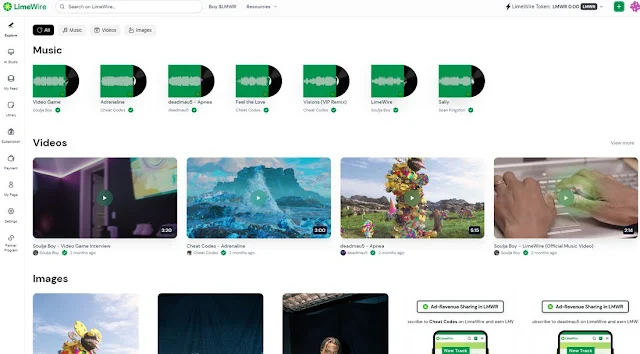
In the early 2000s, the name "LimeWire" was synonymous with the digital music revolution—and the subsequent legal battles that defined the Napster era of peer-to-peer file sharing. Two decades later, the brand has undergone a radical metamorphosis. Reborn as a cutting-edge generative AI publishing platform, LimeWire is no longer about illicit downloads; it is about empowering creators to harness the power of artificial intelligence to build sustainable digital businesses. By merging AI-driven content creation with blockchain-based monetization, LimeWire has positioned itself as a unique nexus for artists, musicians, and digital creators in the Web3 era.
The Chronology of Transformation: From P2P to AI
The journey of LimeWire is a case study in corporate reinvention. After shuttering its original operations in 2010 following high-profile copyright litigation, the brand lay dormant for years. Its resurgence began in the early 2020s, with a pivot toward the NFT (Non-Fungible Token) market. Recognizing that the digital landscape had shifted from simple file swapping to the ownership of digital assets, the new management team acquired the intellectual property to build a marketplace for music and art.
By 2023, the platform took its most significant leap forward: the launch of LimeWire Studio. This marked the transition from a passive marketplace to an active content creation hub. By integrating advanced generative AI models, the platform evolved into a one-stop-shop where users could not only create high-fidelity images, music, and videos but also mint them as digital collectibles and distribute them to a global audience. This evolution reflects a broader industry trend where platforms are moving away from being mere storefronts to becoming comprehensive creative ecosystems.
The Mechanics of LimeWire AI Studio
At the heart of the current LimeWire experience is the AI Studio. Unlike standalone image generators that operate in a vacuum, LimeWire provides a cohesive environment where the output of an AI model is immediately tied to a monetization pathway.
Advanced Generative Capabilities
The platform supports some of the most robust AI models currently available, including Stable Diffusion 2.1, Stable Diffusion XL, and DALL-E 2. This multi-model approach allows creators to select the "engine" that best suits their aesthetic requirements. Whether a user is aiming for hyper-realistic cinematic photography, abstract digital art, or stylized anime, the platform provides the necessary infrastructure to iterate rapidly.
Furthermore, the interface simplifies the often-daunting complexity of "prompt engineering." Through a user-friendly dashboard, creators can experiment with different samplers, guidance scales, and style presets. This lowers the barrier to entry for novices while providing the granular control demanded by professional digital artists. The company has also signaled its intention to release a proprietary AI model, suggesting that it aims to move beyond hosting third-party tools toward vertical integration of its technology stack.
Monetization: The Web3 Creative Economy
The most distinguishing feature of the modern LimeWire is its aggressive stance on creator economics. In an era where social media platforms often hoard advertising revenue, LimeWire attempts to flip the script by offering a revenue-sharing model that incentivizes original content creation.
Blockchain Integration and Minting
When a creator publishes a piece of AI-generated content on LimeWire, the platform offers an automated "minting" feature. Through the Polygon or Algorand blockchains, the content is transformed into an NFT. This is not merely a gimmick; it provides a verifiable, immutable record of ownership. This digital signature ensures that the artist retains a link to their creation, even as it is shared or sold across the secondary market.
The Royalty and Revenue Structure
The monetization strategy is tiered, designed to reward consistency and engagement:
- Ad Revenue Sharing: Creators receive a percentage of the ad revenue generated by their content. Depending on the user’s subscription tier, this can range from 50% to 70%.
- Royalty Fees: A hallmark of the platform’s commitment to creators is the 2.5% royalty fee paid to the original artist every time their NFT-based content is traded on the secondary market. This ensures that as an artist’s reputation grows, their past work continues to generate passive income.
- The LMWR Token: The platform’s native cryptocurrency, LMWR, serves as the lifeblood of this economy. Earnings are distributed in LMWR, which can be liquidated on major exchanges like Kraken and ByBit, or reinvested back into the platform to purchase additional credits for AI generations.
Supporting Data: Subscription Tiers and Accessibility
LimeWire operates on a "freemium" model, ensuring that the platform remains accessible to casual enthusiasts while offering high-capacity tools for professionals.
| Tier | Monthly Cost | Credits | Ad Revenue Share |
|---|---|---|---|
| Free | $0 | 10 (20 images/day) | 50% |
| Pro | $9.99 | 1,000 | 50% |
| Pro Plus | $29.00 | 3,750 | 60% |
| Pro Premium | $49.00 | 5,000 | 70% |
| Pro Elite | $99.00 | 11,250 | 70% |
These tiers are structured to scale with the creator’s growth. High-volume users, such as digital agencies or social media influencers, benefit from the higher-tier plans, which remove advertising, offer faster generation speeds, and provide early access to experimental AI models.
Official Stance and Strategic Vision
LimeWire’s management has framed the platform’s development as a response to the "democratization of creativity." By removing the technical barriers to entry—such as the need for expensive hardware to run local AI models or the complexity of deploying smart contracts for NFTs—the platform is effectively acting as a bridge between Web2 social media and the Web3 decentralized web.
Industry commentators have noted that LimeWire’s pivot is a strategic move to capitalize on the "creator economy" boom. By attracting high-profile figures like Deadmau5 and Soulja Boy, the platform has successfully leveraged celebrity influence to validate its transition. These partnerships are critical, as they provide the platform with the cultural capital necessary to differentiate itself from a saturated market of generic AI image generators.
Implications for the Creative Landscape
The emergence of platforms like LimeWire signals a paradigm shift in how digital art is produced and valued. Several implications arise from this model:
1. The Death of the "Passive Creator"
Traditional social media models relied on users providing content for free, while the platform owners collected the entirety of the ad revenue. LimeWire’s model suggests that the future of content platforms will be defined by ownership. If creators own their output as NFTs and receive a direct share of the revenue, the power dynamic between the platform and the user shifts in favor of the latter.
2. The Normalization of AI-Assisted Art
By integrating AI tools directly into a publishing interface, LimeWire is helping to mainstream generative art. This integration bridges the gap between "prompting" and "publishing," making it easier for artists to focus on conceptualization rather than technical execution. However, it also raises questions regarding copyright and the saturation of digital content, which remain ongoing discussions within the legal and artistic communities.
3. The Future of Content Diversification
While the platform currently excels in image generation, its planned expansion into AI-driven music and video creation is where the real disruption lies. If LimeWire successfully implements high-quality music and video generation, it could become a significant challenger to established media distribution platforms. The ability to generate a music video or a soundtrack on-demand and immediately monetize it as a tradeable asset could fundamentally alter how indie musicians interact with their fanbases.
Conclusion: A New Frontier
LimeWire’s transformation from a relic of the early internet to a pioneer in the generative AI space is a testament to the platform’s agility. By solving the dual problems of content creation and content monetization, LimeWire has created a sustainable, albeit experimental, model for the future of digital art.
As the platform continues to innovate—bringing in new models, refining its blockchain integration, and expanding into multi-modal creative tools—it stands as a significant case study for how legacy brands can adapt to the AI era. For creators looking to enter the world of generative art, the barrier has never been lower. Whether one is a hobbyist experimenting with a free account or a professional artist looking to monetize a digital catalog, LimeWire provides a compelling, if evolving, roadmap for the future of the digital creative economy.
 Iffa Jayyana
  Nila Kartika Wati
  Nana
Nana 