
 By Suro Senen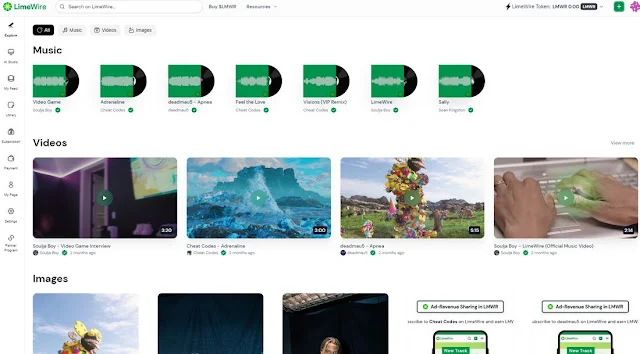
The digital landscape is defined by constant flux, yet few brands have managed a transition as radical as LimeWire. Once the definitive symbol of the peer-to-peer file-sharing era in the early 2000s, LimeWire has been meticulously reborn. Today, it stands not as a relic of software piracy, but as a sophisticated, forward-looking platform for generative artificial intelligence and digital asset monetization. By bridging the gap between high-end AI image synthesis and blockchain-based economic models, LimeWire is positioning itself as a vital ecosystem for the modern digital creator.
Main Facts: The New Architecture of LimeWire
In its current iteration, LimeWire serves as a comprehensive content publishing platform that leverages generative AI to empower creators. Unlike traditional AI tools that merely act as image generators, LimeWire functions as an all-in-one studio where the lifecycle of a digital asset—from conceptualization and creation to distribution and monetization—is contained within a single interface.
The platform distinguishes itself through three core pillars:
- AI-Driven Creation: Providing seamless access to industry-leading models like Stable Diffusion (2.1 and XL) and DALL-E 2.
- NFT Integration: Automatically minting every creation as an NFT on the Polygon or Algorand blockchains, ensuring verifiable digital ownership.
- Monetization Ecosystem: Enabling creators to earn revenue through advertising shares, subscription-based fan models, and secondary market royalties.
A Chronology of Transformation
The journey from a legacy software brand to a Web3-integrated AI powerhouse did not happen overnight. The narrative of LimeWire is a case study in brand pivoting.
- The Early 2000s: LimeWire becomes a household name, synonymous with the democratization of music through peer-to-peer sharing, eventually leading to complex legal challenges that shuttered the original service.
- The Rebirth: A decade later, the brand was acquired with the intent to pivot toward the digital collectibles market. The platform launched with a focus on music-based NFTs, attracting high-profile figures such as Deadmau5, Soulja Boy, and Sean Kingston.
- The AI Pivot: Recognizing the explosive demand for generative AI, the developers integrated advanced image generation capabilities into the "LimeWire Studio." This transition shifted the platform’s identity from a passive marketplace to an active content-generation workspace.
- The Present Day: The platform continues to iterate, moving toward a proprietary AI model and preparing for the integration of video and audio synthesis, signaling a long-term commitment to remaining at the bleeding edge of the creator economy.
Supporting Data: The Economic Mechanics
LimeWire’s appeal to creators lies in its transparent and lucrative revenue-sharing model. By moving away from traditional ad-supported web models that favor platforms over creators, LimeWire flips the script.
The LMWR Token Economy
At the heart of the platform’s financial infrastructure is the LMWR token. Unlike fiat-only platforms, LimeWire integrates its native cryptocurrency to facilitate a global, frictionless economy. Earnings are distributed monthly, and the utility of the token extends to the platform itself—users can spend their earned LMWR to purchase more credits for AI generation, creating a self-sustaining cycle of creation and consumption.
Revenue Tiers and User Incentives
LimeWire offers a tiered pricing structure that scales with the creator’s ambition. Whether a hobbyist or a professional, the platform provides:
- The Free Tier: A entry point offering 10 credits and 50% of ad revenue, perfect for those testing the waters of AI-generated art.
- Premium Tiers ($9.99 to $99.00/month): These tiers offer massive increases in generation capacity (up to 22,500 images per month), access to "Pro" badges, ad-free experiences, and significantly higher ad-revenue shares (up to 70%).
The inclusion of a 2.5% royalty on all secondary NFT trades further cements the platform’s commitment to creators. Every time an asset is sold by a fan or collector, the original creator receives a perpetual commission, a revolutionary concept for digital artists who previously struggled to monetize their work after the initial point of sale.
Official Stance and Strategic Vision
The leadership behind the new LimeWire has been vocal about their mission: to democratize access to sophisticated technology. By integrating complex models like Stable Diffusion and DALL-E 2 into a user-friendly, web-based dashboard, LimeWire lowers the technical barrier to entry.
In official communications, the platform emphasizes that it is not merely a tool, but a "community." By allowing creators to toggle between public posts and subscriber-only content, LimeWire provides the agency needed for artists to build a loyal fanbase. The "subscriber-only" model, in particular, mirrors the success of platforms like Patreon, but with the added layer of digital ownership via NFTs.
The company has also addressed the criticism regarding AI’s impact on human art by positioning itself as a hybrid space. By providing tools for artists to iterate, prototype, and sell, they argue that they are not replacing the artist but providing a new set of digital brushes that can be monetized in ways never before possible.
Implications for the Future of Content Creation
The shift initiated by LimeWire has significant implications for the broader creative industry.
1. The Death of the "Passive Viewer"
LimeWire’s model of allowing fans to subscribe to creators and own tradeable digital collectibles changes the relationship between the audience and the artist. When a fan owns a piece of an artist’s work as an NFT, they become a stakeholder in that artist’s success. This fosters a deeper level of engagement that traditional social media metrics (likes and shares) fail to capture.
2. The Normalization of AI-Generated Assets
As AI becomes more ubiquitous, the ability to generate high-quality, unique, and ownable assets will become a standard requirement for designers. LimeWire’s foresight in minting content as NFTs on Polygon and Algorand solves the "authenticity problem" that currently plagues the AI art space. Because the platform provides a clear, blockchain-backed provenance, it creates a "safe" environment for buyers who might otherwise be wary of AI-generated content.
3. Future-Proofing for Multimodal AI
Perhaps the most ambitious aspect of LimeWire is its roadmap. By planning the integration of AI music and video generation, the platform is preparing for the "multimodal" future of the internet. If an artist can currently generate an album cover using LimeWire, they will soon be able to generate the music video and the background score within the same ecosystem. This consolidation of creative tools will likely attract a new wave of indie creators who are currently overwhelmed by the fragmentation of the AI tool market.
Conclusion: A New Chapter
LimeWire’s transformation is a testament to the power of adaptation. By moving away from the controversial peer-to-peer file sharing of the past and embracing the transparent, decentralized nature of the modern Web3 and AI era, the platform has successfully reinvented its legacy.
For the modern creator, LimeWire offers a compelling value proposition: a professional-grade AI studio, a secure marketplace for digital assets, and an economic model that prioritizes the artist’s bottom line. Whether one is a seasoned digital artist or a curious newcomer, the platform provides a low-friction environment to experiment with the future of visual expression. As LimeWire continues to iterate and expand its capabilities, it remains a vital space to watch for anyone interested in the intersection of artificial intelligence, blockchain, and the future of human creativity.
The era of digital content is shifting, and with its latest evolution, LimeWire is clearly aiming to be the infrastructure upon which that new era is built.
 Ammar Sabilarrohman
  Ali Ikhwan
  Pevita Pearce