
 By Lina Hope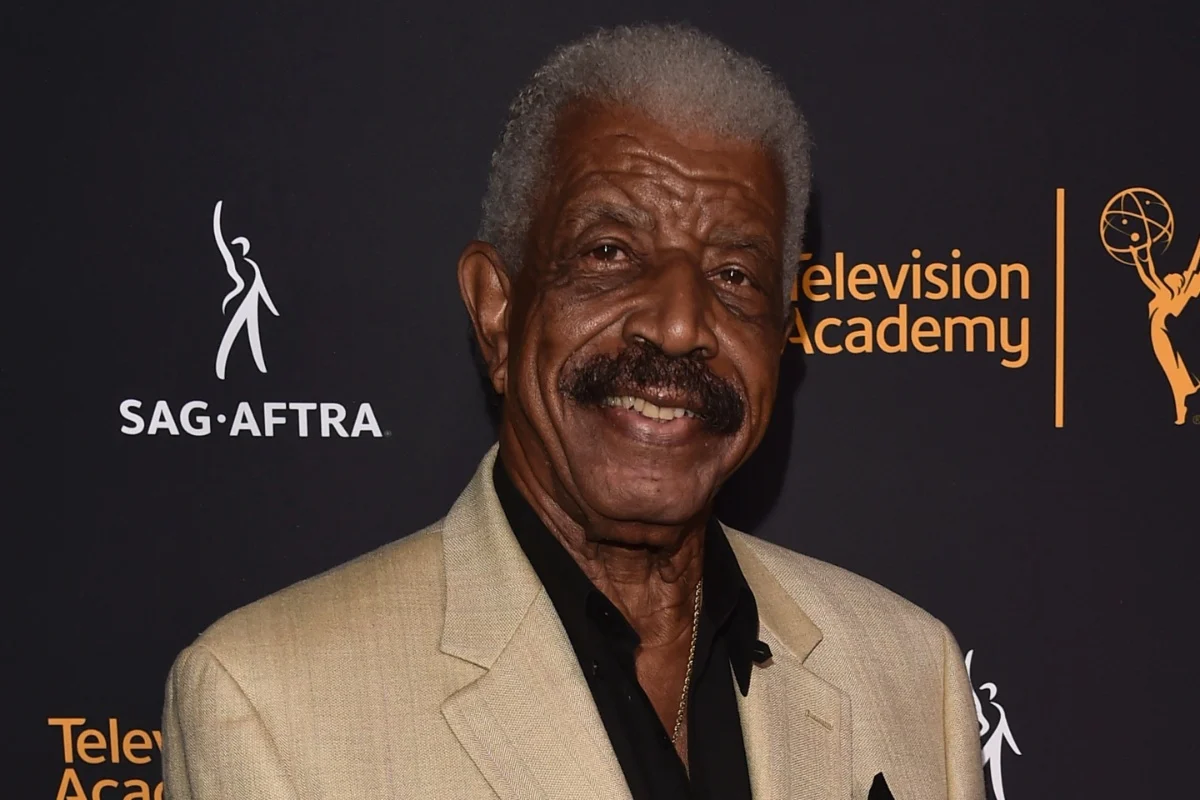
Main Facts: The Passing of a Television Icon
Hal Williams, a versatile and beloved character actor whose career spanned five decades of television history, has passed away at the age of 91. His death was confirmed by his longtime manager, marking the end of a life defined by consistent professionalism and an uncanny ability to ground even the most comedic scenarios in authentic, relatable humanity.
Williams was perhaps best known to audiences as the steady, reliable patriarch Lester Jenkins on the hit NBC sitcom 227, or as the sharp-witted Officer "Smitty" Smith on the legendary Sanford and Son. His presence on screen was characterized by a distinct warmth, a booming, authoritative voice, and a comedic timing that allowed him to play both the straight man and the scene-stealer with equal proficiency. Whether navigating the domestic dynamics of an apartment building in Washington, D.C., or engaging in the classic "good cop, bad cop" routines that became a staple of 1970s television, Williams remained a fixture of American living rooms for generations.
Chronology: A Career of Persistence and Versatility
Born in the mid-20th century, Williams began his ascent in an era when television was transitioning from its infancy into a cultural behemoth. His trajectory was not one of meteoric, overnight fame, but rather one of hard-won respect earned through dozens of guest spots and recurring roles.
The Early Years and the Breakthrough
Williams entered the industry during a time of shifting demographics in media, finding steady work throughout the late 1960s and early 1970s. His big break came with the role of Officer "Smitty" Smith in Sanford and Son. Appearing in 22 episodes, Williams became half of a comedic duo that would become etched in the canon of classic television. Alongside Howard Platt’s Officer "Hoppy" Hopkins, Williams provided the necessary grounding for the show’s more outlandish premises.
The chemistry between the two officers was legendary, centered on a recurring bit that showcased Williams’ brilliance in reactive comedy. In these scenes, Platt would deliver a dense, jargon-heavy explanation of a police case, often leaving the audience—and the characters—baffled. It was then left to Williams to "translate" the legalese into plain, conversational English, usually with a look of exhausted amusement.
The 227 Era
In the mid-1980s, Williams transitioned from law enforcement to the role for which many contemporary fans remember him most: Lester Jenkins on 227. Airing from 1985 to 1990, the show offered a vibrant, humorous look at life in a D.C. apartment complex. Williams played the husband to Marla Gibbs’ Mary Jenkins and the father to a young, burgeoning star in Regina King, who played Brenda Jenkins.
The series was a hallmark of NBC’s prime-time lineup, running for 116 episodes. It was a show that balanced ensemble chemistry with individual character arcs, and Williams was the glue that held the household together. During his tenure, he watched as his co-stars, including the iconic Jackée Harry—who famously won an Emmy for Best Supporting Actress in 1987—received national acclaim. For Williams, success was measured in the quality of the work and the longevity of the show, and 227 remains one of the most fondly remembered sitcoms of its era.
Beyond the Sitcoms
Following his success in 227, Williams did not slow down. He remained a "working actor" in the truest sense of the term, appearing in a diverse array of projects. His credits read like a history book of American television, featuring roles in The Waltons, On the Rocks, Private Benjamin, and The Sinbad Show. His career even extended into the modern streaming and reboot era, with a recent appearance on the CBS Matlock remake, proving that his talent remained relevant well into his ninth decade.
Supporting Data: An Extensive Body of Work
While his fame was rooted in television, Williams’ filmography is equally extensive and underscores his range as a performer. He was never typecast, moving comfortably between drama and comedy.
Filmography Highlights
- Hardcore (1979): A gritty turn in Paul Schrader’s crime drama.
- The Rookie (1990): Working alongside Clint Eastwood, demonstrating his comfort in high-stakes action environments.
- Percy & Thunder (1993): A television movie that allowed him to explore more dramatic, character-driven storytelling.
- Guess Who (2005): A modern comedic turn that introduced him to a new generation of audiences.
- Flight (2012): A late-career appearance in Robert Zemeckis’ acclaimed drama, highlighting his enduring presence in major studio productions.
Official Responses and Reflections: The "Smitty and Hoppy" Legacy
In a recent interview with WKYC, Williams offered a rare glimpse into the creative process behind his most famous television partnership. He recalled the spontaneous nature of the Sanford and Son writing process, noting that the "Smitty and Hoppy" dynamic was born out of necessity and rehearsal-room experimentation.
"We did it one time in rehearsal and the producers thought it was funny," Williams reflected. "We did it in the first or second episode and it clicked." He described an environment where writers were constantly looking for ways to elevate the humor, often tasking the actors with filling in the blanks. "Some days, we would come to rehearsal and they didn’t have anything solid. The producers would say, ‘Go out, take a break for two hours, and bring us something back.’"
This level of creative autonomy allowed Williams to infuse his characters with a naturalistic charm that scripted lines alone could not capture. His peers and collaborators often noted that Williams was a consummate professional, a man who understood that comedy was a team sport and that his contribution—the "straight man" role—was just as vital as the punchline.
Implications: The End of an Era
The passing of Hal Williams is more than the loss of a talented actor; it is the closing of a chapter in the history of American television. Williams represented a generation of character actors who were the backbone of the medium. These were the men and women who, through consistent appearances in homes across the country, became familiar faces—almost like extended family members.
The Changing Landscape of Television
The type of sitcom work that defined Williams’ career—the ensemble-driven, studio-audience-led, five-season-run model—is becoming increasingly rare in the age of high-concept, short-order streaming series. Williams’ career arc highlights a time when actors could spend years inhabiting a character, allowing the audience to grow alongside them.
A Lasting Legacy
Williams leaves behind a legacy of professionalism. He was never embroiled in the tabloid-style scandals that often plague modern stars; instead, he was defined by his work ethic and his ability to elevate the projects he touched. Whether he was playing a police officer trying to make sense of bureaucracy or a husband navigating the complexities of family life, he brought a sense of dignity and humor to every frame.
As the industry reflects on his passing, the outpouring of affection from fans and former colleagues serves as a testament to his impact. He did not need to be the lead of every show to be the most memorable part of it. He was a master of the "supporting" role, proving that in television, there are no small parts—only actors who know how to make every second count.
Hal Williams’ contributions to the American cultural fabric will continue to be enjoyed by audiences through syndication and digital archives, ensuring that his voice, his humor, and his presence will remain a part of the television landscape for years to come. He taught generations of actors that the secret to longevity is not in seeking the spotlight, but in being the most reliable person on the stage. His was a life well-lived, and a career that set the gold standard for the modern character actor.
 Siti Muinah
  Ammar Sabilarrohman
  Layla Zulfa