
 By Siti Muinah
In the high-stakes world of digital commerce, the quest for instant revenue often leads brands down a treacherous path. For modern online retailers, the temptation to rely on perpetual discounting is an ever-present hazard. While slashing prices provides an immediate dopamine hit for both the merchant’s bottom line and the consumer’s wallet, it masks a dangerous underlying reality. Over time, an over-reliance on markdowns trains customers to become transactional opportunists rather than loyal brand advocates, quietly eroding profit margins and diminishing brand equity.
As digital acquisition costs continue to rise and consumer attention spans fracture, e-commerce founders are forced to rethink their retention strategies. The challenge is clear: how do you design email campaigns that generate immediate urgency and excitement without training your audience to wait for the next clearance event?
The Anatomy of the Discount Trap: Why Flash Sales Are a Double-Edged Sword
To understand how to fix the problem, we must first diagnose why discounting is so universally seductive. Psychologically, price-off incentives trigger core human biases: scarcity, urgency, and reward anticipation. When a consumer receives an email declaring a "24-Hour Flash Sale: 30% Off Everything," their brain releases dopamine. It feels like a win. For the brand, open rates spike, click-through rates surge, and orders roll in, creating a satisfying graph that shoots upward in real-time.
However, this short-term sugar rush comes with severe systemic side effects. When discounts become predictable, consumer behavior shifts fundamentally. Shoppers begin abandoning full-priced carts, knowingly waiting for the inevitable weekend promotion or holiday clearance. They skip items at regular retail value because they have been conditioned to expect a discount within a week.
Industry analysts point out that while discounting can effectively clear aging inventory or reactivate dormant subscribers, utilizing it as a primary brand identity degrades perceived product value. When everything is perpetually on sale, nothing is truly valuable. Consequently, smart e-commerce enterprises are learning to treat price-offs not as the core narrative of their marketing, but merely as an occasional exclamation point.
Chronology of a Campaign: The Evolution of Modern Retention Strategy
The historical trajectory of email marketing has undergone a dramatic transformation over the past decade. Understanding this evolution is crucial for modern merchants looking to refine their approach.
Phase One: The Blast-and-Discount Era (Early 2010s)
In the early days of direct-to-consumer (DTC) retail, email marketing was largely transactional and unsophisticated. Brands maintained basic subscriber lists and broadcasted weekly or daily generic promotional blasts. The playbook was simple: louder volume, bigger percentages off, and aggressive countdown timers. This approach worked well when inboxes were less crowded and customer acquisition costs (CAC) were low.
Phase Two: The Automation Boom (Mid-to-Late 2010s)
As platforms matured, automation entered the mainstream. Brands began implementing welcome series, abandoned cart sequences, and post-purchase follow-ups. While this increased efficiency, many brands simply automated their discounting strategy—triggering a 10% off coupon code for every visitor who hesitated at checkout. This institutionalized the discount habit on a massive scale.
Phase Three: The Margin-Protection and Relationship Era (Present Day)
Today, with privacy updates making targeted acquisition more expensive and ad efficiency plateauing, email has reclaimed its crown as the most profitable owned channel. However, successful brands have pivoted away from constant price-cutting. Modern retention strategy focuses on behavioral segmentation, high-value content, alternative incentives, and the delicate equilibrium of relationship-building.
Supporting Data: The Hidden Costs of Constant Markdowns
While comprehensive financial reports rarely isolate "discount fatigue" as a line item, industry metrics consistently illustrate the perils of margin erosion.
- The Margin Squeeze: According to various retail analytics studies, brands that run promotional campaigns on more than 40% of their total outbound emails experience a gradual decline in customer lifetime value (LTV). While initial conversion rates may rise by 15% to 20% during a sale, subsequent purchases by those same acquisition cohorts typically occur exclusively during future sale events.
- The Return on Attention Gap: Studies on consumer inbox behavior reveal that email fatigue is real. Unsubscribe rates spike by an average of 35% among lists that receive more than three promotional or discount-heavy emails per week without intervening value-add content.
- Perceived Value Degradation: Consumer psychology research indicates that up to 60% of shoppers associate frequent discounting with lower baseline product quality, making it significantly harder for brands to raise their prices later to combat inflation or rising supply chain costs.
Industry Perspectives: Expert Insights on Sustainable Growth
Leading minds in the e-commerce and retention marketing space emphasize that email must function as a two-way street of value exchange rather than a digital megaphone for clearance items.
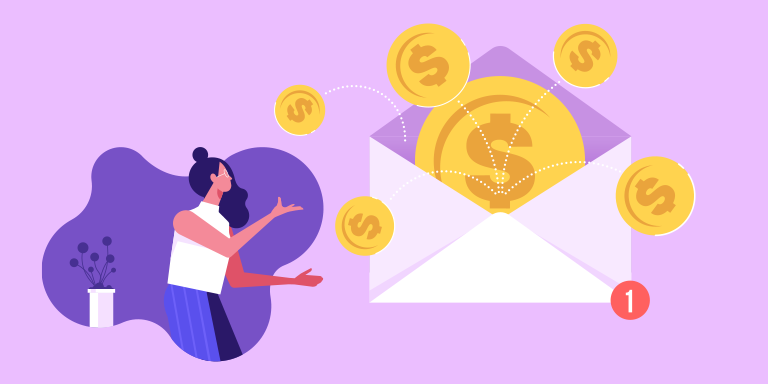
Marketing strategists frequently advocate for what can be termed the "Give and Take Theory." Under this framework, email communications are split into two distinct categories: relationship-builders ("Give") and revenue-drivers ("Take").
- The "Give" Emails: These messages form the backbone of brand loyalty. They provide genuine utility, entertainment, or inspiration without asking for a direct purchase. This includes behind-the-scenes founder stories, educational content on how to maximize product usage, user-generated content showcases, or industry insights. By consistently depositing into the emotional bank account of the subscriber, the brand builds trust.
- The "Take" Emails: These are the conversion events—product drops, limited-edition bundles, milestone celebrations, and strategic flash sales. Because the brand has established robust goodwill through its "Give" campaigns, these direct asks land with maximum impact and do not alienate the audience.
Industry experts stress that the primary error founders make is taking too frequently. When every single email in a sequence is transactional, subscriber burnout is inevitable.
Re-Engineering the Offer: How to Protect Margins Without Losing Conversions
To maintain strong conversion rates without resorting to continuous price slashing, forward-thinking brands are redesigning what an "offer" actually looks like. The key is to leverage perceived value over actual financial sacrifice.
1. Exclusive Access and Early Drops
Instead of discounting a new collection, offer your VIP email subscribers the chance to shop 24 hours before the general public. Exclusivity is a powerful psychological driver that costs the business nothing in profit margin while making the customer feel privileged and valued.
2. Value-Add Bundling
Rather than taking 20% off a single item, package complementary products together. A customer perceives a curated bundle as a higher-value proposition, while your actual product cost remains manageable and inventory moves faster.
3. Gifting with Purchase (GWP)
Introduce low-cost, high-perceived-value items as gifts for orders over a certain threshold. A branded accessory, an exclusive sample size, or a digital guide can tip a hesitant shopper over the edge without diminishing the perceived worth of your core product line.
4. Loyalty and Gamification Tiers
Reward repeat buyers not with flat discounts, but with early access to limited inventory, invitation-only virtual events, or customized product variations. This fosters long-term community belonging rather than short-term bargain-hunting.
Strategic Implications for the Future of E-Commerce
As the digital marketplace grows increasingly crowded, the strategic implications for brands are profound. Surviving and thriving in the current economic landscape requires a disciplined approach to customer relationship management.
Brands that master the art of non-price-driven offers will cultivate more resilient, loyal customer bases. They will protect their profit margins, insulate themselves against inflationary pressures, and build equity that transcends temporary sales spikes. Conversely, those that continue to race to the bottom with aggressive, uninspired discount loops will find themselves trapped in a cycle of diminishing returns, forever beholden to bargain-hunting consumers.
Ultimately, an email list should not be treated as a clearance bin, but as a thriving community. By balancing generosity with boundary-setting, e-commerce founders can craft email campaigns that not only drive immediate revenue, but also secure the long-term health and profitability of their brand.
 Ali Ikhwan
  Azzam Bilal Chamdy
  Pevita Pearce