
 By Suro Senen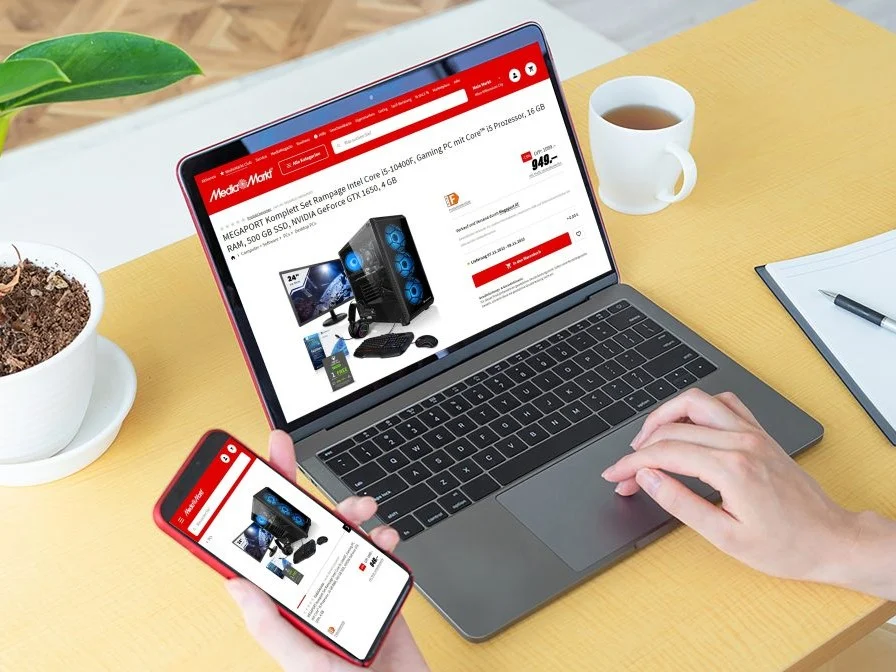
In a landscape dominated by global e-commerce titans, Ceconomy—the parent company of European electronics retail giants MediaMarkt and Saturn—has unveiled a comprehensive strategic roadmap for the coming three years. As the retail sector grapples with shifting consumer behaviors and aggressive international competition, MediaMarktSaturn is pivoting away from traditional revenue-focused goals toward a model defined by specialized marketplace growth and margin optimization.
The strategy, presented last week, underscores a critical inflection point for the company. While core revenue growth is expected to remain largely stagnant, the group is placing a high-stakes bet on its third-party marketplace ecosystem, aiming to more than double its Gross Merchandise Value (GMV) by the 2028/2029 financial year.
Main Facts: The New Strategic Reality
The core of MediaMarktSaturn’s new direction is a recalibration of expectations. For the 2025/2026 financial year, the group reported a total revenue of 23.2 billion euros. Looking toward the 2028/2029 horizon, the company projects a modest increase to roughly 24 billion euros. This conservative outlook reflects an acknowledgment of intense pressure from platforms like Amazon and Temu, which have significantly eroded the traditional electronics retail market share.
While top-line revenue growth appears muted, the company is prioritizing profitability over sheer scale. The EBIT margin, which stood at 2.2 percent (500 million euros) in 25/26, is targeted to climb to 3.3 percent (800 million euros) by 28/29. This strategic shift highlights a transition from a "growth-at-all-costs" mentality to a focused effort on operational efficiency and high-margin service offerings.
Central to this effort is the expansion of the online marketplace. Having recorded a GMV of 800 million euros in the 25/26 financial year, MediaMarktSaturn is aiming to reach 1.9 billion euros in marketplace GMV by 2028/2029.
A Chronology of Change: From Potential Buyout to Strategic Pivot
To understand the current state of MediaMarktSaturn, one must view it through the lens of recent corporate history:
- February 2026: Reports surfaced indicating that Chinese e-commerce giant JD.com was in serious negotiations to acquire Ceconomy. The potential deal sent shockwaves through the European retail sector, signaling a possible consolidation of the continent’s electronics market under Asian ownership.
- Spring 2026: German regulatory authorities granted preliminary approval for the potential acquisition, acknowledging the shifting competitive landscape in the electronics sector.
- Mid-2026: The acquisition process moved into the final, critical stage: review by the EU Commission. The outcome of this regulatory hurdle remains the primary variable in the company’s future governance.
- July 2026: MediaMarktSaturn released its 25/26 financial results and its three-year strategic outlook. Notably, for the first time in years, the presentation omitted specific e-commerce revenue targets, marking a departure from previous communication styles.
- Late 2026: The company confirmed its immediate roadmap, including the expansion of its marketplace into the Hungarian market by September, signaling a push into new geographical territories.
Supporting Data: The Anatomy of the 2029 Forecast
The strategic presentation provided a granular look at the financial architecture of MediaMarktSaturn’s future. The divergence between stagnant total revenue and aggressive marketplace growth is the defining feature of the plan.
Revenue and Margin Projections
| Metric | 2025/26 (Actual) | 2028/29 (Target) |
|---|---|---|
| Total Revenue | 23.2 billion EUR | ~24.0 billion EUR |
| EBIT Margin | 2.2% | 3.3% |
| EBIT (Absolute) | 500 million EUR | 800 million EUR |
| Marketplace GMV | 800 million EUR | 1.9 billion EUR |
The data indicates that while the physical retail footprint and legacy e-commerce operations will face headwinds, the "Marketplace" segment is expected to serve as the primary engine for margin expansion. By opening their platform to third-party sellers, MediaMarktSaturn is attempting to monetize their high-traffic digital real estate without the heavy inventory costs associated with traditional retail.
The "Invisible" E-commerce Targets: A Strategic Omission
One of the most striking aspects of the recent strategy briefing was the conspicuous absence of specific online sales targets. In previous years, MediaMarktSaturn’s leadership team made e-commerce revenue growth the centerpiece of their communications.
Industry analysts suggest that this omission is not an oversight, but a tactical retreat. By declining to set public targets for direct online sales, the company is shielding itself from the volatility of competing with Amazon. The company is effectively conceding that, in the commodity electronics space, fighting for raw online volume is a "race to the bottom." Instead, they are focusing on the marketplace model—a strategy that allows them to collect commissions and service fees from third-party sellers while diversifying the product assortment far beyond the traditional electronics catalog.
Implications: Diversification and the Marketplace Bet
The expansion of the marketplace assortment is perhaps the most significant strategic maneuver in the current plan. MediaMarktSaturn is moving aggressively to transform its digital presence from an electronics shop into a comprehensive lifestyle marketplace.
Expanding Beyond Electronics
The shift in strategy includes the integration of several non-traditional categories:
- Pet Care: Leveraging the recurring nature of pet supply purchases to increase customer frequency.
- Mobility: Tapping into the growing market for e-bikes, scooters, and accessories.
- Energy and Sustainability: Providing solutions for home energy management.
- Health, Sports, and Baby/Kids: Targeting high-engagement demographics that align with the core household-shopper profile.
By diversifying into these categories, the company hopes to increase the "stickiness" of its platform. If a customer visits MediaMarkt or Saturn not just for a new television but for pet food or baby supplies, the platform gains invaluable data and increases its share of the consumer’s wallet.
The Hungarian Launch
The expansion into Hungary is a litmus test for this cross-category strategy. By launching the marketplace in Hungary, the company is signaling its intention to export the German marketplace model to markets where the brand has high recognition but limited digital penetration. If successful, this could be the blueprint for further expansion into Central and Eastern European markets.
Official Responses and Industry Outlook
The industry response to these developments has been mixed. Critics point to the loss of market share as a sign of institutional decline, suggesting that the company is too slow to adapt to the agile pricing and logistics models of Temu and Amazon.
Conversely, supporters of the strategy argue that the focus on EBIT margin is a sign of a "rationalized" retailer. In an era of high interest rates and thin retail margins, prioritizing profitability over top-line growth is a necessary survival mechanism.
The Regulatory Hurdle
The looming decision by the EU Commission regarding the JD.com acquisition hangs over these projections like a cloud. If the acquisition is approved, the infusion of capital and technical expertise from the Chinese retail powerhouse could radically accelerate the marketplace growth targets. JD.com, known for its superior supply chain logistics, could provide the technological backbone required for MediaMarktSaturn to hit its 1.9 billion euro GMV goal well ahead of schedule.
If the deal is blocked, however, MediaMarktSaturn will be forced to execute this transformation with its existing resources, which may prove challenging given the competitive pressure on its margins.
Conclusion: The Road to 2029
MediaMarktSaturn is in the midst of a profound identity crisis. It is a company that built its fortune on the physical "experience" of electronics retail, now struggling to find its place in an increasingly fragmented digital economy.
The strategy for 2029 is clear: the company no longer aspires to be the biggest retailer in Europe by revenue. Instead, it aspires to be a profitable, diversified marketplace operator. Whether this strategy will be sufficient to stave off the existential threat posed by global platforms remains to be seen. The coming three years will determine whether MediaMarktSaturn becomes a relic of the big-box era or successfully navigates the transition to become a modern, digital-first retail platform.
As they move toward the 24-billion-euro revenue mark, the success of their experiment in non-electronics categories and the outcome of the EU regulatory process will be the defining factors in the group’s legacy. For now, the leadership has set a path that favors caution, margin health, and a pivot toward the marketplace model—a transition that will be closely watched by investors and competitors alike.
 Pevita Pearce
  Ammar Sabilarrohman
  Iffa Jayyana