
 By Ammar Sabilarrohman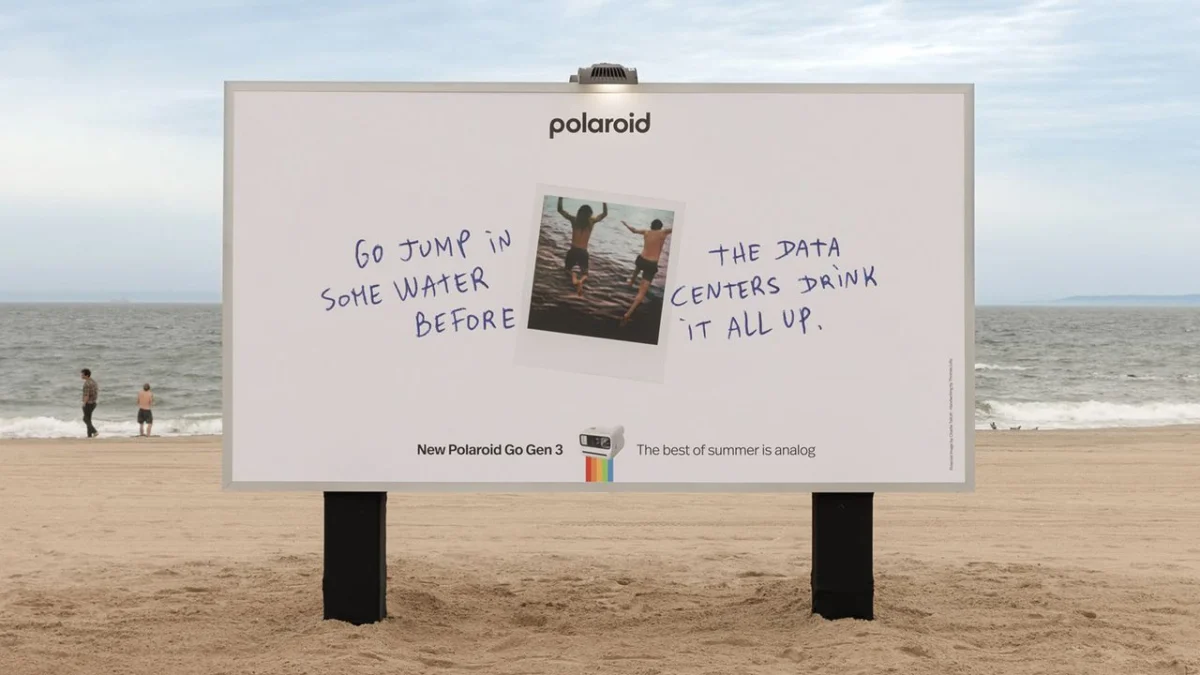
In an era defined by high-resolution screens, infinite scrolls, and the relentless creep of artificial intelligence into every facet of our creative lives, Polaroid has emerged as a surprisingly defiant voice. The iconic instant photography brand, which has long served as a shorthand for tangible memories, has launched its latest marketing initiative, "The best of Summer is Analog." This campaign, which coincides with the release of the new Go Generation 3 camera, serves as more than just a product promotion; it is a cultural critique of our increasingly detached, digital-first existence.
By stripping away the bells and whistles of modern advertising, Polaroid is championing a "back-to-basics" philosophy that encourages consumers to "touch grass," unplug, and embrace the imperfect, tactile nature of reality.
The Core Philosophy: An Anti-Design Manifesto
At the heart of the campaign is a bold, minimalist aesthetic that stands in stark contrast to the high-gloss, hyper-processed visuals that dominate modern social media feeds. Polaroid’s creative team has utilized what many are calling "anti-design"—a style that prioritizes raw, honest communication over complex visual trickery.
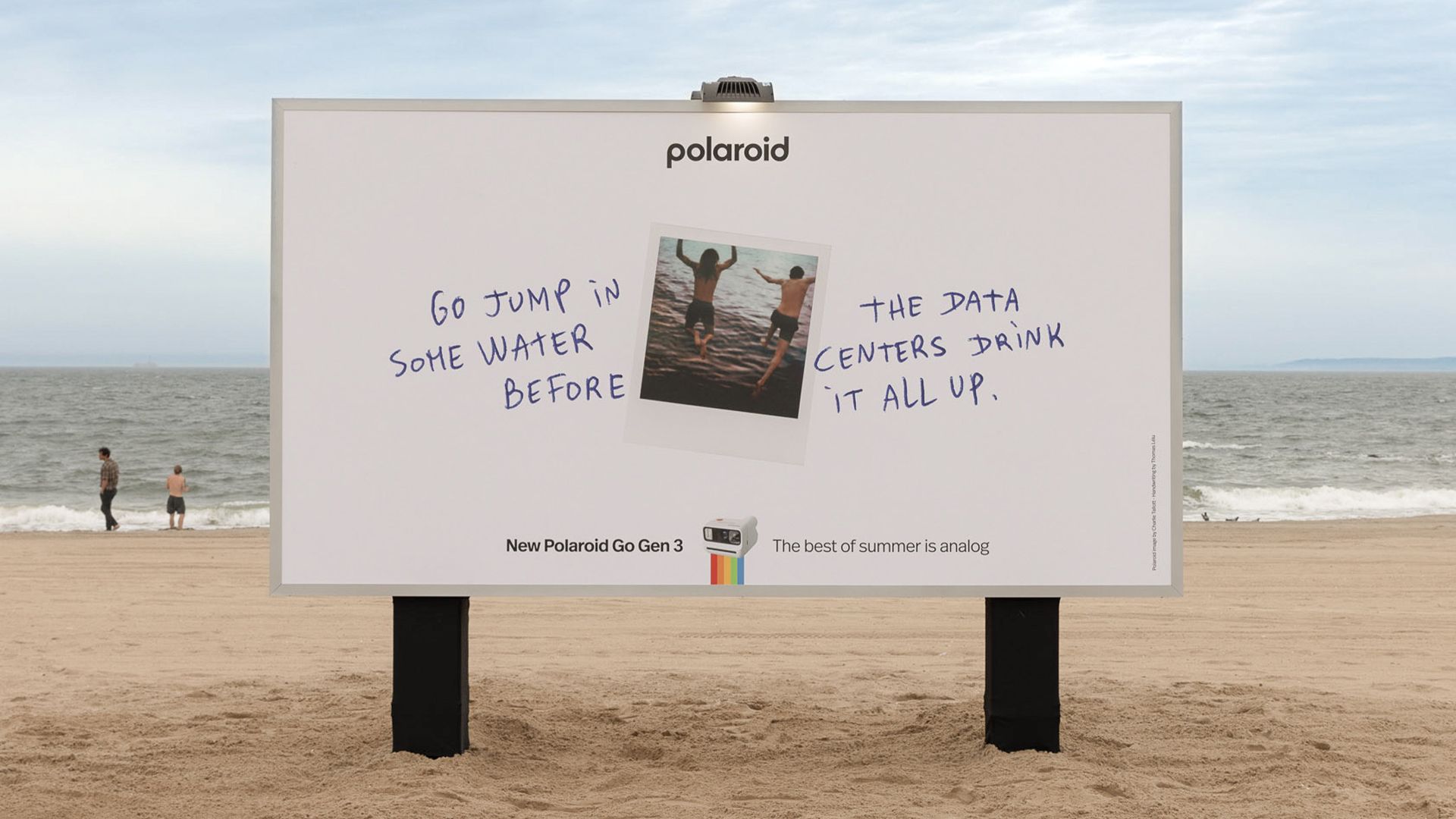
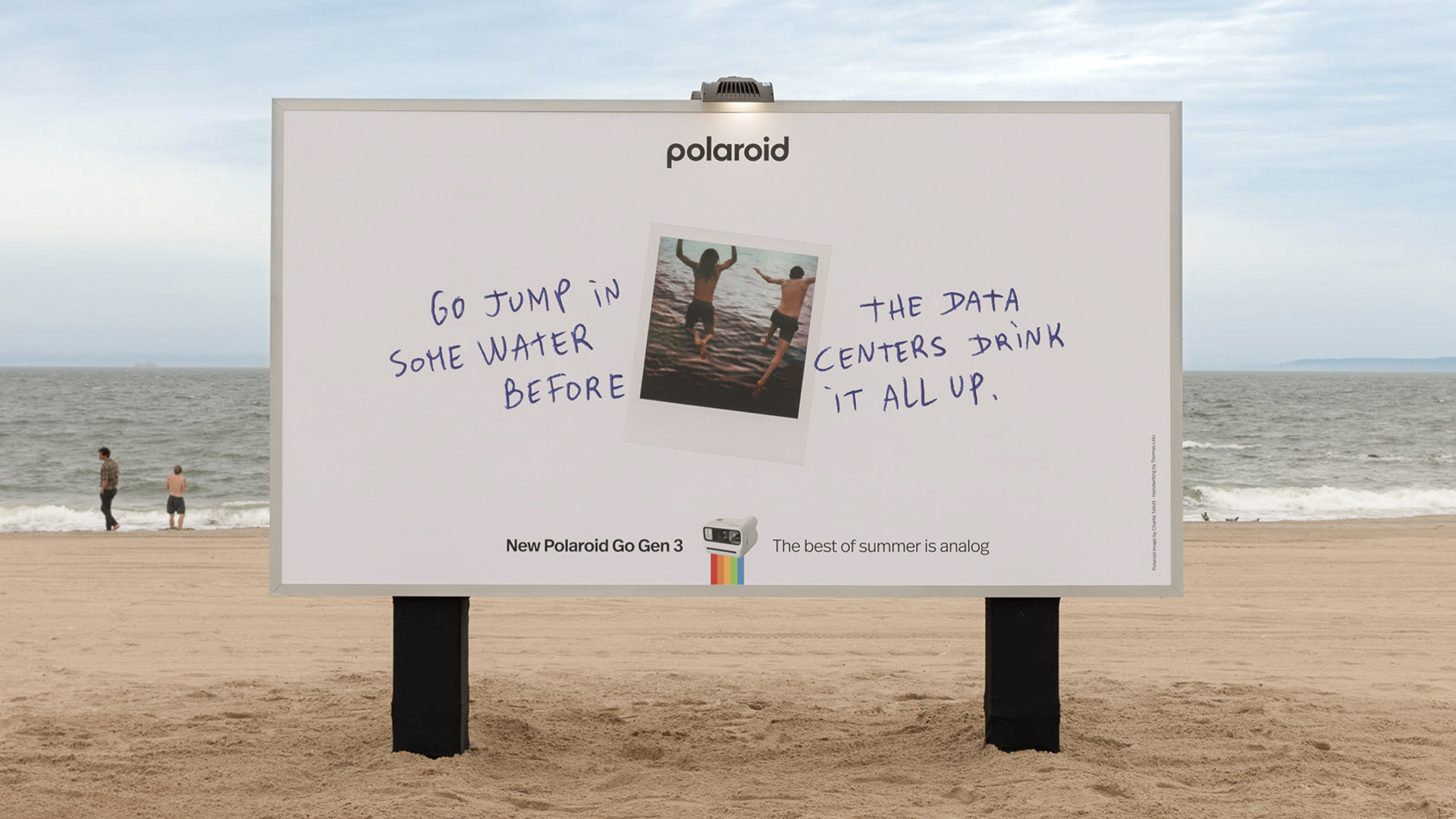
The campaign centers on a series of provocative billboards and outdoor placements, perhaps most notably at Coney Island, New York. One billboard features a candid, unedited Polaroid snapshot alongside the text: "Go jump in some water before the data centers drink it all up."
This messaging is layered with meaning. While it serves as a playful nudge to enjoy the summer, it simultaneously highlights the massive environmental cost of the digital age—specifically the water-intensive cooling systems required to maintain the data centers that fuel AI and cloud storage. By placing this message in high-traffic, public spaces, Polaroid isn’t just selling a camera; it is forcing a dialogue about the trade-offs between virtual convenience and physical presence.
Chronology: A Strategic Rollout
The campaign has been meticulously structured to infiltrate the cultural consciousness of three major global hubs: New York, London, and South Korea.
- Initial Launch (New York): The campaign broke cover on the beaches of Coney Island, utilizing the contrast between the sand-and-surf environment and the stark, warning-like copy of the billboards.
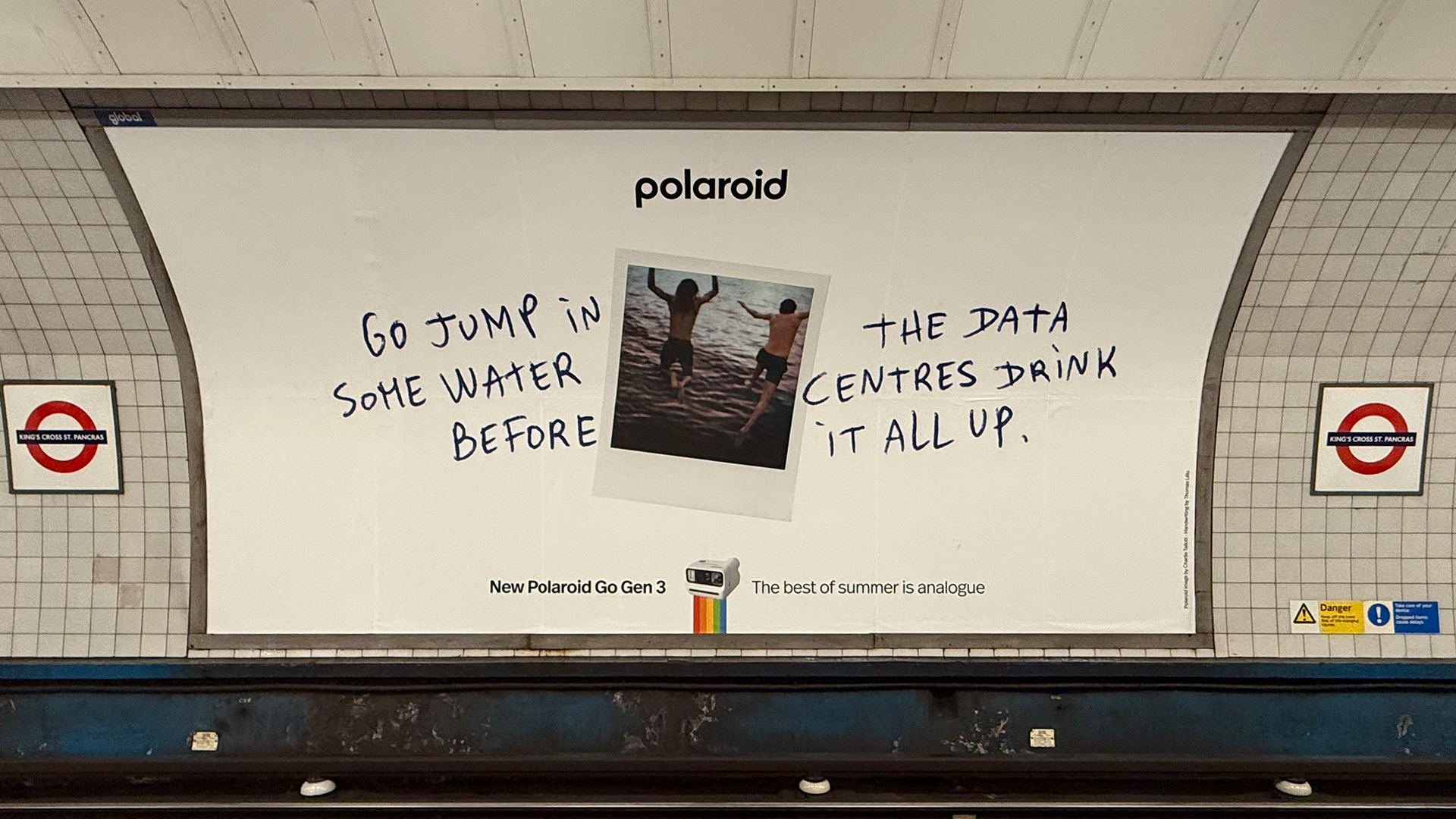
- Expansion (London & Beyond): The initiative quickly expanded to London, featuring a comprehensive "station takeover" at King’s Cross. This location was chosen strategically; it is a hub of transit where thousands of commuters are often seen staring at their phones, providing the perfect backdrop for the campaign’s poignant reminders.
- Localized Placements: Throughout neighborhoods like Hackney and Bethnal Green, Polaroid has deployed localized ads that oscillate between genuine encouragement—"Dance like nobody is recording"—and biting, self-aware sarcasm—"What a glorious day to stare into various screens for hours on end."
This phased rollout demonstrates a sophisticated understanding of urban geography, targeting commuters and city dwellers at the exact moments they are most likely to feel the fatigue of the digital grind.
The Shift in Strategy: From Consumer to Cultural Commentator
For years, the marketing challenge for instant camera companies was simple: "How do we make analog technology relevant to Gen Z?" However, as Polaroid’s creative leadership recently noted, that question has evolved into a much more existential inquiry.
"When we stopped asking ‘How do you make instant cameras appealing to Gen Z?’ and started asking ‘Why should Polaroid exist at all in an AI era?’ we knew we were on to something," says Patricia Varella, Creative Director at Polaroid.
This shift in strategy represents a maturation of the brand. Polaroid is no longer merely a manufacturer of hardware; it is positioning itself as a guardian of human experience. Varella clarifies that the brand is not luddite in its approach. "We’re not anti-digital. We know we have to live alongside it, but we’re deeply pro-human," she explains. "We know what humanity gives us, and we know what we stand to lose if we don’t protect it. That’s a fight worth fighting."
Supporting Data: The Rise of the "Analog Renaissance"
Polaroid’s pivot comes at a time when the "Analog Renaissance" is no longer just a niche trend—it is a measurable market shift. According to recent consumer behavior studies, there is a growing fatigue regarding "screen time."
- The "Unplugged" Demographic: Market research suggests that individuals aged 18–30 are increasingly seeking "low-fidelity" experiences. This is evidenced by the steady rise in sales for film cameras, vinyl records, and physical books.
- The AI Backlash: As generative AI creates increasingly perfect, "synthetic" images, the value of the "imperfect" photo has skyrocketed. A Polaroid, with its distinct chemical development and lack of a "delete" button, represents an authentic moment in time—a stark contrast to the infinite, ephemeral nature of digital files.
- Environmental Awareness: The "data center" critique in the campaign taps into a growing public consciousness regarding the carbon footprint of digital consumption. While the average user may not know the exact water consumption of a cloud server, the narrative that digital life has a physical, often detrimental, footprint is gaining significant traction.
Implications: The Future of Brand Storytelling
The success of this campaign highlights a critical lesson for modern marketers: authenticity is the ultimate currency.
In an age where consumers are bombarded by thousands of ads daily, many of which are generated or optimized by AI, the human touch has become a luxury. Polaroid’s decision to use handwritten-style fonts, candid photography, and bold, slightly uncomfortable copy works because it feels like a conversation rather than a corporate mandate.
Impact on Competitive Landscape
Competitors in the instant photography space—such as Fujifilm’s Instax line—have traditionally focused on lifestyle, color palettes, and ease of use. Polaroid, by contrast, is moving into the realm of philosophy. By aligning their brand identity with the preservation of human experience, they are insulating themselves from the volatility of tech trends. If the future of photography is increasingly automated, Polaroid is banking on the idea that humans will value the "hand-made" even more.
The Role of "Anti-Design"
The use of anti-design in this campaign—characterized by a lack of polished, high-production value—is a strategic move to build trust. When a brand adopts a "raw" aesthetic, it signals to the consumer that they are not being sold to by an algorithm. This creates an emotional bond. It suggests that the brand understands the frustration of the modern user, creating a sense of camaraderie that traditional, polished advertising simply cannot achieve.
Final Thoughts: A Fight Worth Fighting
As the "Go Generation 3" hits the market, its success will likely be measured by more than just units sold. It will be measured by the brand’s ability to sustain this conversation about the value of physical, non-digital memories.
Polaroid’s campaign is a powerful reminder that technology should serve to enhance our lives, not replace them. Whether or not the campaign leads to a massive, global rejection of screen time is irrelevant; the victory lies in the fact that a major brand is willing to tell its customers to "go jump in some water."
In a world where we are constantly told to log in, sync up, and optimize, the radical act of simply existing in the real world is, as Varella suggests, the most powerful statement of all. Polaroid has successfully transformed the camera from a tool into a protest, and in doing so, has reclaimed its place as an essential, human-centric icon in the 21st century.
As we navigate the intersection of AI, big data, and personal identity, perhaps the most revolutionary thing we can do is carry a camera that only holds eight shots, requires patience, and produces a physical object that—much like a human memory—is unique, fleeting, and entirely our own.
 Raul Delapena Setiawan
  Muslim