
 By Iffa Jayyana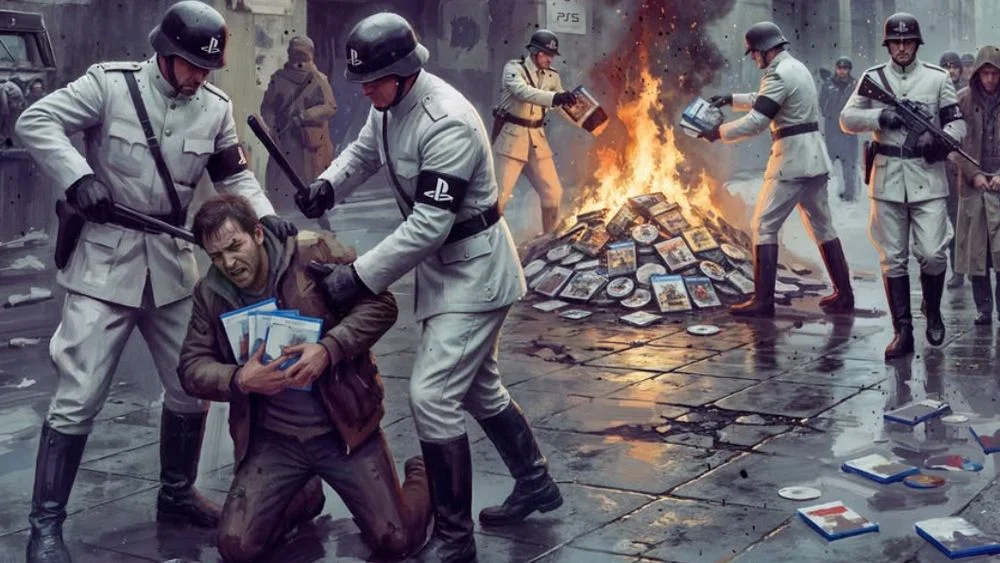
The landscape of entertainment consumption is undergoing a tectonic shift, one that has left gamers, collectors, and digital rights advocates reeling. This week, Sony Interactive Entertainment ignited a firestorm of controversy with the announcement that PlayStation games will no longer be available on physical discs starting in January 2028. This move, which signals the potential sunset of the physical console gaming era, was delivered in a manner described by many industry analysts as a communications disaster—coming a mere 48 hours after the company confirmed that hundreds of digital films would be purged from user libraries due to licensing expirations.
The reaction was immediate and visceral. As social media platforms became conduits for a growing backlash, the conversation transcended technical specifications and business strategy, evolving into a philosophical debate about ownership, preservation, and the fragility of digital archives. Central to this discourse is a new, provocative artwork by the famed digital artist Beeple, whose commentary on the situation has only served to muddy the waters, forcing us to ask: are we witnessing the evolution of technology, or the systematic dismantling of our right to own what we buy?
The Chronology of a Controversial Pivot
To understand the intensity of the current backlash, one must look at the sequence of events that pushed the gaming community to the brink. For decades, the physical disc served as the bedrock of the "ownership" model—a tangible artifact that functioned as a legal deed to a piece of intellectual property.
- Early 2024: Whispers of a "digital-only" future began to circulate as manufacturers increasingly pushed users toward subscription services like PlayStation Plus.
- Mid-Week, Current Month: Sony confirmed that a significant library of licensed digital films, previously purchased by users, would be removed from accounts, citing the expiration of content distribution agreements.
- 48 Hours Later: Sony followed up the film-deletion news with the bombshell announcement that it would cease all physical disc production for PlayStation software by January 2028.
- The Reaction: The dual announcements created a "perfect storm" of distrust. Users who had spent thousands of dollars on digital storefronts realized their libraries were not assets, but temporary leases subject to the whims of corporate licensing.
Beeple’s Dystopian Vision: A Mirror or a Mockery?
Mike Winkelmann, known globally as Beeple, has long been a lightning rod for the intersection of art, technology, and controversy. After shattering records with his $69.3 million NFT sale, Everydays: The First 5000 Days, and creating viral, often polarizing digital pieces—ranging from a tree-birthing Madonna to satirical JD Vance memes—Beeple turned his lens toward Sony.
His latest Instagram entry, part of his storied "Everydays" series that has run consecutively since 2007, depicts a chilling, Orwellian scene. In the image, riot police are seen torching massive piles of game cases, while ominous banners hanging from city skyscrapers declare the ownership of physical media a criminal offense. The visual language is clear: this is a nod to the book-burning motifs found in Ray Bradbury’s Fahrenheit 451 and the totalitarian control of George Orwell’s 1984.
However, the ambiguity of the piece has sparked an intense debate. Is Beeple, a pioneer of the NFT space—a medium often criticized for its own lack of physical permanence—sincerely mourning the loss of physical media? Or is he offering a cynical commentary on the reactionary nature of gamers who cling to plastic discs in an increasingly digitized world?
The Philosophical Conflict: Possession vs. License
The core of the issue lies in the distinction between "buying" and "licensing." When a consumer purchases a physical disc, they own a tangible item. While the software on the disc may require updates, the base code remains in the user’s possession. In contrast, digital purchases are essentially long-term rental agreements.
Critics of Sony’s move argue that the company is effectively forcing a subscription-based future upon its user base. If a game is pulled from a digital storefront, or if a server is shut down, the user loses access to the content they paid for. This "digital ephemera" is a significant departure from the historical standard of gaming, where a user could, in theory, play a game bought in 1995 on a console from that era.
Conversely, proponents of the digital-only model argue that the physical disc is already a relic. Modern "AAA" games often require dozens of gigabytes of day-one patches, meaning the disc itself is often just a physical key to trigger a download. Furthermore, there is the environmental argument: millions of plastic cases, printed manuals, and discs end up in landfills, contributing to a massive e-waste problem that the industry has struggled to address.
The AI Controversy: A Complication of the Narrative
As the debate raged on under Beeple’s post, a new layer of friction emerged. Observers began to question whether the artist had utilized generative AI to create his piece. This sparked a secondary, heated discussion about the irony of the protest.
"Being mad about less physical media is a preservation mindset, but all AI does is ruin our planet," one commenter noted, pointing to the high energy consumption and ethical debates surrounding AI-generated imagery. This irony is not lost on the community: Beeple, an artist who has championed technologies that rely on immense digital infrastructure, is being critiqued by an audience that is similarly attached to their own digital habits.
Beeple himself has been transparent about his use of various software—including Photoshop and Cinema 4D—but has remained guarded regarding his specific workflow for his daily posts. The accusation that he used AI to depict the destruction of physical media by "digital" means adds a layer of meta-commentary that has distracted from, yet simultaneously enriched, the original conversation.
Implications for the Future of Preservation
The implications of a post-physical world are profound. If the industry shifts entirely to cloud-based or digital-only distribution, we face a "digital dark age." Libraries, museums, and individual collectors will find it impossible to archive the history of video games, as the content will exist only on servers controlled by private corporations.
- Consumer Trust: The erosion of the "buy to own" paradigm creates a trust deficit that may take years to recover from.
- Cultural Heritage: Without physical copies, video games—which represent a massive portion of 21st-century cultural output—become vulnerable to deletion.
- Monopolistic Control: A digital-only market allows publishers to unilaterally set prices and remove content without the pushback typically associated with physical retail, where retailers can still sell used or surplus stock.
Official Responses and Industry Trends
While Sony has yet to issue a formal apology for the timing of their announcements, industry insiders suggest that this is an inevitable move driven by the economics of the "Games-as-a-Service" (GaaS) model. By eliminating the secondary market—the ability for players to trade, sell, or lend their physical discs—Sony and other platform holders can maximize revenue and maintain complete control over the consumer lifecycle.
Retailers are already feeling the heat. Major outlets have reported a decline in pre-orders for physical special editions, as consumers begin to realize that the "collector’s items" they are purchasing may soon be locked behind a digital wall that could vanish with a server update.
Conclusion: A Turning Point for Digital Rights
The outcry against Sony’s decision to phase out physical discs by 2028 is not merely about a piece of plastic. It is a fundamental protest against the erosion of consumer sovereignty. Whether Beeple’s artwork is a genuine critique or a provocative piece of performance art, it has successfully crystallized the anxieties of a generation that is beginning to understand the fragility of their digital lives.
As we look toward 2028, the industry must decide how it plans to address these concerns. If gaming companies continue to prioritize efficiency and profit margins over the longevity of their products, they risk alienating the very fans who built their empires. The battle for the physical disc may be nearing its end, but the battle for digital ownership and the right to preserve our cultural history is only just beginning.
What are your thoughts on this shift? Does the convenience of a digital library outweigh the security of physical ownership? Share your views in the comments below.
 Raul Delapena Setiawan
  Ammar Sabilarrohman
  Muslim