
 By Evan Lee Salim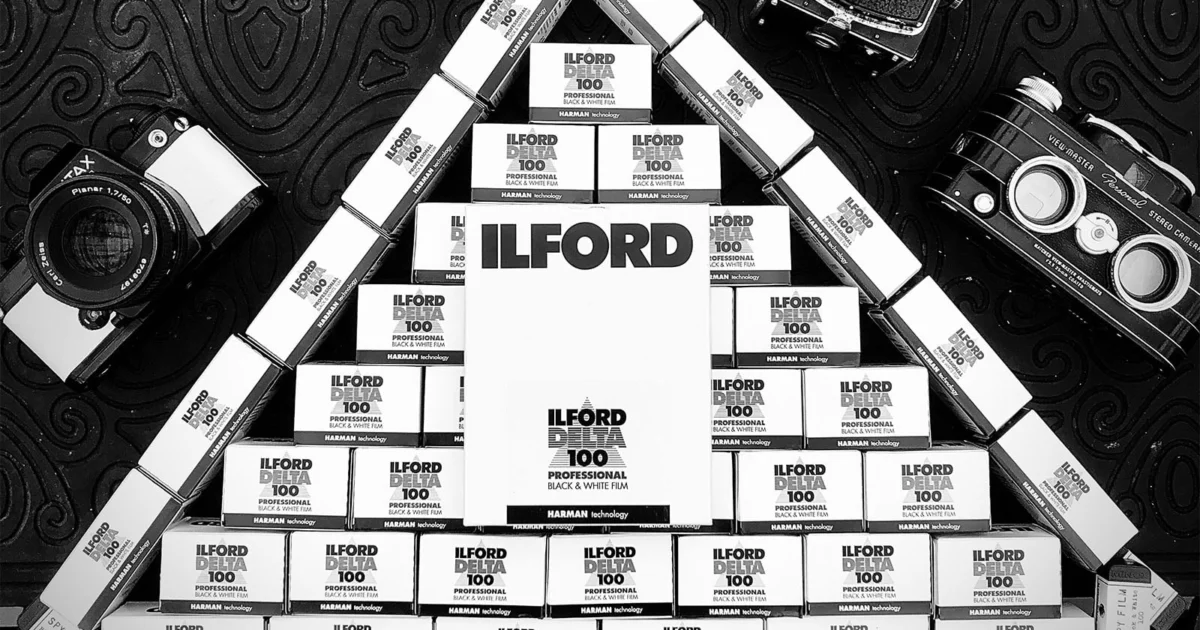
In the digital age, where sensor technology advances at a blistering pace, the act of loading a camera with film remains a deliberate, sensory experience. For the team at Blue Moon Camera and Machine in Portland, Oregon, the "Film Friday" series was born out of a desire to look beyond the industry giants—like Kodak Tri-X—and explore the nuance of the film world’s overlooked treasures. Among these, Ilford Delta 100 emerged not just as a test subject, but as a revelation.
The Genesis of the Delta Series
To understand Ilford Delta 100, one must look back to the early 1990s. Introduced in 1992, Delta 100 followed the 1990 release of Delta 400, effectively forming a three-part family that would be completed by the arrival of Delta 3200 in 1998.
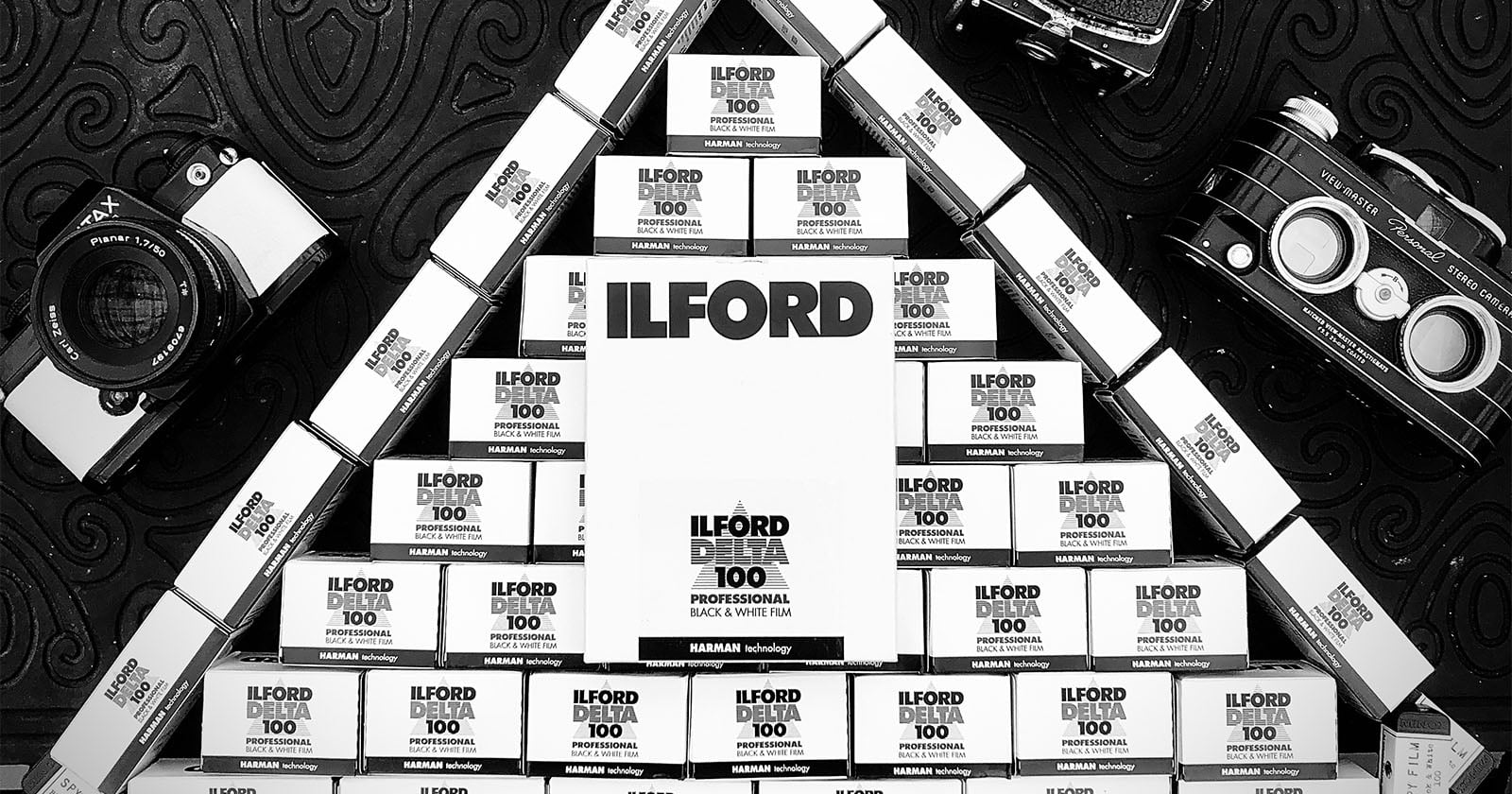
At the time of its inception, the Delta line served as a direct strategic response to Kodak’s T-Max series. The photographic industry was in the midst of a technological shift, moving away from traditional cubic silver halide crystals toward the more efficient, flatter "tabular grain" (T-grain) technology. By matching the ISO 100, 400, and 3200 offerings of its primary competitor, Ilford positioned the Delta line as a high-performance alternative for the discerning professional.
While Ilford’s long-standing emulsions—the legendary HP5 and FP4—remain the bedrock of the company’s catalog, the Delta films have quietly held their ground for over three decades. They offer a distinct visual signature, providing a "counter-harmony" to the traditional grain structure of the HP5/FP4 duo. Much like the relationship between T-Max and Tri-X, the Delta series provides a sophisticated, modern aesthetic that caters to photographers seeking clinical sharpness and tonal precision.

The Science of Tabular Grain
The hallmark of Delta 100 is its specialized grain structure. Unlike traditional cubic grains, which can appear clumped and organic, tabular grains are flattened and more uniform in shape. This engineering allows the film to respond to light with greater efficiency, resulting in superior resolving power and sharpness.
When testing the film, the team at Blue Moon found that "fine-grained" is an understatement. The real beauty of Delta 100 lies in the smoothness of its rendering. In direct comparisons with T-Max 100 and Fuji Acros II, Delta 100 occupies a unique space. While Acros II may hold a marginal lead in absolute grain fineness, Delta 100 offers a smoother, more fluid transition of tones. It manages to feel refined without becoming sterile, bridging the gap between the high-contrast drama of modern films and the softer, more forgiving nature of classic emulsions.

Tonality and Contrast: The Balanced Performer
Defining a film’s "character" is often subjective, but with Delta 100, the consensus is clear: it is a master of balance.
The film exhibits a remarkably smooth transition between highlights and shadows. Many photographers struggle with high-contrast emulsions that lose detail in the highlights or "block up" in the shadows; Delta 100, however, maintains excellent separation across the entire tonal range. It is rich enough to provide deep, punchy blacks but retains the delicate nuances in the mid-tones that are often lost on less sophisticated stocks.

Even when slightly overexposed, the highlights on Delta 100 remain clean and printable, a testament to its wide exposure latitude. It occupies a "Goldilocks" zone: it is more nuanced than typical high-contrast films like APX or RPX, yet it avoids the flat, muddy look that sometimes plagues slower, traditional-grain films. It is a workhorse that excels by being perfectly calibrated for a wide variety of lighting conditions.
Long Exposure and Reciprocity Failure
For the landscape or architectural photographer, the behavior of a film during long exposures is critical. During our testing, which included extended sessions with pinhole cameras and long-exposure setups, we closely monitored Delta 100’s reciprocity failure characteristics.

Delta 100 is not immune to reciprocity failure, but its behavior is highly predictable—a massive boon for photographers working in low-light environments.
- Up to 1 second: No significant adjustment is typically required.
- 10 seconds: A full stop of compensation is recommended (e.g., exposing for 20 seconds).
- 60 seconds: According to the official Ilford data sheet, roughly 1.25 stops are required.
Beyond the one-minute mark, the compensation requirements grow quite slowly, making it feasible to execute exposures of four to six minutes without needing to account for a second full stop of light. This predictability removes the guesswork from long-exposure photography, allowing the photographer to focus on composition rather than complex mental math.

The Developer Ecosystem
One of the most compelling reasons to adopt Delta 100 is the sheer volume of technical documentation available. Because it has been a staple for over 30 years, it is arguably one of the most well-documented films on the market.
Whether you prefer the middle-of-the-road balance of D-76 (1:1), the ultra-fine grain results of Ilford DD-X, or the edge-sharpness of Rodinal (stand-developed at 1:100), the "Massive Dev Chart" lists over 200 possible combinations. This versatility allows a photographer to "tune" the film’s look to their specific needs. You could spend a lifetime shooting nothing but Delta 100 and still find new ways to render it by simply switching your chemistry.

Versatility Across Formats
Ilford has ensured that the Delta 100 experience is accessible to almost every photographer, regardless of their camera choice. Beyond the standard 35mm and 120 medium format rolls, Delta 100 is a staple of the Ultra Large Format (ULF) program.
From 4×5 and 8×10 sheet film to massive, specialty cuts like 8×20 or 16×20 inches, the film’s consistency is absolute. For those working in niche formats, it is even available as Minox film. This level of accessibility means that as your technical repertoire grows—perhaps moving from a 35mm SLR to a 4×5 field camera—you do not have to "re-learn" how your film behaves. You can trust the same tonal range and sharpness in every format.

Implications for the Modern Photographer
In an era where film stocks are occasionally discontinued or suffer from supply chain volatility, the longevity and consistency of the Ilford Delta line are significant advantages. It represents a mature technology that has been refined to near-perfection.
The takeaway for the modern film enthusiast is clear: Delta 100 is not just a legacy product; it is a contemporary powerhouse. It satisfies the need for high-resolution, low-grain imagery while providing the tonal depth that digital sensors often struggle to replicate. Whether you are a student learning the ropes of development or a master printer looking for a consistent, high-fidelity medium, Delta 100 remains an essential tool.

As we continue our exploration of film stocks at Blue Moon, we find ourselves returning to Delta 100 with increasing frequency. It is a film that rewards patience, study, and the willingness to experiment. If you have yet to dedicate a few rolls to this emulsion, we highly recommend adding it to your next order. Given its adaptability and its standing in the professional community, it is a film that will likely remain a fixture in our bags—and on our darkroom easels—for years to come.
This report is brought to you by Blue Moon Camera and Machine in Portland, OR. Blue Moon offers professional film, development, printing, and a curated selection of vintage cameras. PetaPixel Members receive 10% off all lab services with Blue Moon.
 Raul Delapena Setiawan
  rifanmuazin
  Ammar Sabilarrohman