
 By Nila Kartika Wati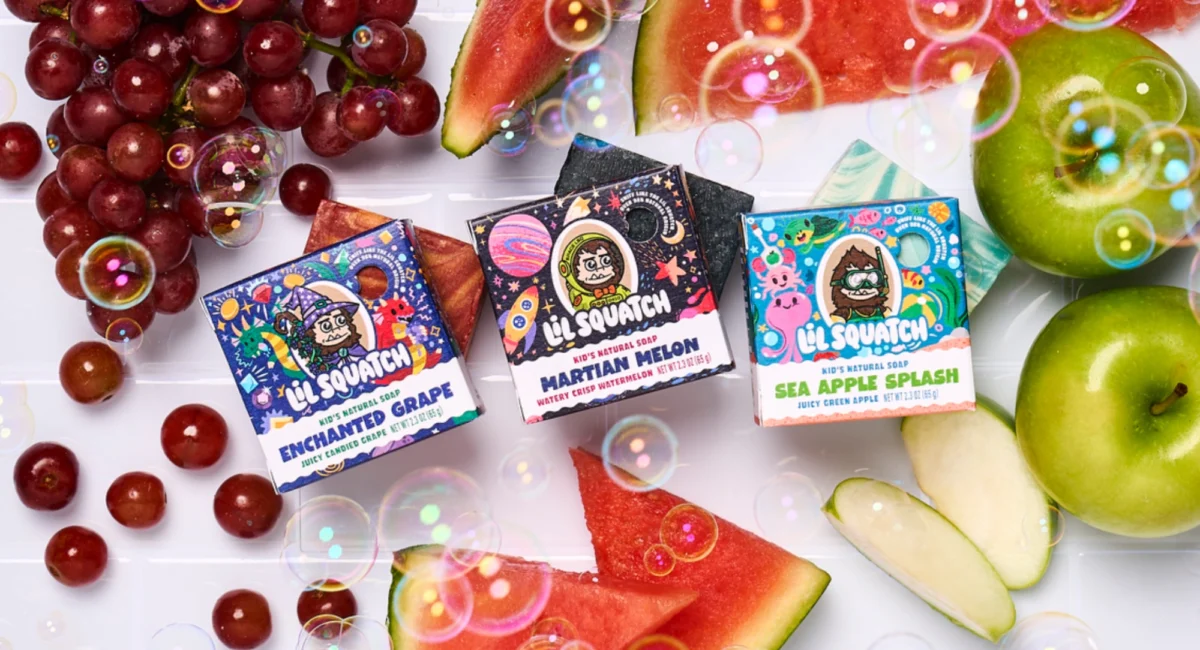
In a strategic maneuver that bridges the gap between nostalgic cult-favorite grooming and the rapidly evolving Gen Alpha demographic, Dr. Squatch has officially entered the children’s personal care market. The Unilever-backed powerhouse, previously synonymous with rugged, masculine, natural-origin soaps, has unveiled "Lil’ Squatch," a direct-to-consumer line specifically engineered for children ages 5 through 12.
This launch represents a pivotal shift for a brand that has spent years cultivating a loyal adult male following. By introducing three flagship bar soaps—Sea Apple Splash, Enchanted Grape, and Martian Melon—Dr. Squatch is not merely diversifying its inventory; it is attempting to capture the "tween" market that many legacy personal care brands have historically overlooked.
Main Facts: A New Chapter for Dr. Squatch
The Lil’ Squatch line debuts with a clear focus on the specific needs of children. Each 2.3-ounce bar is cold-processed using natural oils and boasts a 98% natural-origin ingredient profile, a key selling point for parents who are increasingly scrutinizing the chemical composition of products used in their households.
The collection is currently available as a full set, priced at $12, exclusively through the brand’s direct-to-consumer (DTC) channels. By keeping the launch within its own digital ecosystem, Dr. Squatch maintains full control over the customer experience, data collection, and the narrative surrounding the brand’s pivot toward a younger consumer base.
Chronology: From Pop-Culture Collaborations to Category Expansion
Dr. Squatch’s journey into the children’s space did not happen overnight. The brand has been testing the waters for several years through a series of high-profile, limited-edition collaborations.
- The Early Years: Dr. Squatch established its market dominance through aggressive digital marketing and a focus on "clean" grooming for men.
- The "Toy Story" and "SpongeBob" Era: The brand’s previous flirtations with kid-adjacent culture—notably collaborations with Toy Story 5 and SpongeBob SquarePants—served as a soft launch of sorts. While these products were branded for a general audience, internal data revealed a surprising trend: parents were purchasing these collaborative sets specifically for their children.
- The Acquisition: Following its acquisition by Unilever last year, the brand gained the operational support and market reach necessary to scale these "experimental" categories into full-fledged product lines.
- July 2026: The official unveiling of the Lil’ Squatch sub-brand, marking the company’s first formal foray into the dedicated children’s personal care category.
Supporting Data: The "Missing Middle" in Personal Care
According to Theo Lee, the lead product strategy executive at Dr. Squatch, the decision to launch Lil’ Squatch was driven by a clear identification of "white space" in the current retail landscape.
"We started looking at the market and realized there was a gap between baby products and the adult aisle," Lee explains. "Once they graduate from baby, there isn’t anything servicing that group."
This "missing middle"—the toddler-to-tween demographic—has become a focal point for investors and beauty conglomerates alike. As Gen Alpha begins to exert more influence over household spending, the demand for products that are "fun" for children but "safe" for parents has skyrocketed. Data suggests that while Gen Alpha consumes content at a rapid pace, their purchasing power is still filtered through the parental lens. Consequently, brands like Evereden and Shay Mitchell’s Rini have begun aggressively targeting this demographic, signaling a broader industry trend toward age-specific, ingredient-conscious formulations for children.
Official Perspectives: The Dual-Audience Strategy
One of the most significant challenges in the children’s grooming space is the "double-customer" problem: the product must appeal to the child’s sense of play, while satisfying the parent’s demand for safety and efficacy.
"We know that parents have the spending power," Lee notes. "So, how do you design something that’s super fun and exciting for kids, but also super safe? That’s sort of the trick, right? You’re designing for an audience, but then the spending power is a separate person, so you’re kind of having to please both."

For Dr. Squatch, the Lil’ Squatch line is a calculated "happy medium." By utilizing playful names like "Martian Melon" and "Enchanted Grape," the brand maintains its signature whimsical, energetic branding while relying on its existing reputation for natural, high-quality ingredients to reassure parents.
Implications: A Strategic Trial Run
The launch of Lil’ Squatch is currently framed as a trial, with the product line set for a three-to-four-month market test. This approach is highly indicative of modern DTC strategy, where agility is prioritized over mass-market saturation.
"We’re teasing it," says Lee. "We want to see the excitement. That allows us to learn around real-time usage to see how we can continue to improve and enhance the product."
If the sales data reflects the initial interest, the implications for Dr. Squatch are profound. A successful rollout would likely trigger a rapid expansion of the line to include additional scents, hair care, and bath products. Furthermore, Lee hinted that the brand is already eyeing potential entertainment intellectual property (IP) partnerships to further bolster the line’s appeal to children.
Market Implications
The entry of a Unilever-backed brand into the children’s natural soap category places immediate pressure on smaller, independent brands currently occupying that space. Dr. Squatch’s ability to leverage its massive social media following and existing supply chain efficiencies could allow it to capture significant market share in a very short window.
Moreover, the move suggests that Dr. Squatch is evolving from a "men’s grooming brand" into a broader "family-centric lifestyle brand." By capturing consumers at age five and maintaining brand loyalty through their adult years, the company is effectively building a "cradle-to-grave" customer lifecycle.
The Gen Alpha Factor
Gen Alpha is not merely a demographic; it is a cultural force that interacts with brands differently than its predecessors. These consumers are digital natives who respond to the same high-energy, personality-driven marketing that made Dr. Squatch a sensation among millennials. By applying its proven marketing playbook to a younger audience, Dr. Squatch is attempting to bypass the traditional retail hurdles that often plague new product launches.
Whether the "Lil’ Squatch" name carries enough weight to transition from a novelty item to a household staple remains to be seen. However, given the brand’s history of viral marketing and its current backing by one of the world’s largest consumer goods corporations, the odds favor a significant disruption in the children’s aisle.
Conclusion
As the brand moves forward with this trial, the industry will be watching closely. If Dr. Squatch can successfully translate its adult-focused, natural-origin success into a family-friendly format, it may well define the standard for the next generation of personal care. For now, the focus remains on the "tease"—monitoring real-time feedback, refining the formulations, and ensuring that the Lil’ Squatch brand resonates with both the child in the bath and the parent holding the wallet.
The experiment is simple, yet the stakes are high. As Lee summarized, "We’re definitely putting our best foot forward on this one, and it ties well to our brand." With the launch of Lil’ Squatch, Dr. Squatch is not just cleaning up; it is growing up alongside its future customer base.
 Neng Nana
  Ali Ikhwan
  Lina Hope