
 By Sagoh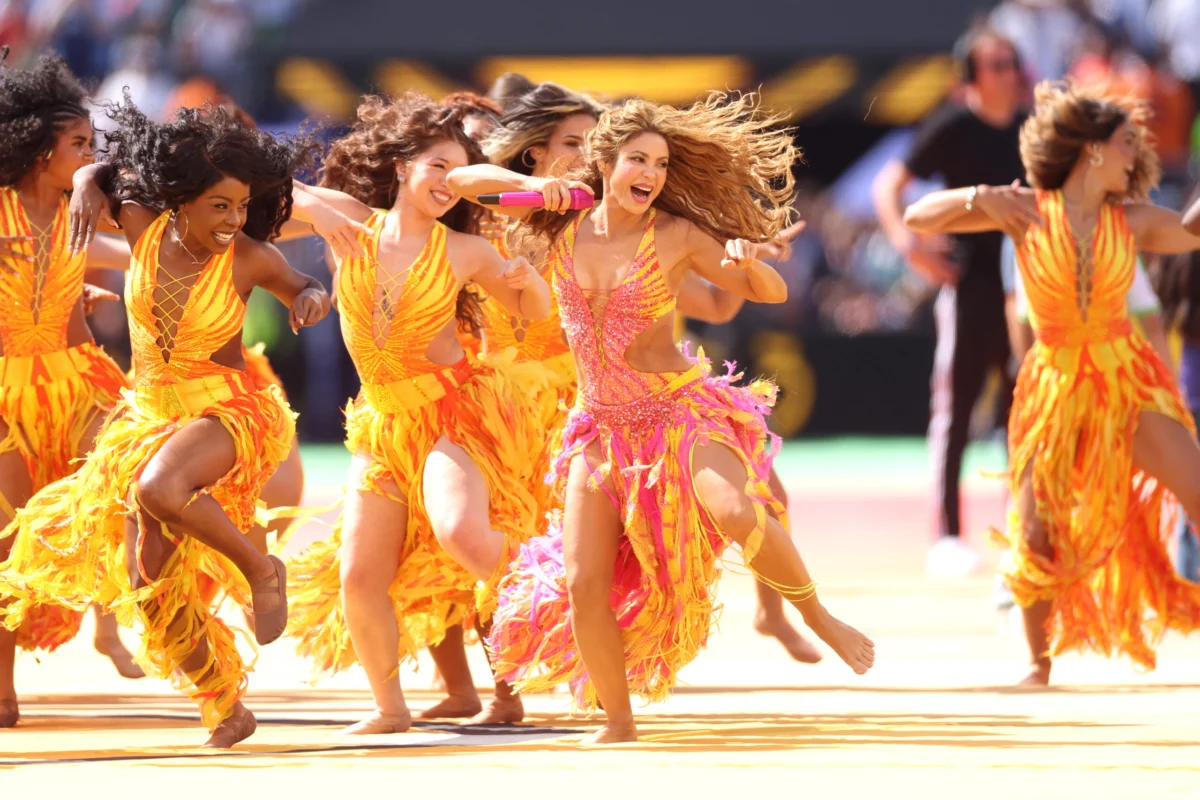
As the "barefoot shoe" trend continues to dominate the summer fashion landscape—with luxury houses like Chanel showcasing delicate, barely-there silhouettes on the runway—global superstar Shakira has once again opted for the most literal interpretation of the aesthetic. During her high-octane halftime performance at the 2026 FIFA World Cup final in New Jersey this past Sunday, the Colombian icon bypassed the season’s trendiest footwear entirely, choosing instead to grace the stage with nothing but her own two feet.
While the fashion industry debates the merits of minimalist footwear, Shakira’s choice was far from a spontaneous stylistic decision. For the songstress, performing barefoot is an act of reclamation, a signature aesthetic, and a deeply ingrained ritual that has anchored her stage presence for over 30 years.
The Main Facts: A Halftime Performance to Remember
The 2026 FIFA World Cup final, held at the sprawling New York-New Jersey Stadium, served as the backdrop for one of the most anticipated musical sets of the year. Shakira, tasked with the prestigious halftime slot, delivered a vibrant performance of her latest hit, "Dai Dai," alongside Nigerian powerhouse Burna Boy and the infectious energy of Uganda’s Ghetto Kids.
The visual narrative of the performance was striking. Clad in a custom-made, crystal-encrusted bodysuit designed by Fausto Puglisi for Roberto Cavalli, paired with a fluid, movement-ready fringe skirt, Shakira’s ensemble was built for agility. However, it was the absence of footwear that caught the attention of fashion critics and spectators alike. By performing barefoot, Shakira not only prioritized her complex Latin dance choreography but also maintained the raw, grounded energy that has come to define her live shows.
This performance served as a stark contrast to her appearance during the tournament’s Opening Ceremony in June, where she opted for a high-fashion, elevated look, sporting $1,495 white leather R13 Riot platform sneakers.
Chronology: From ‘Pies Descalzos’ to Global Icon
To understand Shakira’s relationship with the stage, one must look back to the mid-1990s. The singer’s affinity for going barefoot is not a modern eccentricity but a fundamental pillar of her career evolution.
The 1996 Origins
The moniker "Pies Descalzos" (Barefoot) is more than just a title for her breakthrough 1995 album; it was the ethos of her formative years. In 1996, she launched her "Tour Pies Descalzos," a massive undertaking that saw her performing across Latin America and the United States. It was during this era that the image of a young Shakira, hair flowing and feet exposed, became an indelible icon of the Latin pop explosion.
The Evolution of the Signature
Throughout the early 2000s and into her global crossover, the barefoot look transitioned from a necessity of her early aesthetic to a deliberate performance tool. Whether she was performing at the Super Bowl or an intimate stadium concert, the absence of shoes became a symbol of her ability to move with fluidity, allowing for the intricate hip movements and athletic footwork that have become her hallmark.
The 2026 World Cup Contrast
The 2026 World Cup has provided a masterclass in Shakira’s sartorial versatility. While she opened the tournament in heavy-duty, platform-soled footwear—a nod to the current "chunky sneaker" trend—she returned to her roots for the grand finale. This pendulum swing between high-fashion footwear and complete minimalism highlights the duality of the artist: the fashion-forward pop icon and the grounded performer who refuses to be constrained by traditional stage attire.
Supporting Data: Why Barefoot Matters
The psychology behind Shakira’s choice is rooted in both comfort and artistic necessity. In several interviews throughout her career, the singer has been candid about her experience with stage fright during her teenage years. She noted that the act of removing her shoes served as a grounding mechanism, helping her feel more connected to the stage and, by extension, her audience.

The Biomechanics of Dance
From a technical perspective, performing in a barefoot state allows for superior contact with the floor. For a performer like Shakira, whose repertoire involves rapid pivots, rhythmic stomping, and fluid transitions, footwear can often act as a barrier to balance and traction. By removing the shoe, she eliminates the risk of slipping and gains an improved center of gravity, which is essential for the high-intensity Latin dance moves she performs.
Fashion’s "Barefoot" Trend
The fashion industry has spent the last 18 months flirting with the idea of "minimalism." From the "naked shoe" trend to the rise of barefoot-inspired training gear, high-fashion brands are currently obsessed with the concept of the foot as a design element. Shakira’s decision to go completely shoeless acts as a subversion of this trend. While designers suggest "barefoot-style" shoes, Shakira suggests that the only way to truly achieve the look is to discard the footwear entirely.
Official Perspectives and Public Reception
The choice to perform barefoot has sparked widespread discourse on social media and within the fashion press. While some commentators argue that it diminishes the "polish" of a high-budget halftime show, the consensus among her fanbase and professional dance critics is one of respect for her technical commitment.
By choosing to wear a custom Roberto Cavalli piece, the singer bridged the gap between haute couture and raw, visceral performance. "The juxtaposition of the crystal-studded bodysuit with bare feet creates a visual tension that is uniquely Shakira," says a leading fashion analyst. "It tells the audience that while she is a global superstar in couture, she remains the same performer who started her career in a studio, focused purely on the rhythm."
Implications: The Legacy of the Unconventional
Shakira’s continued commitment to performing without shoes carries significant implications for the world of pop performance and celebrity branding.
1. Challenging the Standards of "Professionalism"
Historically, pop stars have been expected to wear elaborate, often uncomfortable footwear as part of their stage persona. By consistently choosing to go barefoot, Shakira challenges the notion that "professional" performance must adhere to traditional fashion standards. She sets a precedent that the artist’s comfort and performance quality take precedence over sartorial expectations.
2. A Signature Branding Tool
In an industry where branding is everything, having an instantly recognizable physical signature is invaluable. Just as a specific vocal timbre or a signature dance move identifies an artist, Shakira’s barefoot aesthetic serves as a visual shorthand for her brand. It connects her modern-day stadium performances to her humble beginnings, creating a sense of authenticity that is difficult to manufacture.
3. Influence on Fashion Trends
While it is unlikely that performing barefoot will become a trend for the average consumer, Shakira’s influence on the footwear industry is undeniable. Her choice to alternate between the luxury R13 platform sneakers and no shoes at all has prompted conversations about the functionality of footwear. Designers are increasingly looking to the "performance-minimalism" that she embodies, creating shoes that aim to mimic the feel of bare feet while providing the necessary protection for the modern urban environment.
Conclusion
As the 2026 World Cup concludes, the image of Shakira performing in her custom Cavalli bodysuit, hair wild and feet bare, stands as a testament to her enduring artistic integrity. She has managed to remain at the pinnacle of the music industry for three decades not by chasing trends, but by dictating them through her own unique, authentic lens. Whether she is in $1,500 platform sneakers or completely barefoot, the message remains the same: the performance is not about the accessories—it is about the connection between the artist, the rhythm, and the earth beneath her feet.
— With contributions from Karla Rodriguez.
 Neng Nana
  Ali Ikhwan
  Lina Hope