
 By Muslim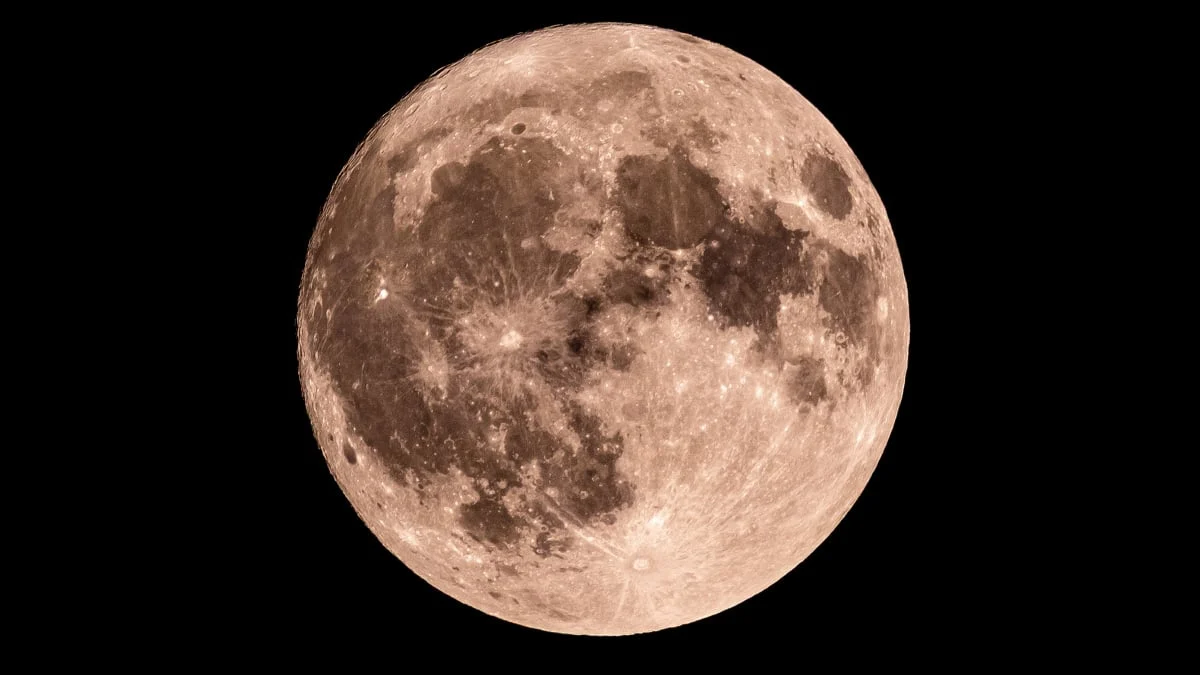
Main Facts: The First Quarter Moon of June 21
On Sunday, June 21, the Moon enters its First Quarter phase, presenting a prime opportunity for astronomers, casual stargazers, and citizen scientists alike to observe the lunar surface. According to NASA’s Daily Moon Guide, the Moon will be 54% illuminated tonight. This level of illumination makes the celestial body highly visible in the night sky, offering a perfect balance of light and shadow that highlights the Moon’s diverse geological features.
The First Quarter phase is widely considered by astronomers to be one of the best times for lunar observation. Unlike a Full Moon, which can be blindingly bright and flattens the appearance of the lunar surface due to direct overhead sunlight, the First Quarter phase features a distinct line dividing the dark and light halves of the Moon. This boundary, known as the "terminator," casts long, dramatic shadows across craters, valleys, and mountain ranges, bringing the Moon’s three-dimensional topography into sharp relief.
Tonight’s event is a prelude to the next major milestone in the lunar cycle: the Full Moon, which is scheduled to take place on June 29. Until then, observers can take advantage of the progressive nightly changes in lighting to explore different features of the lunar landscape using a variety of optical instruments, ranging from the naked eye to high-powered backyard telescopes.
Chronology: The Mechanics of the 29.5-Day Lunar Cycle
To understand why the First Quarter phase occurs, it is essential to examine the chronological progression of the lunar cycle. The Moon completes one full orbit around Earth approximately every 27.3 days (a sidereal month), but because the Earth is also moving around the Sun, it takes 29.5 days (a synodic month) for the Moon to complete a full cycle of phases as seen from our planet.
Although the same side of the Moon—the near side—always faces Earth due to tidal locking, the portion of that surface illuminated by the Sun changes continuously. This orbital dance creates a repeating sequence of eight distinct phases:
1. New Moon
The cycle begins with the New Moon. In this phase, the Moon is positioned directly between the Earth and the Sun. The side of the Moon facing Earth is completely in shadow, making it virtually invisible to the naked eye. This phase marks the start of the lunation cycle.
2. Waxing Crescent
As the Moon continues its eastward journey around the Earth, a small sliver of sunlight begins to illuminate the right edge of the lunar disk (as viewed from the Northern Hemisphere). This phase is known as the Waxing Crescent, during which the sliver of light grows larger each night.
3. First Quarter
Tonight’s phase, the First Quarter, occurs roughly seven days after the New Moon. At this point, the Moon has completed one-quarter of its monthly orbit. From our perspective, exactly half of the Moon’s visible disk is illuminated on the right side, resembling a luminous half-circle.
4. Waxing Gibbous
Following the First Quarter, the illuminated portion continues to expand. During the Waxing Gibbous phase, more than half of the Moon is lit up, but it has not yet reached full illumination. The terminator line slowly marches toward the left edge of the lunar disk.
5. Full Moon (Upcoming: June 29)
Approximately 14 to 15 days into the cycle, the Moon reaches the point in its orbit directly opposite the Sun. The entire near side is fully illuminated, creating a bright, circular disk in the night sky. The upcoming Full Moon of this cycle will occur on June 29.
6. Waning Gibbous
After the peak of the Full Moon, the illuminated area begins to shrink, or "wane." During the Waning Gibbous phase, light starts to recede from the right side of the Moon, leaving the left side illuminated.
7. Third Quarter (or Last Quarter)
Occurring approximately three weeks after the New Moon, the Third Quarter phase is another half-moon. However, unlike the First Quarter, it is the left side of the Moon that is illuminated, while the right side remains in darkness.
8. Waning Crescent
The final phase of the cycle is the Waning Crescent. A thin sliver of light remains visible on the far left edge of the Moon before it disappears entirely, transitioning back into the darkness of the New Moon to begin the cycle anew.
Supporting Data: A Viewer’s Guide to Tonight’s Lunar Features
The 54% illumination of tonight’s First Quarter Moon provides an exceptional canvas for observers. Depending on the equipment available, different layers of lunar geography become accessible.
+------------------+-------------------------------------------------------------+
| Optical Tool     | Visible Lunar Features                                      |
+------------------+-------------------------------------------------------------+
| Naked Eye        | Mare Fecunditatis, Mare Serenitatis, Mare Crisium           |
+------------------+-------------------------------------------------------------+
| Binoculars       | Endymion Crater, Posidonius Crater, Mare Nectaris           |
+------------------+-------------------------------------------------------------+
| Telescope        | Linne Crater, Descartes Highlands, Rupes Altai              |
+------------------+-------------------------------------------------------------+
Naked-Eye Observations: The Lunar Maria
Even without optical aids, observers can easily identify several large, dark plains on the Moon’s surface. These plains, known as maria (Latin for "seas"), are ancient basaltic plains formed by volcanic eruptions billions of years ago. Tonight, three prominent maria are visible:
- Mare Fecunditatis (Sea of Fecundity): Located on the eastern limb of the Moon, this basin spans roughly 840 kilometers in diameter.
- Mare Serenitatis (Sea of Serenity): Positioned in the northern hemisphere, this mare is notable for its clear, circular shape and its historical importance as the targeting area for multiple space missions.
- Mare Crisium (Sea of Crises): A highly localized, dark oval basin isolated from the main body of maria, located near the eastern edge. It is one of the easiest features to spot with the naked eye.
Binocular Observations: Craters and Basins
Using standard binoculars (such as 7×50 or 10×50 models), the resolution increases dramatically, revealing the impact history of the Moon:
- Endymion Crater: Located near the northeast limb, this ancient, 125-kilometer-wide crater features a dark, lava-flooded floor that contrasts sharply with its bright rim.
- Posidonius Crater: Situated on the edge of Mare Serenitatis, this prominent, shallow crater has a complex interior with a smaller, off-center crater inside it, visible under steady binocular view.
- Mare Nectaris (Sea of Nectar): A smaller, circular mare basin that is bordered by dramatic geological faults, which are accentuated by tonight’s low-angle sunlight.
Telescopic Observations: High-Contrast Topography
For those utilizing a telescope, the high contrast along the terminator line reveals intricate geological structures:
- Linne Crater: Located in Mare Serenitatis, this is a small, highly reflective, bowl-shaped crater. Historically, it was the subject of debate among 19th-century astronomers who mistakenly believed it had changed shape, sparking early interest in active lunar geology.
- Descartes Highlands: This highly rugged, mountainous region is famous as the landing site of Apollo 16 in 1972. Telescopic viewers can appreciate the uneven, hilly terrain that challenged astronauts John Young and Charles Duke.
- Rupes Altai (Altai Scarp): A spectacular mountain cliff line that stretches for nearly 480 kilometers. This feature represents the ancient, outer rim of the impact basin that created Mare Nectaris. Under tonight’s lighting, the scarp will cast long, dramatic shadows across the lunar surface.
Official Responses: NASA and Astronomical Consensus on Moon Watching
Astronomical organizations and space agencies emphasize the educational and scientific value of observing the Moon during its intermediate phases. NASA’s Daily Moon Guide serves as a public outreach tool designed to encourage citizen science and foster a broader interest in space exploration.
In statements regarding lunar observation, NASA scientists frequently point out that public engagement with the Moon helps demystify orbital mechanics. "The Moon is our closest cosmic neighbor and a stepping stone to the rest of the solar system," a NASA educational representative noted. "Observing the phase changes allows people to physically connect with the laws of gravity and motion that govern our universe."
Furthermore, astronomical societies point out that amateur observations play a vital role in keeping public interest alive as humanity enters a new era of space exploration. The predictability of the lunar cycle, combined with the accessibility of features like the Descartes Highlands and Mare Serenitatis, provides an excellent entry point for STEM education.
Implications: The Resurgence of Lunar Exploration
The renewed public interest in observing the Moon coincides with a geopolitical and commercial push to return to the lunar surface. The features visible tonight are not just historical artifacts of 1960s exploration; they are active targets for modern space agencies and private aerospace corporations.
The Descartes Highlands, visible via telescope tonight, remind observers of the Apollo program’s legacy, while nearby maria are currently being mapped for potential ice and mineral resources. Under NASA’s Artemis program, the agency aims to land the first woman and person of color on the Moon, targeting the south polar regions where permanently shadowed craters may harbor water ice.
At the same time, commercial ventures, such as robotic landers developed by private firms like iSpace and Intuitive Machines, are actively targeting areas near the lunar equator and poles for commercial delivery services. For backyard observers, looking at Mare Serenitatis or the Altai Scarp is no longer just an exercise in passive stargazing; it is a direct view of the terrain that will host the next generation of human habitats, scientific outposts, and resource extraction facilities.
As tonight’s First Quarter Moon transitions toward the Full Moon on June 29, it serves as a bright reminder of both our astronomical heritage and our impending multi-planetary future.
 Asro
Asro  Nila Kartika Wati
  Siti Muinah