
 By Pevita Pearce
GLOBAL E-COMMERCE DESK — In the modern digital marketplace, the obsession with customer acquisition often blinds brands to the quiet erosion of customer retention. For years, digital marketing playbooks have dictated a volume-first approach: more campaigns, louder promotions, and relentless daily reminders designed to keep a brand front-of-center.
However, emerging consumer behavior data and shifting psychological frameworks indicate that volume is no longer the key to sustained revenue. Instead, industry analysts point to a more surgical approach: behavioral timing. By aligning email deployments with precise customer actions and psychological inflection points, brands are discovering that a single well-timed message can generate exponential returns compared to broad, untargeted campaigns.
Main Facts: The Shift from Volume to Timing
The core revelation in modern digital marketing is that customer disengagement is rarely caused by receiving too few emails. Rather, churn occurs because messages arrive at the wrong contextual moment. A promotional discount that feels urgent and valuable today can feel invasive or irrelevant tomorrow if it fails to match the recipient’s current lifecycle stage.
Recent data underscores this paradigm shift. According to 2025 e-commerce metrics compiled by marketing automation platform Omnisend, automated emails—despite accounting for a negligible fraction of total broadcast volume—drive a disproportionately massive share of overall digital revenue. Specifically, automated behavioral flows generate approximately 37% of email-driven sales from just 2% of total email volume.
This stark disparity highlights a fundamental truth: context creates meaning. When an email acknowledges a specific action taken by a consumer—such as a recent purchase, a product registration, or a predictable pause in usage—it transitions from an annoying marketing intrusion into a helpful resource.
Chronology: The Lifecycle of a Customer Relationship
To understand how timely emails secure repeat business, marketing strategists break the customer journey down into distinct chronological windows. Success relies on recognizing these phases rather than applying a blanket communication schedule.
1. The Post-Purchase Window (Immediate Reassurance)
Immediately following a first-time purchase, a unique psychological window opens. The customer is actively engaged with the brand, yet they are also subconsciously seeking validation for their financial decision.
- The Traditional Mistake: Brands immediately hit the buyer with aggressive cross-sells or unrelated product promotions.
- The Timely Approach: The brand sends a message focused on confirmation, orientation, and confidence. By setting expectations, offering usage guides, or reinforcing the value of the acquisition, the business mitigates buyer’s remorse and establishes the groundwork for a second purchase.
2. The Quiet Period (Nurturing Without Selling)
Weeks after the initial transaction, many brands commit a critical error: they go completely silent, or worse, they default to generic, blast-style newsletters.
- The Chronological Opportunity: This phase represents a vital interval to sustain familiarity without transactional pressure. Educational content, maintenance tips, or community insights help customers extract maximum value from what they already own, keeping the relationship warm while building institutional trust.
3. The Re-Entry Point (Intuitive Re-Engagement)
Eventually, the customer reaches a natural juncture where replenishment, an upgrade, or a complementary product becomes logical.
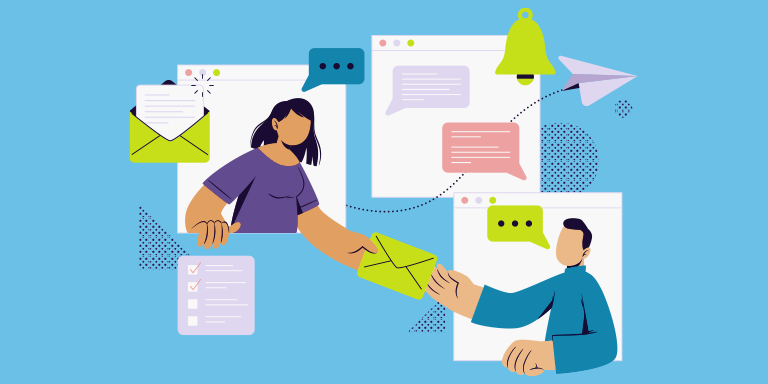
- The Strategic Payoff: When an automated email arrives precisely at this behavioral threshold, the interaction feels effortless. The decision to return is not forced by a desperate discount; it is guided by natural timing.
Supporting Data and Behavioral Psychology
The mechanics of timely email marketing are deeply rooted in consumer psychology. When evaluating why behavioral triggers outperform scheduled campaigns, behavioral scientists point to three primary cognitive drivers:
- Recognition and Validation: When an automated message mirrors a recent user action, it signals active attentiveness. This builds immediate trust and lowers psychological resistance to future transactions.
- Momentum Capitalization: Emotional connection and brand awareness peak immediately following an interaction. Failing to follow up within this golden window causes brand recall to decay exponentially faster than most businesses anticipate.
- Reduction of Decision Fatigue: Asking a cold lead to evaluate a brand requires significant cognitive effort. Conversely, a timely email arrives when the decision is already half-formulated, making the path to purchase frictionless.
Omnisend’s data further validates these psychological principles. By substituting arbitrary campaign schedules with data-driven behavioral triggers, e-commerce brands have significantly lowered their unsubscribe rates while simultaneously driving higher average order values (AOV) from repeat buyers.
Official Perspectives and Industry Responses
Industry leaders and e-commerce strategists emphasize that the future of digital marketing belongs to infrastructure over output.
"For too long, founders believed that scale meant more noise," notes a senior digital growth strategist. "The 2025 data tells a different story. Scale is achieved through precision. When automated workflows handle the heavy lifting of timing and personalization, marketing stops feeling like a chore for the consumer and starts feeling like an intuitive service."
Marketing platform executives echo this sentiment, pointing out that smaller teams can now compete with enterprise-level giants simply by mastering lifecycle triggers. By leveraging dynamic data inputs—such as browsing history, purchase cadences, and product categories—even bootstrapped startups can deploy enterprise-grade personalization without expanding their marketing headcount.
Implications for Founders and Digital Marketers
The transition toward behavioral timing carries profound implications for digital business models:
- Resource Optimization: Because automated flows generate over a third of revenue from minimal volume, marketing teams can drastically reduce the hours spent designing daily broadcast campaigns. This frees up creative bandwidth to focus on product development and customer experience.
- Cost Efficiency: Sending fewer, highly targeted emails reduces server loads, minimizes domain reputation risks (such as spam complaints), and protects profit margins by reducing reliance on constant site-wide discount codes.
- Long-Term Brand Equity: Brands that respect their customers’ inboxes by communicating only when context demands it foster deeper loyalty. Over time, this transforms one-time transactional buyers into passionate brand advocates.
Moving Forward
Customer retention is rarely secured through volume; it is won through relevance. As consumer expectations for personalized digital experiences continue to rise, the brands that survive and thrive will be those that master the intersection of data, psychology, and timing.
For entrepreneurs looking to implement these frameworks without increasing their operational workload, modern tools offer turnkey solutions. Platforms like Omnisend provide pre-built behavioral automations, dynamic personalization engines, and integrated social proof features designed to capture repeat revenue automatically.
As a special offer for readers, new users can access 50% off their first 3 months on Omnisend by using the promo code FOUNDR50 at checkout, enabling brands to transition from high-frequency noise to high-impact timing.
 rifanmuazin
  Reynand Wu
  Basiran