
 By Evan Lee Salim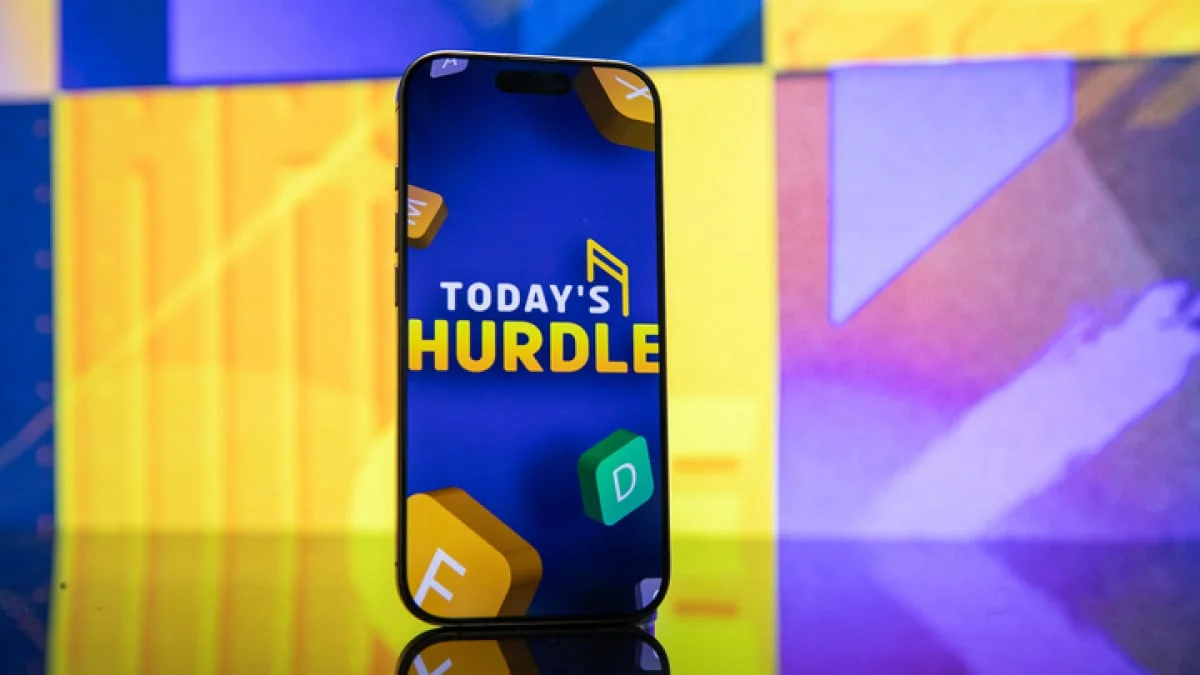
The landscape of digital micro-gaming has undergone a massive paradigm shift over the past several years. What began as a viral sensation with Josh Wardle’s Wordle has matured into a highly competitive, sophisticated ecosystem of daily brainteasers. Among the standout innovations in this genre is Hurdle, a multi-layered, five-round word puzzle that tests a player’s linguistic agility, deduction skills, and stamina.
Unlike single-word games, Hurdle demands a cumulative strategic approach. Today, we break down the mechanics of the game, analyze the chronological solutions for today’s puzzle—featuring the words GLIDE, SLING, ATOLL, NUTTY, and the final solution, MAUVE—and explore the broader industry implications of the casual gaming boom across major media networks like Mashable.
Main Facts: Today’s Solutions and the Mechanics of Hurdle
For players navigating today’s Hurdle, the puzzle presented a diverse linguistic journey, transitioning from fluid verbs to geographic terms, colloquial adjectives, and ending on an elegant color-based noun. Below are the key answers and corresponding hints for today’s five-stage challenge:
- Hurdle Word 1 (Hint: Drift):
GLIDE - Hurdle Word 2 (Hint: Carry):
SLING - Hurdle Word 3 (Hint: Coral reef):
ATOLL - Hurdle Word 4 (Hint: Crazy):
NUTTY - Hurdle Word 5 / Final Hurdle (Hint: Pink shade):
MAUVE
Understanding the Hurdle Engine
At its core, Hurdle expands upon the traditional Mastermind-style letter-elimination format. While a standard puzzle gives players six attempts to find a single five-letter word, Hurdle ups the ante by stringing five puzzles together.
The progression operates under a strict set of rules:
- The Opening Stage: Players solve Hurdle 1 using standard elimination rules (green indicates correct letter and placement; yellow indicates correct letter but incorrect placement; gray indicates the letter is not in the word).
- The Relay Effect: Upon successfully solving a hurdle, that correct word is automatically pre-filled as the first guess of the subsequent hurdle. This mechanic is a double-edged sword: it can either grant the player several critical green and yellow tiles right out of the gate, or it can yield absolutely nothing if the consecutive words share no letters.
- The Final Gauntlet (Hurdle 5): The fifth and final round does not pre-fill a single word. Instead, it aggregates all correct answers from the previous four rounds. Correct and misplaced letters from the previous solutions are highlighted on the keyboard, providing a complex mosaic of clues. However, a crucial caveat exists: the frequency with which a letter was highlighted in previous rounds does not dictate how many times it will appear in the final word.
Chronology: Step-by-Step Analysis of Today’s Puzzle Run
To understand the cognitive workflow required to solve today’s Hurdle, we must examine the chronological progression from the first guess to the final round. Each stage presents unique linguistic hurdles and strategic decision points.
[Hurdle 1: GLIDE] ---> (Pre-filled as Guess 1) ---> [Hurdle 2: SLING]
                                                            |
[Hurdle 4: NUTTY] <--- (Pre-filled as Guess 1) <--- [Hurdle 3: ATOLL]
        |
        +---> [Final Hurdle: MAUVE] (Aggregated keyboard clues from 1-4)
Hurdle 1: GLIDE (Hint: Drift)
The journey began with the word GLIDE. The hint "Drift" nudged players toward concepts of smooth, effortless movement.
- Linguistic Profile:
GLIDEis highly favorable for an opening round due to its use of common consonants (G,L,D) and a strong vowel presence (I,E). - Strategic Value: The presence of the terminal silent
Eand the high-frequency vowelImakesGLIDEan excellent starting word, offering immediate structural data for the second round.
Hurdle 2: SLING (Hint: Carry)
Upon solving the first round, GLIDE was automatically entered as the opening guess for Hurdle 2.
- The Transition:
GLIDEandSLINGshare the lettersL,I, andG. Depending on how players structured their intermediate guesses, they were likely greeted by a mixture of yellow and green tiles, pointing toward the consonant-vowel-consonant-consonant structure. - The Solution: Using the hint "Carry" (or "Carry/Support" in some regional variations), players deduced SLING. This word introduces the highly common
Sand the productive-INGsuffix, which is a staple of English five-letter words.
Hurdle 3: ATOLL (Hint: Coral reef)
With SLING locked in, it became the default first guess for Hurdle 3.
- The Transition:
SLINGandATOLLshare almost no common ground, save for the letterL. This likely resulted in a "cold start" for many players in Round 3, forcing them to pivot quickly to alternative vowel configurations. - The Solution: The hint "Coral reef" pointed directly to ATOLL, a specialized geographical term. This word is particularly tricky due to the double
Lat the end and the uncommon starting vowelA. Managing the double-letter constraint is one of the primary obstacles that separates casual players from advanced logicians.
Hurdle 4: NUTTY (Hint: Crazy)
The solution to the third round, ATOLL, served as the baseline for Hurdle 4.
- The Transition:
ATOLLandNUTTYshare the letterT, which gave players a solid anchor point. - The Solution: Prompted by the hint "Crazy," players arrived at NUTTY. This word introduced another double-consonant hurdle (
TT) and the terminal semi-vowelY. Eliminating the standard vowels (A,E,I,O) in previous rounds naturally steered players toward the underutilizedUandYcombination.
The Final Hurdle: MAUVE (Hint: Pink shade)
The ultimate round represents the climax of the game. Rather than a pre-filled guess, the game keyboard highlighted the letters compiled from GLIDE, SLING, ATOLL, and NUTTY.
- The Synthesized Clue Board: The active letters on the keyboard included
A,D,E,G,I,L,N,O,S,T,U, andY. - The Deduction Process: The clue "Pink shade" narrowed the semantic field to colors. Using the available pool of letters, players had to arrange them to form MAUVE.
- The Trap: A common pitfall in the final hurdle is assuming that because a letter appeared multiple times in the previous solutions (such as
LorT), it must appear in the final word. Successful players bypassed this assumption, focusing instead on the French-derived vowel combinationAUand the rare consonantVto secure their victory.
Supporting Data: The Casual Gaming Phenomenon and Audience Metrics
The enduring popularity of games like Hurdle is supported by significant consumer data and psychological research. Since the pandemic-era boom of casual web games, media companies have recognized that puzzles are not merely novelties; they are foundational to modern digital subscription and retention models.
The Psychology of the Daily Habit Loop
According to behavioral psychologists, the appeal of daily word games lies in the "scarcity principle" and the "Zeigarnik effect."
- Scarcity: By restricting gameplay to one puzzle per day, developers prevent user burnout and create a shared cultural moment. Players know that everyone else is tackling the exact same puzzle within a 24-hour window, fostering a sense of community.
- Dopamine Rewards: The step-by-step reduction of uncertainty (turning gray tiles into green) provides a predictable, low-stakes dopamine loop that relieves stress and stimulates cognitive function.
| Metric / Aspect | Standard Wordle | Hurdle |
|---|---|---|
| Number of Target Words | 1 | 5 |
| Average Play Time | 2–5 minutes | 8–15 minutes |
| Primary Cognitive Load | Vocabulary recall, basic deduction | Multi-stage strategy, cumulative deduction |
| User Retention Rate | High (daily habit) | Very High (deeper engagement curve) |
Media Retention Metrics
Data from digital publishing analysts indicates that users who visit a media site specifically to play games exhibit vastly different behavior patterns than those who arrive via search engines or social media feeds:
- Dwell Time: Game users spend an average of 3x to 5x more time on-site than standard news readers.
- Return Rate: Puzzle players have a 30-day return rate exceeding 65%, compared to the typical 10–15% for general news consumers.
- Cross-Pollination: A significant percentage of players who finish a puzzle go on to browse other sections of the host website, boosting overall page views and ad impressions.
Official Responses and Strategic Media Pivots
The integration of Hurdle into Mashable’s digital portfolio is part of a broader, industry-wide trend of media diversification.
Mashable’s Gaming Expansion
In statements regarding their digital roadmap, Mashable has highlighted the launch of its dedicated Games Hub. Alongside Hurdle, the hub features classics like Mahjong, Sudoku, daily crosswords, and specialized word puzzles.
This move mirrors the highly successful strategy of The New York Times, which acquired Wordle in early 2022 for an undisclosed seven-figure sum. The Times later reported that the acquisition brought tens of millions of new users to their platform, many of whom subsequently subscribed to their news and cooking products.
By actively promoting initiatives like the "Mashable 101 Fan Fave" and encouraging community nominations, the platform is building an interactive community around its gaming content. This strategy shifts the publisher-audience relationship from passive consumption to active, daily participation.
Implications: The Future of Puzzles in the Attention Economy
The rise of games like Hurdle has profound implications for both the media industry and the cognitive habits of the public.
Puzzles as the New Loyalty Programs
As traditional advertising revenues fluctuate and social media algorithms become increasingly unreliable drivers of traffic, media outlets must find ways to establish direct relationships with their audiences. Games have emerged as the ultimate loyalty program. They bypass third-party platforms entirely; users bookmark the page, return daily, and voluntarily engage with the brand. We are already seeing this trend expand beyond news outlets, with professional networking platforms like LinkedIn introducing daily games to boost user dwell time and platform engagement.
Cognitive Resilience in the Digital Age
On an individual level, the daily puzzle routine serves as a counterweight to the passive, infinite-scroll content consumption that dominates modern smartphones. Hurdle, with its multi-layered structure, demands sustained focus, working memory, and logical deduction. As the population ages, the demand for accessible "brain training" games is projected to grow, positioning games like Hurdle not just as entertainment, but as daily exercises in cognitive health and linguistic maintenance.
Ultimately, today’s sequence—from the effortless motion of a GLIDE to the vibrant hue of a MAUVE—proves that the allure of the written word remains as powerful as ever. In a digital world characterized by noise, the quiet, structured challenge of the daily Hurdle remains a welcome sanctuary for minds seeking a daily dose of intellectual satisfaction.
 Asro
Asro  Nila Kartika Wati
  Siti Muinah