
 By Lina Hope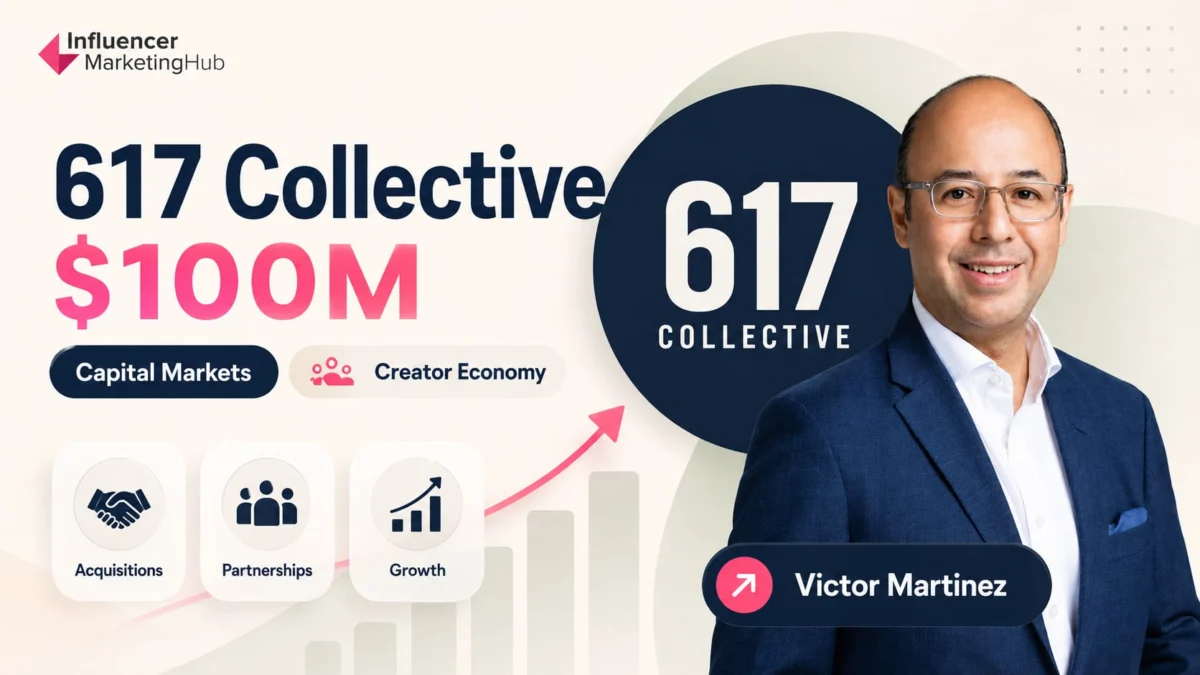
Key Takeaways
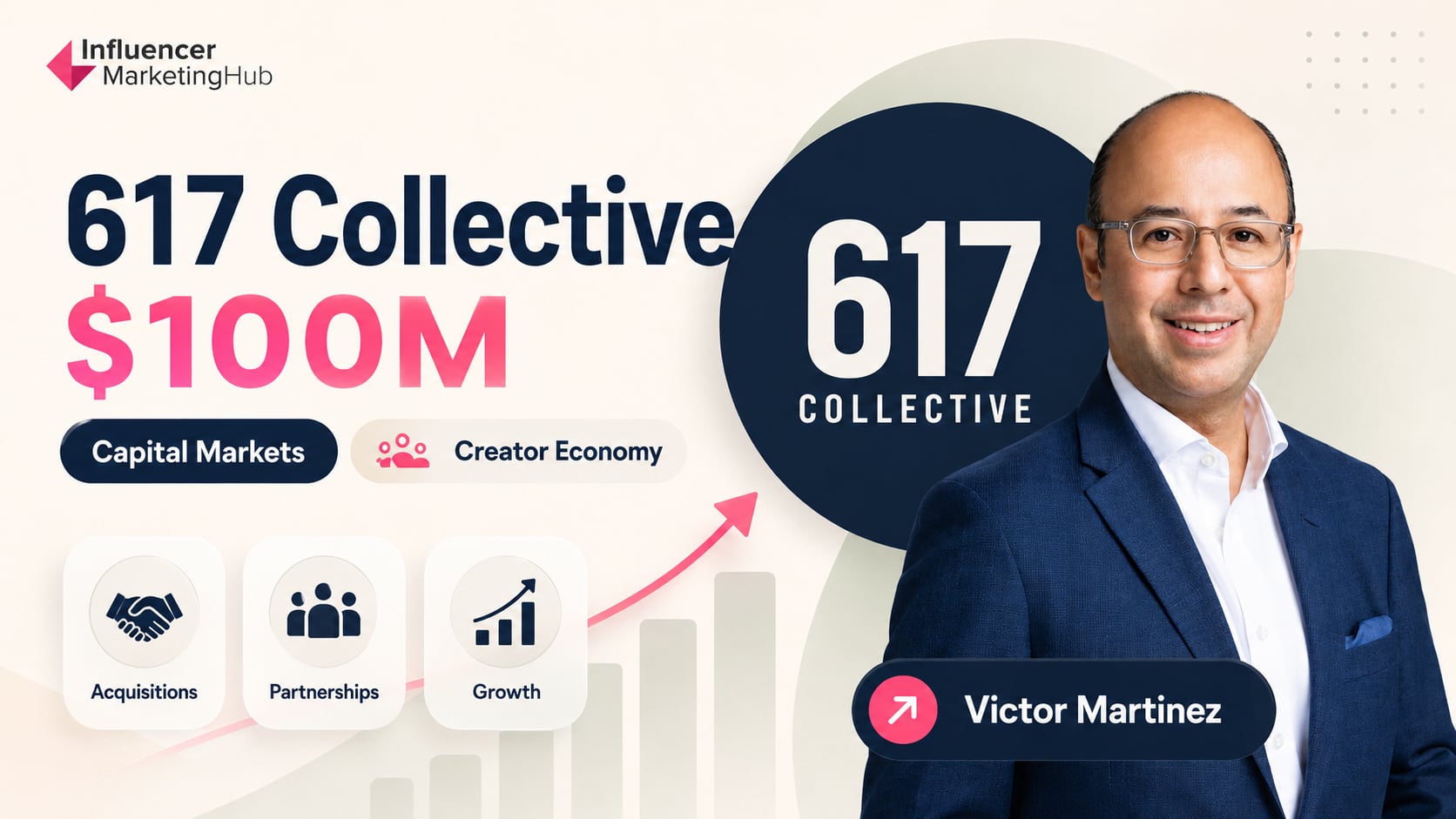
- Strategic Hire: 617 Collective has appointed former Citi and JPMorgan investment banker Victor Martinez as Partner and Head of Capital Markets to spearhead a $100 million acquisition push.
- A Shift in Strategy: The firm is positioning itself as a "partner-holdco" that provides institutional-grade financing without the operational homogenization typical of traditional agency roll-ups.
- Market Context: Amidst rapid consolidation in the creator economy, 617 Collective aims to balance founder-friendly autonomy with the structural advantages of a large-scale holding company.
- The Funding Gap: By building sophisticated lender relationships, the firm aims to compete directly with major agency networks for high-growth influencer, PR, and creative agencies.
The Institutional Pivot
In a move that signals the professionalization of the fragmented agency landscape, 617 Collective, a New York-based acquisition platform, has recruited veteran investment banker Victor Martinez to oversee its capital markets strategy. Martinez, who brings over two decades of high-level experience from Citi and JPMorgan, joins the firm at a pivotal moment. His mandate is clear: to build the robust financing infrastructure necessary to deploy $100 million in capital across the creative services, influencer marketing, and public relations sectors throughout 2026.
This hire marks a significant evolution for a company that only publicly announced its first acquisition five months ago. By bringing in a seasoned Wall Street veteran, 617 Collective is signaling that it is no longer content to act as a boutique buyer. Instead, it is preparing to compete with the industry’s heavyweights—the sprawling holding companies that have historically dominated the market through aggressive, often intrusive, consolidation.
A Chronology of Growth: From Launch to Scale
617 Collective emerged in August 2025, founded on the premise that the agency model was ripe for a "permanent capital" approach. Unlike private equity firms that look to flip agencies within a three-to-five-year window, or mega-holdcos that prioritize centralizing back-office operations, 617 Collective promised a different path.
The firm’s initial focus was localized, targeting Northeast-based agencies generating between $1 million and $5 million in annual revenue. The strategy was specifically designed to capture firms with deep ties to Gen Z and millennial audiences—demographics that are increasingly difficult for traditional, legacy agencies to reach authentically.
- August 2025: 617 Collective officially launches, backed by a syndicate of family offices and private investors.
- January 2026: The firm makes its first major move, acquiring Oklahoma-based creative studio Nominee Design. Simultaneously, Cynthia Monroy joins as Managing Partner to oversee operational integration.
- April 2026: The firm expands its footprint with the acquisition of Zanahoria Azul, a Miami-based agency specializing in influencer talent management within the U.S. Hispanic and Latin American markets.
- June 2026: The appointment of Victor Martinez marks the transition from an early-stage venture to an institutional-grade platform, with $100 million in dry powder earmarked for further acquisitions.
The "Partner-Holdco" vs. The Roll-Up
The core of 617 Collective’s value proposition is its rejection of the "roll-up" playbook. In a standard roll-up, agencies are often stripped of their independent identities; accounting, human resources, and creative processes are centralized to achieve cost synergies. While this approach improves margins, it often alienates the very founders who made the agencies successful in the first place.
617 Collective’s "partner-holdco" model aims to preserve the cultural and operational autonomy of its acquisitions. By layering on capital, strategic support, and shared infrastructure, the firm hopes to provide the benefits of scale without the drawbacks of total integration.
However, as Managing Partner Cynthia Monroy noted, the arrival of Martinez is part of the "continued institutionalization" of the firm. This creates an interesting tension: can a firm maintain its "founder-friendly" reputation while simultaneously building the rigorous, standardized financial systems required to satisfy the institutional lenders that Martinez is now courting?
Supporting Data: The Consolidation Wave
The timing of 617 Collective’s aggressive expansion is no coincidence. The creator economy is currently experiencing an unprecedented period of deal flow. Recent data from the Influencer Marketing Hub suggests the addressable market could reach $480 billion by 2027, with the sector compounding at an annual rate exceeding 20%.
Despite this growth, the market remains structurally fragmented. Thousands of small-to-mid-sized agencies are currently competing for attention, providing a rich hunting ground for well-capitalized acquirers. According to Quartermast Advisors’ 2026 report, there were 81 creator-economy transactions in 2025, a 17.4% increase from the previous year.
Marketing services M&A has remained resilient even as broader economic headwinds have slowed deal activity in other sectors. Capstone Partners reported a 14% year-to-date increase in marketing services M&A throughout 2025, signaling that investors view these agencies as "recession-resistant" assets capable of capturing sustained advertising spend from major brands.
The Competitive Landscape: The Giants of Madison Avenue
617 Collective is entering a field dominated by entrenched titans. The sheer scale of the opposition is daunting:
- Omnicom/IPG: The $13.5 billion merger that closed in late 2025 created a behemoth with approximately $25 billion in annual revenue.
- Publicis Groupe: A leader in the creator space, having invested $500 million in the influencer platform Influential and acquiring Latin American powerhouse BR Media Group.
- Stagwell: Continuously adding AI-driven influencer capabilities to its portfolio.
To compete with these entities, 617 Collective cannot rely on "conviction" alone. It requires the same financial engineering, tax-efficient structuring, and debt-financing access that allow the giants to make multi-hundred-million-dollar acquisitions with ease. Victor Martinez’s arrival is the strategic bridge to this capability. By building relationships with the same family offices and lenders that back the incumbents, 617 Collective is positioning itself to be a "third way"—an institutional player that acts like a boutique partner.
Implications: Can the Model Scale?
The "permanent capital" model is not entirely new; it has seen significant success in the software industry through firms like Constellation Software and in the digital media space through platforms like Tiny. However, applying this to the agency world presents unique challenges.
1. Conflict of Interest and Data Privacy
As 617 Collective grows, it faces the same risks as any other holding company. Industry consultancy Ebiquity has warned that as these networks accumulate agencies, brand clients become increasingly concerned about data-sharing exposure and competitive conflicts. If multiple agencies under the 617 umbrella work for competing brands, the "independent" facade could quickly become a liability.
2. The Drift Toward Integration
There is an inherent "gravity" in holding companies. Even those that start with a decentralized philosophy often find that centralizing certain functions—such as payroll, insurance, and legal—is necessary to satisfy lenders and maximize profitability. The question remains: at what point does 617 Collective’s "shared infrastructure" become indistinguishable from the "standardized delivery" of a traditional roll-up?
3. Cultural Preservation
The ultimate test for the firm will be its ability to retain top-tier creative talent. If the founders who drive the value of these agencies feel that their autonomy is being eroded by the very "institutionalization" they once sought to avoid, the firm will face significant churn.
Looking Ahead
617 Collective’s bet is that the future of the agency world belongs to those who can offer the best of both worlds: the agility of an independent agency and the financial muscle of a Wall Street holding company. With $100 million in capital ready for deployment, the next 18 months will be the proving ground for this hypothesis.
As 2026 continues to shape up as a year of intense consolidation, the market will be watching closely to see if 617 Collective can scale without losing its soul. For founders in the creator economy, the firm represents a compelling alternative to being swallowed by a massive network, provided that the "institutionalization" promised by the arrival of Victor Martinez remains a tool for growth rather than a mechanism of control.
 Iffa Jayyana
  Siti Muinah
  Asro
Asro 