
 By Suro Senen
Main Facts
In the mid-20th century, the American culinary landscape underwent a seismic shift. Amidst the rising tides of suburban expansion, increased global mobility, and the revolutionary television broadcasts of culinary icons like Julia Child, the standard American weeknight dinner was reimagined. Gone were the days of uniform frozen TV dinners and monotonous casseroles as the sole providers of household convenience; instead, a wave of sophisticated, continental dining swept through suburban kitchens.
At the forefront of this culinary democratization was Chicken Kiev—a dish featuring a tender chicken breast wrapped around seasoned, herb-infused butter, coated in crisp breadcrumbs, and fried or baked to a golden perfection. When sliced open at the dinner table, the cutlet would release a rich, aromatic cascade of melted butter.
While its name nods to Ukraine’s capital, Kyiv, the history of Chicken Kiev is a complex tapestry involving 19th-century Russian royalty, French haute cuisine, and post-World War II American marketing. By the 1960s, this once-exclusive restaurant specialty had successfully transitioned into the repertoire of the aspiring American middle class, becoming a symbol of accessible luxury, culinary ambition, and mid-century dinner party theater.
Chronology of a Culinary Icon: From Tsarist Courts to Suburban Freezers
To understand how Chicken Kiev became a staple of 1960s suburban life, one must trace its journey across continents and centuries. Its timeline reflects shifting geopolitical alliances, immigration patterns, and the evolution of the global food industry.
1. Mid-19th Century: The French-Russian Fusion
According to culinary historians and reports by NPR, the roots of Chicken Kiev stretch back to the mid-1800s. During this era, Russian royalty frequently employed French chefs or sent their own native cooks to Paris to master the intricacies of French haute cuisine.
Upon returning to the Russian imperial courts, these chefs adapted French techniques to local ingredients, giving rise to a veal dish known as the Mikhailovska cutlet. Over time, chefs in Moscow transitioned from veal to chicken—a protein that was considerably more exclusive and largely reserved for the upper echelons of society. Viacheslav Gribov, head chef at Kyiv’s Hotel Dnipro, noted in historical interviews that the early iterations of the dish were created for high-level diplomatic meetings, where presentation and delicate flavors were paramount.
2. Post-World War II: The American Introduction
The dish found its way to the United States in the wake of World War II. Fine-dining establishments in major American cities began serving the cutlet under the name "Chicken Kiev," tailoring the menu item to attract and welcome Soviet immigrants, while simultaneously captivating adventurous American diners who were eager for sophisticated international flavors.
3. The 1960s and 1970s: The Suburban Boom
By the 1960s, Chicken Kiev had made the leap from white-tablecloth restaurants into the American suburban mainstream. This transition was accelerated by several cultural factors:
- The Julia Child Effect: Through her landmark cookbook Mastering the Art of French Cooking (published in 1961) and her television show The French Chef, Child demystified European cooking, inspiring homemakers to elevate their culinary standards.
- The Rise of James Beard: Culinary authority James Beard published recipes for the dish in James Beard’s American Cookery, categorizing it as a "Russian Specialty" and acknowledging the growing appetite of home cooks attempting restaurant-quality stuffed cutlets in domestic kitchens.
- The Frozen Food Revolution: As commercial freezing technologies advanced, food manufacturers capitalized on the popularity of Chicken Kiev. Grocery store freezer aisles began stocking pre-made, frozen versions of the dish. This allowed busy homemakers to serve an impressive, decadent meal to guests without enduring the labor-intensive process of butterflying, pounding, stuffing, securing, and double-breading chicken breasts at home.
4. Late 20th Century to Present: Decline and Nostalgia
As with many food trends, overexposure led to saturation. By the late 1970s and 1980s, as convenience foods became the norm rather than a novelty, Chicken Kiev lost its elite cachet. It gradually faded from mainstream menus and modern recipe books, deemed passé by changing dietary preferences and evolving global cuisines. Today, however, the dish enjoys a second life in digital nostalgia spaces, with food enthusiasts and online communities frequently reminiscing about its golden age.
Supporting Data and Cultural Impact
The cultural footprint of Chicken Kiev during the mid-20th century highlights a broader sociological shift in how middle-class Americans expressed status and creativity through food.
- The Economics of Aspiration: In the 1960s, international air travel was still largely a luxury reserved for the affluent. Bringing global cuisine into the home—whether through fondue sets, beef bourguignon, or Chicken Kiev—allowed the burgeoning middle class to participate in a cosmopolitan lifestyle without breaking the financial bank.
- The "Theatrics" of Dining: Food psychologists note that mid-century dining relied heavily on sensory presentation. Chicken Kiev offered a unique interactive element: the structural integrity of the breaded crust held the molten butter captive until the precise moment of incision. This created an element of surprise and theatricality that elevated a standard Tuesday night dinner into an event.
- The Supermarket Shift: Market research from the era indicates that frozen poultry products experienced exponential growth during the 1960s. Frozen Chicken Kiev represented a bridge between industrial food processing and artisanal presentation, satisfying the post-war demand for time-saving kitchen solutions that still felt gourmet.
Official Responses and Culinary Perspectives
While Chicken Kiev is rarely found on contemporary fine-dining menus today, professional chefs and food historians continue to analyze its legacy within the global canon of comfort food.
The Debate Over Origins
The naming rights and national attribution of Chicken Kiev have long been a subject of friendly debate between Russia and Ukraine. While the recipe’s direct ancestors were developed in elite Moscow and St. Petersburg kitchens, the dish’s modern identity is inextricably linked to the city of Kyiv, particularly through its prominence in Soviet-era tourism and international hotel restaurants like the Hotel Dnipro.
Modern Chef Interpretations
Contemporary chefs often view Chicken Kiev as a masterclass in culinary technique. Despite its retro reputation, mastering a true, scratch-made Chicken Kiev requires precision:
- Temperature Control: The butter must remain completely sealed inside the chicken breast during the frying or baking process; otherwise, the butter leaks out, resulting in dry meat.
- Double Breading: Achieving an ultra-crisp exterior that withstands the thermal shock of hot oil requires a careful dredging sequence of flour, egg wash, and breadcrumbs.
In recent years, upscale gastropubs and retro-themed restaurants have occasionally resurrected Chicken Kiev, updating the recipe with gourmet variations such as truffle butter, garlic-herb compound butters, or panko crusts to appeal to modern palates.
Implications: The Enduring Legacy of Mid-Century Comfort Food
The trajectory of Chicken Kiev offers valuable insights into the cyclical nature of food culture, class aspiration, and culinary memory.
1. The Democratization of Luxury
Chicken Kiev serves as a prime example of how elite culinary traditions filter down to the general public. What began as a dish designed exclusively for tsarist royalty and high-level diplomats ultimately found a permanent home in suburban electric ovens and aluminum TV trays. This democratization set the stage for modern food culture, where global ingredients and complex techniques are routinely adopted by home cooks through television, blogs, and social media.
2. The Power of Food Memory
Though frozen varieties of Chicken Kiev have become increasingly rare in modern supermarket aisles—often replaced by trendier convenience foods like chicken nuggets, tenders, and pre-marinated cutlets—the dish maintains a passionate digital following. Platforms like Reddit and nostalgic food blogs are filled with testimonials from Americans searching for the exact flavor profile of their childhoods.
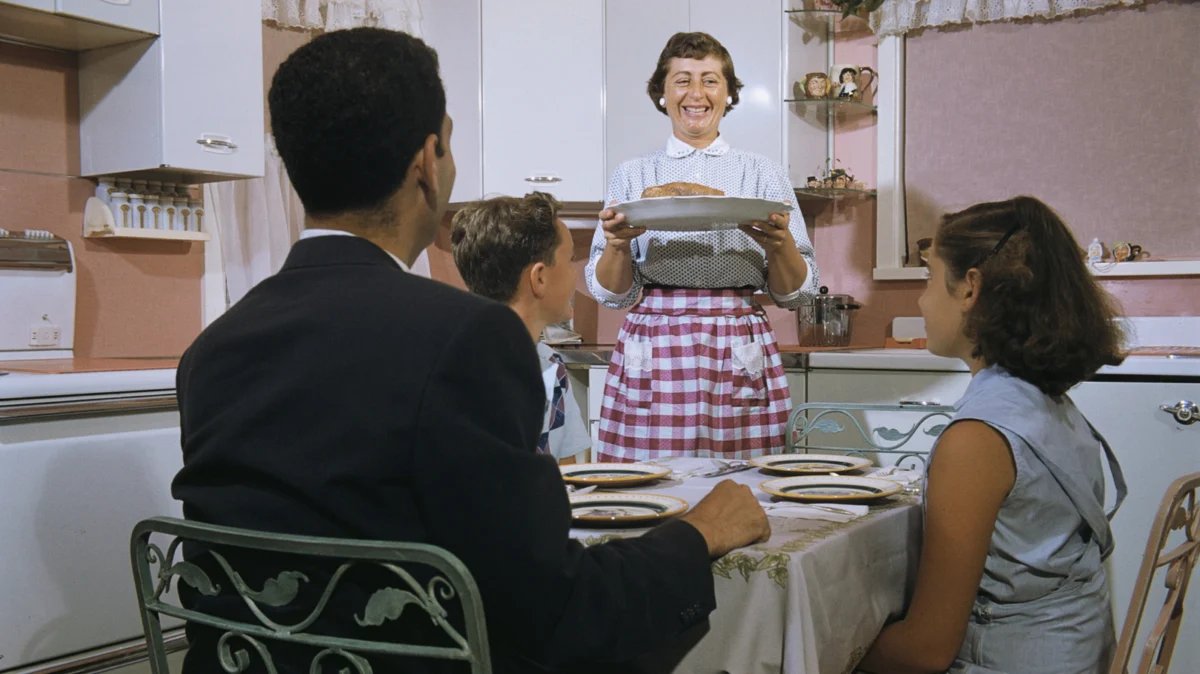
These digital discussions underscore a fundamental truth about comfort food: recipes are rarely valued for their nutritional profile or technical complexity alone. Instead, they serve as edible time capsules, capable of instantly transporting diners back to an era of fondue pots, apron-clad hosts, and the simple, theatrical joy of cutting open a golden crust to watch the butter flow.
 Jia Lissa
 Reynand Wu
 Nana Muazin
