
 By rifanmuazin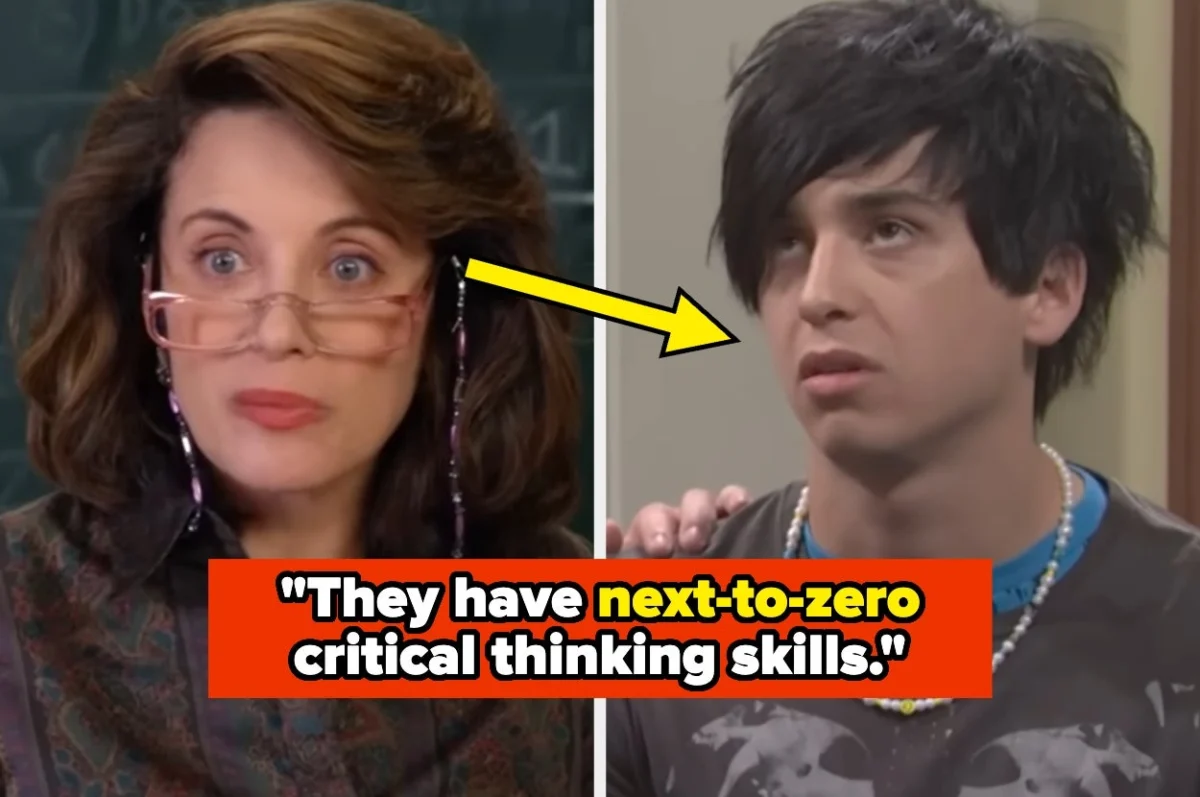
The landscape of modern education is undergoing a seismic shift, and for those on the front lines, the view is increasingly grim. As teachers across the globe grapple with the integration of Artificial Intelligence, the lingering effects of the pandemic, and a digital culture that prioritizes instant gratification over deep focus, a troubling narrative has emerged. From preschools to university lecture halls, educators are reporting a profound decline in foundational knowledge, cognitive processing, and basic life skills among Gen Alpha and the youngest cohorts of Gen Z.
The following report synthesizes anecdotal evidence from thousands of educators, painting a picture of a school system struggling to reconcile 20th-century pedagogical goals with 21st-century developmental realities.
The Erosion of Foundational Literacy and Numeracy
For many veteran educators, the most alarming trend is the regression in basic academic benchmarks. The days when middle schoolers could reasonably be expected to perform mental arithmetic or grasp geographic concepts are, in many districts, becoming a relic of the past.
Teachers report that high school seniors are frequently incapable of performing elementary-level math, such as basic multiplication or understanding the concept of a square root. One high school math teacher recounted a sophomore who struggled to comprehend the logic of "20 more than" a given number, demonstrating a disconnect between abstract reasoning and real-world application.
This gap extends to geography and humanities as well. Educators have shared harrowing anecdotes of students who believe Spain is a city in Mexico, or that Alaska and Japan are part of the United States. In elementary settings, basic linguistic markers—such as the distinction between vowels and consonants—are becoming foreign concepts to students who were once expected to master these in the primary grades.
The Digital Paradox: Artificial Intelligence and Critical Thinking
Perhaps the most significant disruptor in the modern classroom is the rapid adoption of generative AI. While technology has always played a role in education, the ease with which students can now bypass the "thinking" process entirely is creating a unique crisis of cognition.
"I asked an undergraduate student for their opinion on a text," one professor noted, "and they pulled out their phone, typed my question into ChatGPT, and read the answer aloud."
This phenomenon is not limited to higher education. High school students are increasingly using AI to answer subjective, opinion-based prompts, leading to absurd scenarios where a student submits an answer like, "As an AI, I cannot perform CPR," in response to a personal question about their comfort level with first aid. Teachers argue that the over-reliance on digital tools is eroding the capacity for independent thought, as students increasingly struggle to "put things in their own words"—a task that was once considered standard for middle schoolers.
Chronology of Decline: A 20-Year Retrospective
The decline, according to long-term educators, did not happen overnight. It has been a slow, steady drift that accelerated significantly over the last decade.
- 2004–2014: The "Foundational Period." Teachers recall a time when center rotations in preschool lasted 15–20 minutes, with students engaged in play-based learning.
- 2014–2019: The "Digital Shift." As social media platforms like TikTok began to dominate youth culture, teachers noticed a sharp decrease in attention spans. The need for "constant stimulation" became a prerequisite for student engagement.
- 2020–2022: The "Interruption Era." Remote learning during the pandemic exacerbated existing issues, leading to significant gaps in social-emotional development and basic academic continuity.
- 2023–Present: The "AI Integration." Teachers are now witnessing a "brain drain" where students prioritize speed and automation over mastery, leading to a loss of basic troubleshooting and problem-solving skills.
The Disappearance of Basic Life Skills
Beyond academics, there is a growing concern regarding the "practical literacy" of students. Educators across various disciplines report that students are increasingly unable to perform manual tasks that require spatial awareness or basic motor skills.
One teacher noted that students are frequently unable to read an analog clock, even when one is mounted in plain sight. Others report a widespread inability to use simple office tools like staplers, with students expressing frustration or confusion when faced with physical paperwork.
Transportation officials have noted that even in high-performing school districts, students are increasingly reliant on their peers or staff to navigate the most basic daily routines, such as locating their assigned bus. "They see the bus isn’t their regular driver, and they look around in horror," one transport worker shared. "They don’t even know their own home addresses."
Implications: A Society in Flux
The implications of these trends are far-reaching. Educational psychologists suggest that the shift is driven by a combination of "screen saturation" and a parenting culture that, in some cases, removes obstacles so effectively that children fail to develop resilience.
When a student asks a teacher to intervene in a minor social conflict because they have "too much social anxiety" to speak to a peer, they are missing a critical developmental milestone. This "do it for me" mindset is being codified in some schools through administrative policies that prioritize graduation rates over academic proficiency. In one case, a student was promoted to fifth grade despite failing to master foundational reading or shape recognition, highlighting a systemic failure to address educational neglect.
Official Responses and the Road Ahead
School districts and educational boards are currently under immense pressure to respond. While many officials point to the need for increased funding and smaller class sizes, critics argue that the issue is not merely budgetary.
"We don’t require motivation anymore," says one middle school teacher. "You can turn in zero work and still pass."
The consensus among the teaching community is that the current model of schooling is failing to compete with the addictive nature of digital media. As students become accustomed to 15-second "bites" of information, the traditional 50-minute lecture—or even a 15-minute center rotation—is becoming increasingly difficult to sustain.
Moving forward, the focus may need to shift from content delivery to "cognitive rehabilitation." Educators are calling for a return to analog methodologies, such as mandatory pen-and-paper assignments and a greater emphasis on face-to-face problem solving, to force students to engage their "processing power" before it atrophies further.
Conclusion: The Call to Action
The stories shared by teachers are not just complaints; they are early warning signs of a profound societal shift. If the current generation of students continues to struggle with the basic mechanics of human interaction, critical thinking, and logical reasoning, the consequences will be felt far beyond the classroom walls.
As the school year progresses, the education sector faces a critical decision: continue to adjust standards to meet the capabilities of a disengaged generation, or implement rigorous interventions that challenge students to reclaim the cognitive skills necessary for the modern world. For the teachers on the front lines, the choice is clear—the future of the next generation depends on the ability to turn the tide.
 Lina Irawan
  Layla Zulfa
  Asep Darmawan